|
||||||||||||||||||||||
![Australia's First Online Journal Covering Air Power Issues [ISSN 1832-2433]](APA/APA-Title-Analyses.png "Australia's First Online Journal Covering Air Power Issues [ISSN 1832-2433]") |
||||||||||||||||||||||
![F-22A Raptor, FB-22, F-22E, F-22N and Variants Index Page [Click for more ...]](APA/f-fb-22.png "F-22A Raptor, FB-22, F-22E, F-22N and Variants Index Page [Click for more ...]") |
 |
![People's Liberation Army Air Power Index Page [Click for more ...]](APA/pla-air-pwr.png "People's Liberation Army Air Power Index Page [Click for more ...]") |
 |
 |
 |
 |
 |
 |
![Military Ethics, Culture, Education and Training Index Page [Click for more ...]](APA/ethx-culture.png "Military Ethics, Culture, Education and Training Index Page [Click for more ...]") |
 |
||||||||||||
 |
![Russian / Soviet Weapon Systems Index Page [Click for more ...]](APA/rus-weps.png "Russian / Soviet Weapon Systems Index Page [Click for more ...]") |
 |
 |
 |

|
 |
 |
 |
 |
 |
||||||||||||
 |
 |
 |
||||||||||||||||||||
| Last Updated: Mon Jan 27 11:18:09 UTC 2014 | ||||||||||||||||||||||
|
||||||||||||||||||||||
|
||||||||||||||||||||||
|
||||||||||||||||||||||
|
|
|
|
|
|
|
|
|
|
|
||||||||||||
|
|
|
|
|
|
|
|
|
|
|
||||||||||||
| |
|
|
||||||||||||||||||||
| Last Updated: Mon Jan 27 11:18:09 UTC 2014 | ||||||||||||||||||||||
|
||||||||||||||||||||||
Is This the Future for Australia's Military Capabilities? |
|||||||||
|
Air Power Australia Analysis
2008-01
13th January 2008 A Paper by Air Commodore Ted Bushell AM (Retd) Text © 2008 E. J. Bushell |
|||||||||
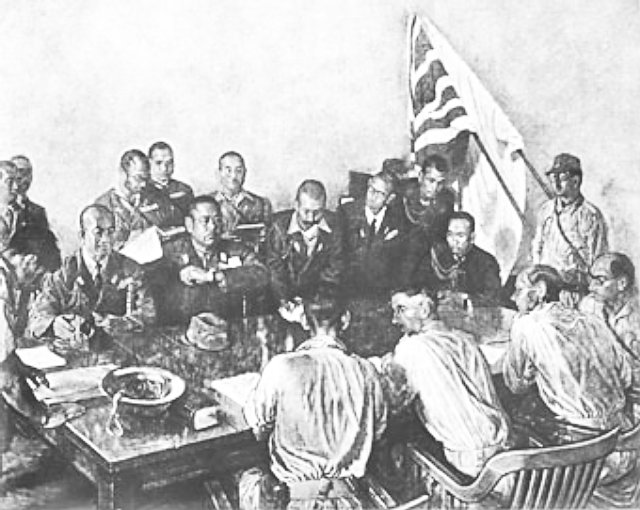 The fall
of the Singapore
garrison in 1942 represents a globally accepted case study of the
consequences of
military incompetence (Image
AWM 135867)
|
|||||||||
|
|||||||||
|
|
|||||||||
IntroductionMilitary history around the world, from distant to recent times, has been littered with examples of well-researched advice from qualified sources being ignored both at the military level by General-ranking officers and at the political level. In too many cases, this rejection of reality has resulted directly in a needless loss of military personnel and precious equipment. In extreme cases, battles have been lost and national sovereignty put at risk. From the military point of view, this occurs sometimes through a lack of understanding of what they are being told. At other times, they may be well aware of what they are being told, but it is rejected as being in conflict with non-military 'imperatives' that they see as having to take precedence over sound military judgement. Such 'imperatives' usually come from the Defence bureaucracy or through the political net, often both. In all cases, however, they result in non-military pressures distorting sound military judgement. The British ExperienceTurning to the British Military, which suffered our Defence Reform Programme (DRP)-type structural changes a few years earlier than the ADF, we find that a most disturbing pattern of behaviour has developed within the military hierarchy and the bureaucratic/political levels. The situation within the British defence organisation has been raised recently by General Sir Michael Rose, former head of the SAS, ex-commander of UN forces in Bosnia, and formerly in charge of standards in the British Army as Adjutant General. (See 'Washington's War' by Michael Rose). His assessment is that Britain has witnessed the most catastrophic collapse of its military ethos in recent history. While he is concerned particularly with the impacts of the imposition of ‘politically-correct’ European Union (EU) legislation emanating from Brussels, he is disturbed about the effects of the war in Iraq which he maintains has broken the military chain of command, caused generals and chiefs to lose the trust of their men, disorientated soldiers, and destroyed the trust between civilian society and the armed forces. To remedy this, he sees a need to get rid of those 'top brass' who kowtow to Whitehall, and to distance military decisions from politics from wherever it emanates. Rose feels that at the heart of the reported confrontation between RN and Iranian forces in the Gulf were a corruption of military ethos and a loss of moral authority. He also cites compelling reports generated by young officers giving the true situation in Iraq being 'binned' by the Brigadier because he wanted promotion. He points to the politicisation of the military, resulting in generals not speaking out, causing confusion in the chain of command, and undermining the trust one needs from one's men. The Commanding Officer, he adds, used to be a feared and respected figure. Now, when he makes some disciplinary judgement, it can be overridden by civilians. To remedy the situation, Rose believes that it is vital to retrain and recover. In particular, the Army needs its own jurisdiction, administration, discipline, ethos, and all these things have to be different from civilians, and outside their meddling. The General's comments, of course, related in principle to all three British Services. The Canadian ExperienceTurning to Canada, where their Defence Force was re-formed before both the UK and Australia, the situation seems to be even worse than that described by General Rose[1]: The military structures that foster and sustain the complex attitudes and behaviours amongst military members, which evolved over centuries and were certainly present in Canada, but have for some time been impacted by organisations “that reward conformity over capability, allowing the slow rise of petty authoritarians into positions of control”. The Military ethos is not understood within the Canadian Parliament, or by the media, and the intelligentsia refuses to recognise its existence. Unfortunately, this also seems to be true amongst senior officers. The ethos has been warped and perverted at times (not least in the Airborne Regiment in 1992-93), indicative of a failing leadership even at junior ranks. “The Military should be turning out men accustomed to hardihood, ready to inflict and receive harm, accustomed to rewarding trust and respect while being trusted and respected in turn. This is not happening now”. Instead, the Military is now expected to be more conformist in line with notional ideals, certainly not sexist or ageist, recruitment and training standards have been dropped, and officers are saddled with environmental impact reports and have to undergo ‘sensitivity training’, a poor substitute for common decency. Canadians ask: “If officers shun personal responsibility for the actions of those under their command, is this not seen also in so many other Canadian institutions?” “Indeed, for 30 years, Canadians have stressed individual rights, entitlements, and privileges, while disavowing the concepts of duty, obligation, and personal responsibility. For years, perception has been more important than reality and substance yields first place to appearance. These tenets have dominated public discourse for so long, Canadians ask if it is any wonder that many officers who rise to General and Flag rank abide by them?” “The shirking of individual responsibility and the importance of appearance are leading traits among the incompetent, as outlined by Dixon. Worse still, too much of the Military’s current leadership is increasingly inclined to micromanaging every aspect of military life, making the domination of the Armed Forces by the incompetent that much closer. More than ever, Canadian soldiers are expected to be in conformity with Canada’s increasingly twisted values.” The Australian Experience?While Britain and Canada have had a few more years and a few more major conflicts during which their problems have developed, Australia's post-defence reform structure is showing the development of identical trends, and it is imperative that these trends be checked and checked brutally if we are not to go down the same path. Although there is some evidence that the problems besetting the British and Canadian Military have penetrated to the operational elements of the ADF, a measure of degree cannot be made with complete confidence. The well-respected Australian Defence Association (ADA) in its Autumn 2007 'Defender' magazine notes that the excessive secrecy about what our troops are doing and why has greatly exacerbated community disengagement from their defence force on a day-to-day basis, as well as their ignorance in military matters. It adds that tactical incidents are sensationalised and judged unfairly, using peacetime moral absolutes, political biases, or ideological fixations. In its Winter 2007 magazine, ADA also highlighted problems with our Military Justice System which in its present form plays a significant role in debasing the ethics of our ADF. Finally, the fine art of obfuscation, misinformation, and 'spin' developed by Defence as its prime defensive strategy against anything smacking of public or parliamentary criticism has resulted in a feeling of deep distrust amongst those who try to debate with them. These conditions all dictate against the facts becoming known. The situation is not helped by the aggressive, personal denigration to which senior Defence officials too often resort as a counter to any form of criticism, real or implied, or no matter how well intended. However, any true measure of the state of health of the ADF should not start at the lowest fighting level. If serious problems are found there, then it is far too late; the organisation has already failed completely. The core of a service's effectiveness lies in the strength of its morale and ethos, and both of these drip down from above-they do not well up from below. Furthermore, in order to maintain morale and ethos, the spring feeding them must be well tendered and refreshed with leaders selected carefully for very special qualities, not only for their professionalism, but also for their loyalty, integrity, leadership, courage, and moral fibre. If those at the higher levels of a service (say at one, two and three star ranks), do not demonstrate these qualities in all matters and at all times then their Service will wither through a lack of trust and respect all the way down the chain of command. Before the imposition of the Tange structural changes of 1974, there were few instances of bureaucratic interference in military matters that impacted ethos and morale as each service head was accountable to parliament through his minister and the Minister was advised also by his Secretary who sat on the Service Board of management. Not unexpectedly, there were some political pressures, but these were able to be handled, as well as could be, by the Minister concerned within Cabinet. These clear lines of delegation and accountability, together with the short and direct organisational links between the Service Head and the Minister, the Service Head and the Secretary, and between all and the Cabinet and the other upper levels of Defence machinery provided responsive, sound, and timely advice on service matters to those who needed to know. The Tange changes, together with the sweeping changes imposed later by Government direction through the Defence Reform Program introduced a confused overlapping of the military and a vastly inflated bureaucracy, with the military placed in roles subservient to the will of the public service bureaucracy. Despite continual reviews and reports, the dysfunctional Defence organisation created has only grown larger, adding more and more layers to an already complex bureaucracy. What has not been well recognised, and often overtly ignored, has been the insidious impact of this structure upon the higher management of the Services, and the consequential adverse impact down the Service chain of command, much as was described by General Rose and experienced in Canada. These problems have been raised by very few senior military officers and none has taken a firm stand in the defence of his service while serving. The warning signs have been surfacing over the years, but have not been heeded by the Services, the bureaucracy, or government. Here, we look at only a few of the practices that have developed since the imposition of defence reform, the consequent downsizing and de-skilling of the Services, and the imposition of civilian control: The kowtowing to our equivalent of Whitehall by senior officers seeking to curry favour for future promotion. While the pressures placed inevitably on senior officers and service heads working within civilian bureaucracies are generally known, it is critical that military input be voiced strongly and unambiguously, without fear. Molding military input to accommodate bureaucratic or political 'imperatives' immediately compromises both the officer and his input. An officer who yields to such pressure or temptation places himself in serious conflict of interest which can impact defence planning adversely and, as recent history shows, does. He does himself, his service and his country no good. Those who apply such pressures on the spoken or unspoken threat of influencing future promotion are, of course, equally guilty. Senior officers contributing to or accepting silently bureaucratic/political decisions knowing them to be false or misleading. The bureaucracy, having taken a decision will constrain all concerned, including service officers, to adopt it as the 'party line'. Having become a willing or unwilling party to the Department's position, service officers are further constrained to defend often indefensible decisions within their own organisation. A by-product is that those down the chain of command have also to be directed to support the 'party line'. Those voicing doubt, dissatisfaction, or disagreement may also be reminded that their dissent will jeopardise their future careers. Senior officers failing to stand up and defend their men when they have fallen foul of the bureaucracy as a result of standing firm on important matters influencing their service. There is nothing more calculated to destroy morale than senior officers, both within and outside the Defence bureaucracy, not standing up for their men, particularly when it is evident that they have been victimised unjustly. In most cases, this will lead to the loss of officers and men who, in fact, demonstrated those vitally needed characteristics lacking in the senior officer. These few characteristics carry the seeds for multiple problems down the chain of command, diluting the morale and ethos of the services. The end result is that a service will be progressively unable to develop future heads of service and senior ranks with the loyalty, integrity, leadership, courage, and moral fibre so sorely needed. All Service Heads and their senior officers should perhaps conduct a personal audit to see if they have fallen into the bureaucratic trap and are contributing to the demise of military ethics within their service. Hopefully, we may see more service heads and senior officers standing firm on military matters. For their part, those in the bureaucracy might well remember that those selecting service heads and senior officers should demonstrate the same characteristics that must be sought in those being considered for promotion. In the end, it is critical that the new Labor Government, as part of its review of Defence matters, focuses closely on the structural weaknesses that have led Australia down paths similar to those trodden by the UK and Canada. If this problem is not remedied, then all else achieved will come to naught. |
|||||||||
Endnotes[1] The
comments that follow have been cited from Norman Dixon’s highly
respected study ‘On the Psychology of Military Incompetence’,
as reported by the Mackenzie Institute of Canada in its article
‘Sheep in Sheep’s Clothing’, which may be found at
www.mackenzieinstitute.com.
|
|||||||||
Air Power Australia Analyses ISSN 1832-2433 |
|||||||||
 |
|||||||||
|
|||||||||||||
|
|
|
|
|
|
|
|
|
|
|
|||
|
|
|
|
|
|
|
|
|
|
|
|||
| |
 |
|
|||||||||||
| Artwork, graphic design, layout and text © 2004 - 2014 Carlo Kopp; Text © 2004 - 2014 Peter Goon; All rights reserved. Recommended browsers. Contact webmaster. Site navigation hints. Current hot topics. | |||||||||||||
|
Site Update
Status:
$Revision: 1.753 $
Site History: Notices
and
Updates / NLA Pandora Archive
|
|||||||||||||
|
|
Tweet | Follow @APA_Updates | |||||||||||
|
|
|||||||||||||
|
|
|||||||||||||






