|
||||||||||||||||||||||
 |
||||||||||||||||||||||
![F-22A Raptor, FB-22, F-22E, F-22N and Variants Index Page [Click for more ...]](APA/f-fb-22.png "F-22A Raptor, FB-22, F-22E, F-22N and Variants Index Page [Click for more ...]") |
 |
![People's Liberation Army Air Power Index Page [Click for more ...]](APA/pla-air-pwr.png "People's Liberation Army Air Power Index Page [Click for more ...]") |
 |
 |
 |
 |
 |
 |
![Military Ethics, Culture, Education and Training Index Page [Click for more ...]](APA/ethx-culture.png "Military Ethics, Culture, Education and Training Index Page [Click for more ...]") |
 |
||||||||||||
 |
![Russian / Soviet Weapon Systems Index Page [Click for more ...]](APA/rus-weps.png "Russian / Soviet Weapon Systems Index Page [Click for more ...]") |
 |
 |
 |

|
 |
 |
 |
 |
 |
||||||||||||
 |
 |
|||||||||||||||||||||
| Last Updated: Mon Jan 27 11:18:09 UTC 2014 | ||||||||||||||||||||||
|
||||||||||||||||||||||







|
CV-63 USS Kitty Hawk / CVW-15
“The Cold War: A Day in the Life of a Carrier Air Wing” |
Photographic Essay APA-PE-2010-0601  by Dr Carlo Kopp Text © 2010 Carlo Kopp Updated April, 2012 Photographic and lineart images © 1981 - 2010 Carlo Kopp |
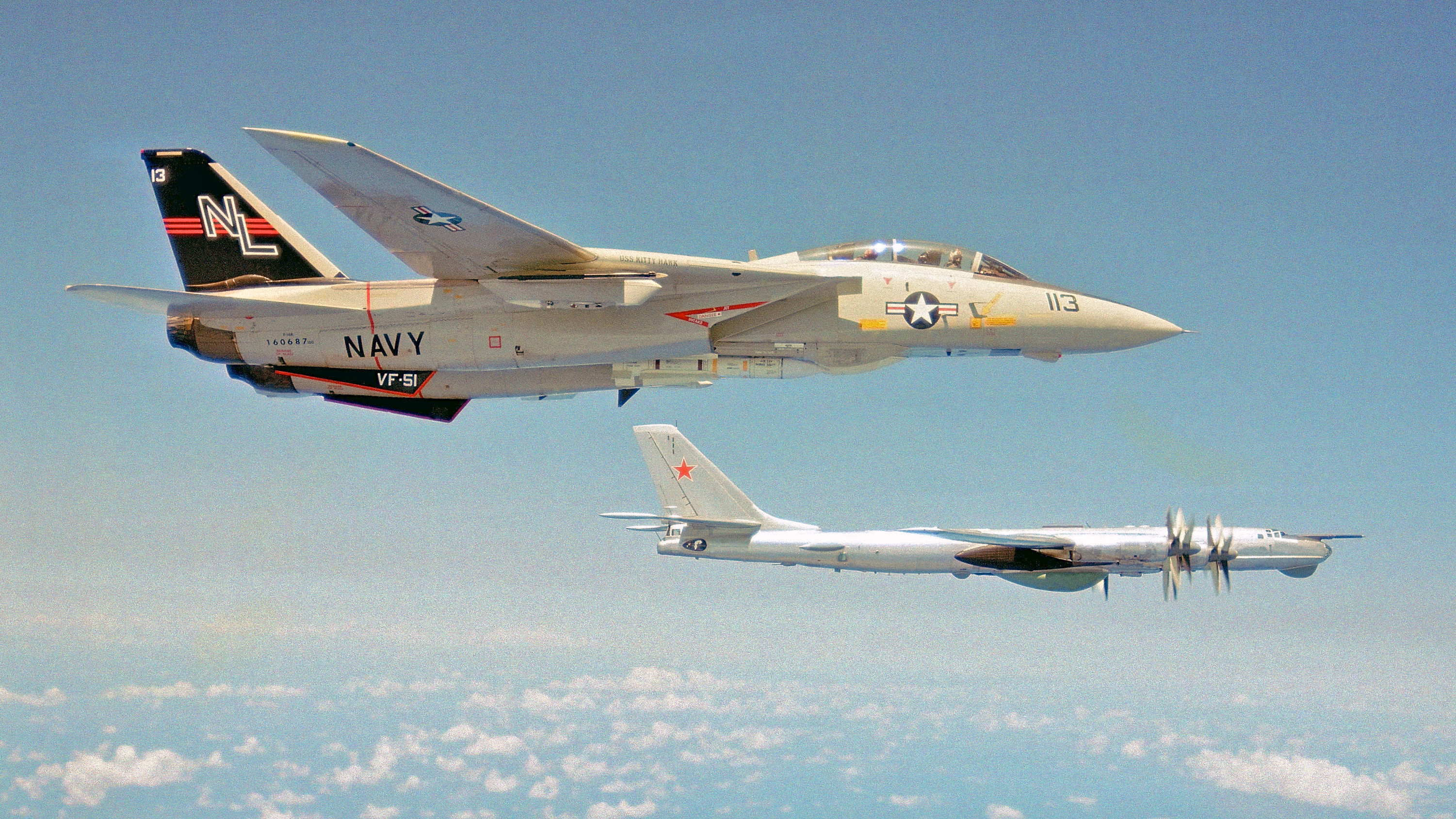 An
air-to-air right side view of a Grumman F-14A Tomcat aircraft from
Fighter Squadron 51 (VF-51) as it intercepts a Soviet Tu-95RTs Bear-D
OTH Targeting aircraft. No author is credited in the original US DoD
DVIC record, but the image quality and date suggests the image was
authored by LtCdr Dave Erickson of VF-51 using his privately owned
Mamiya M645 (US Navy image).
|
|
The post Cold War period has seen the US Navy progressively decline from the post Reagan era “600 ship Navy” to a current size around one third of its peak. No more is this decline visible than on the flight decks of US navy carriers, where a once diverse mix of Tier 1 combat aircraft, capable of challenging most land based air forces, has been replaced by a mix of Tier 2 F/A-18C/D and F/A-18E/F aircraft, none of which can contest top end late model Russian fighters such as the late model Su-30MK, Su-35S, or survive modern air defences built up from systems such as the S-300PMU2, S-400 or HQ-9. The late Cold War air wing on larger US Navy carriers comprised two squadrons of the then very potent F-14A Tomcat air superiority fighters, a squadron of A-6E/KA-6D Intruders providing a robust strike capability beyond 600 nautical miles, a light attack squadron of A-7E Corsair II to perform defence suppression, and a squadron of S-3A Viking ASW aircraft, in addition to detachments of E-2C Hawkeye, EA-6B Prowler, C-2A Greyhound COD and SH-3 Sea King. This air wing composition allowed a CVBG to control the air, surface and subsurface environment within sustained reach of its air wing. The contemporary US Navy air wing composition is only useful for Counter-Insurgency and Close Air Support, lacking the survivability, lethality and reach to compete with land based air power, and lacking the ASW capability to perform the Cold War era convoy escort and sea control role. The CV-63 Kitty Hawk was the lead ship in the four vessel Kitty Hawk class, comprising the CV-63 USS Kitty Hawk, CV-64 USS Constellation, CV-66 USS America, and CV-67 USS John F. Kennedy. The last of this class to be decommissioned was the Kitty Hawk in 2009, the ship remaining mothballed in reserve. The Kitty Hawk was home ported mostly in San Diego, but operated from Yokosuka in Japan between 1998 and 2008. Most of the imagery in this photoessay was produced by the author in late 1981, during a short stay on the Kitty Hawk, intended to produce a public analysis of US Navy capabilities in the Indian Ocean. Only a small number of these images were published in Australian Aviation, due to the then high cost of colour reproduction in glossy journals. In-flight VF-51 F-14A imagery was donated for use in the article by LtCdr Dave Erickson, who would carry his medium format Mamiya M645 on operational sorties to produce what is arguably some of the best period imagery of F-14A flight operations. The quality of the author's 35 mm imagery varies, largely due to the challenging lighting conditions of early summer in Western Australia. More than often the dynamic range of the lighting exceeded the capabilities of the then very good Kodachrome 25 and Ektachrome 64 film media. Notes:
|
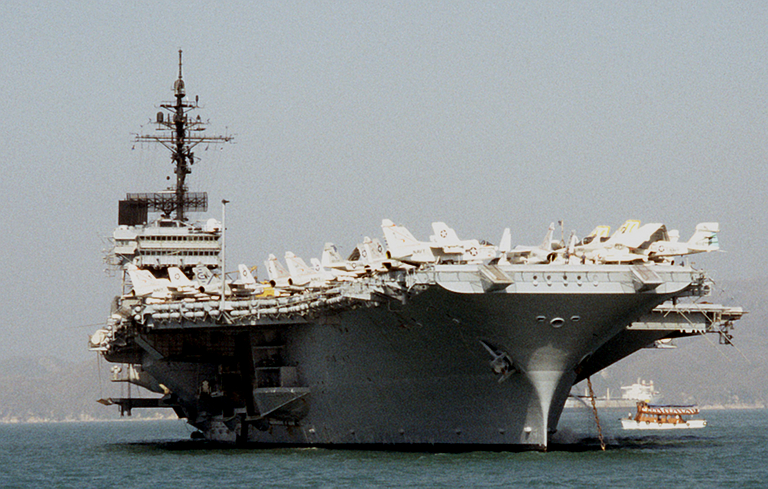 CV-63 USS Kitty Hawk at anchor off Hong Kong in 1981 (US Navy image). 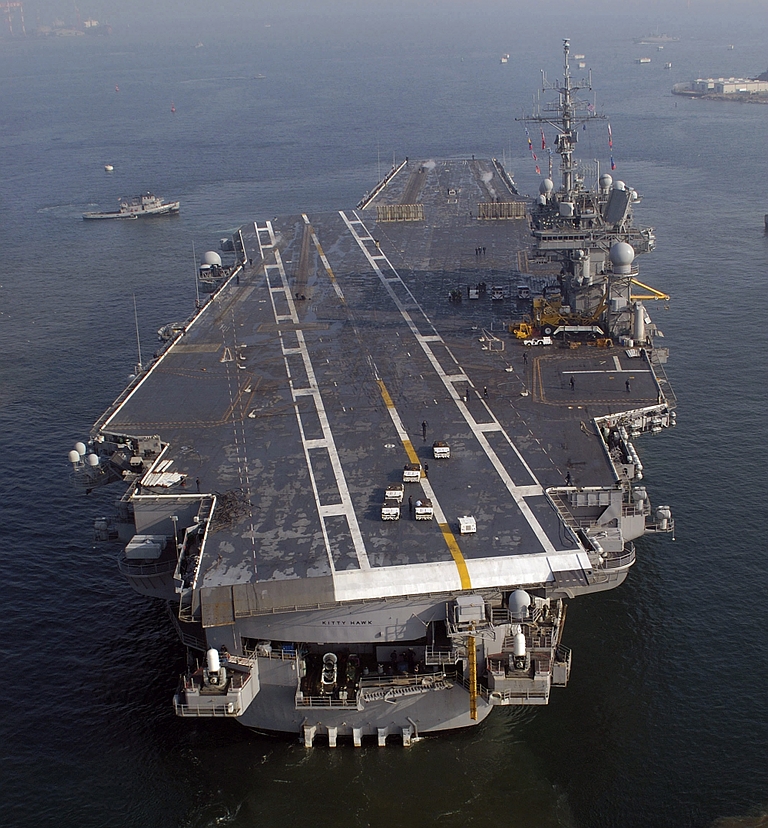 CV-63 USS Kitty Hawk departing Subic Bay (US Navy image). 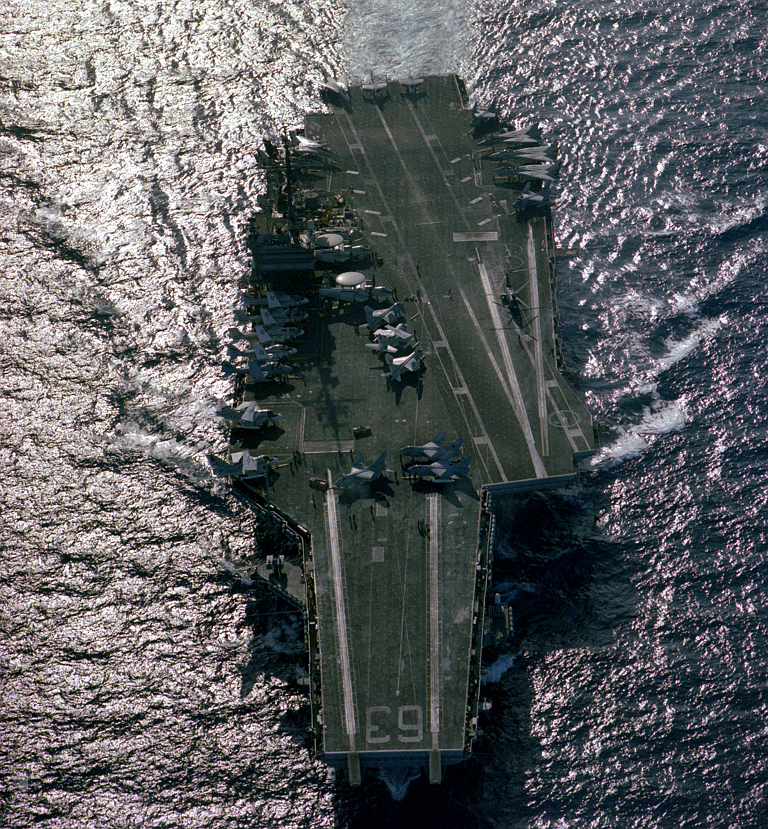 CV-63 USS Kitty Hawk under way early 1980s (US Navy image). 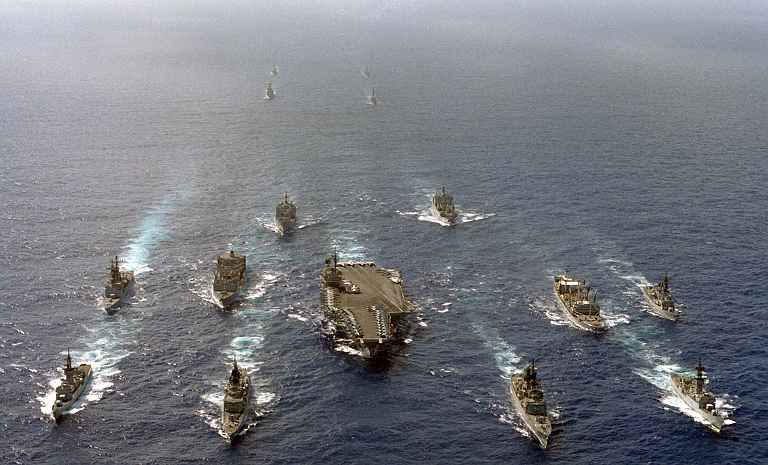 CV-63 USS Kitty Hawk with escorts and replenishment ships in 1985 (US Navy image). 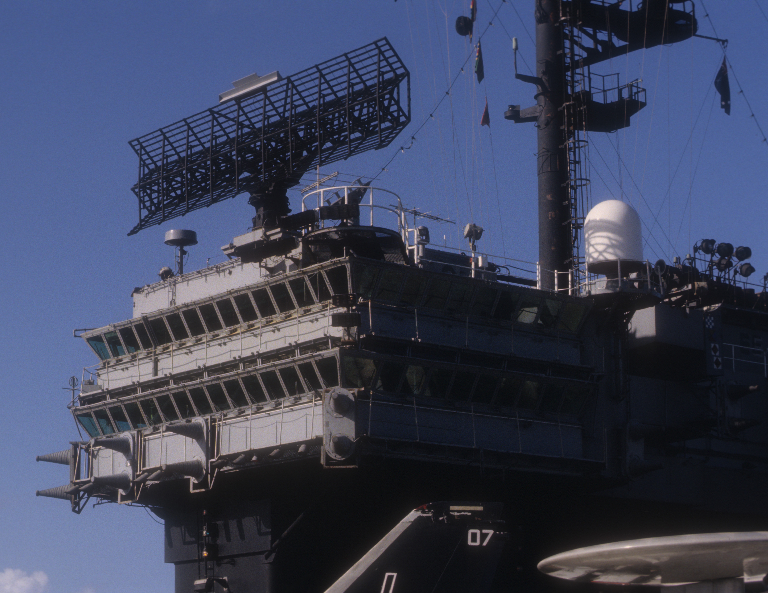 |
|
Grumman F-14A Tomcat / VF-51 Screaming Eagles |
The
F-14A Tomcat was employed to perform the Maritime Air Superiority role,
encompassing fleet air defence, and strike package escort. In 1981,
CVW-15 included VF-51 and VF-111. While VF-111 aircraft were mostly
repainted in low contrast camouflage, VF-51 aircraft were at this time
almost all in classic full visibility livery.
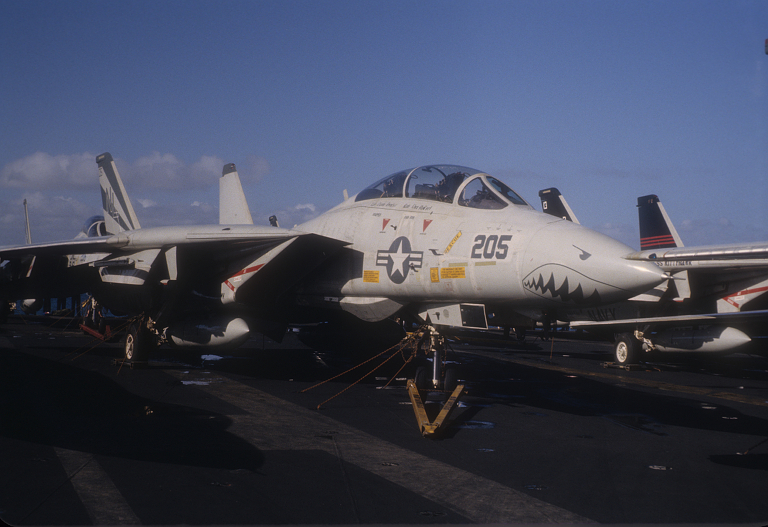
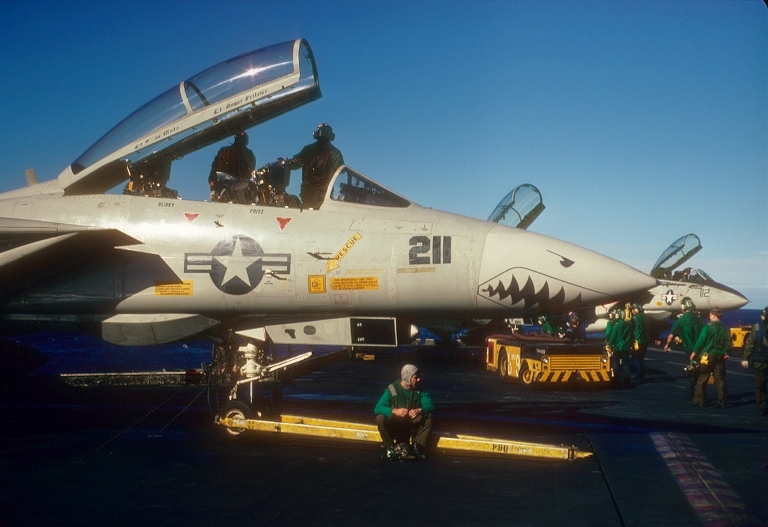
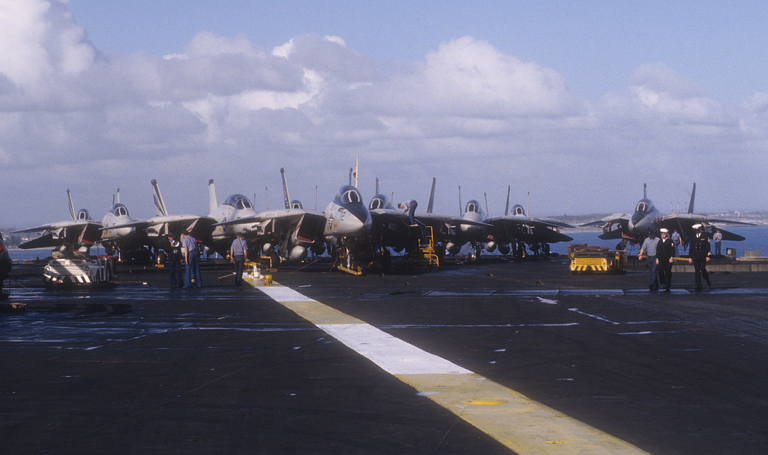 F-14A Tomcats of VF-51 and VF-111 parked on deck. 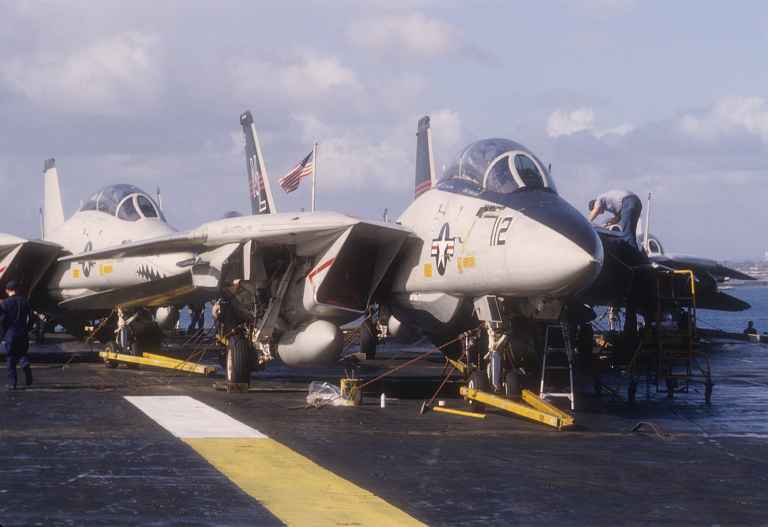 F-14A Tomcats of VF-51 and VF-111 parked on deck. 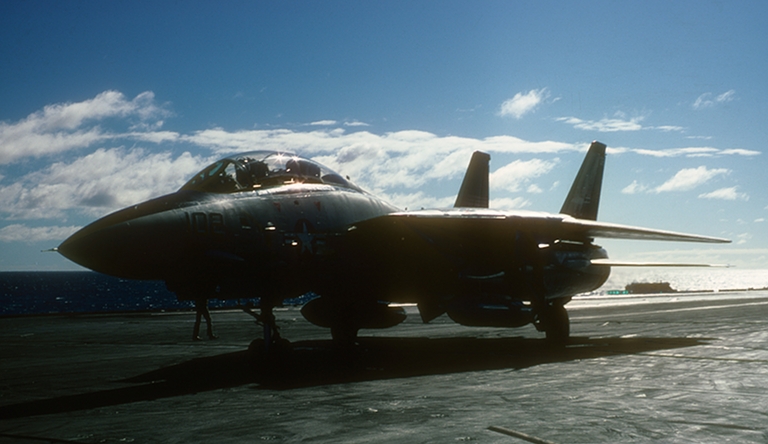 Above, below: F-14A Tomcat of VF-51 taxiing along the flight deck. 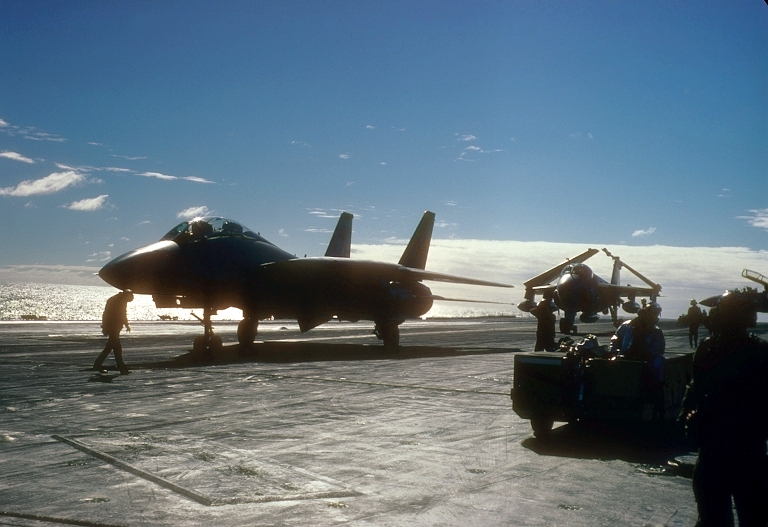 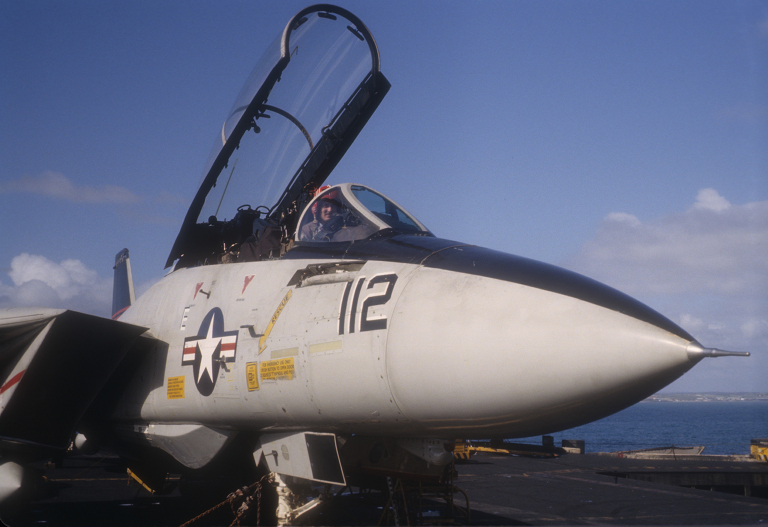 F-14A Tomcat of VF-51 - author cameo. 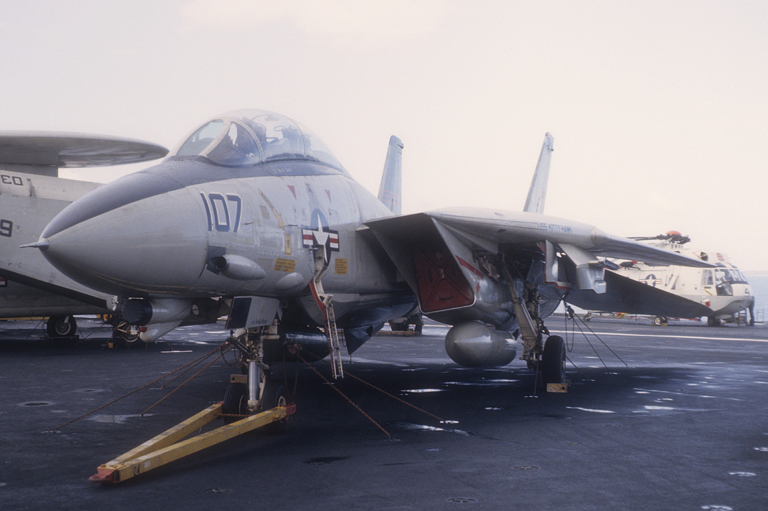 F-14A Tomcat of VF-51. 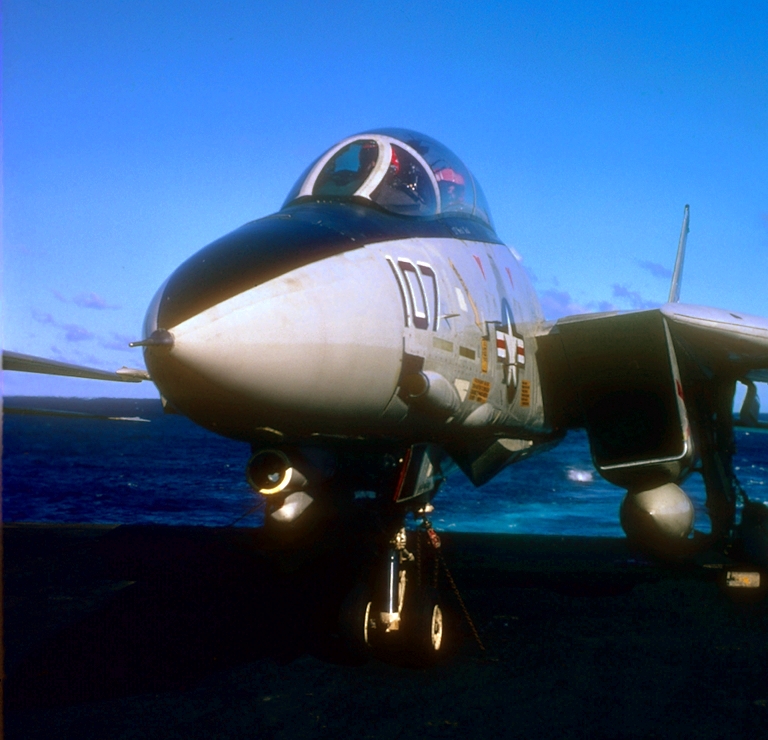 F-14A Tomcat of VF-51 equipped with Northrop AN/AXX-1 Television Camera System (TCS). 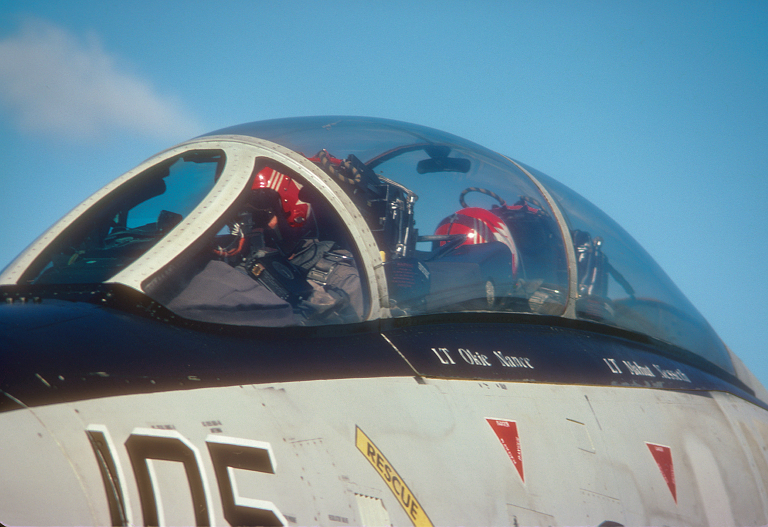 F-14A Tomcat of VF-51 taxiing along the flight deck. 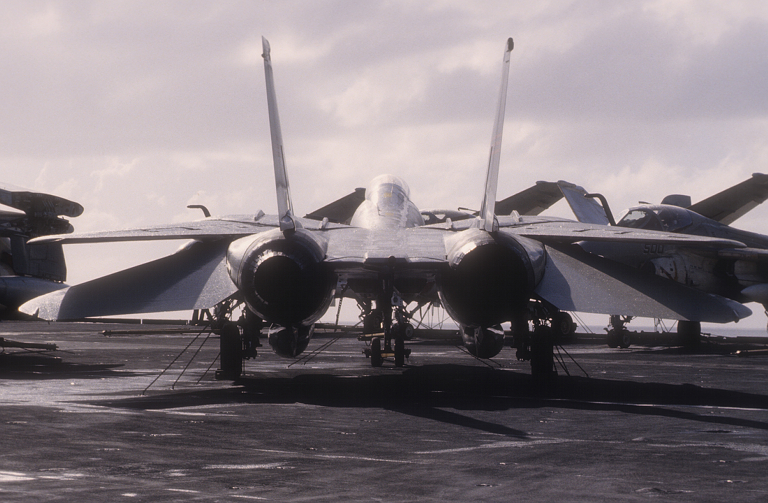 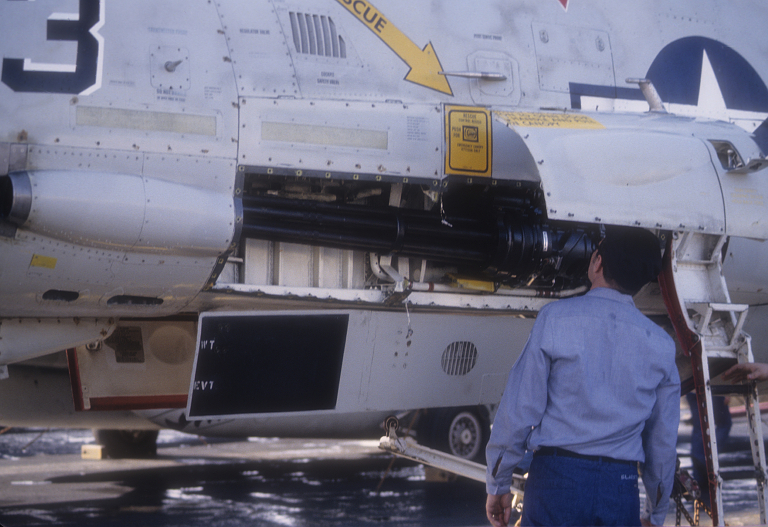 F-14A M61A1 20 mm gatling gun installation. 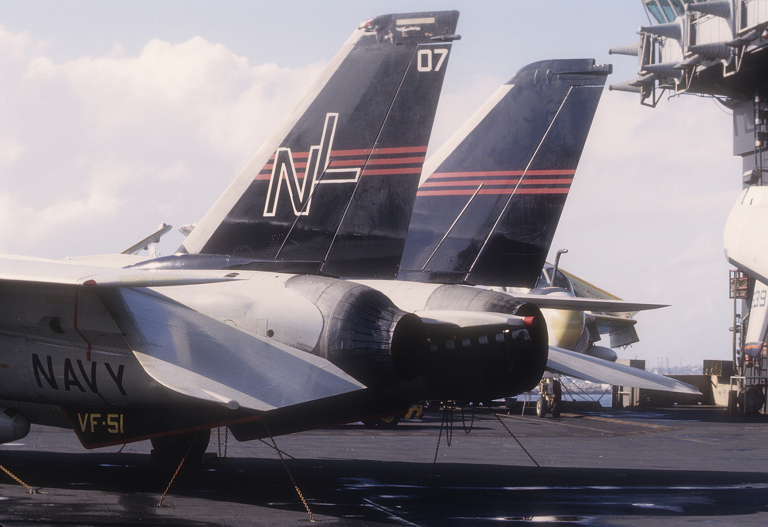 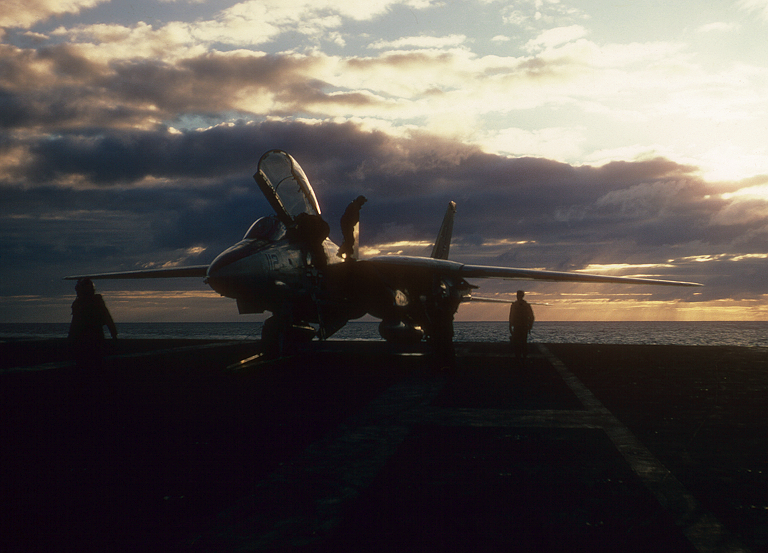 |
|
Grumman F-14A Tomcat / VF-111 Sundowners |
 Grumman
F-14A
Tomcat
of
VF-111
in low visibility camouflage.
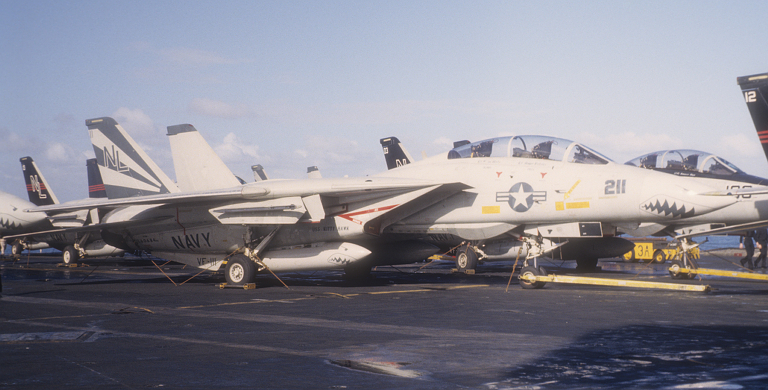 Grumman
F-14A
Tomcat
of
VF-111
in low visibility camouflage.
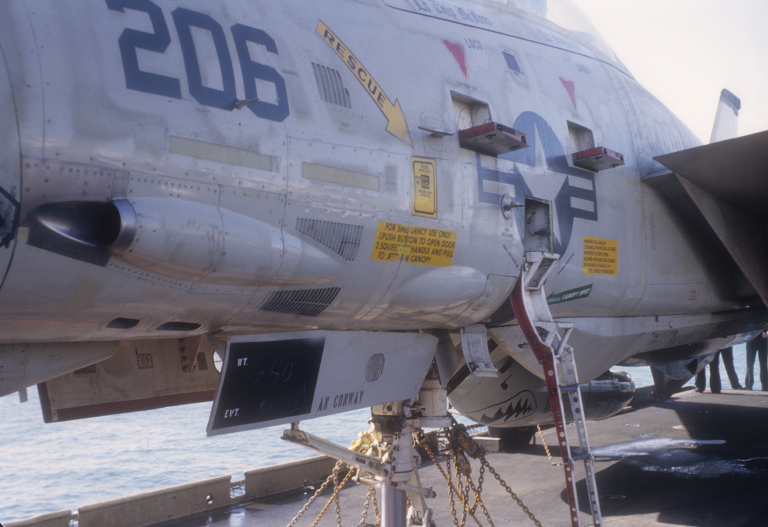 Crew
access ladder on a Grumman F-14A Tomcat of VF-111 in low visibility
camouflage.
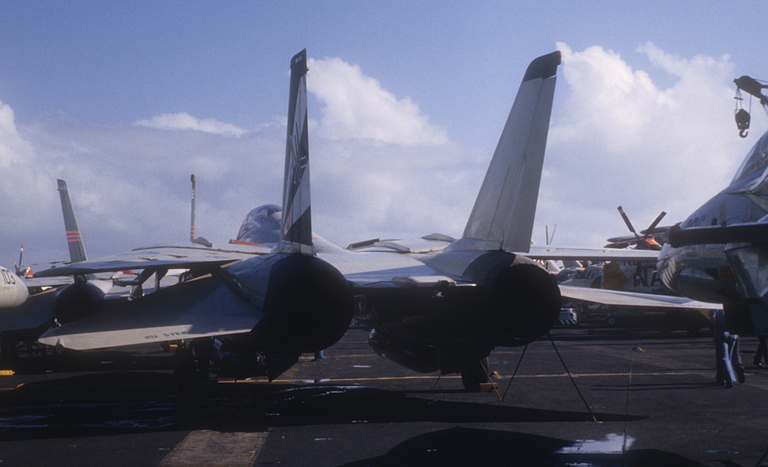 Aft
view of Grumman F-14A Tomcat of VF-111 in low visibility camouflage.
 Grumman
F-14A
Tomcat
of
VF-111
in low visibility camouflage.
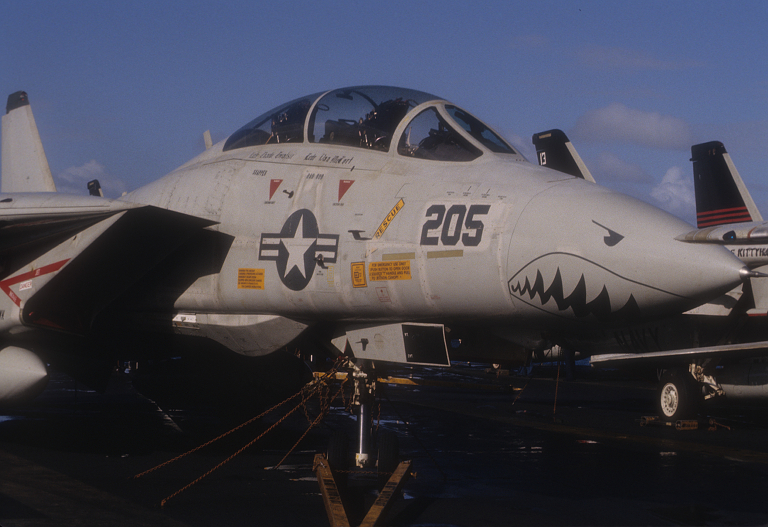 Grumman
F-14A
Tomcat
of
VF-111
in low visibility camouflage.
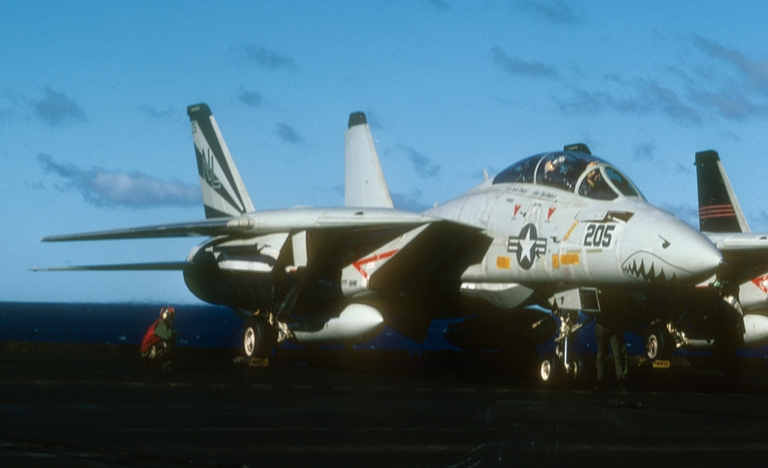 Grumman
F-14A
Tomcat
of
VF-111
in low visibility camouflage.
|
|
Vought RF-8G Crusader / VFP-63 Detachment 1 Super Det One |
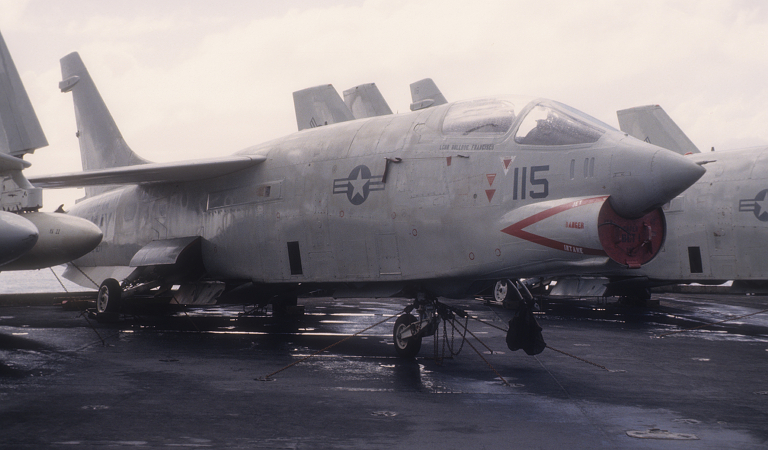 Vought RF-8G Crusader photoreconnaissance aircraft of VFP-63. 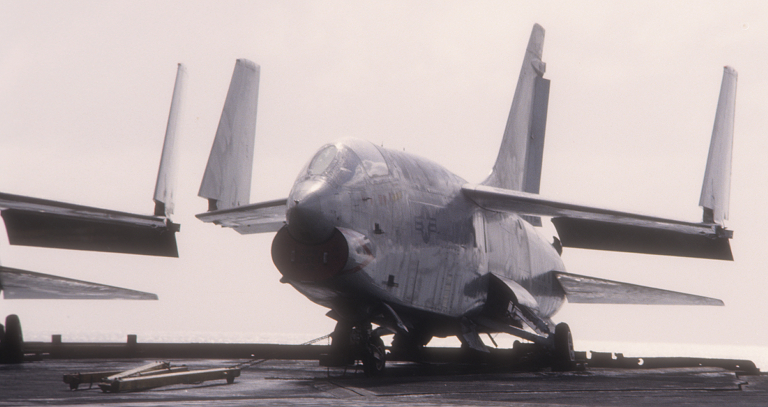 Vought RF-8G Crusader photoreconnaissance aircraft of VFP-63. 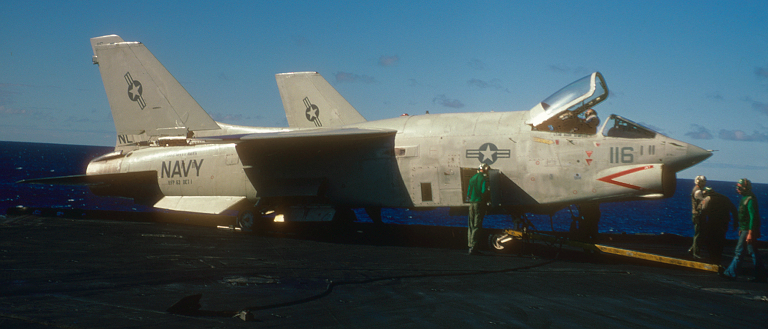 Vought RF-8G Crusader photoreconnaissance aircraft of VFP-63. |
|
Lockheed S-3A Viking / VS-29 Vikings |
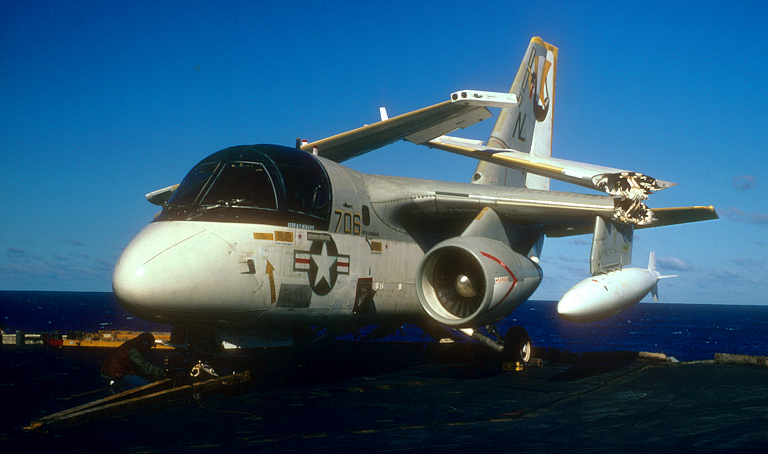 Lockheed
S-3A
Viking
ASW
aircraft
of VS-29.
 Lockheed
S-3A
Viking
ASW
aircraft
of VS-29.
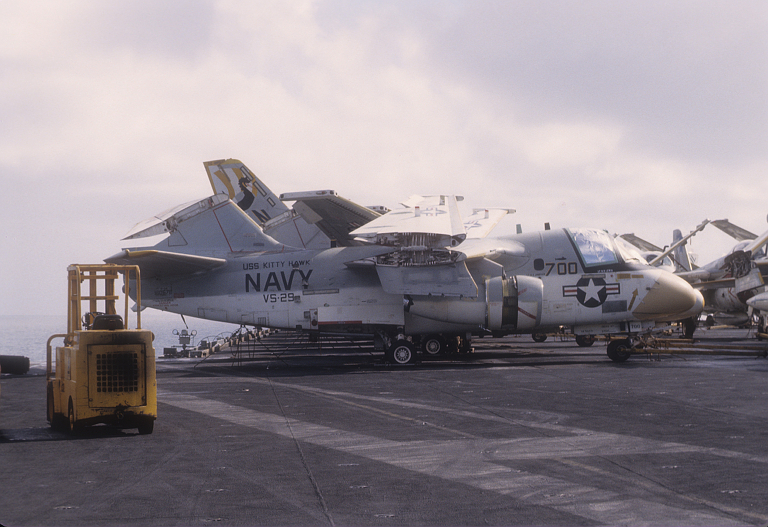 Lockheed
S-3A
Viking
ASW
aircraft
of VS-29, fully stowed configuration.
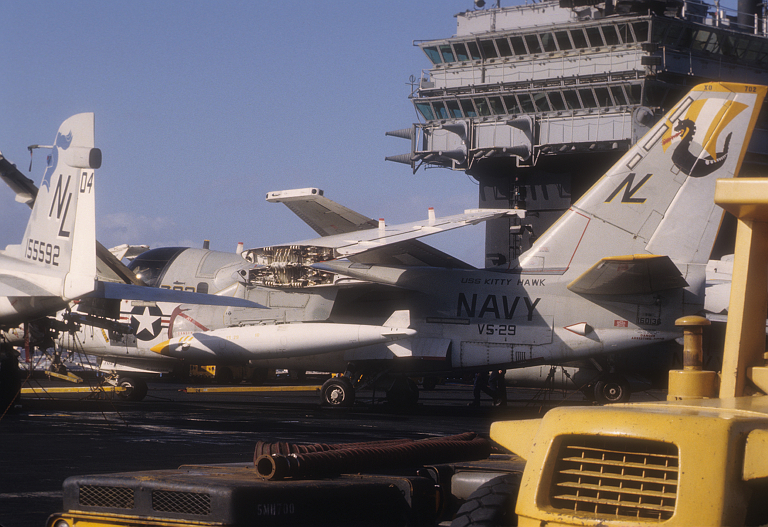 Lockheed
S-3A
Viking
ASW
aircraft
of VS-29.
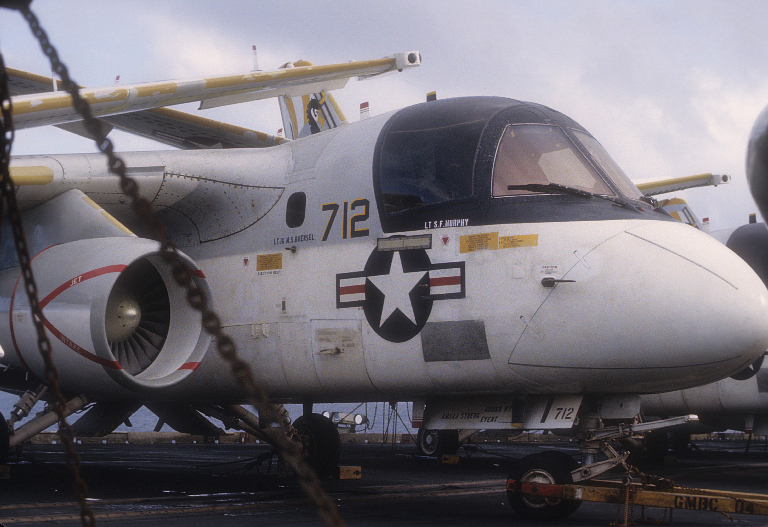 Lockheed
S-3A
Viking
ASW
aircraft
of VS-29.
|
|
Grumman E-2C Hawkeye / VAW-114 Hawks |
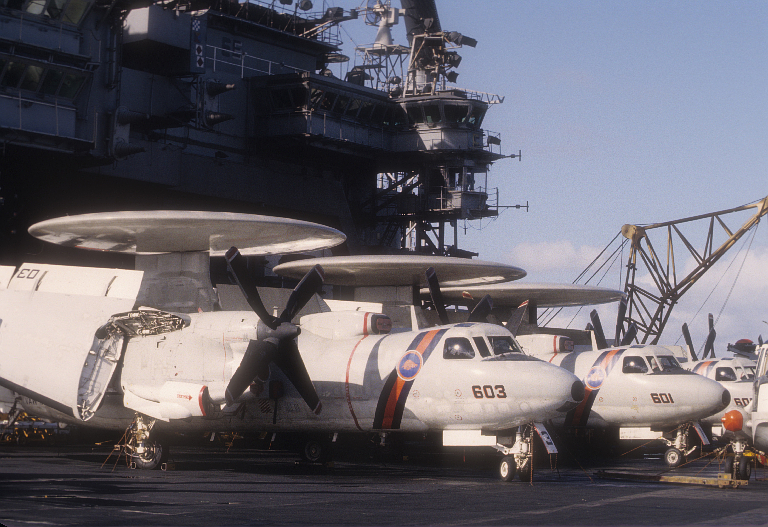 The Grumman E-2C Hawkeye remains the primary ISR platform for US Navy air wings. |
|
Grumman A-6E/KA-6D Intruder / VA-52 Knightriders |
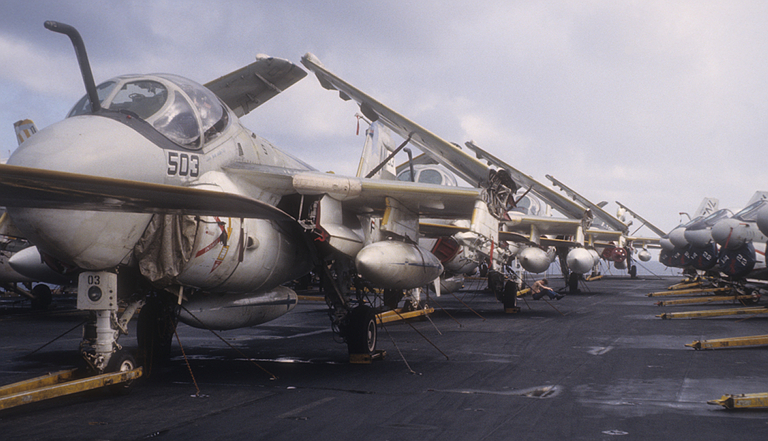 The Grumman A-6E Intruder was the primary strike platform in the 1980s air wing. 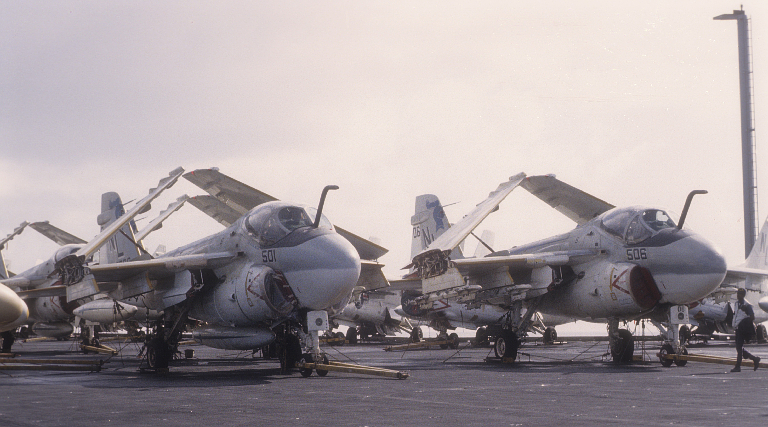 Grumman A-6E Intruders of VA-52. 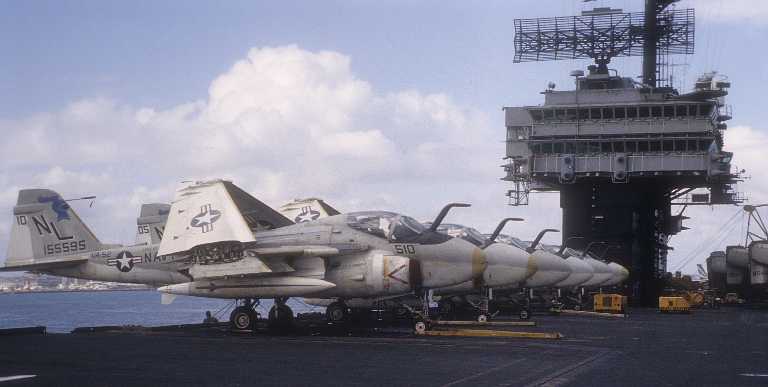 Grumman A-6E Intruders of VA-52. 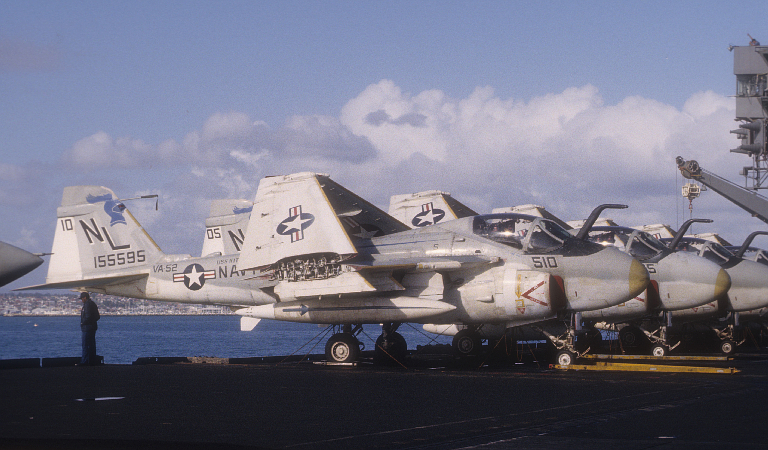 Grumman A-6E Intruders of VA-52. 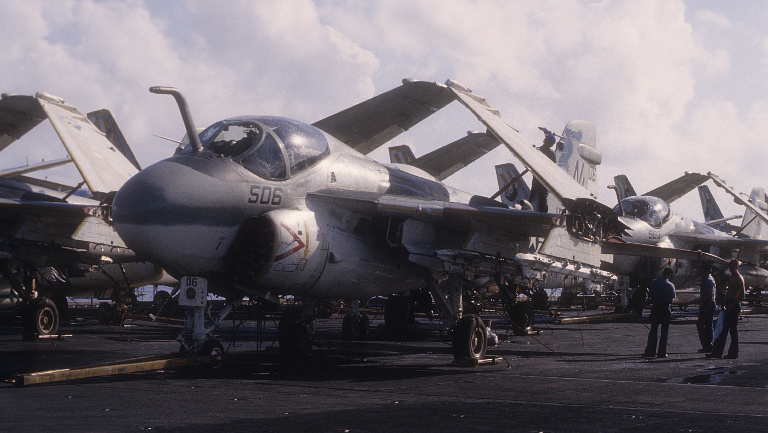 Above, below: Grumman A-6E Intruder of VA-52. 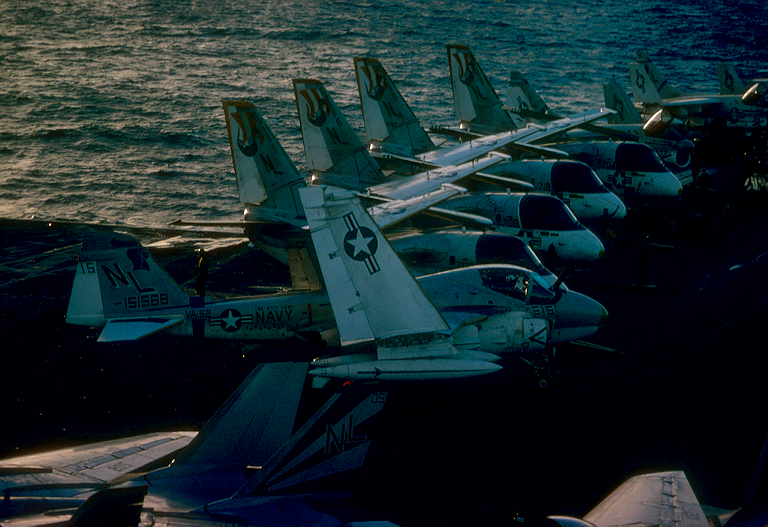 |
|
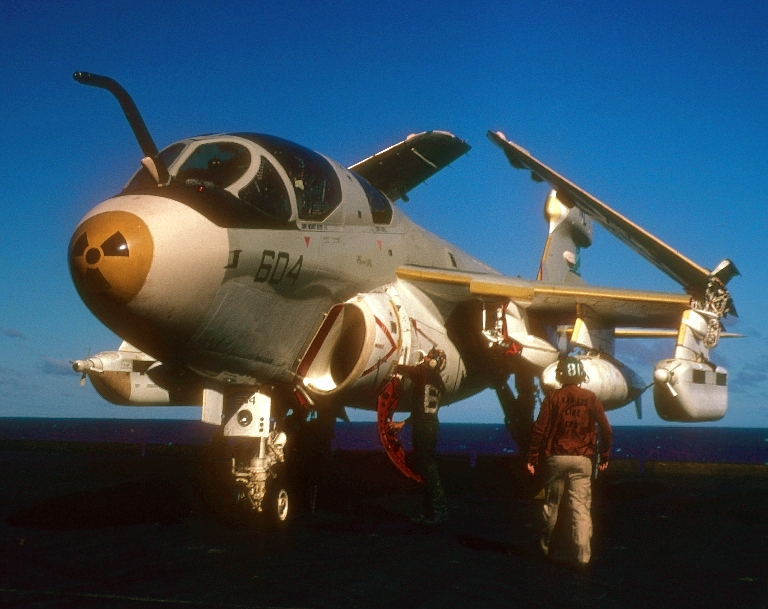
Grumman EA-6B Prowler / VAQ-135 Black Ravens |
|
Equipped
with
the
highly
effective
Eaton/AIL
ALQ-99
Tactical
Jamming
System,
the
EA-6B
provided
support
jamming
for
strike
packages
and
fleet defence.
 |
|
LTV A-7E Corsair II / VA-22 Fighting Redcocks |
|
The
A-7E Corsair II was introduced to the fleet during the Vietnam conflict
and served with distinction until the end of the Cold War.
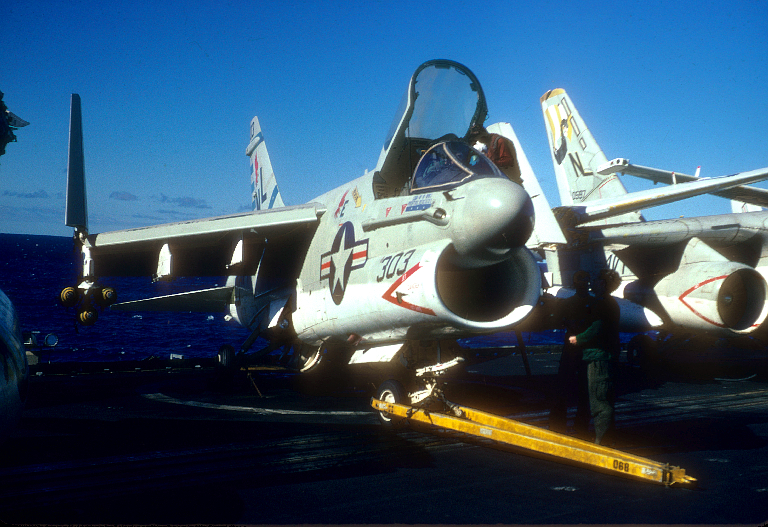 LTV A-7E Corsair II of VA-22 armed with six 500 lb Mk.82 bombs. 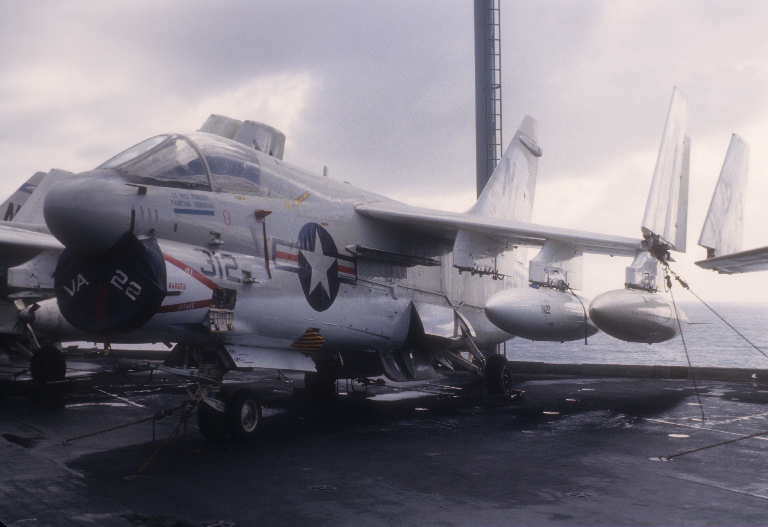 LTV A-7E Corsair II of VA-22 carrying four drop tanks. 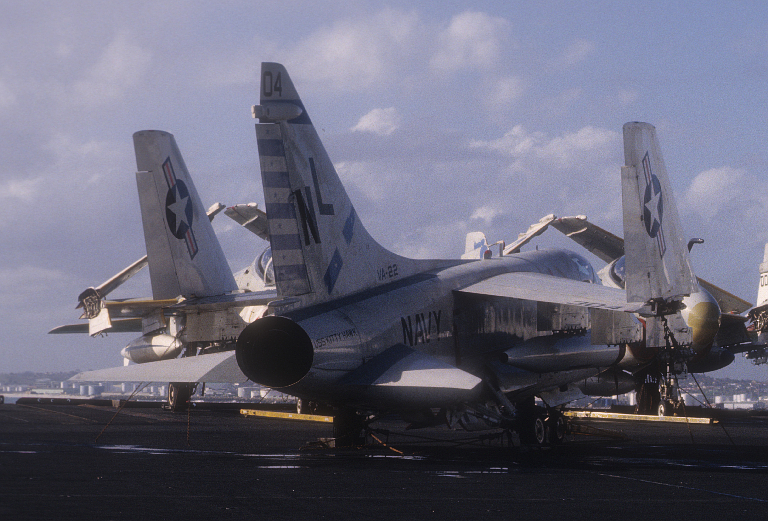 LTV A-7E Corsair II of VA-22 carrying a Texas
Instruments
AN/AAR-45
FLIR
pod
for
night attack profiles.
|
|
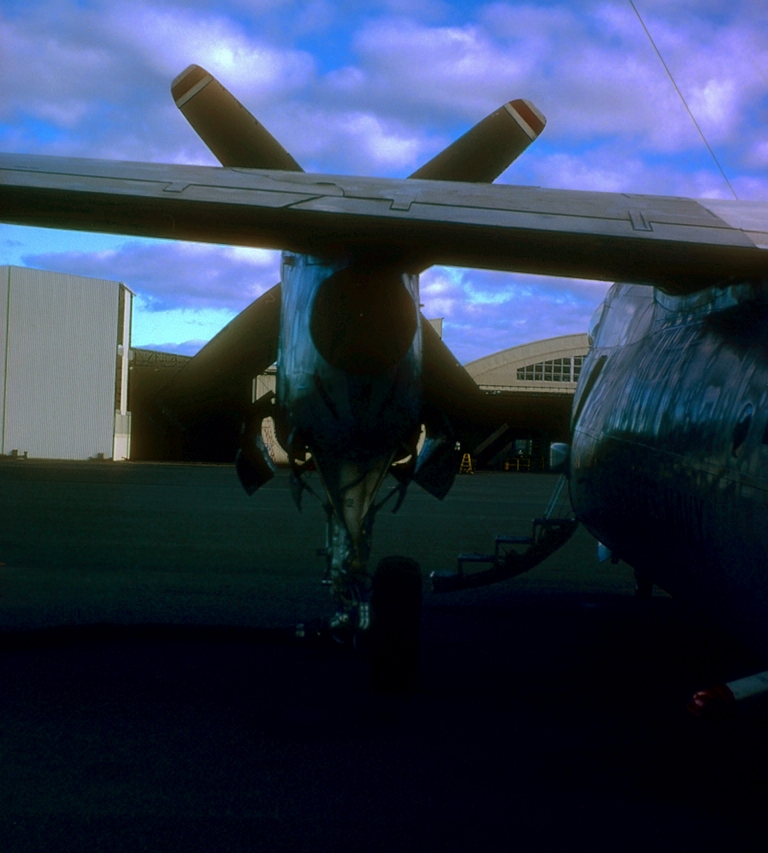
Grumman C-2A Greyhound / VCR-50 Detachment |
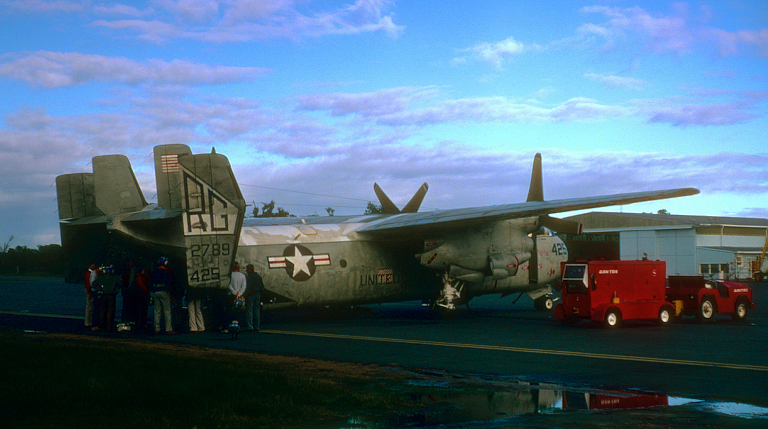 Grumman
C-2A
Greyhound
of
VCR-50
at Perth airport in Western Australia.
 |
|
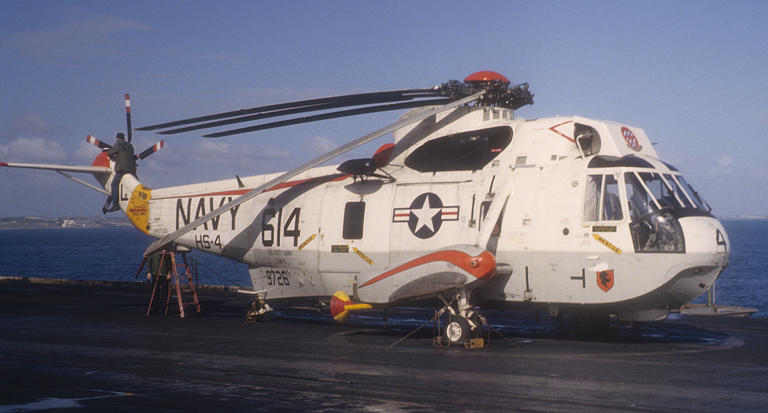
Sikorsky SH-3H Sea King / HS-4 Black Knights |
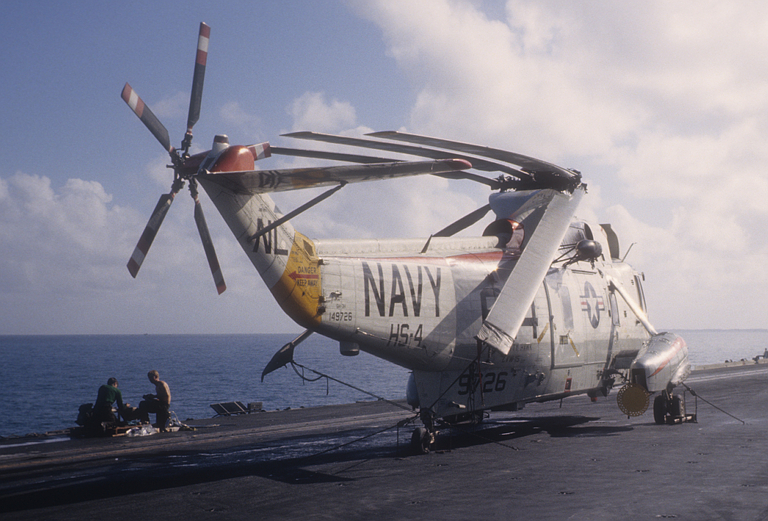 A
Sikorsky SH-3H Sea King of HS-4 undergoing maintenance off Fremantle.
 |
|
CVW-15 Flight Operations |
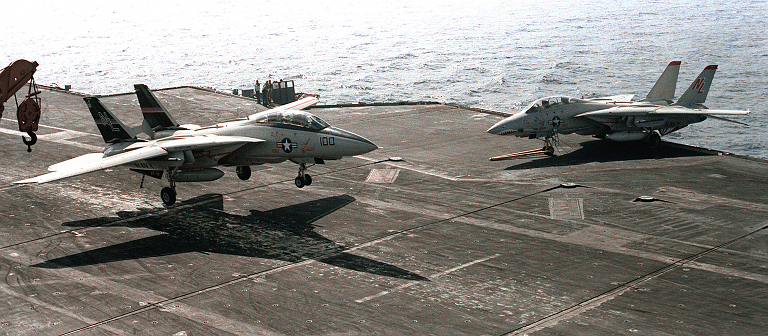 VF-51
F-14A
recovering
on
the
CV-63
USS
Kitty
Hawk
cca
1981 (US Navy image).
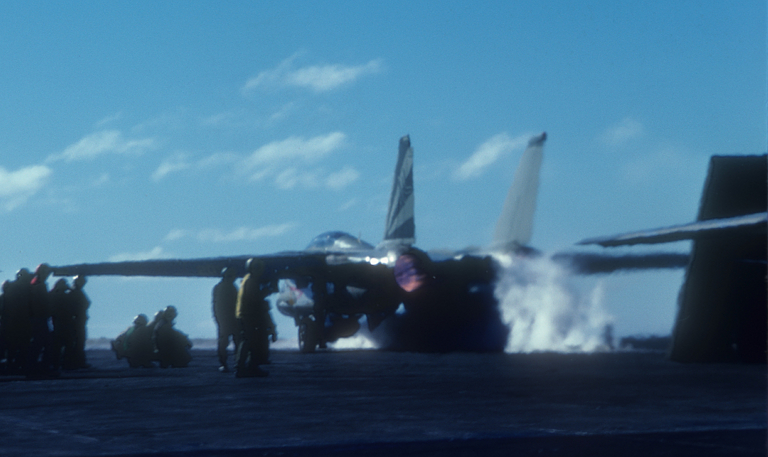
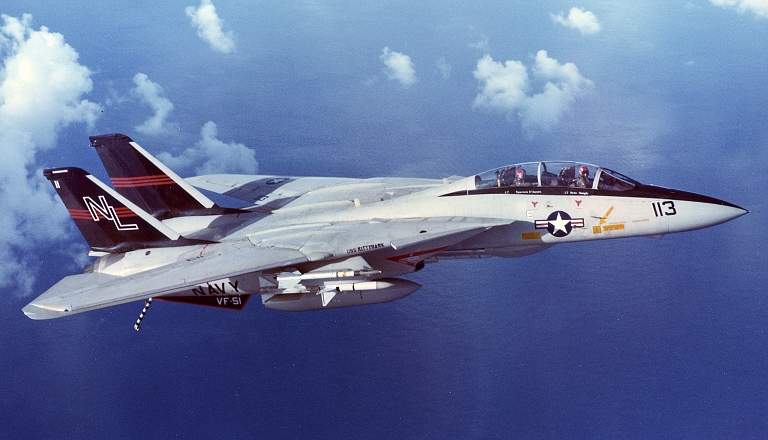 VF-51 F-14A during flight operations (© 1981 - 2010 LtCdr Dave Erickson, VF-51, Mamiya M645) 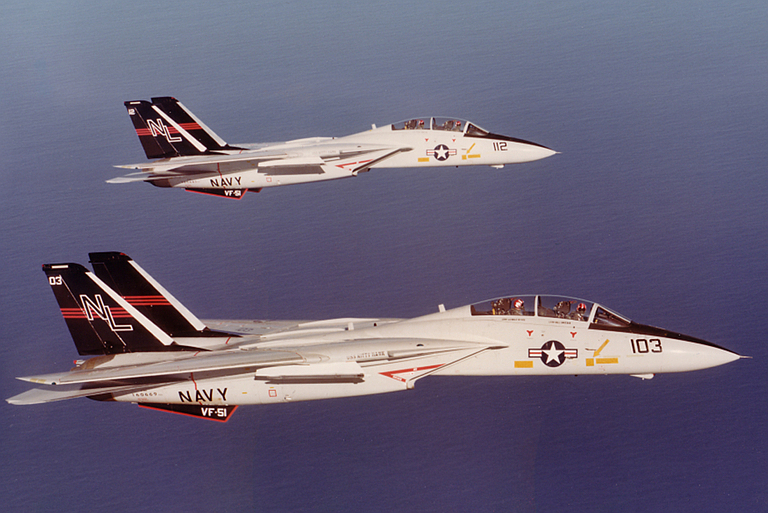 VF-51 F-14A during flight operations (© 1981 - 2010 LtCdr Dave Erickson, VF-51, Mamiya M645) 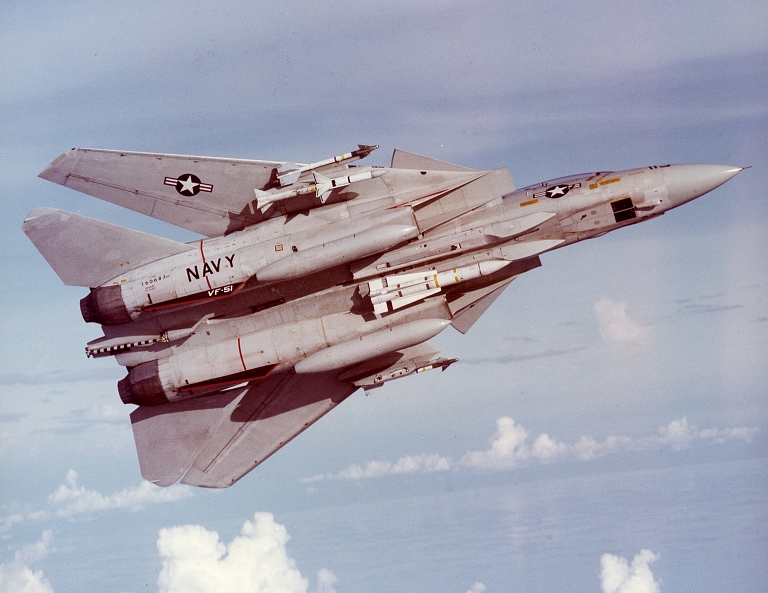 VF-51 F-14A during flight operations (© 1981 - 2010 LtCdr Dave Erickson, VF-51, Mamiya M645) 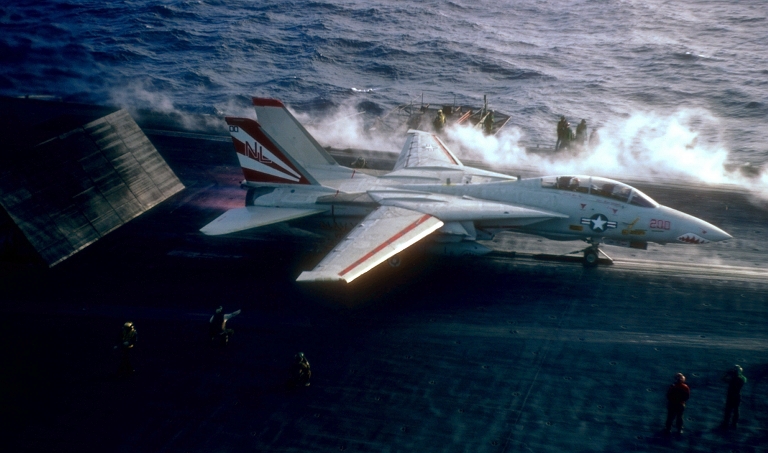 VF-111 F-14A spooling up to full thrust
prior to launch from a waist catapult. This aircraft is in full colour
livery.
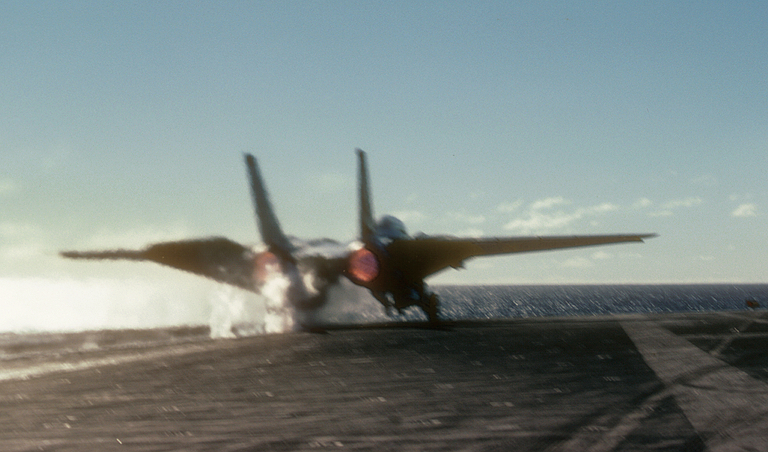
 VF-111 F-14A launching from a bow
catapult. Note the steam escaping from the catapult track.
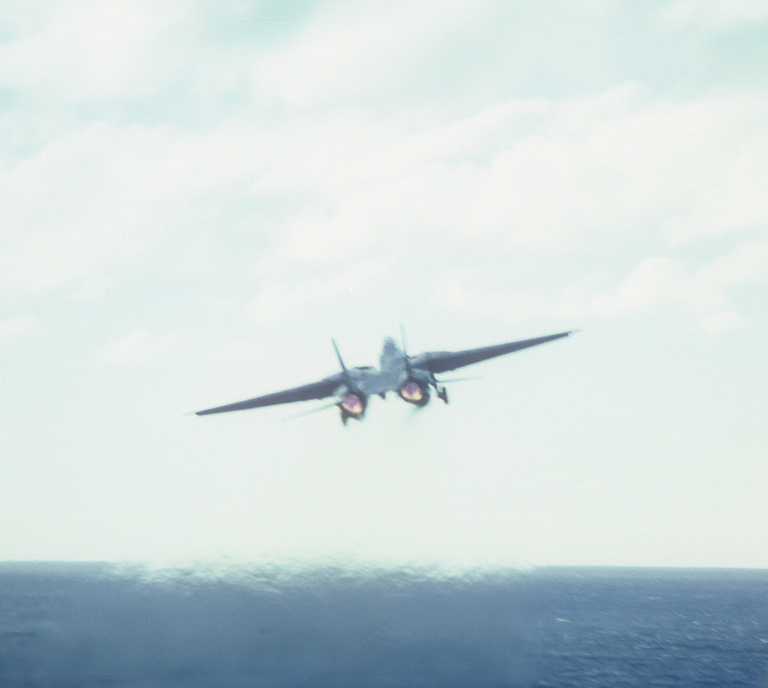
 VF-51 F-14A launching from a bow catapult.
  VF-51 F-14A recovering after a sortie.
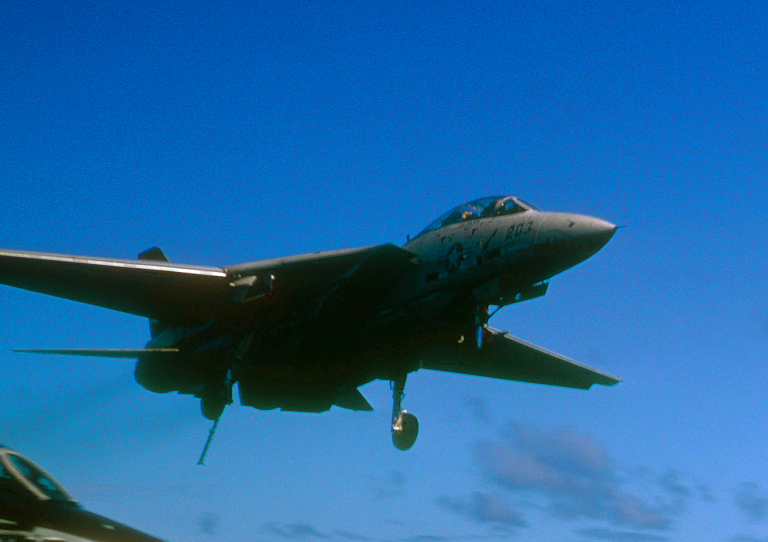 VF-111 F-14A recovering after a sortie.
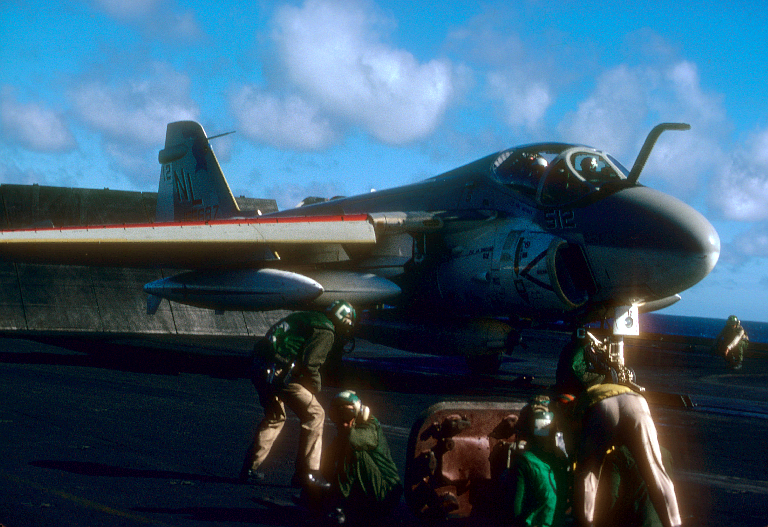
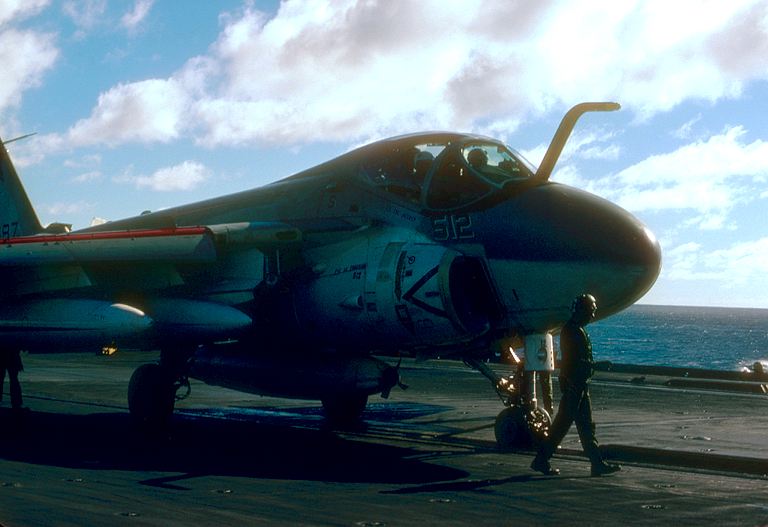 Above, below: VA-52 KA-6D preparing to
launch from a bow catapult.
 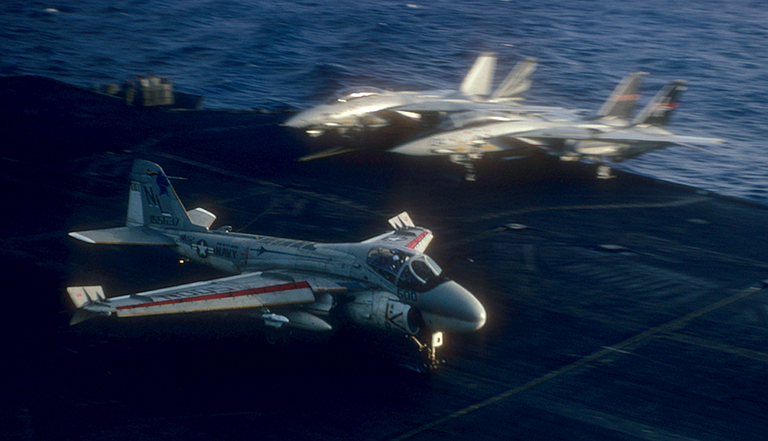 VA-52 A-6E Intruder trap. Note the
deployed wingtip speedbrakes.
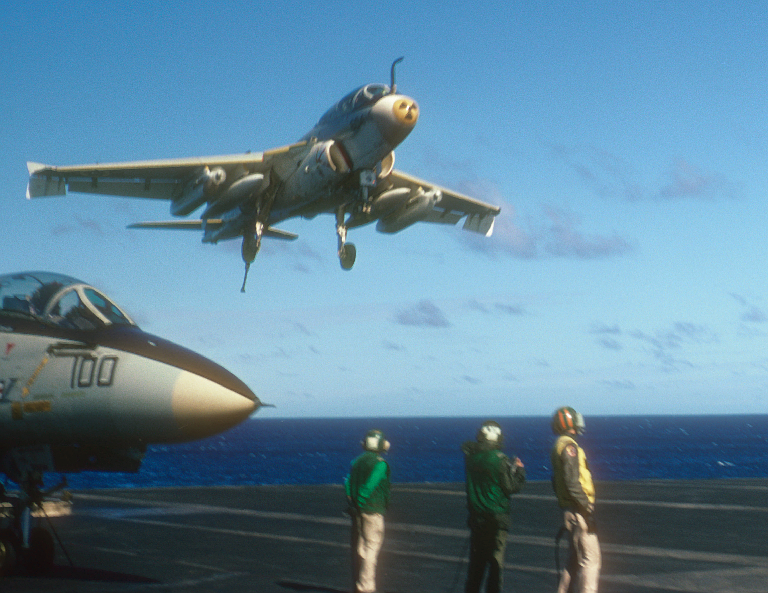 Grumman
EA-6B
Prowler
of
VAQ-135
recovering.
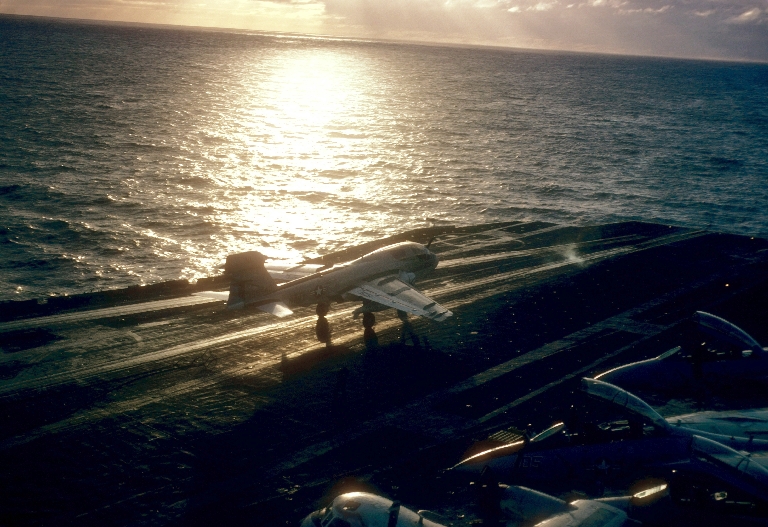 Grumman
EA-6B
Prowler
of
VAQ-135
after a successful trap.
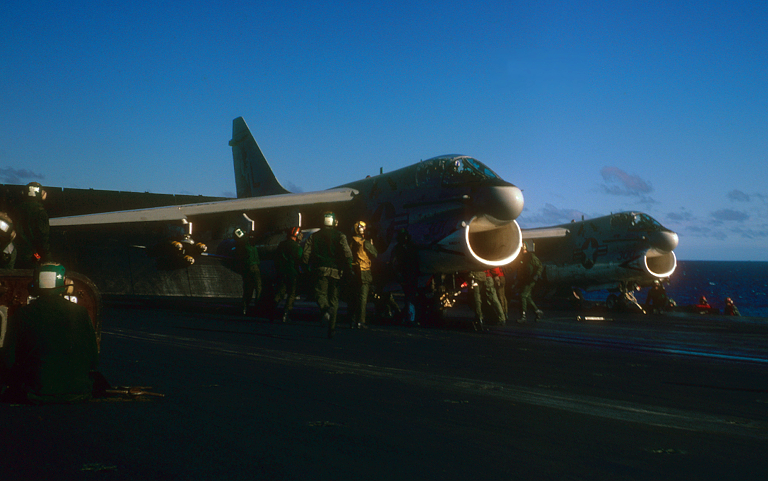 LTV A-7E Corsair II aircraft of VA-22
armed with six 500 lb Mk.82 bombs, prior to launch.
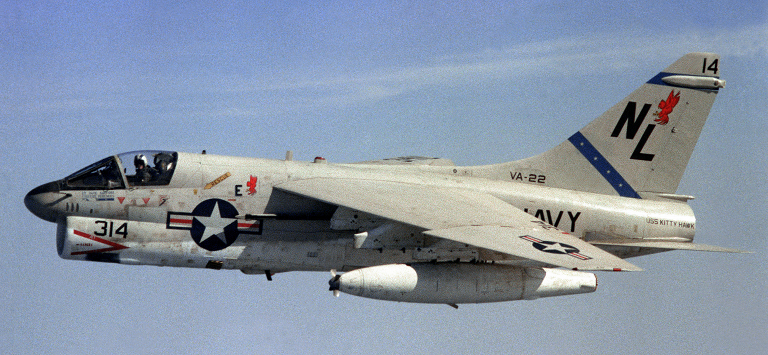 LTV A-7E Corsair II aircraft of VA-22 with
buddy refuelling store (US Navy image).
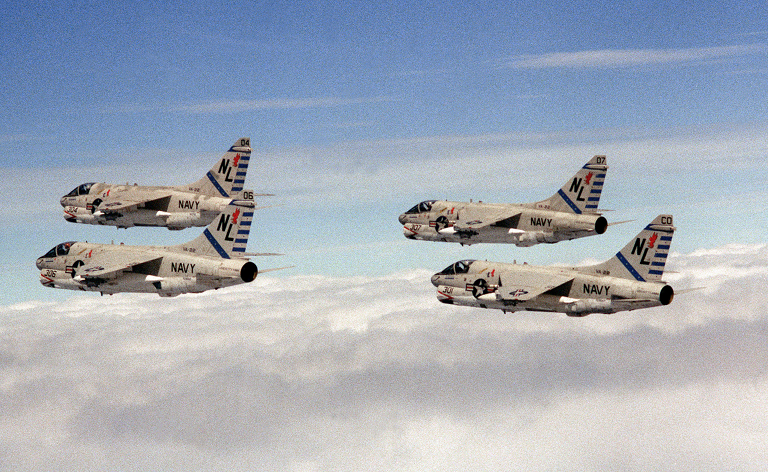 LTV A-7E Corsair II aircraft of VA-22 in
formation (US Navy image).
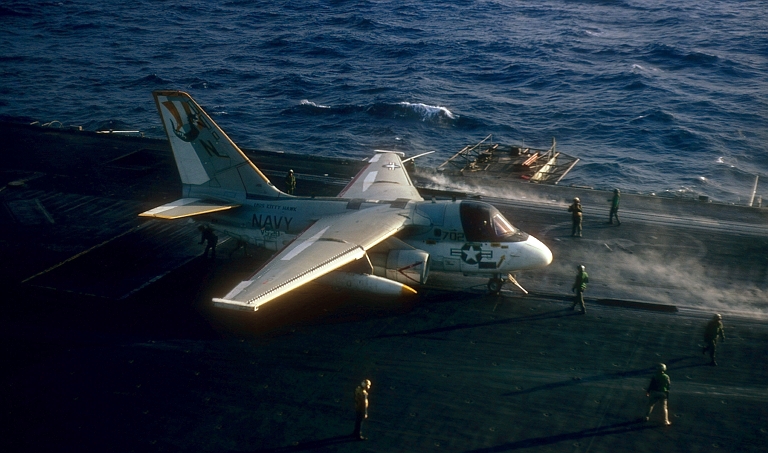 S-3 Viking of VS-29, prior to launch - the
JBDs are not deployed.
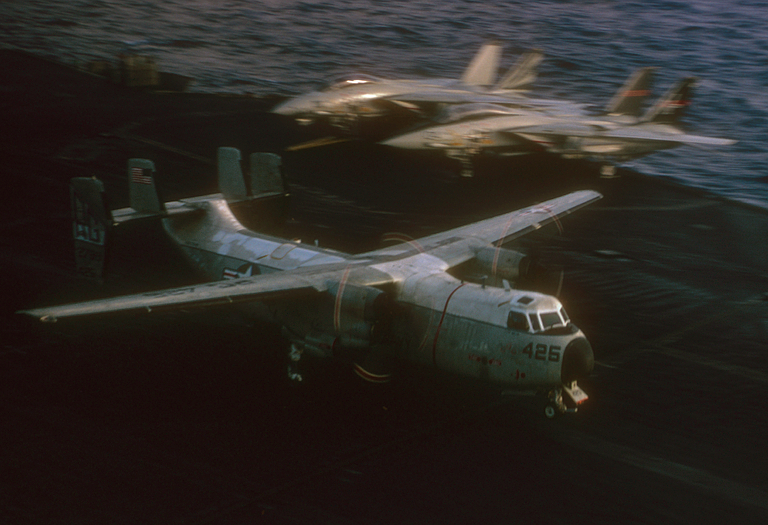 C-2A COD trap.
 Plane
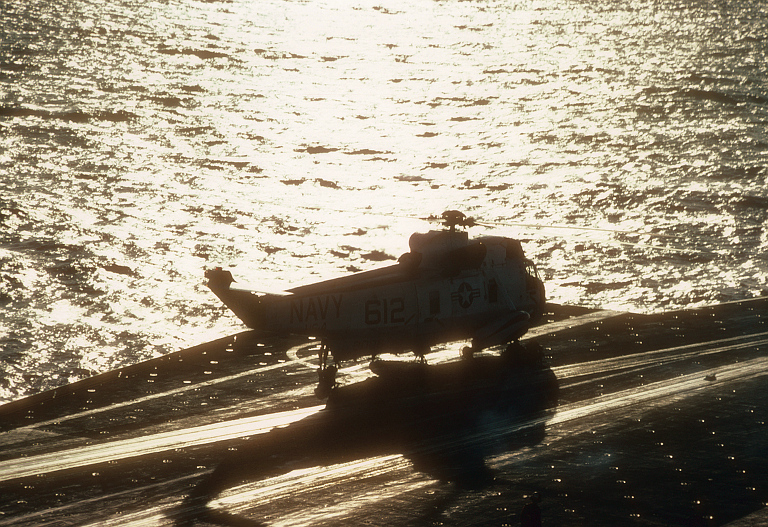
guard helo on station - Sikorsky SH-3H Sea King of HS-4.
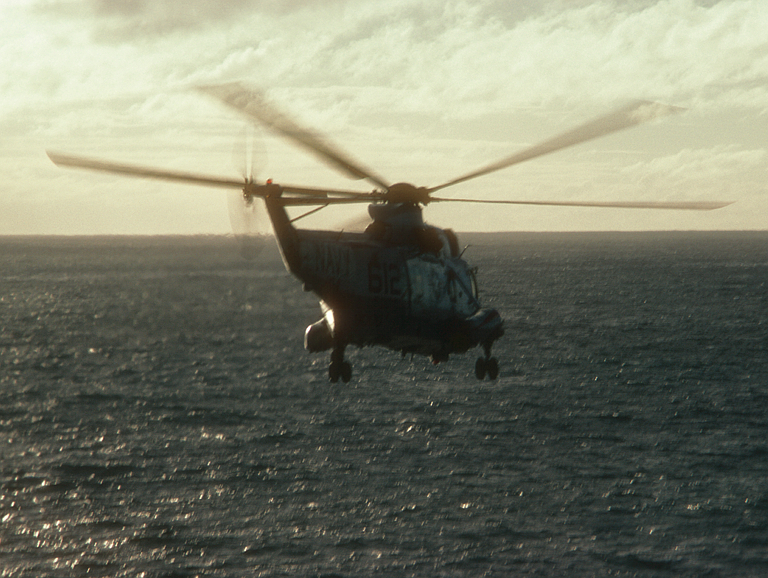 Above,
below:
Sikorsky
SH-3H
Sea
King of HS-4.
 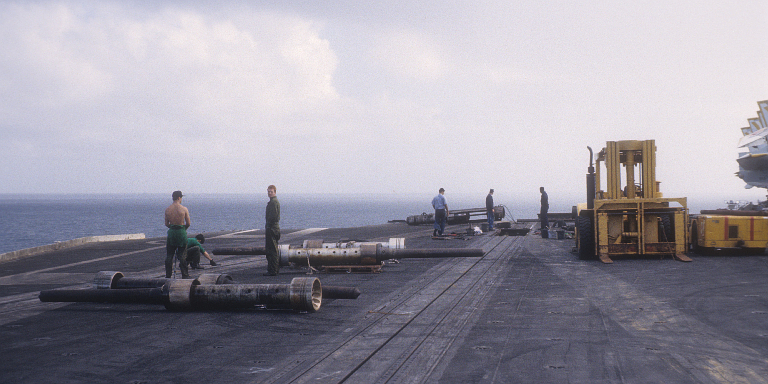 Catapult maintenance while anchored off Fremantle. 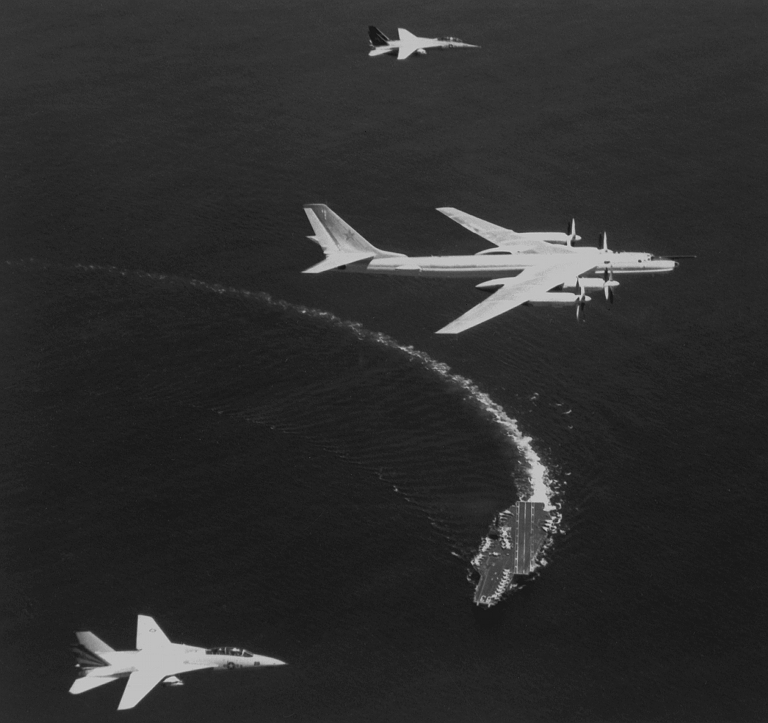 A
pair of F-14A
Tomcats
from VF-51 and VF-111 escorting
an
AV-MF
Bear
E overflying the USS Kitty Hawk
(US Navy image).
|
 |
|
|
 |
|
Imagery Sources: © 1981 - 2010 Carlo Kopp, © 1981 Dave Erickson, US Navy, US DoD |
|
|||||||||||||
|
|
|
|
|
|
|
|
|
|
|
|||
|
|
|
|
|
|
|
|
|
|
|
|||
 |
|
|
|||||||||||
| Artwork, graphic design, layout and text © 2004 - 2014 Carlo Kopp; Text © 2004 - 2014 Peter Goon; All rights reserved. Recommended browsers. Contact webmaster. Site navigation hints. Current hot topics. | |||||||||||||
|
Site Update
Status:
$Revision: 1.753 $
Site History: Notices
and
Updates / NLA Pandora Archive
|
|||||||||||||
|
|
Tweet | Follow @APA_Updates | |||||||||||
|
|
|||||||||||||
|
|
|||||||||||||