|
||||||||||||||||||||||
 |
||||||||||||||||||||||
![F-22A Raptor, FB-22, F-22E, F-22N and Variants Index Page [Click for more ...]](APA/f-fb-22.png "F-22A Raptor, FB-22, F-22E, F-22N and Variants Index Page [Click for more ...]") |
 |
![People's Liberation Army Air Power Index Page [Click for more ...]](APA/pla-air-pwr.png "People's Liberation Army Air Power Index Page [Click for more ...]") |
 |
 |
 |
 |
 |
 |
![Military Ethics, Culture, Education and Training Index Page [Click for more ...]](APA/ethx-culture.png "Military Ethics, Culture, Education and Training Index Page [Click for more ...]") |
 |
||||||||||||
 |
![Russian / Soviet Weapon Systems Index Page [Click for more ...]](APA/rus-weps.png "Russian / Soviet Weapon Systems Index Page [Click for more ...]") |
 |
 |
 |

|
 |
 |
 |
 |
 |
||||||||||||
 |
 |
 |
||||||||||||||||||||
| Last Updated: Mon Jan 27 11:18:09 UTC 2014 | ||||||||||||||||||||||
|
||||||||||||||||||||||
|
||||||||||||||||||||||
|
||||||||||||||||||||||
|
|
|
|
|
|
|
|
|
|
|
||||||||||||
|
|
|
|
|
|
|
|
|
|
|
||||||||||||
| |
|
|
||||||||||||||||||||
| Last Updated: Mon Jan 27 11:18:09 UTC 2014 | ||||||||||||||||||||||
|
||||||||||||||||||||||
Молния Сухого поражает F-35 JSF [SUKHOI'S LIGHTNING STRIKES THE F-35 JSF] |
|||||||||||||||||||||||||||||||||||
|
Air Power
Australia - Australia's Independent Defence Think Tank
|
|||||||||||||||||||||||||||||||||||
| Air Power Australia NOTAM 3rd September, 2007 |
|||||||||||||||||||||||||||||||||||
|
|||||||||||||||||||||||||||||||||||
|
|||||||||||||||||||||||||||||||||||
 |
|||||||||||||||||||||||||||||||||||
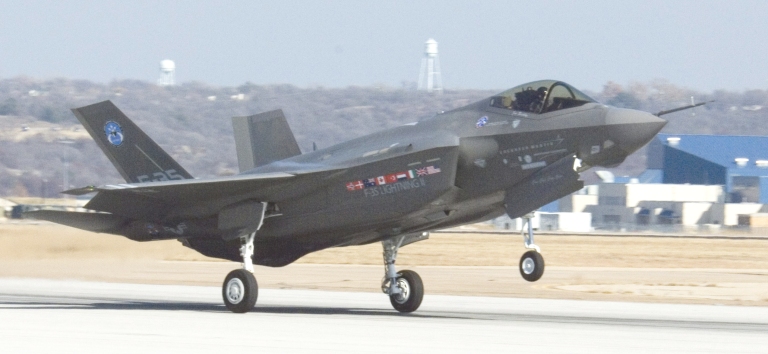
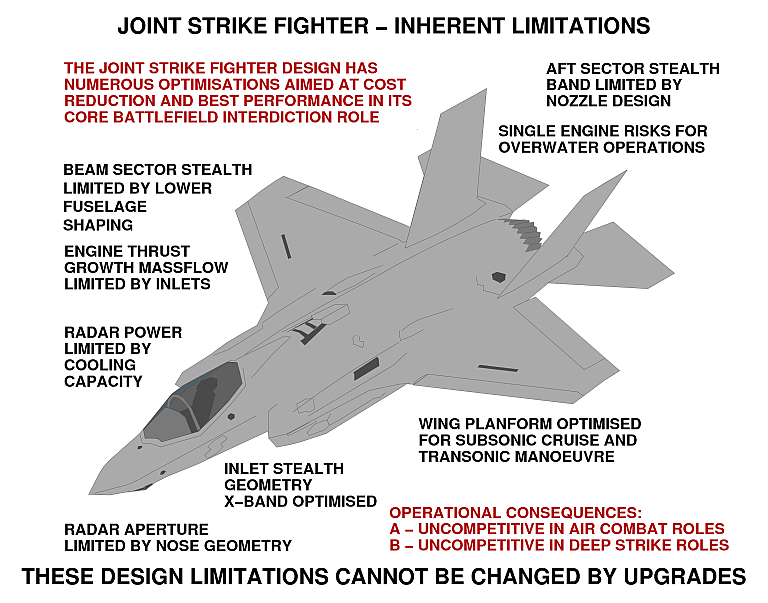
Many readers liked «Pesticide for Super-Hornets» – lots of hits on APA website. Now Grisha is asked another question by colleagues in Asian countries: «Sukhoi kills the Super-Hornet, but will the Sukhoi kill the F-35 JSF which comes soon after?» This is a tricky question. F-35 is still in early development and many Sukhoi upgrades are yet to come, so we might use 2017 for a comparison year. Must make observation though – JSF is more «Strike» than «Fighter», and has slow, fat body and wing design. More like a pigeon than a raptor. It is designed to work with its big brother F-22. The «Pigeon» has holes in its armor that let missiles through. This time, the Sukhoi Su-35 has the new Tikhomirov NIIP IRBIS-E ESA radar and can talk to earlier model Su-30MK to pass target coordinates – like Indian Air Force Su-30MKI talks to older MiG-21 and tells when to fire its missile [Editor: This is the TKS-2 intraflight network]. Ramjet Vympel R-77M «Adder» in service for several years with long range of about 160 km. Also, some new weapons – we discuss these later.
F-35 in service
from 2015
and
Chuck finally understands penalty of having short arms and no punch,
so redoes AIM-120 AMRAAM into the «D» model, with range of 110 km and
a two-pulse motor – Americans have not yet solved ramjet drive like
Russia. Still,
the AIM-120D is a big improvement on old models – Americans then sell
old junk to Allies to fit
to Super Hornets. Not fit too many AIM-120D inside Pidgeon – some say
four,
others two in weapon bay. Cannot put more on pylons – all
stealth is then gone and Sukhoi kills Pigeon like a Super Hornet. Also
AIM-120
only have radar head [Editor: seeker]. Sukhoi have lots of shots and
choose seeker
head – mostly carry 8 mix R-77M with big centre tank. We make the discussion easy – we use «DIED» kill-chain model: Detect, Identify, Engage, Destroy. First, we
detect. We ask
our friends
at the Russian Institute of Radio Physics and Electronics
for the analysis of «Pigeon on Stick» radio-location
reflections. They ask a very good question: «Is
this US version or export
version?» I say US version – if you can kill
that model, export model easier to kill – much bigger radio-location
reflection. We match
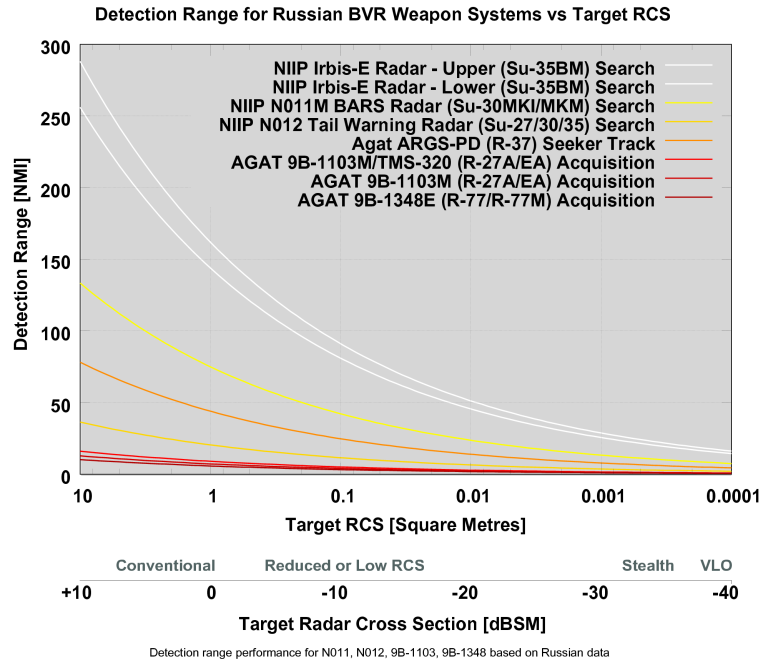
the estimated radio-location reflection with IRBIS-E detection
performance in table:
Physics colleagues say many glints as Pigeon flies and turns. Need to fire R-77M outside AIM-120D range so try to duck head-on shot. This is not so hard to do. 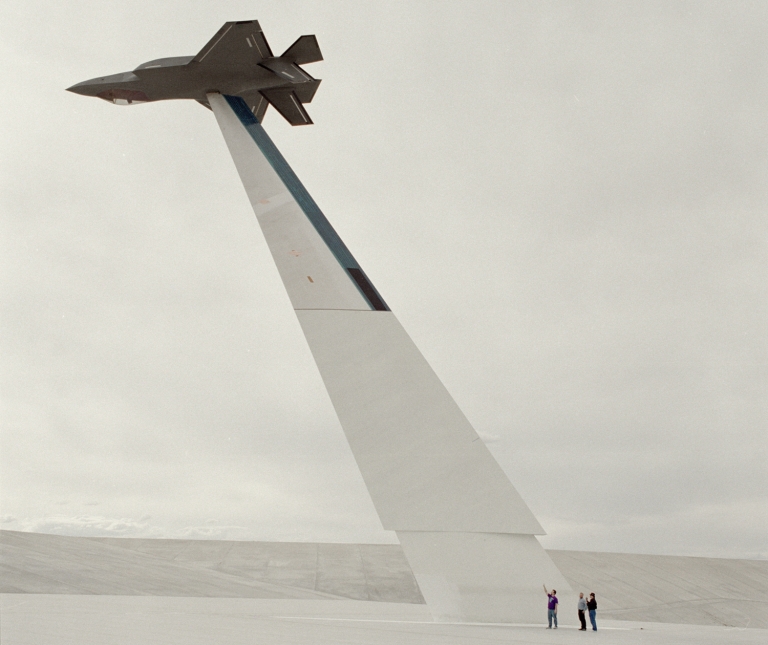 Radar
Cross Section measurement of JSF shape (US DoD).
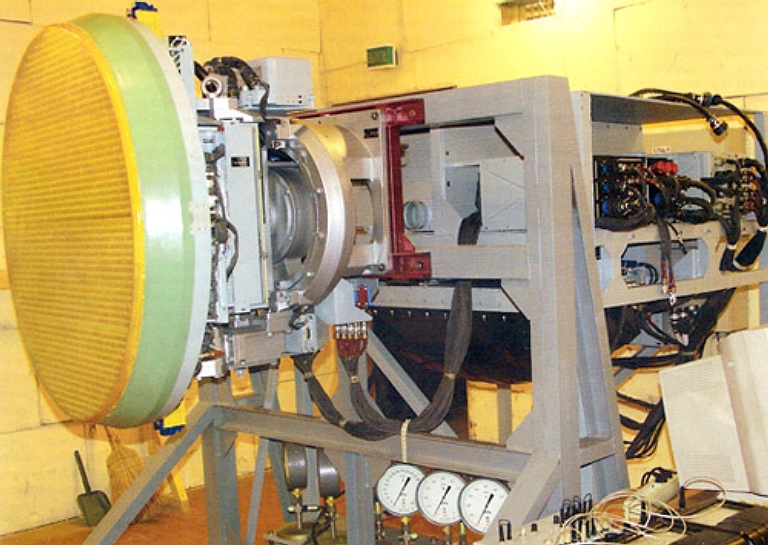
Tactics are important. On fighter sweep we fly line-abreast, put two Su-35 60 km then Su-30MK 40 km more each side – see side radio reflections of Pidgeon and pass target location to shooter with best position. 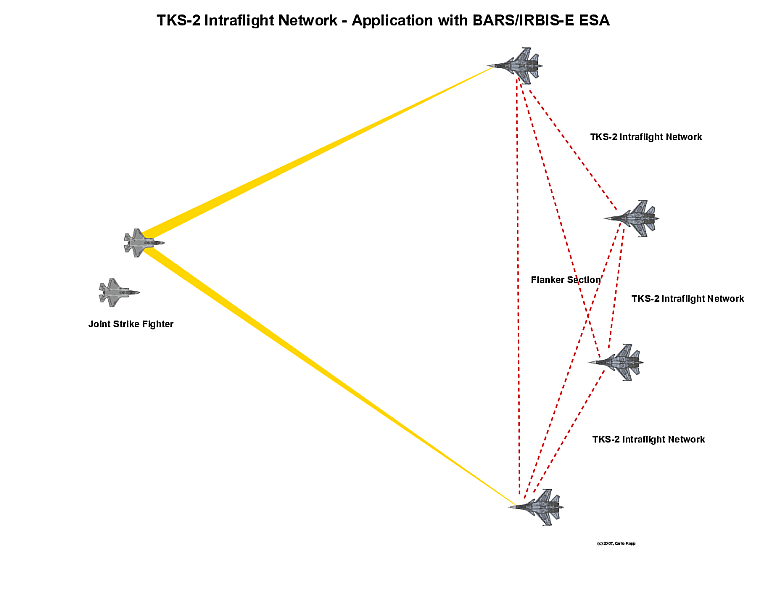 Pigeon hard to see from front on X-Band radio locator, but easy to spot on other bands. Australian JORN [Editor: Jindalee HF band Over The Horizon Backscatter Radar] very good to see stealth aircraft. Also, nice irony that Lockheed Martin make stealth aircraft and radio locator to see stealth aircraft. This one called «Silent Sentry», it works using radio reflection from TV and FM radio – very good over land at low heights and out to sea about 200 km. Also «Surface Wave Radio Locator» work in HF band. Use Pigeon wingspan or body length to tune the radio locator resonance – see very well over water to 400 km distance. Can now put such a radio-location system on a ship. Old radio locators now making a comeback. Many low frequency [Editor: VHF band], like NNIIRT NEBO series «Tall Rack», OBORONA «Tall King» and P-18-2 «Spoon Rest» see stealth airplane at 10,000 meters as far as 250 km. Rosoboronexport have on-line catalogue for these radio locators [1]. Even the Pigeon radiates – it uses APG-81 «Low Probability of Interception (LPI)» radio locator, but still makes energy pulses when it transmits. The Czechs make the «Vera-E» and the Ukrainians makes the «Kolchuga» passive radio-location systems – these track the airplane from time-of-arrival of energy pulses. 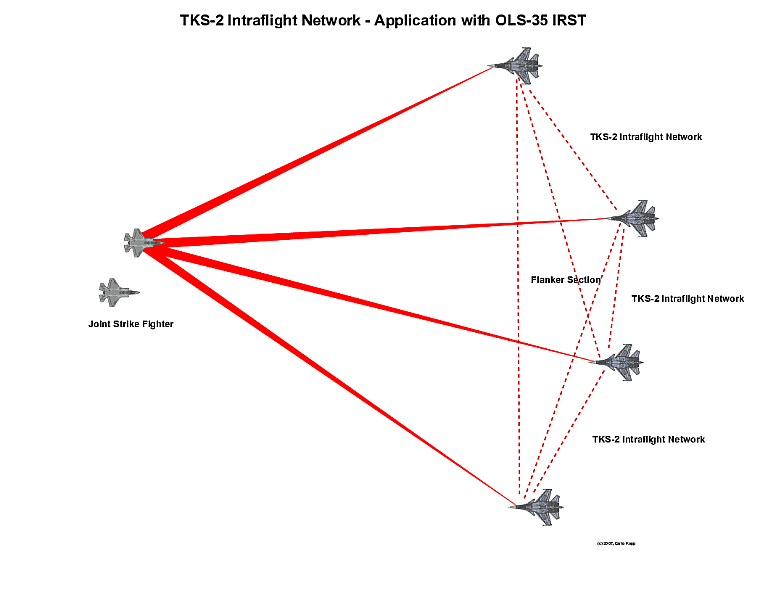 Worst part of the Pigeon is a very hot engine – 160 Celsius hotter than standard combat jet engine exhaust. It makes a very bright star in the sky and long jet plume. Russia adapted space technology for seeing ICBM launches, to air combat fighter. The OLS-35 [Editor: Infra-Red Search and Track Set] in service now, much better versions planned in next decade. Today, we see a standard fighter at about 50 km, by 2017 new technology will see Pigeon at about 150 km. Angle only measurement, but if we fly wide fighter-sweeps and pass angles to other fighters using the TKS-2 network, we can use trigonometry calculations in software to find range. Also the OLS-35 is passive – this is good. So, Grisha advises to build multi-spectral sensors in digital network to catch the Pigeon. Then pass target location to Sukhoi fighters so they can fly close enough, where on-board sensors can detect Pidgeon. 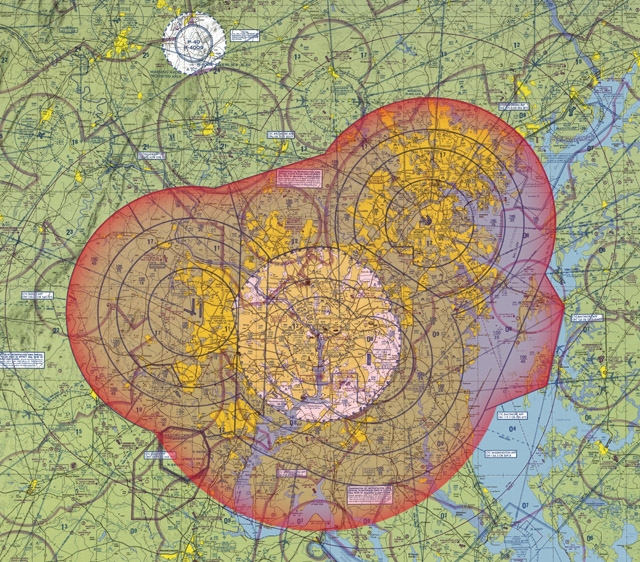 Identifying target type is always hard. Very bad to shoot airliner, but sometimes fighters hide under body of big plane. So, we declare Air Defense Identification Zone (ADIZ) like Americans have over Washington. For commerce airplane, pass over SAM sites to get finer look. Time short for intercept, so if see airplane in ADIZ, shoot first - ask later.
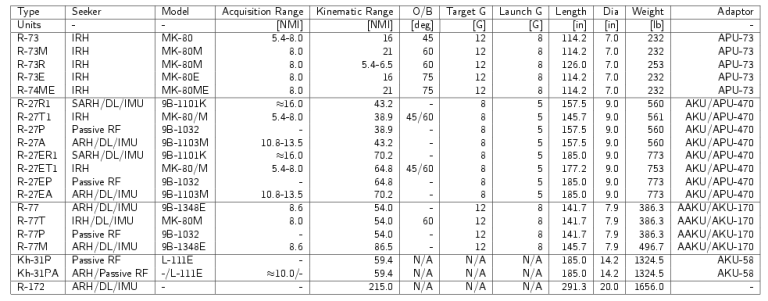
Also, use logic – if we see AWACs airplane then expect fighters in airspace between AWACs and Sukhoi, divide sky up and use fine search with radio locator and infra-red sensor. Engage when first detect. R-77M fly for about 120 seconds out to about 160 km. Problem if glint from Pigeon fade during missile flight, so expect low kill probability. Keep guidance to last point if radio reflection show again. Send a two missile package, one radar locator [Editor: seeker] and one infra-red locator. Maybe R-77M radar self guidance head makes the Pigeon turn to show its tail feathers – very bright spot for infra-red seeker. Also use imaging infra-red so pass by flares to hit plane. This table show how close R-77M get to lock on to Pigeon:
Tikhomirov
NIIP Irbis-E Prototype (T-NIIP)
Sukhoi have lots of fuel and can play «Cat-and-Mouse» like with Super Hornet. Look for missile flare if Pigeon fire AIM-120D, turn and run, then come back. Not all Sukhois need run, only those in reach of AIM-120D. Others may get good shot as Pigeon open weapon bay, turn to fire. Eventually Pigeon go home to roost, expose tail-feathers and make big radio reflection and infra-red from jet pipe. This time make use of a high Mach run, get close, fire several salvoes. Perhaps Pigeon soon runs out of missiles, then it is a good time for Sukhoi. Run in for kill with R-73 or guns. No Pigeon can ever out-fly Sukhoi in «knife fight». The safe way to destroy the Pigeon is to use superior endurance and aerodynamic performance to wait until the Pigeon turns for home, then cook with salvoes of R-77M until well done. So, how about Radio-Elektronnaya Borba [Editor: REB - Electronic Warfare]? Many in West say Russian REB kit crude. Some answers here. Some Sukhois use Israel REB boxes – these test very good [Editor: specifically referring to Indian Su-30MKI Flanker H]. Other Sukhoi and MiG fighters use Russian boxes. With cheap computer chips and smart programs, Russian companies catch up very fast, get technical lead in some areas like infrared detectors. Grisha likes the clever steerable Sorbstiya REB pod - this system borrowed from Backfire.  Much talk in Aviation Week about high power AESA and high power microwave use as weapon. New IRBIS-E is biggest boy on block and go head to head with little radio locator like APG-79 or the APG-81. Big IRBIS-E antenna and 20 kiloWatts peak power fry the Pigeon in short time. Also, we have some «specials». We put high power microwave warhead on R-172 or R-37 (AA-13 Arrow) missile and fire at infra-red return. Command triggers narrow cone microwave or electro-pulse energy at Pigeon. Hope Pidgeon pilot have rapid darkening welding helmet or may get quick sun-tan. Russia has experimented for many years with EMP weapons [2]. Grisha thinks the Pigeon is harder to fry than Super Hornet, but new Sukhoi-35 have more performance, more missile shots, more missile self guidance head types and more fuel. So, with good tactics, the Sukhoi kills the JSF, not every time, just most times. Final word, the new Raptorski come very soon before 2017. Pigeon best stay home unless escorted by bigger brother. 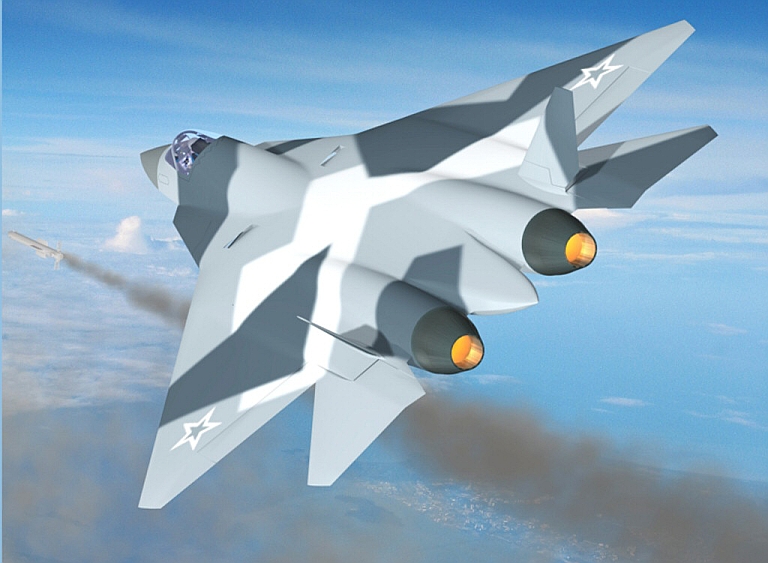 PAK-FA Rendering by NPO
Saturn. Unlike the JSF, the PAK-FA is being designed with air
superiority performance as the primary consideration.
|
|||||||||||||||||||||||||||||||||||
| Footnote: Col. Grisha Medved is a former retired fighter pilot. Endnotes and Comments: [1] Low band radars especially VHF band rely on two
mechanisms to defeat conventional low observable technology. The first
of these is that the shaping becomes ineffective in the Raleigh
scattering regime. The second is that the skin depth of lossy coatings
is much greater in the VHF band [Click
for more ...].
[2] Russian researchers were heavily involved in flux generator technology during the 1950s, gaining a lead in several key technologies. The cylindrical compression generator was invented by Dr Andrey Sakharov, later known in the West as the author of the Soviet H-bomb, and as a dissident. Russian researchers have since developed a range of high power microwave devices. |
|||||||||||||||||||||||||||||||||||
|
|
|||||||||||||||||||||||||||||||||||
| Air
Power Australia Website - http://www.ausairpower.net/ Air Power Australia Research and Analysis - http://www.ausairpower.net/research.html |
|||||||||||||||||||||||||||||||||||
 |
|||||||||||||||||||||||||||||||||||
| |
|||||||||||||||||||||||||||||||||||
|
|||||||||||||
|
|
|
|
|
|
|
|
|
|
|
|||
|
|
|
|
|
|
|
|
|
|
|
|||
| |
|
|
|||||||||||
| Artwork, graphic design, layout and text © 2004 - 2014 Carlo Kopp; Text © 2004 - 2014 Peter Goon; All rights reserved. Recommended browsers. Contact webmaster. Site navigation hints. Current hot topics. | |||||||||||||
|
Site Update
Status:
$Revision: 1.753 $
Site History: Notices
and
Updates / NLA Pandora Archive
|
|||||||||||||
|
|
Tweet | Follow @APA_Updates | |||||||||||
|
|
|||||||||||||
|
|
|||||||||||||