|
||||||||||||||||||||||
 |
||||||||||||||||||||||
![F-22A Raptor, FB-22, F-22E, F-22N and Variants Index Page [Click for more ...]](APA/f-fb-22.png "F-22A Raptor, FB-22, F-22E, F-22N and Variants Index Page [Click for more ...]") |
 |
![People's Liberation Army Air Power Index Page [Click for more ...]](APA/pla-air-pwr.png "People's Liberation Army Air Power Index Page [Click for more ...]") |
 |
 |
 |
 |
 |
 |
![Military Ethics, Culture, Education and Training Index Page [Click for more ...]](APA/ethx-culture.png "Military Ethics, Culture, Education and Training Index Page [Click for more ...]") |
 |
||||||||||||
 |
![Russian / Soviet Weapon Systems Index Page [Click for more ...]](APA/rus-weps.png "Russian / Soviet Weapon Systems Index Page [Click for more ...]") |
 |
 |
 |

|
 |
 |
 |
 |
 |
||||||||||||
 |
 |
|||||||||||||||||||||
| Last Updated: Mon Jan 27 11:18:09 UTC 2014 | ||||||||||||||||||||||
|
||||||||||||||||||||||







|
PLA-AF Airborne Early Warning & Control Programs
Technical Report APA-TR-2007-0702 |
| by
Dr Carlo Kopp, AFAIAA, SMIEEE, PEng July, 2007 Updated November 2009 Updated June 2011 Updated April 2012 Text © 2007-2011 Carlo Kopp Line Artwork © 2007 Carlo Kopp |
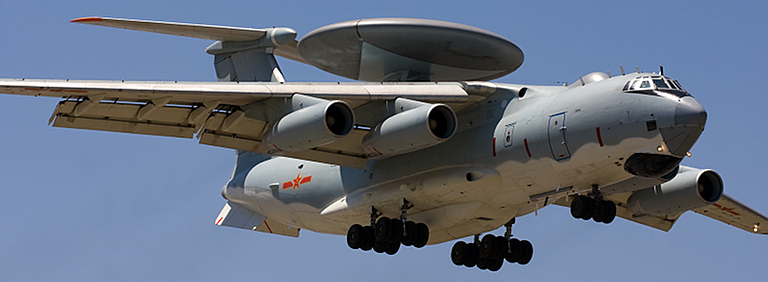 An early production KJ-2000 Airborne Early Warning and Control system on short finals. The dielectric panels on the dorsal radome indicate this is a three sided phased array, probably operating in the L-band and influenced by the design of the Israeli Elta Phalcon system (image © 2009, Zhenguan Studio).  |
|
|
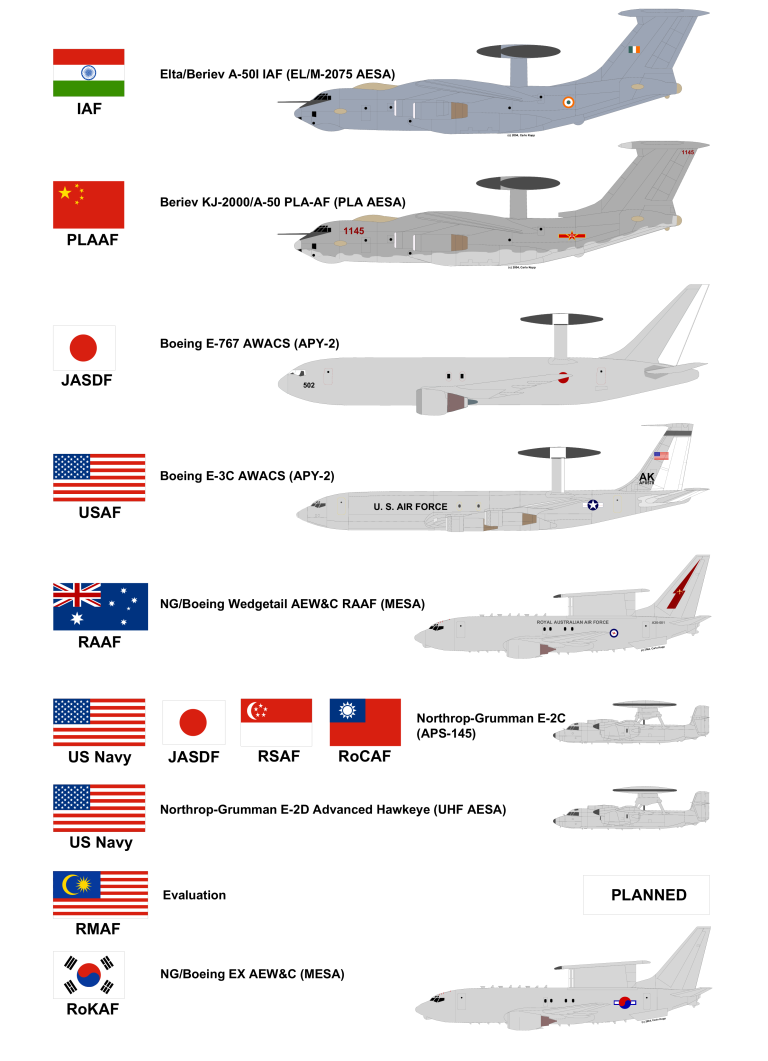
IntroductionThe PLA has had a long standing interest in acquiring an AEW&C/AWACS capability. Its earliest experiments involved the indigenous KJ-1 / Project 926 system carried in a rotodome by a turboprop powered Tu-4 Bull, itself a Soviet clone of the B-29 Superfortress (examples have survived in museums). 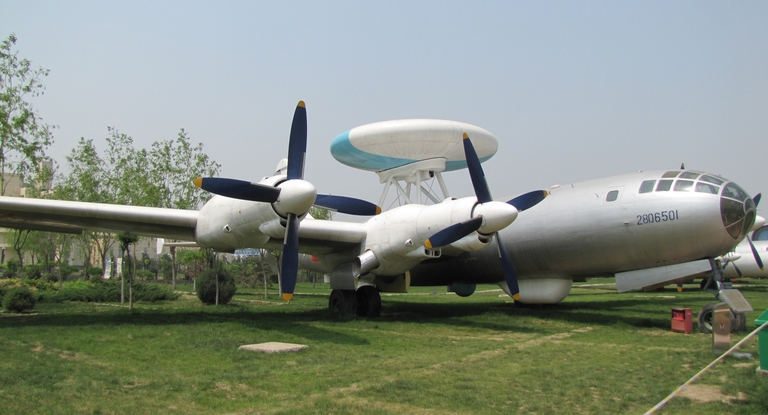 Never regarded to be particularly successful, the KJ-1 was China's first attempt to develop an AEW&C capability, during the 1960s. A surviving example is on display at Datangshan. The conventional rotodome on a rotational coupler employed back to back radar and IFF antennas, emulating the US Navy E-2B/C series ( © 2010, Air Power Australia; via Zhenguan Studio). 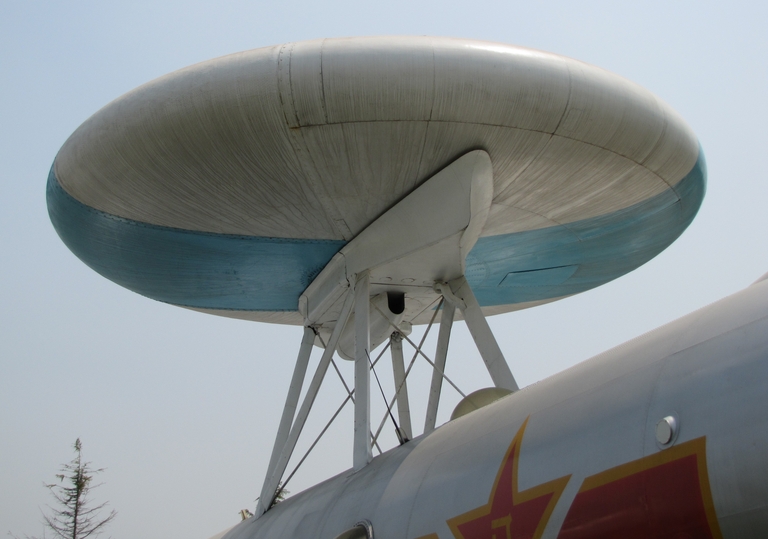 By the 1990s the PLA decided it had to have an AEW&C capability after observing the rout of the Iraqi air force in Desert Storm, and the Serbian air force in Allied Force. China sought to acquire the latest technology and contracted Israeli industry to rehost the Elta Phalcon L-band phased array radar, at the time also bid to the RAAF on an A-310 airframe, on a Russian Ilyushin Il-76 Candid airframe, emulating the Soviet Beriev A-50 Mainstay AEW&C design. The L-band Phalcon was the basis of the Elta bid for the RAAF Wedgetail program and is a generation ahead of Japan's E-767 AEW&C and Taiwan's E-2T Hawkeye. US pressure on Israel killed the A-50I deal in July, 2000, upon which reports soon emerged that the Russian Beriev A-50U or A-50E variant, equipped with the Schmel series mechanically steered array, was to be purchased. India subsequently signed with Israel to pick up the A-50I instead of China. The collapse of China's plan to acquire the Beriev A-50I AEW&C with the Israeli Elta Phalcon phased array radar was a significant setback for the PLA-AF, and loss of face globally to the US. The Chinese leadership vowed publicly they would get an AEW&C capability. Unsupported claims of an impending buy of the Russian Beriev A-50U or A-50E continued, until photographs emerged on the Internet during the 2003 period showing what was clearly an A-50 like AEW&C being flown from the Central Flight Test Establishment at Nanjing. 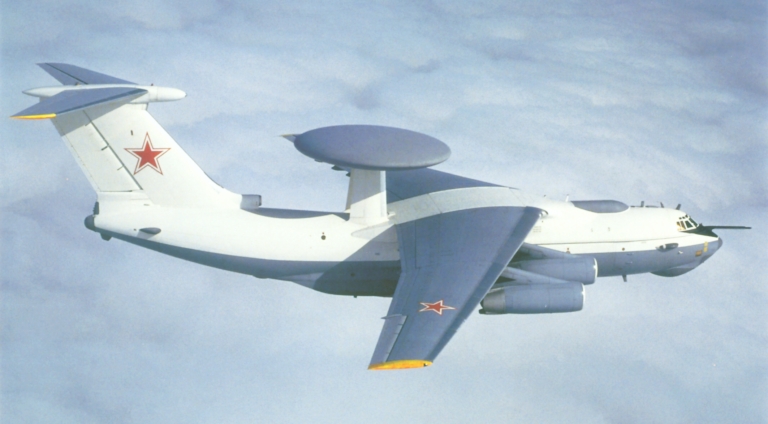 Beriev A-50 AWACS (Beriev).
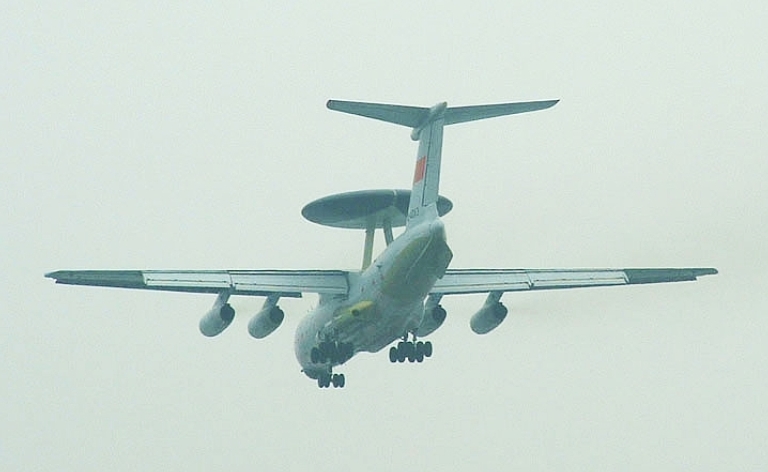 The PLA's new KJ-2000 AWACS prototype in the circuit at the Central Flight Test Establishment in Nanjing. Note the unique ventral strakes and APU exhaust in the port sponson (via Internet). 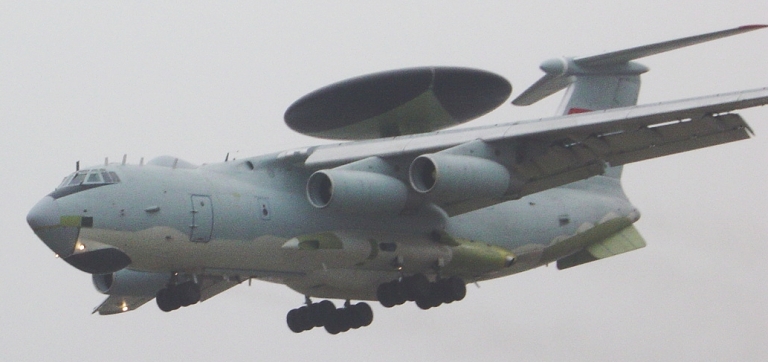 A respectable number of amatuer photographs of an A-50I aircraft being flown over Nanjing have since emerged on the Internet, some of remarkable quality. At least three prototypes were built, and flown in differing livery including a two tone grey camouflage. Chinese sources claim the aircraft is designated the KJ-2000. Imagery clearly shows three sided phased array dielectric radomes, and wingtip ESM fairings, on a rebuilt Il-76 Candid airframe. An APU has been installed in the left main undercarriage fairing. Aft fuselage strakes, absent on the A-50, have been installed. The ram air inlet in the root of the vertical stabiliser of the A-50 is absent, as are the fuselage dielectric blister radomes for the ESM. The KJ-2000 prototypes have been photographed with and without aerial refuelling probes installed. There has been some speculation that the PRC may be attempting to clone the Israeli Phalcon system using indigenous technology. Given that L-band radio frequency power transistors of suitable ratings are available commercially, cloning is feasible and entirely consistent with the long running PLA policy of concurrently developing indigenous products while importing foreign equivalents. An L-band array Transmit-Receive module design of suitable performance and configuration could be used for both the A-50 system and the smaller Y-8 design, sharing most of the system hardware and software. A least one image exists of a ground based antenna testing rig, built up as an AESA radome and mount on top of a mast on a larger building. What remains unclear at this time is the IOC for an operational system, and specific performance parameters for the AESA, such as module count and peak power rating. It is reasonable to speculate that these parameters would be very similar to the Israeli Elta design, to which the PLA had considerable exposure. Media reports suggest that in late 2009 four PLA KJ-2000 systems were operational, but it is not known what the status of the onboard mission systems is. 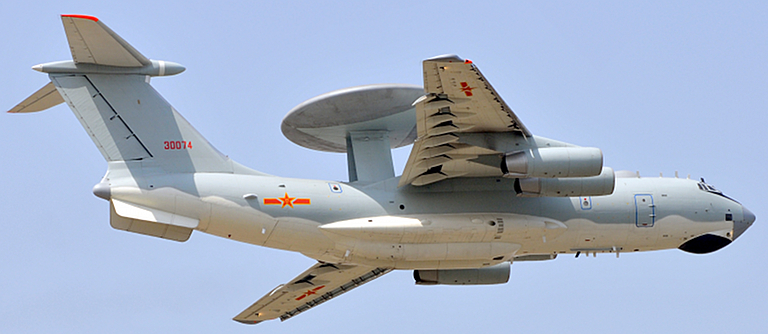 An early production KJ-2000 Airborne Early Warning and Control system T/N 30074 in flight. Note the prominant ventral stabilisers and wingtip ESM radomes (image © 2009, Zhenguan Studio). The PLA has two other AEW&C development programs under way at this time, with multiple photographs now circulating on the Internet. 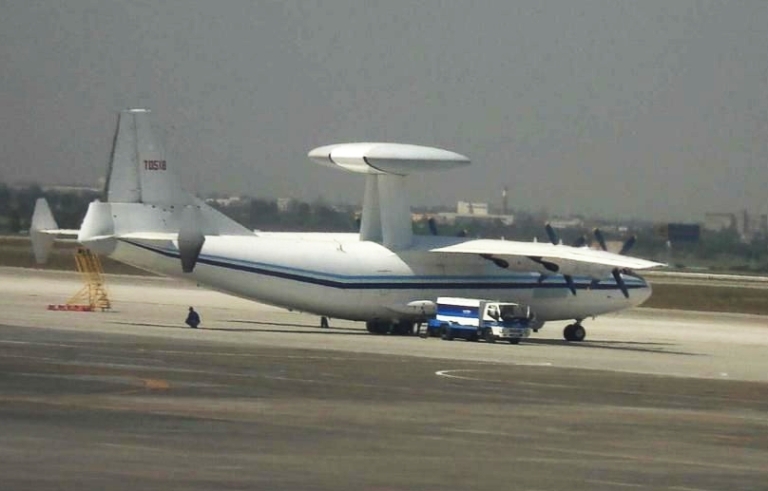 The Y-8 (An-12 Cub) AEW&C
prototype using a conventional radar and rotodome. This design was
recently exported to Pakistan, as the ZDK-03, on a new airframe (via
Internet).
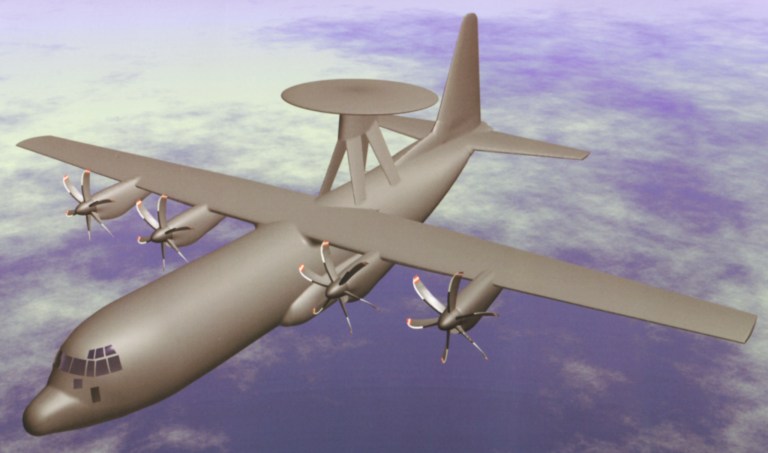
 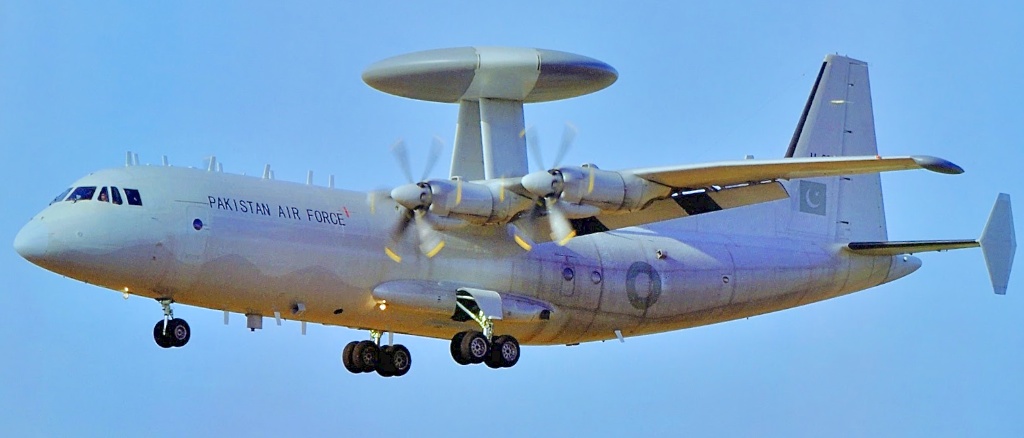 Production ZDK-03 AEW&C system, dubbed the Karakorum Eagle, one of four systems exported to Pakistan on the late production Shaanxi Y-8 airframe. The unusual camouflage is modelled on the USAF MC-2A proposal and is optimal for high altitude ISR aircraft (PAF). 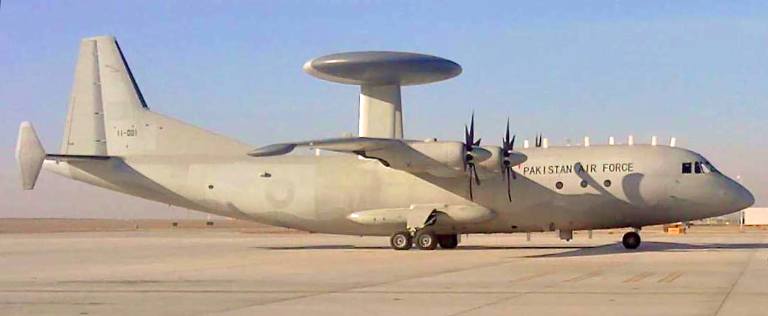 The first is a conventional radar using a rotodome, the installation mounted on a Shaanxi Y-8 (An-12 Cub) transport. The resulting AEW&C system is in the class of the C-130H and P-3B AEW&C systems built by Lockheed-Martin using the APS-145 UHF radar from the E-2C. As no images are available showing the exposed main antenna, it is impossible to draw conclusions about radar operating wavelength and antenna gain and sidelobe performance. The airframe is a 'classic' Y-8 Cub, with additional vertical stabilisers on the tips of the horizontal tails.
Lockheed-Martin
C-130J
AEW&C
Proposal
(LM).
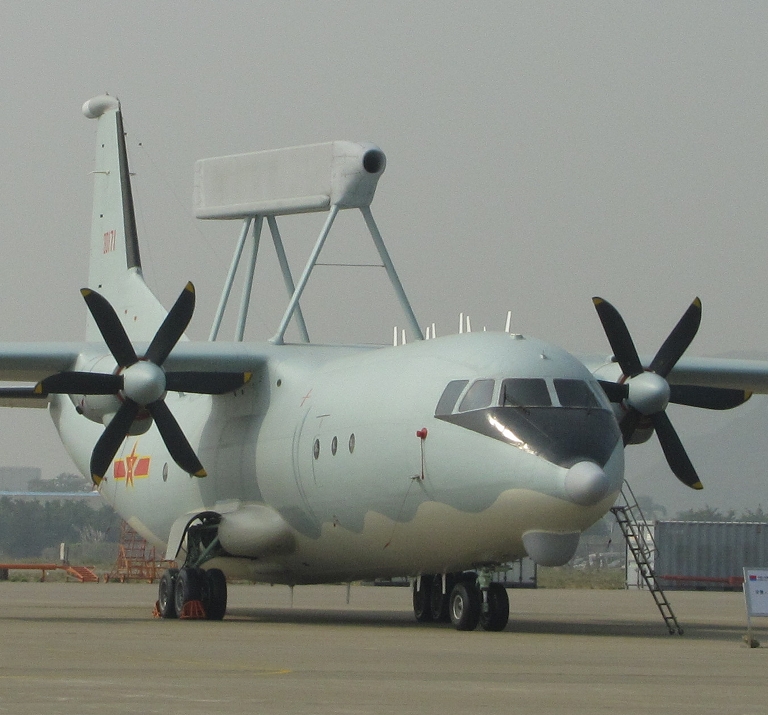
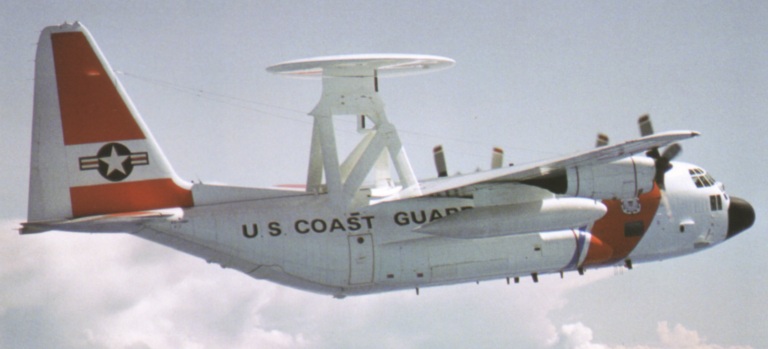 Operational USCG C-130H AEW&C System (USCG). 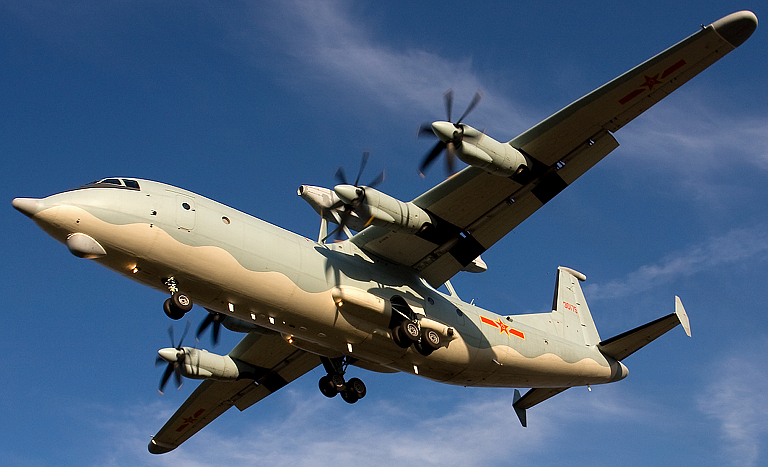 KJ-200 AEW&C system in flight (image © 2009, Zhenguan Studio). The second smaller AEW&C program has been labelled the KJ-200 or 'Y-8 Balanced Beam' system. Installed on a late model Y-8F-600 airframe with Pratt & Whitney Canada PW150B turboprops and Honeywell avionics, the KJ-200 has been observed in the Nanjing area flying with a dorsal structure resembling the Ericsson Erieye AESA system, as well as ventral radomes. With a similar payload/volume to the C-130A, a Y-8 with an Erieye clone AEW&C system would be equivalent in performance and endurance to the C-130/Erieye proposals marketed during the late 1990s. 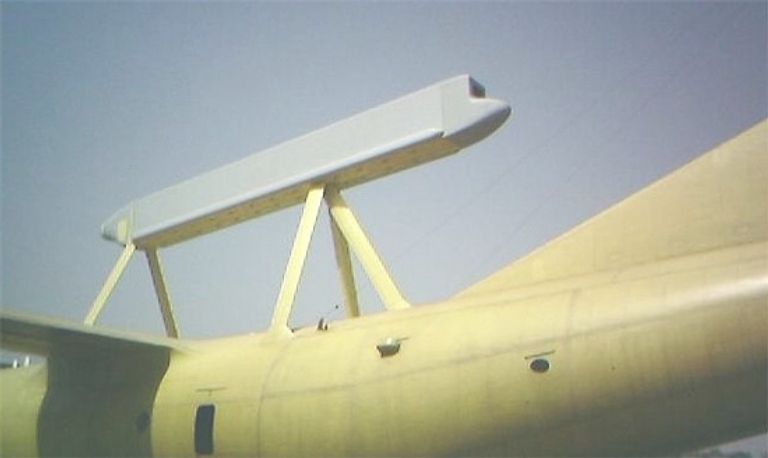 The KJ-200 or 'Y-8 Balanced
Beam' AEW&C prototype
(Via Internet).
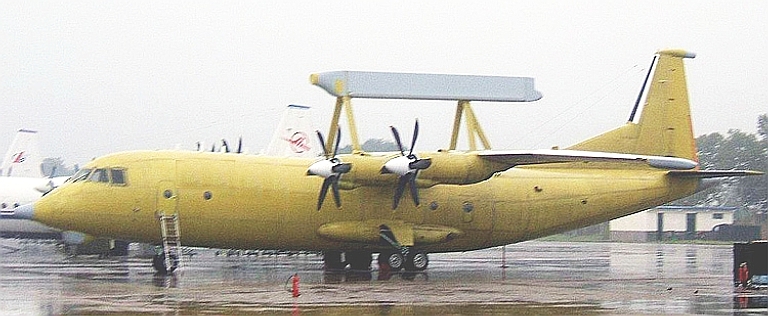 Imagery shows that the KJ-200 antenna assembly is much like the Swedish Ericsson PS-890, including the ram air cooling system for the transmit-receive modules. Like the Erieye, the KJ-200 cannot provide coverage over the nose, but due to large aperture size will have excellent broadside power-aperture ratings and angular resolution. 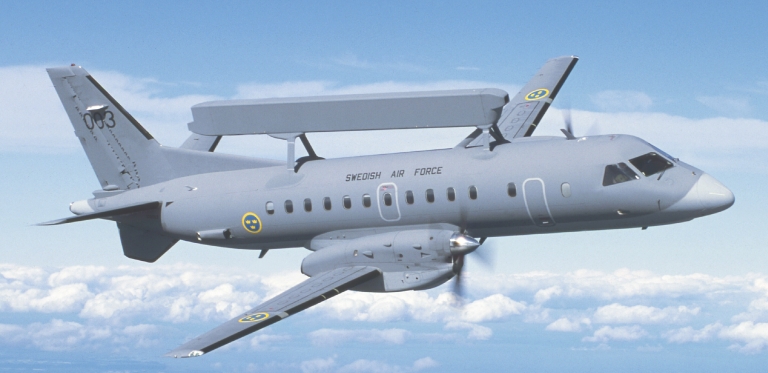 The SAAB/Ericksson Erieye installation
(SAAB).
Given the similar size and platforms used for the two smaller AEW&C systems, it is a reasonable assessment that the rotodome system was developed as a risk hedge in the event that the KJ-200 AESA was too difficult to develop. Press reports from Pakistan and India in 2007 indicated that China had signed a deal with Pakistan to supply an unspecified number of 'AEW&C aircraft'. Given reports that Pakistan was to acquire the SAAB/Ericsson Erieye system, it was not entirely clear what Pakistan intended, or which of the three Chinese systems was sought. India's acquisition of the A-50I would be a strong incentive for Pakistan to acquire the KJ-2000 to match capability. More recently, photographic imagery and PAF media releases showed the aircraft to be the CETC ZDK-03, which is a derivative of the original rotodome based system. Chinese media releases suggested, in 2011, that the KJ-200 was being deployed with PLANAF air defence units. It remains to be seen, longer term, which of the three PLA AEW&C systems will proliferate in the global export market. Regional clients who do not want the political strings attached to US or EU products, or the cost of a Russian or Israeli product, may well find a Chinese AEW&C offering attractive. |
|
|
 |
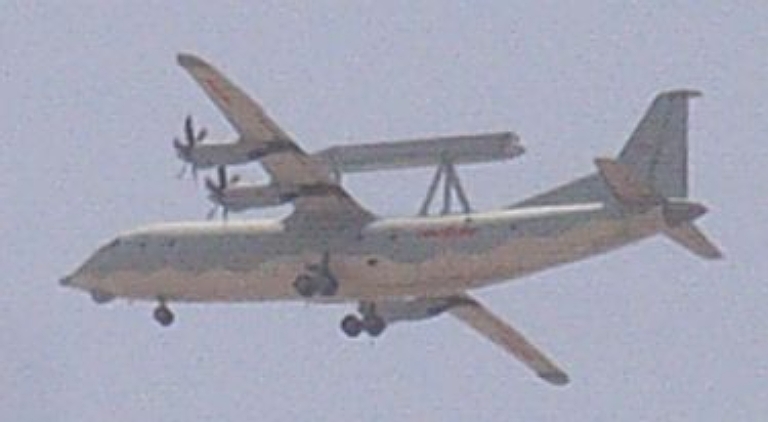 A camouflaged KJ-200
or 'Y-8 Balanced Beam'
AEW&C prototype in flight (Via Internet).
|
KJ-2000 / A-50I Imagery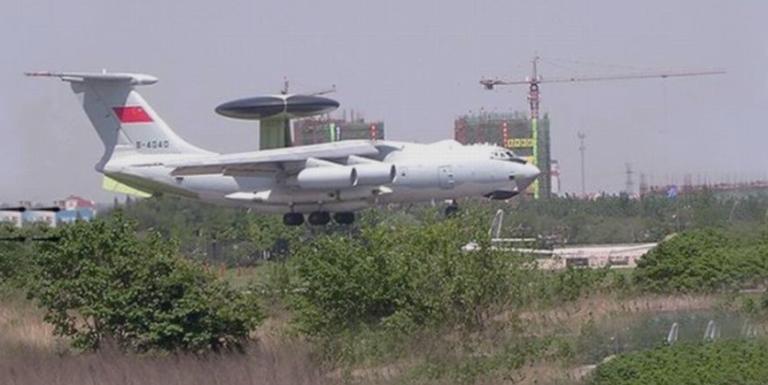 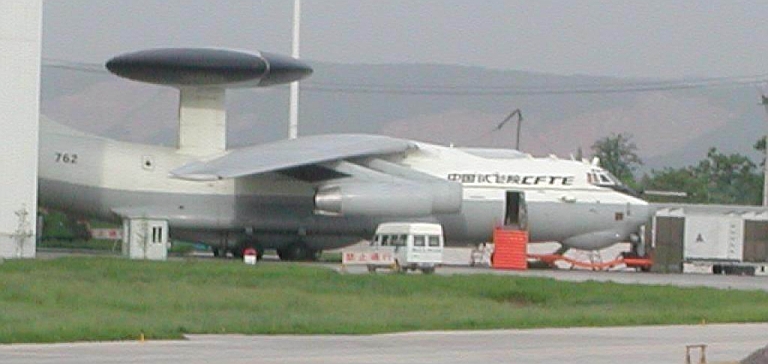 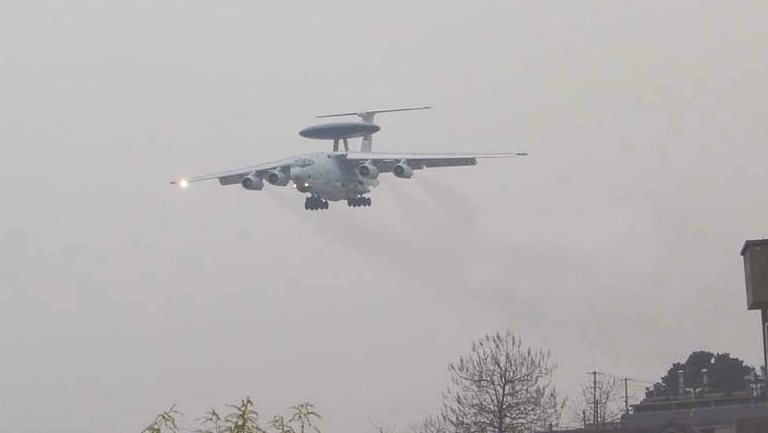 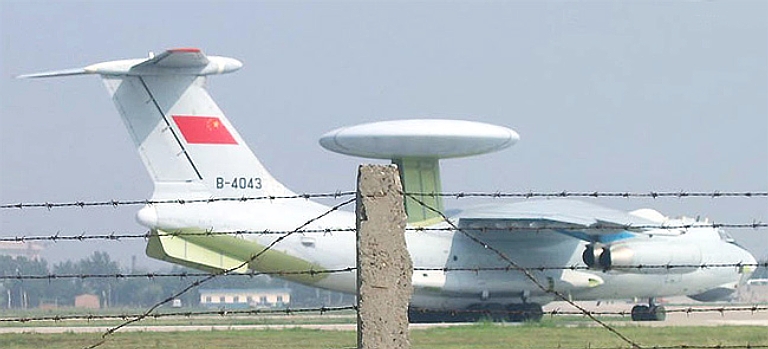 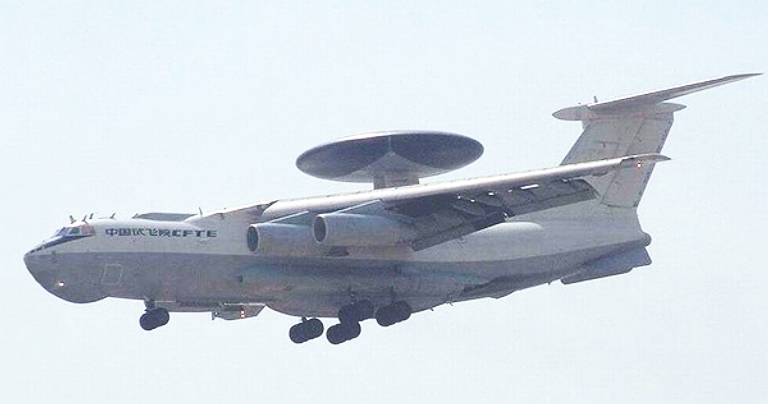 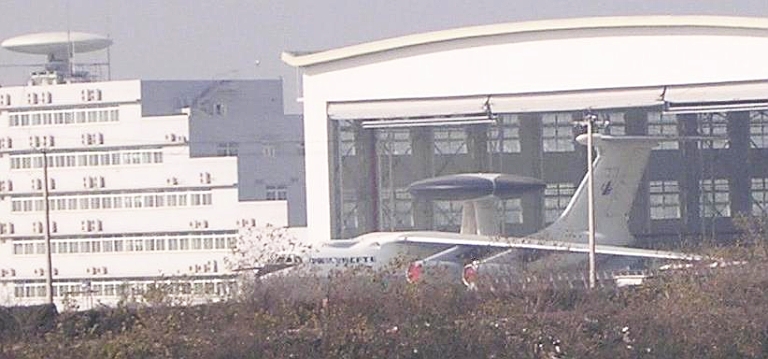 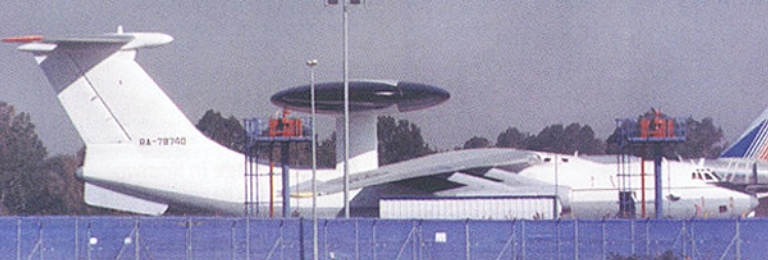 Partially completed A-50I Prototype (via Internet) |
KJ-200 AEW&C ImageryAll images © 2010, Air Power
Australia; via Zhenguan Studio
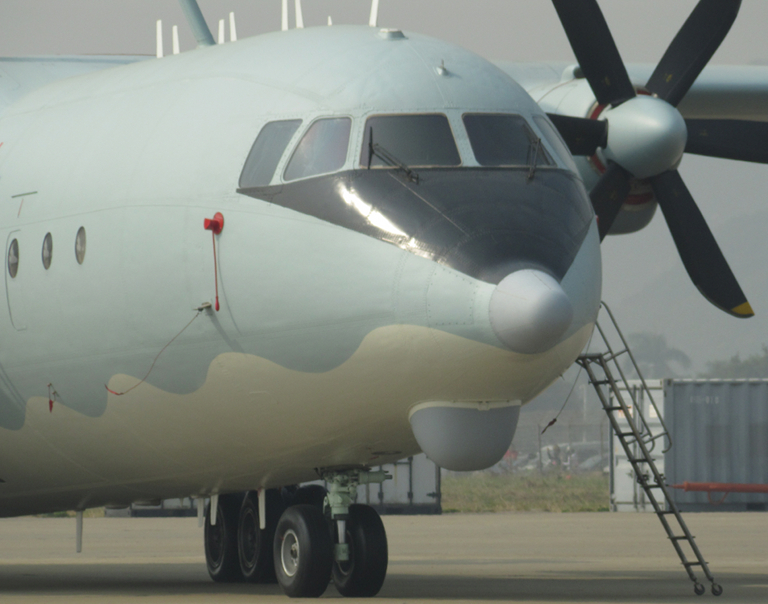 Detail of nose radomes on KJ-200.
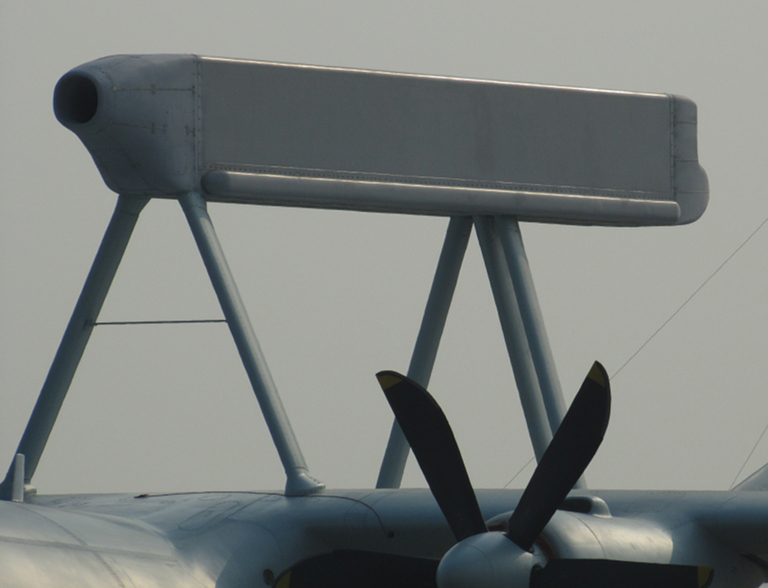 Above, below: Two details of S-band
primary AESA arrangement.
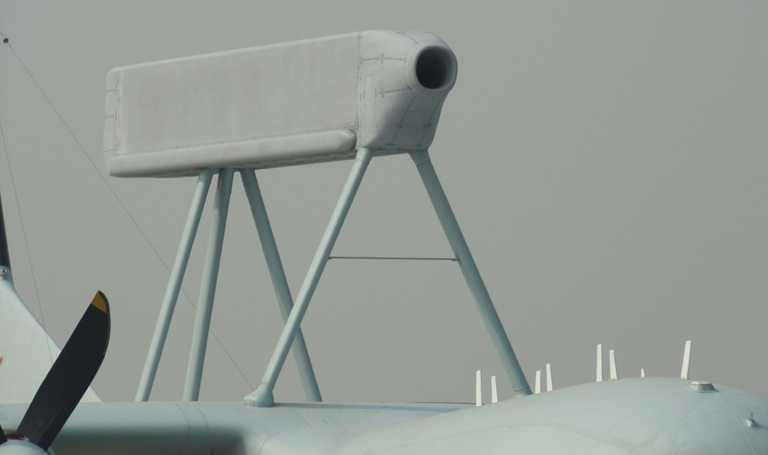 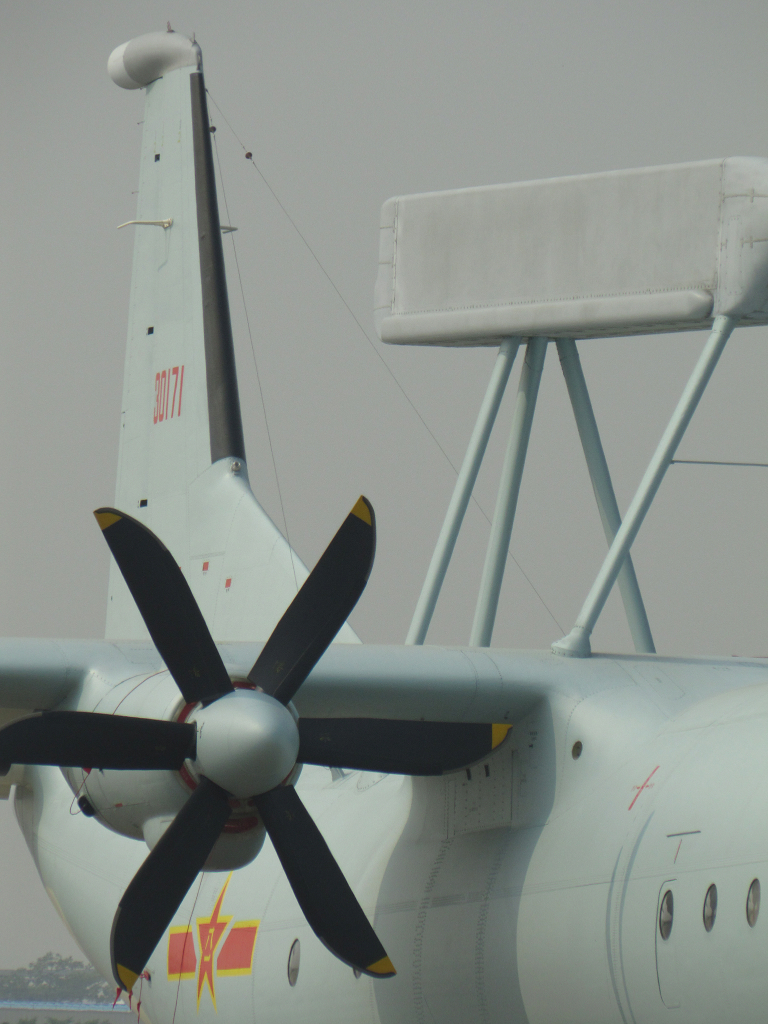 Detail of antenna mounting struts.
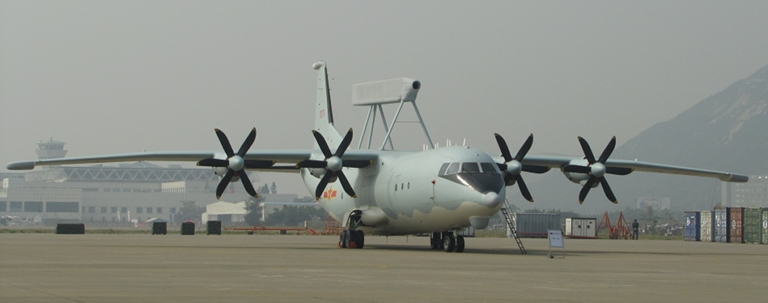 Above, below: general arrangement.
 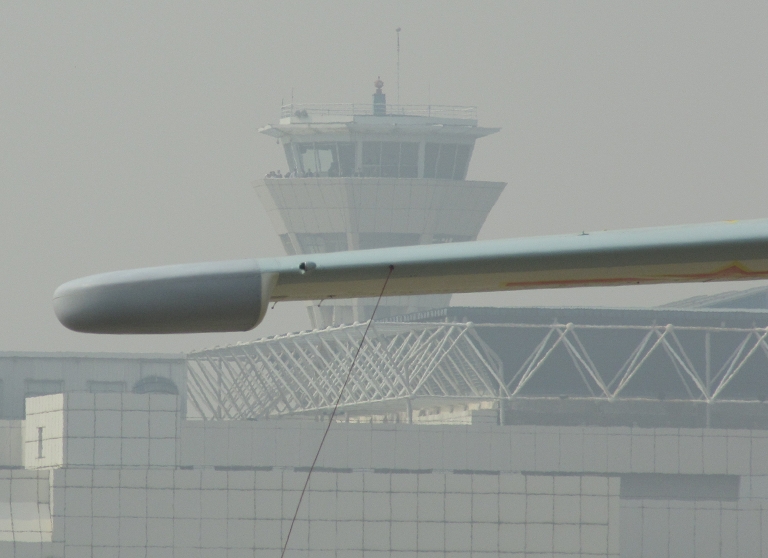 Wingtip ESM radome.
|
Resources
|
|
|
|
Technical Report APA-TR-2007-0702 |
|
|||||||||||||
|
|
|
|
|
|
|
|
|
|
|
|||
|
|
|
|
|
|
|
|
|
|
|
|||
 |
|
|
|||||||||||
| Artwork, graphic design, layout and text © 2004 - 2014 Carlo Kopp; Text © 2004 - 2014 Peter Goon; All rights reserved. Recommended browsers. Contact webmaster. Site navigation hints. Current hot topics. | |||||||||||||
|
Site Update
Status:
$Revision: 1.753 $
Site History: Notices
and
Updates / NLA Pandora Archive
|
|||||||||||||
|
|
Tweet | Follow @APA_Updates | |||||||||||
|
|
|||||||||||||
|
|
|||||||||||||