|
||||||||||||||||||||||
 |
||||||||||||||||||||||
![F-22A Raptor, FB-22, F-22E, F-22N and Variants Index Page [Click for more ...]](APA/f-fb-22.png "F-22A Raptor, FB-22, F-22E, F-22N and Variants Index Page [Click for more ...]") |
 |
![People's Liberation Army Air Power Index Page [Click for more ...]](APA/pla-air-pwr.png "People's Liberation Army Air Power Index Page [Click for more ...]") |
 |
 |
 |
 |
 |
 |
![Military Ethics, Culture, Education and Training Index Page [Click for more ...]](APA/ethx-culture.png "Military Ethics, Culture, Education and Training Index Page [Click for more ...]") |
 |
||||||||||||
 |
![Russian / Soviet Weapon Systems Index Page [Click for more ...]](APA/rus-weps.png "Russian / Soviet Weapon Systems Index Page [Click for more ...]") |
 |
 |
 |

|
 |
 |
 |
 |
 |
||||||||||||
 |
 |
|||||||||||||||||||||
| Last Updated: Mon Jan 27 11:18:09 UTC 2014 | ||||||||||||||||||||||
|
||||||||||||||||||||||







|
PLA-AF and PLA-N Legacy Fighters
Technical Report APA-TR-2007-0104 |
by Dr Carlo Kopp, AFAIAA, SMIEEE, PEng January, 2007 Updated June 2011 Updated April 2012 Text © 2004 - 2012 Carlo Kopp Line Artwork © 2007 Carlo Kopp  |
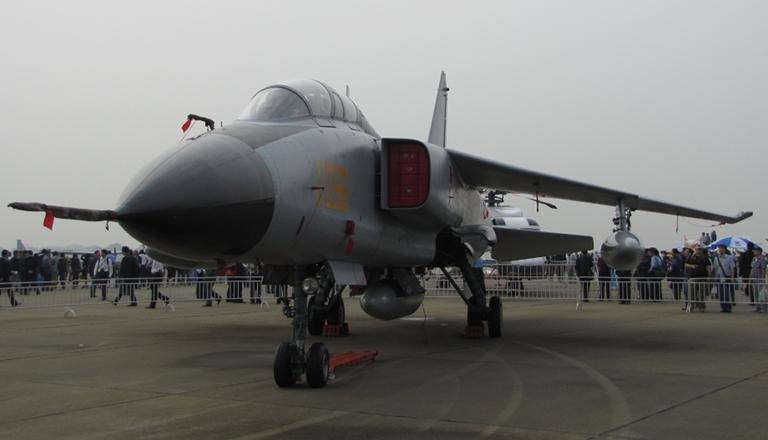 A late production JH-7 Flounder on
display at Zhuhai
2010 (© Air Power Australia, via Zhenguan Studio).
|
|
|
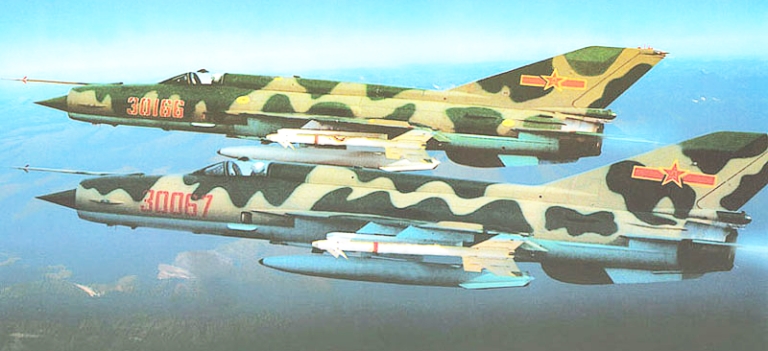
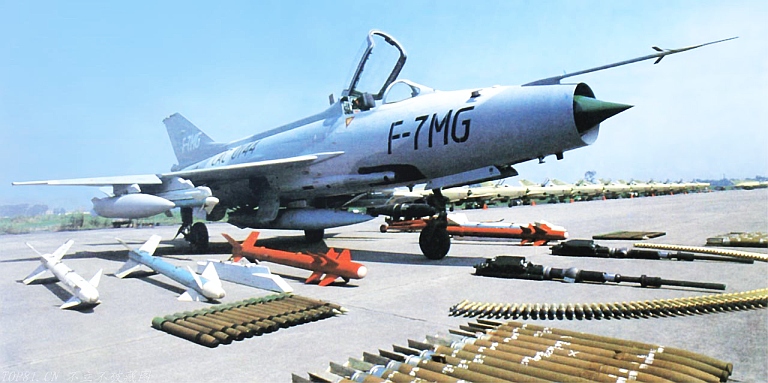
BackgroundThe PLA-AF and PLA-N operate a large number of legacy types, most of these being cloned and evolved variants of older Soviet MiG designs. With many manufactured as recently as a decade ago, and many still in production, both services will be hamstrung by this large fleet of maintenance intensive day VFR short range combat aircraft. By far the most numerous of the legacy types are variants of the J-6 series, essentially a cloned MiG-19 Farmer. Around 2,800 are listed in current reference publications, although real numbers may be much lower as these relics are replaced with newer types. The second most numerous Soviet clone is the J-7 series, based on the MiG-21 Fishbed. Around 700 are listed, comprising a mix of J-7-I, J-7-II/J-7C, J-7-III/J-7D, J-7E and J-7G. Later versions incorporate modern avionics, and a new and larger double delta wing planform to improve agility. The current production J-7G is claimed to have superceded the J-7E (263 built) in production as late as 2002. The Fishbed is likely to remain in service post 2020 on current trends. China started out in the fighter business by cloning and evolving existing Russian designs, and the J-7G is by far the best Fishbed ever built. The first truly indigenous design was the Nanchang Q-5/A-5, evolved from the J-6/MiG-19 as a dedicated strike aircraft. A new forward fuselage with a solid nose, side inlets and numerous structural changes resulted in a supersonic equivalent to the A-4 Skyhawk, of which large numbers were exported, and around 600 remain in PLA-AF/PLA-N service. The design added an internal bomb bay for two 1,000 lb weapons or more fuel, up to four external fuselage hardpoints, additional outboard wing stations and extensive avionic changes. The 20,000 lb empty weight class Shenyang J-8 Finback series evolved to fill the niche occupied by the Sukhoi Su-15/21 Flagon and Tornado ADV - air defence interception. The J-8-I Finback A grew out of MiG-21 technology, resembling a twin engine Su-9/11 Fishpot, and after an extensive nose job transformed into the current J-8-II/J-8B Finback B series, equipped with a Type 208 or KLJ-1 pulse Doppler radar. Several variants, the J-8B, J-8C, J-8D, J-8F and J-8H have been identified, with J-8B service entry cca 1990. The J-8R photo-recce variant is a modified J-8A with a podded recce package. Chinese sources claim between 240 and 360 Finback aircraft in service, mostly J-8B and J-8D variants, the latter with a fixed refuelling probe. The J-8D is best known as the Chinese fighter which collided with an EP-3C over the South China Sea, causing a major diplomatic incident. While the J-8B/D has a strike capability, it has been mostly used as a long range interceptor and remains in production. A contemporary of the J-8 is the Xian JH-7 'Flying Leopard'
maritime strike fighter, developed to replace the Harbin H-5 (Il-28)
Beagle in PLA-N service and essentially a Chinese analogue of the
Panavia Tornado IDS - less the swing wing. Initiated in the late 1970s,
the FH-7 now equips one PLA-N regiment. The aircraft is powered by two
RR Spey 202 fans, is fitted with a Type 232H 'Eagle-Eye' pulse Doppler
radar, and carries a typical weapon payload of four YJ-8K/C-801K
anti-ship cruise missiles, similar to the Exocet or Kormoran. Dependent
on imported surplus RR Spey fans, the JH-7 is likely to become the
first victim of the PLA-N's new Su-30MK2 maritime strike fighter, which
outperforms it in all cardinal parameters. Given the choice of an F-15E
analogue vs a Tornado analogue, the PLA-N is likely to prefer the
Sukhois.
The Q-5 Fantan is the most developed
derivative of the MiG-19 Farmer (Chinese Internet). |
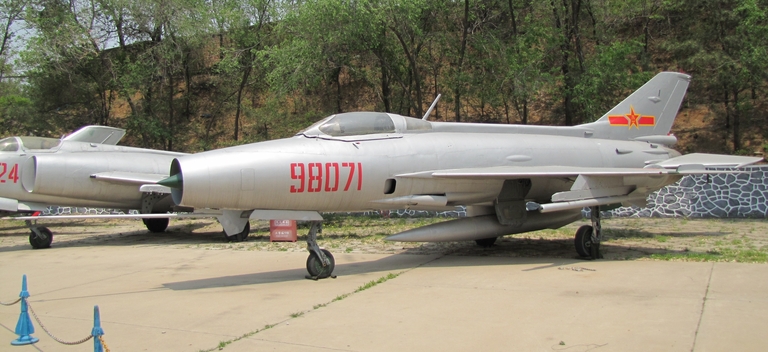
Imported early model Soviet built
MiG-21F Fishbed A (© Air Power Australia, via
Zhenguan Studio).
Derivatives of the MiG-21 Fishbed remain in PLA service and continue to be built for export clientele. While the Soviets ceased building the type decades ago, China continued to evolve the design, and late model Chinese Fishbeds are the most capable subtypes ever built. The PLA intend to eventually replace all Fishbeds with J-10 variants. Chengdu J-7-I Fishbed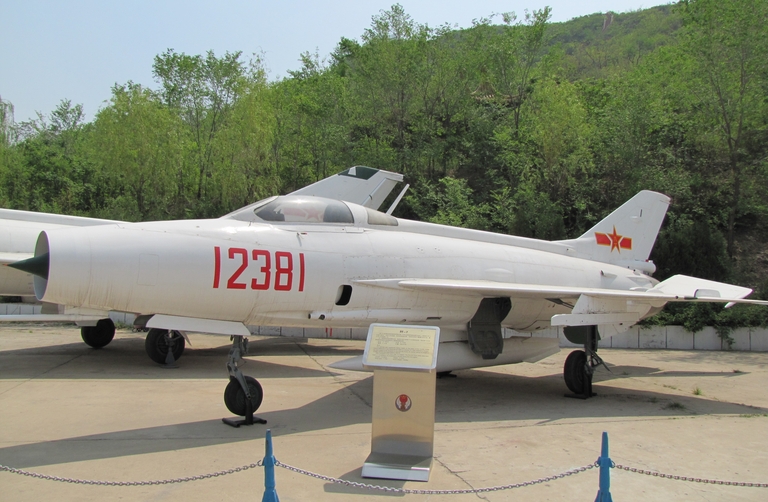 Early model J-7 Fishbed, essentially a cloned MiG-21F Fishbed A (All images © Air Power Australia, via Zhenguan Studio). 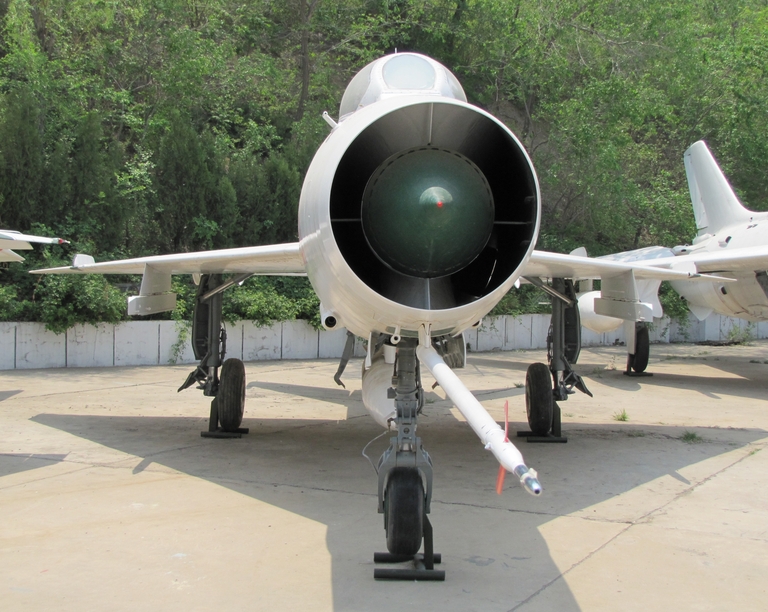 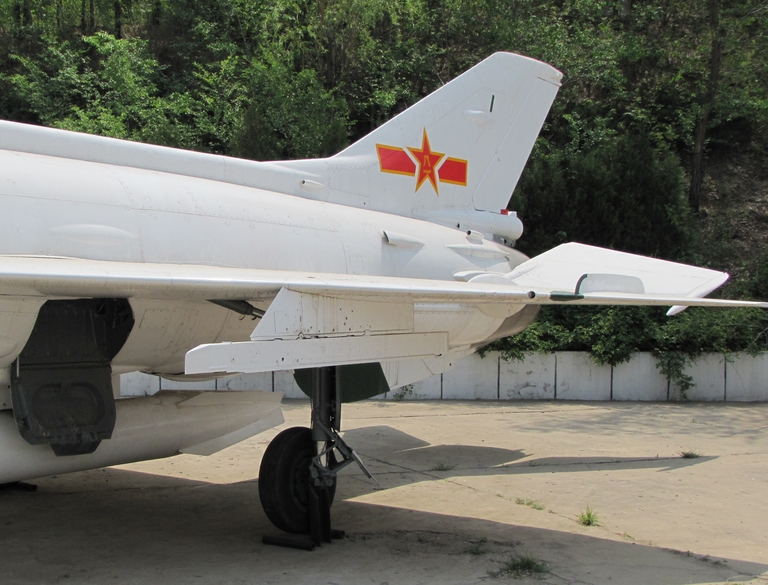 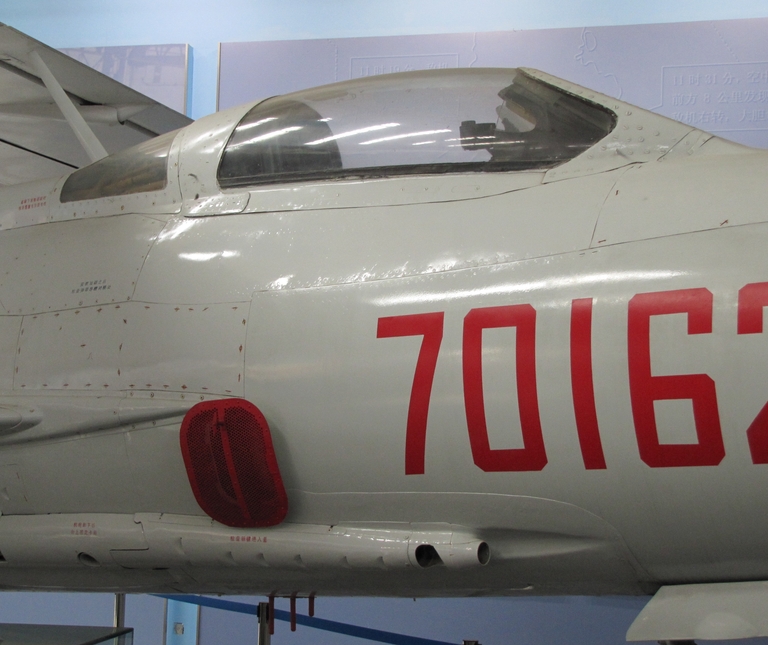 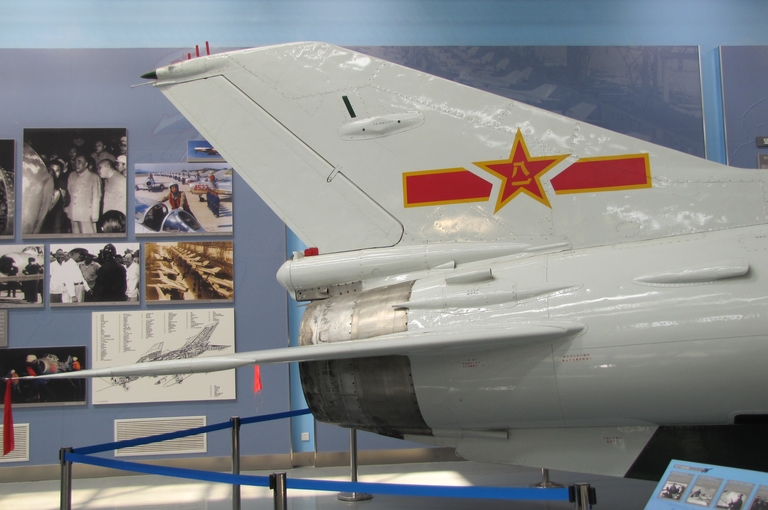 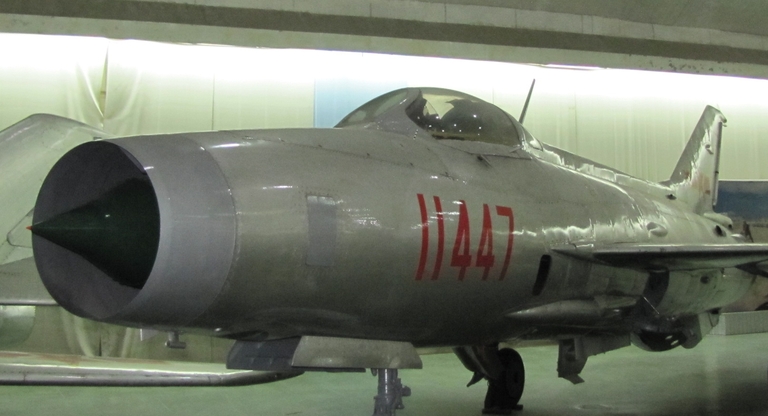 Above, below: Early model J-7
Fishbed, with a pair of cloned K-13A Atoll AAMs, cloned from the AIM-9B
Sidewinder (All images © Air Power Australia, via Zhenguan Studio).
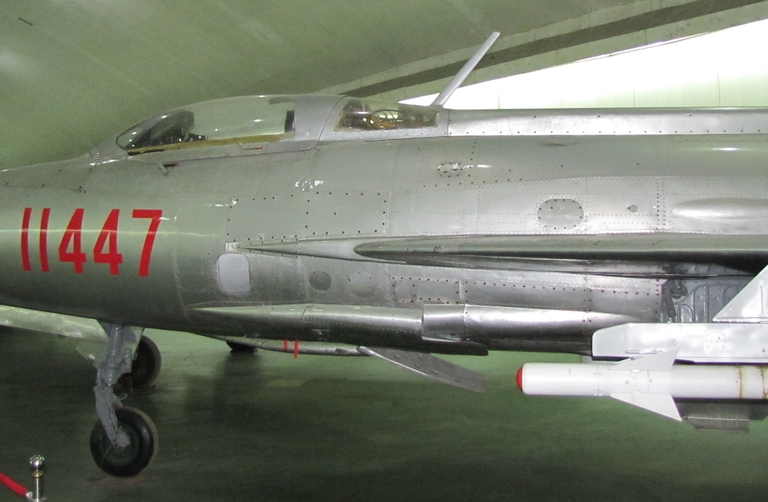 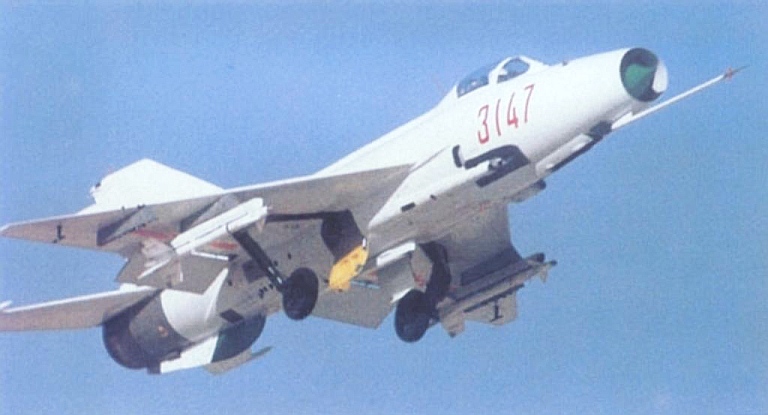 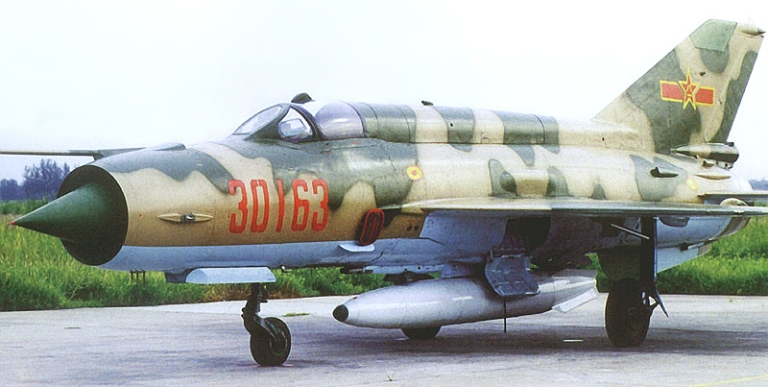 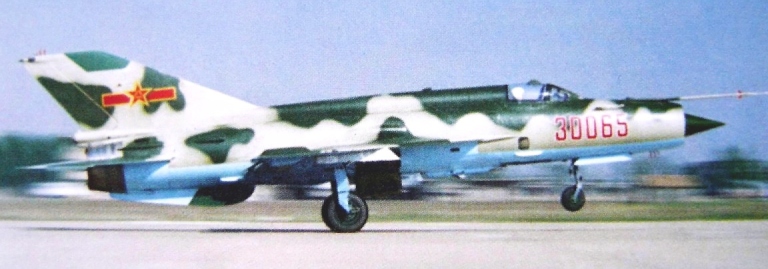  |
    The unusual J-7FS prototype was
used to test a chin inlet arrangement, reminiscent of the F-8 Crusader
series. It is likely the developmental effort was in support of the
J-10 program.
|
|
The Fantan is a direct derivative of the
J-6/MiG-19 Farmer, built as a tactical interdictor and close air
support fighter. It remains in service and many aircraft are being
subjected to technology insertion upgrades to carry guided munitions.
Modifications include a ventral conformal fuel tank and various avionic
upgrades.
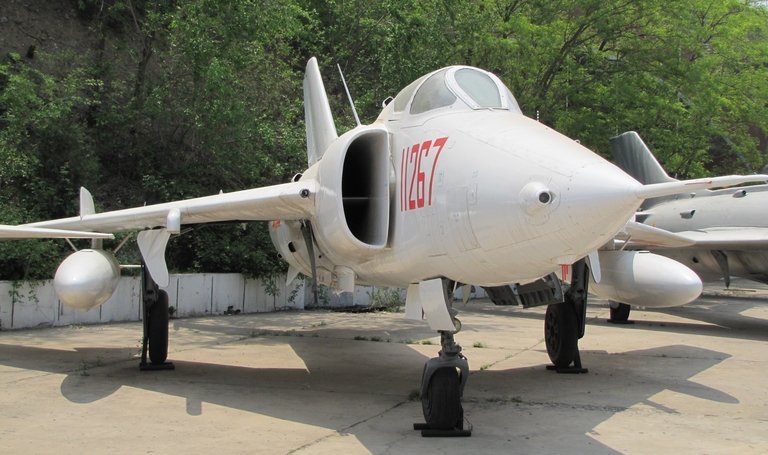 Above, below: Q-5A Fantan A variant (© Air Power Australia, via Zhenguan Studio). 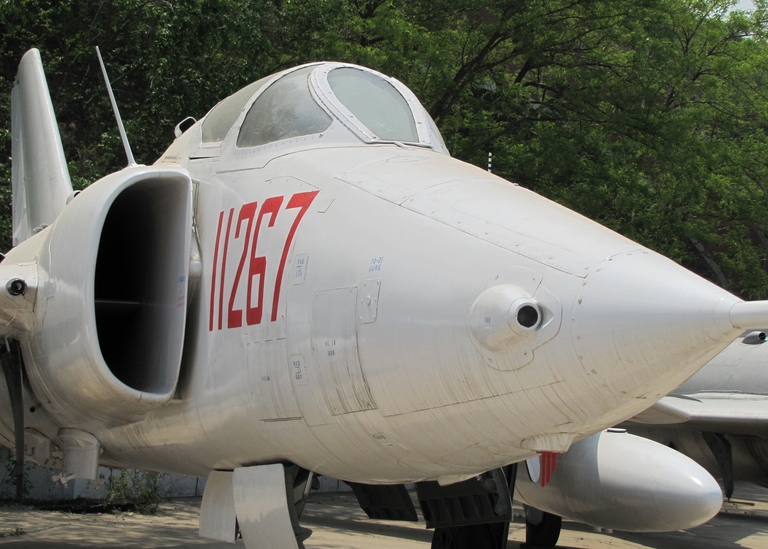 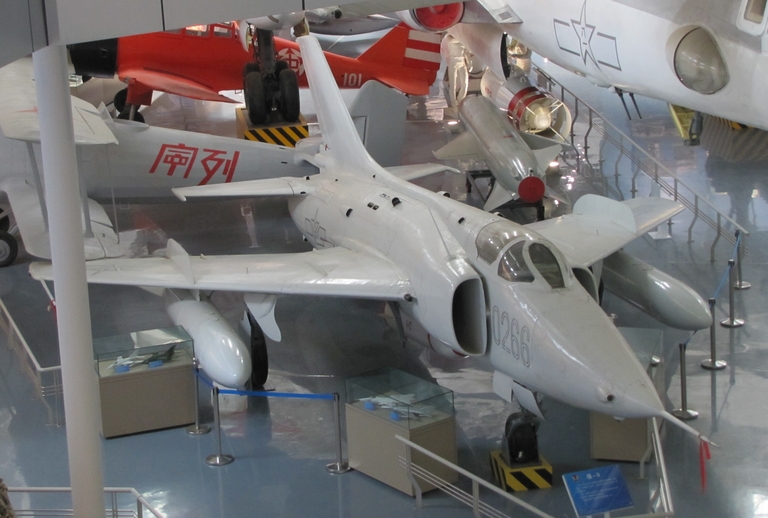 Q-5A Fantan A variant with low visibility markings (© Air Power Australia, via Zhenguan Studio). 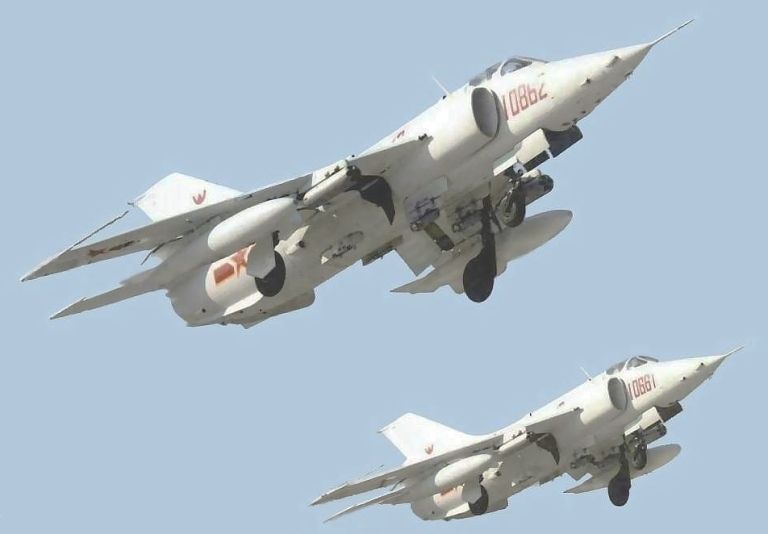 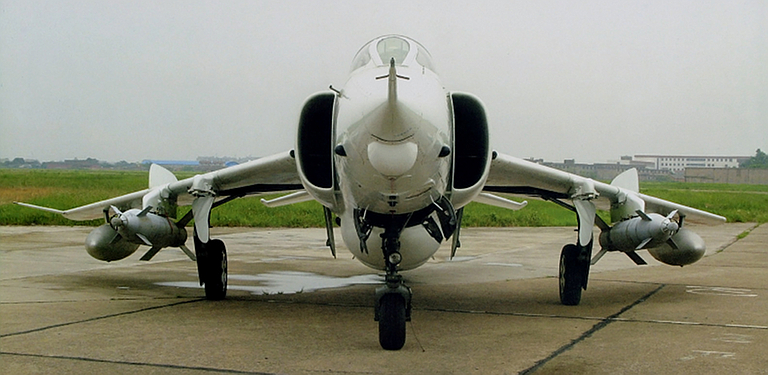 Upgraded Q-5C with LT-2 LGB and conformal tank. 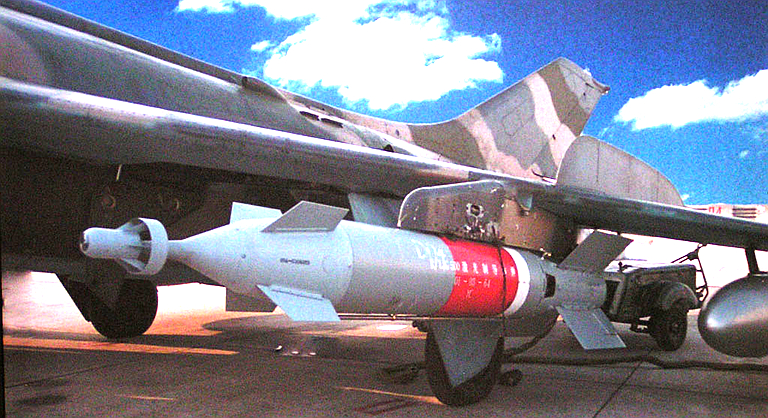 Q-5M with LT-2 LGB. 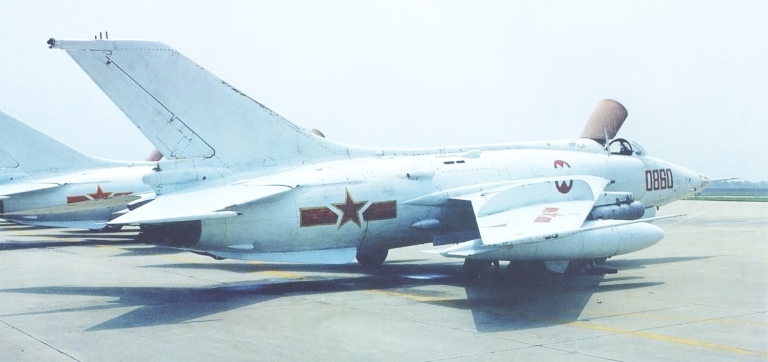 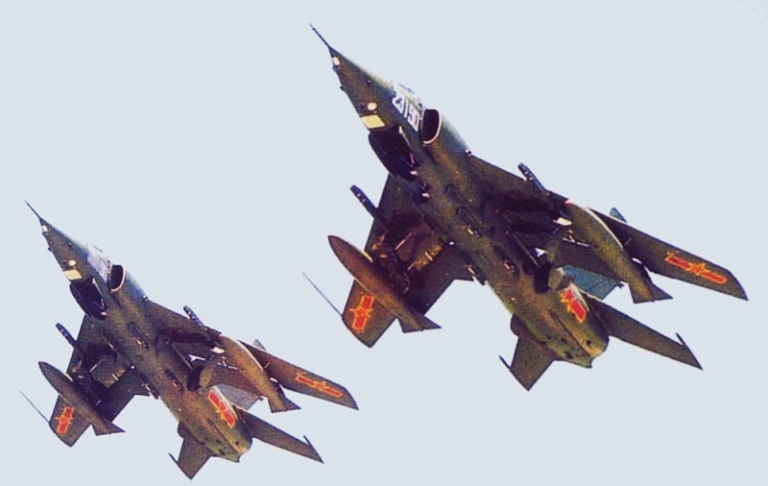 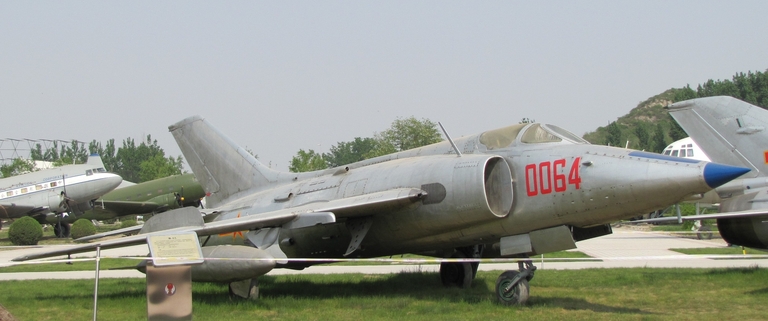 Q-5Z prototype with rangefinding radar in nosecone (© Air Power Australia, via Zhenguan Studio). 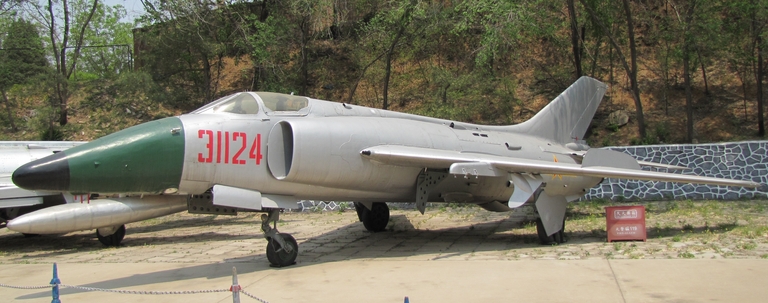 Above, below: Q-5 radar testbed on display at Datangshan (© Air Power Australia, via Zhenguan Studio). 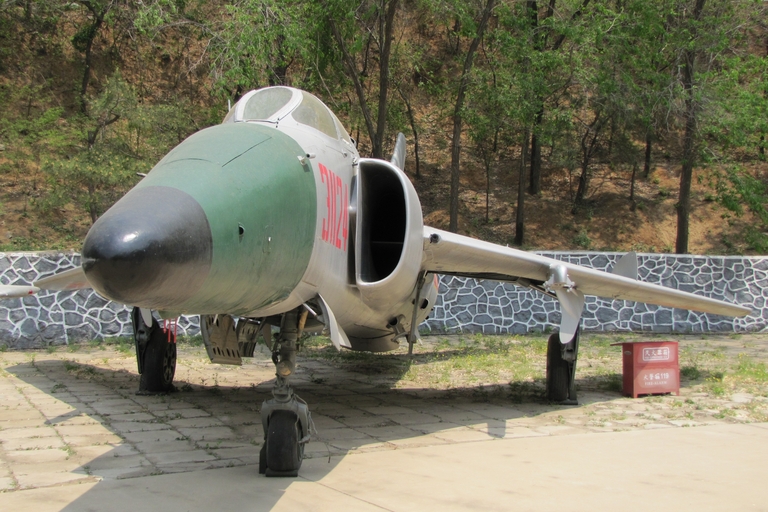 |
Shenyang J-8 Finback
|
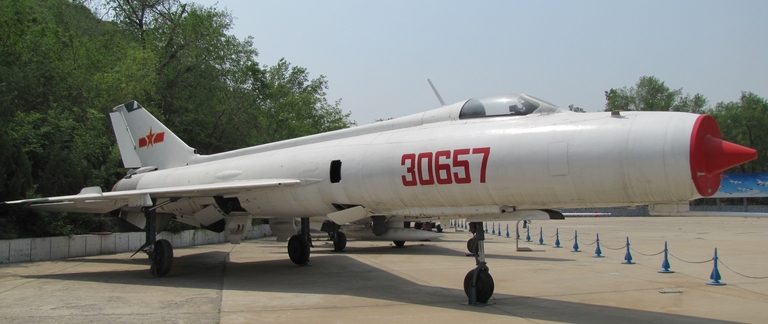 Above, below: J-8-I Finback A on display at Datangshan (© Air Power Australia, via Zhenguan Studio). 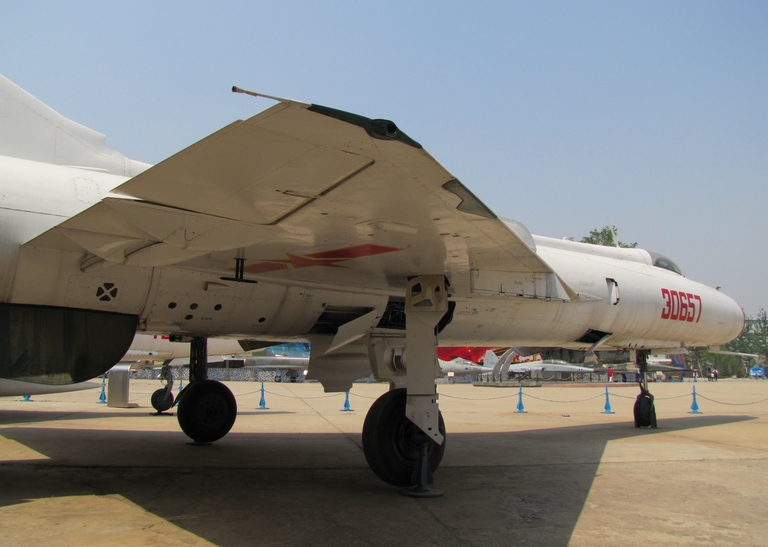 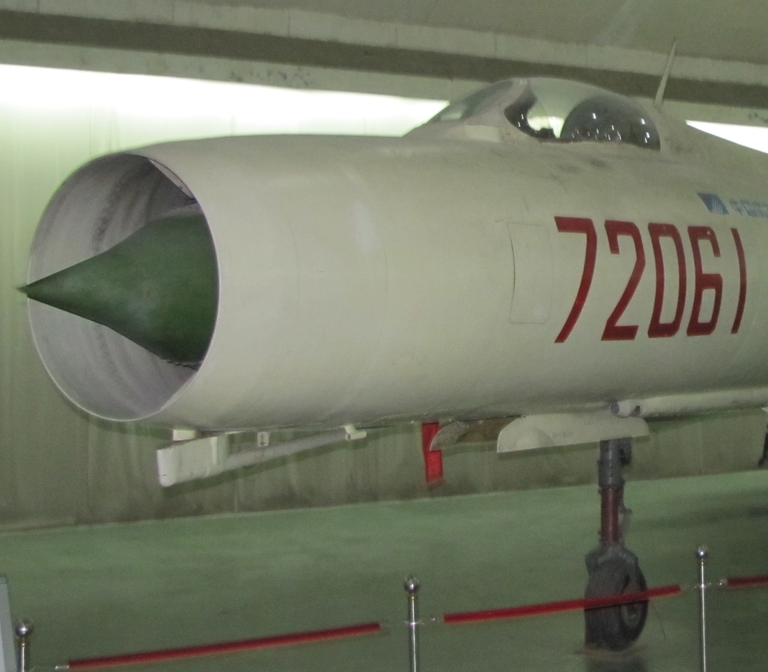 J-8-I Finback A on display at Datangshan (© Air Power Australia, via Zhenguan Studio). 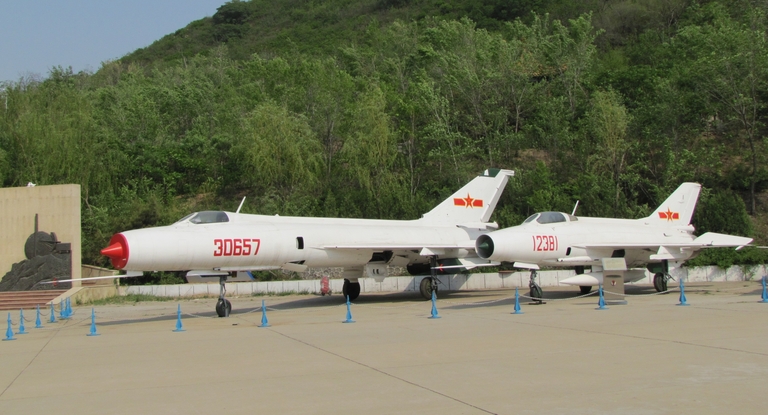 J-8-I Finback A and J-7 Fishbed on display at Datangshan (© Air Power Australia, via Zhenguan Studio). 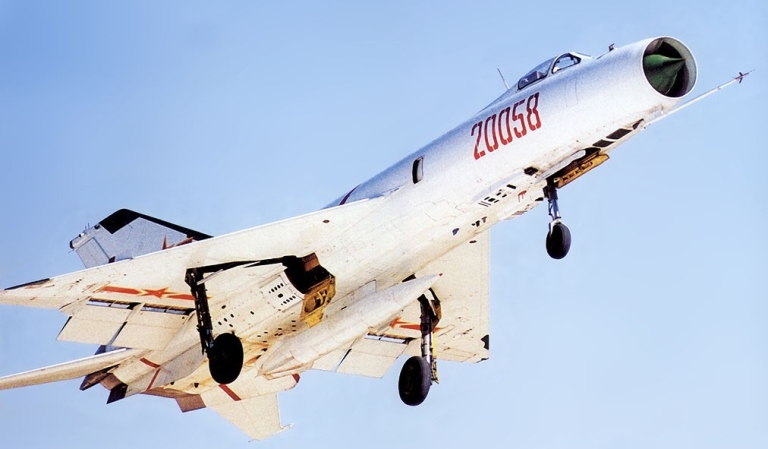 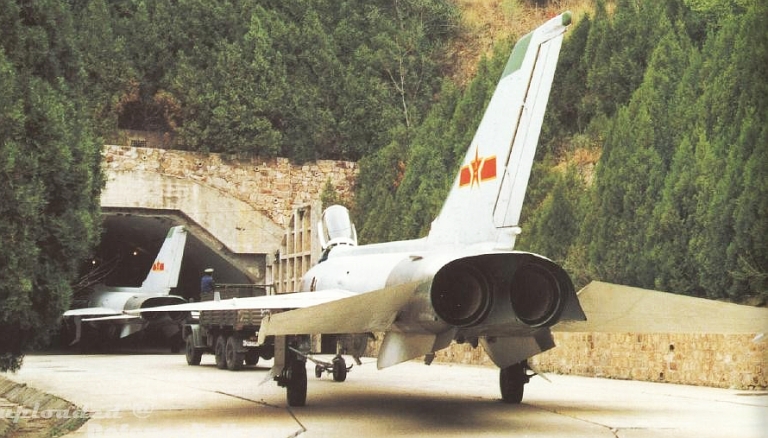 |
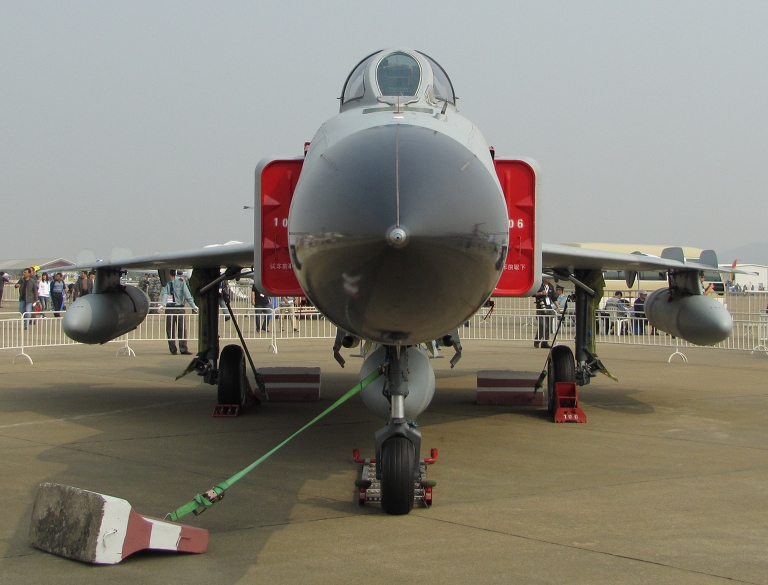
A late production J-8F Finback on display at Zhuhai 2010 (All images © Air Power Australia, via Zhenguan Studio). 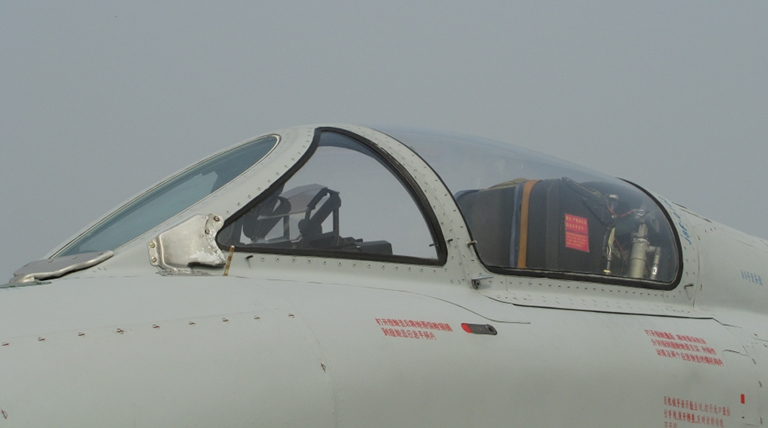
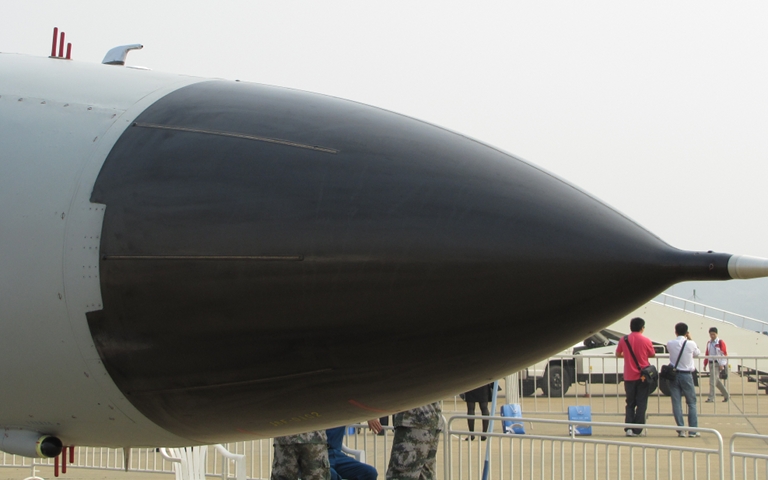
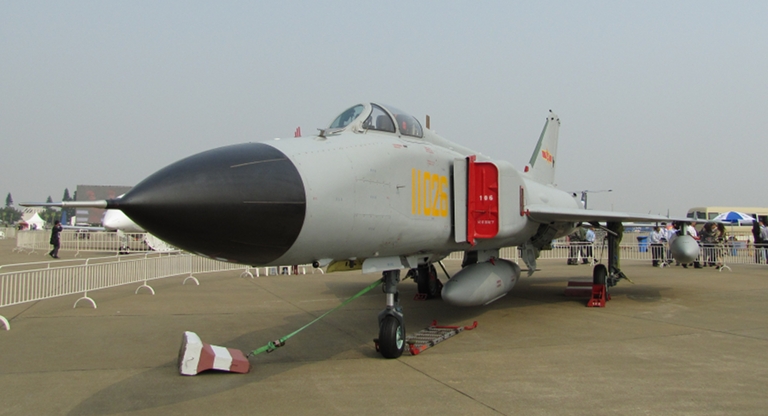
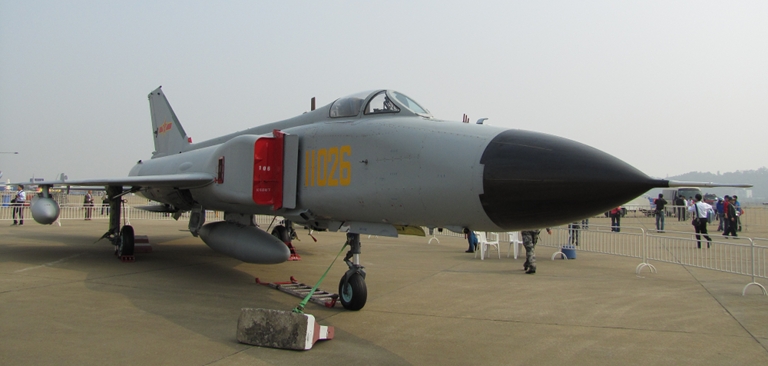
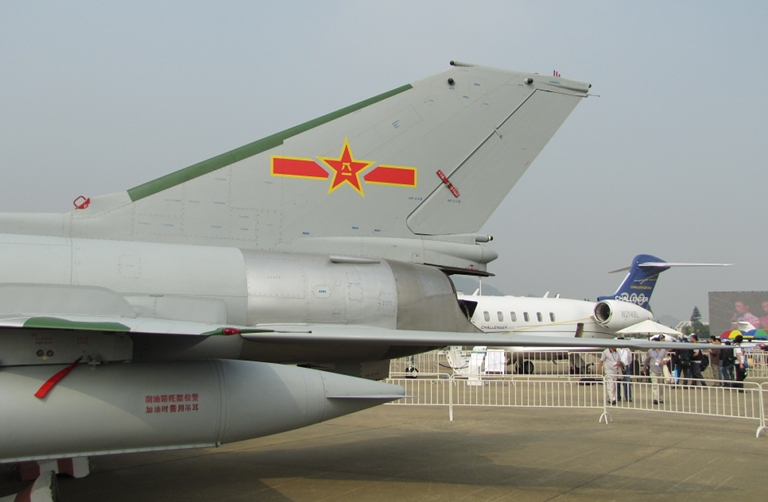
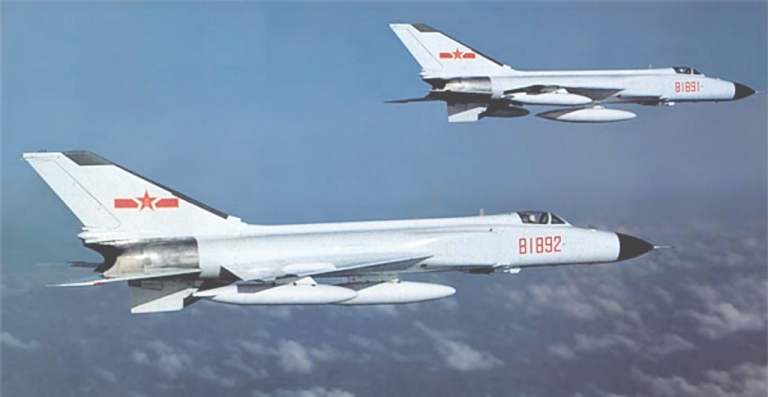 The J-8B Finback remains widely used as an interceptor. 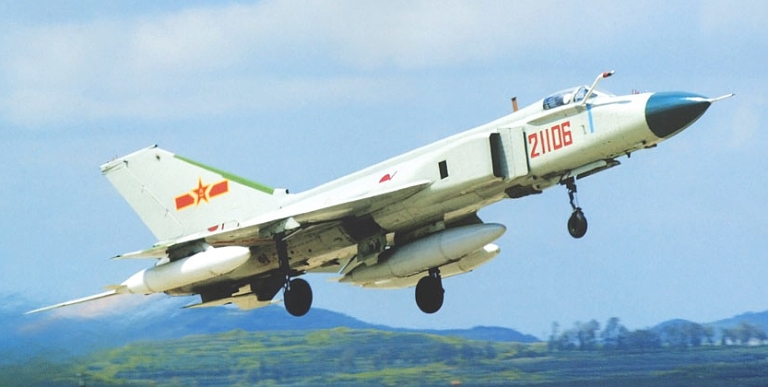 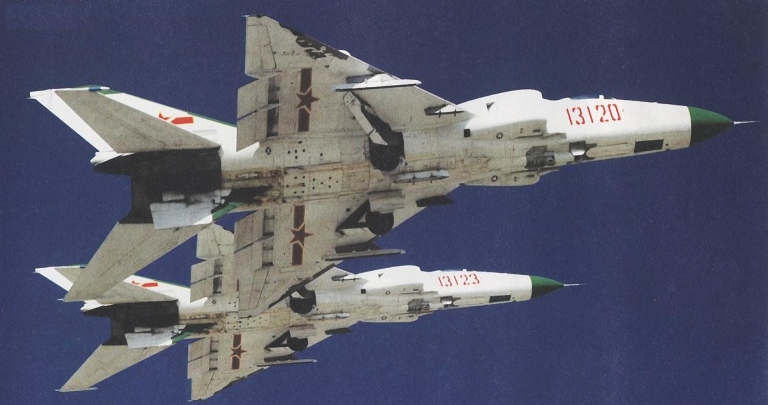 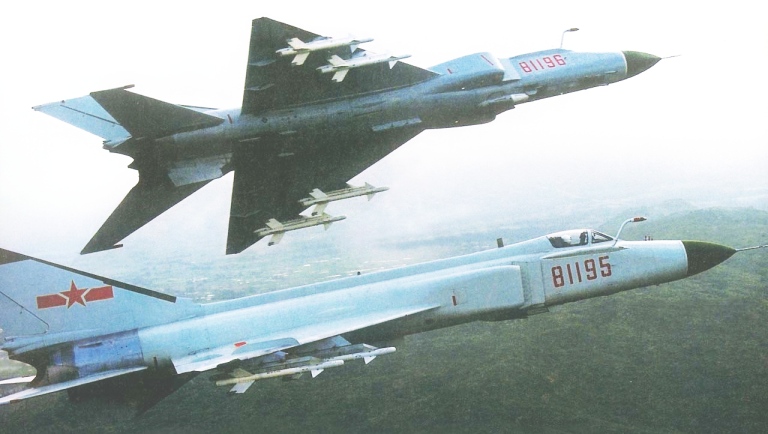 |
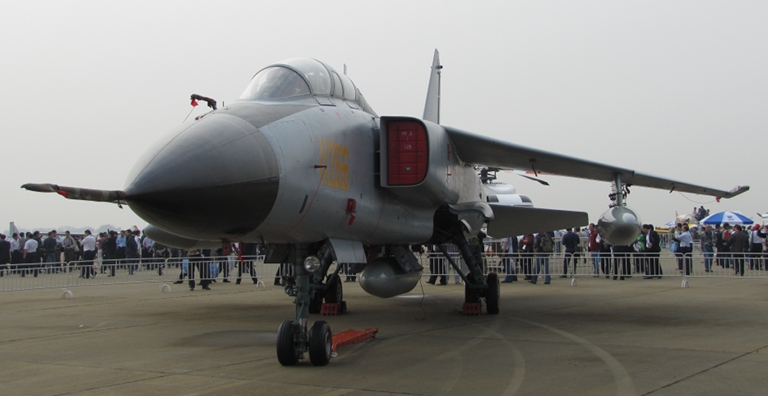 A late production JH-7 Flounder on display at Zhuhai 2010 (All images © Air Power Australia, via Zhenguan Studio). 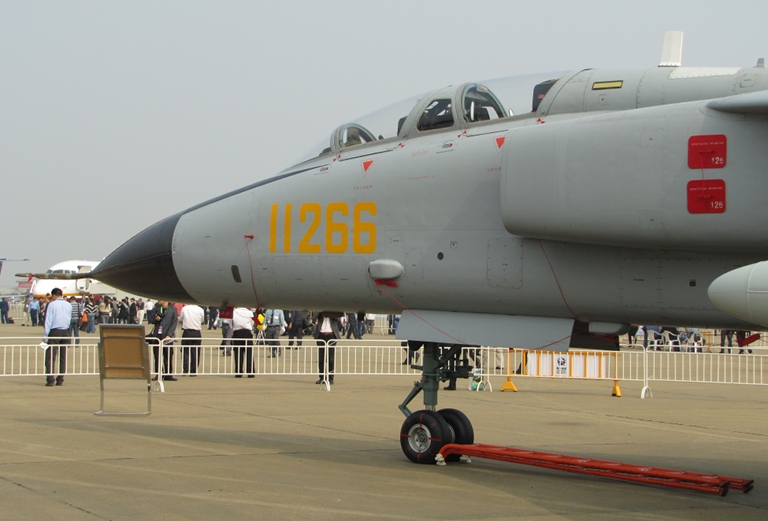 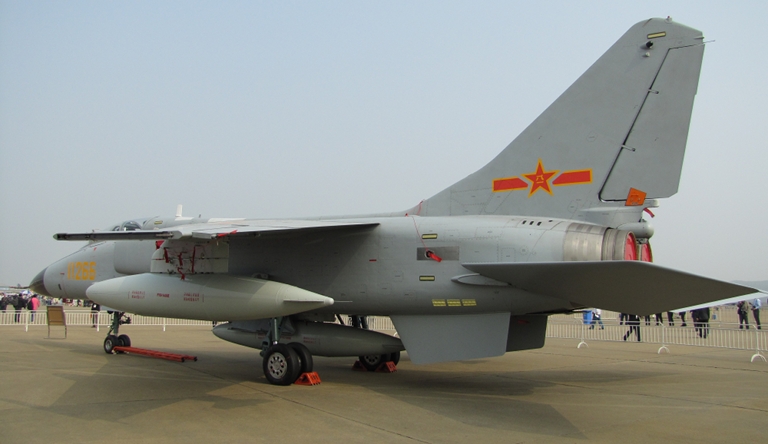 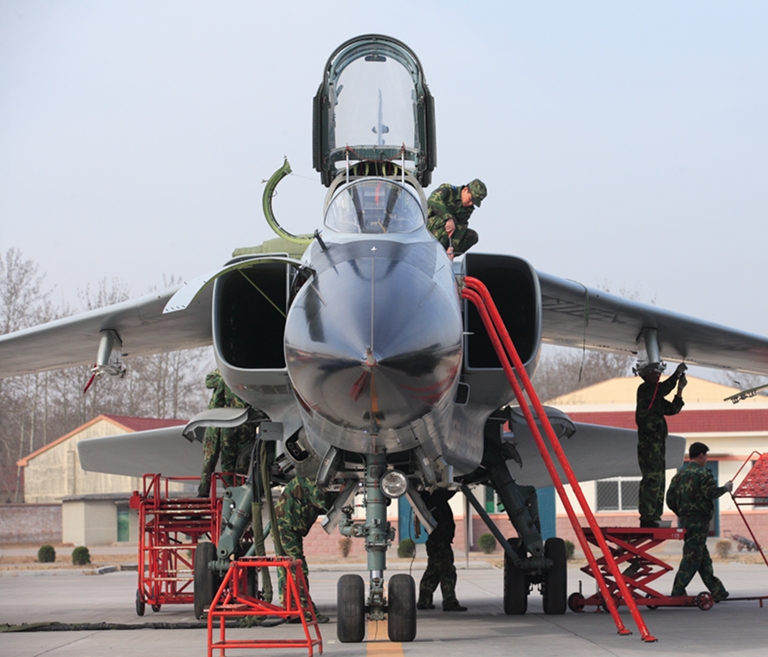 JH-7A turnaround (Chinese Internet).  JH-7A armed with KD-88 ASM and carrying datalink pod (Chinese Internet). 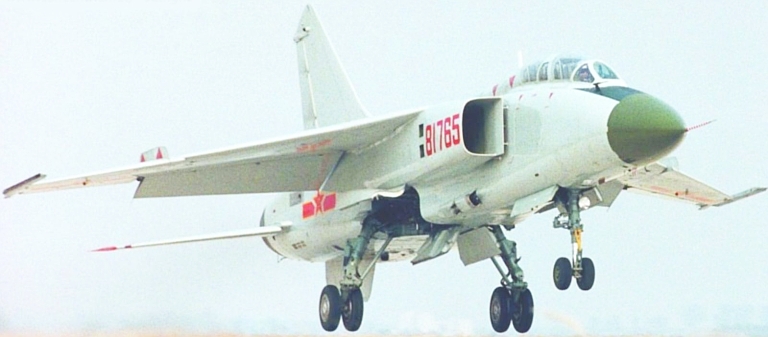 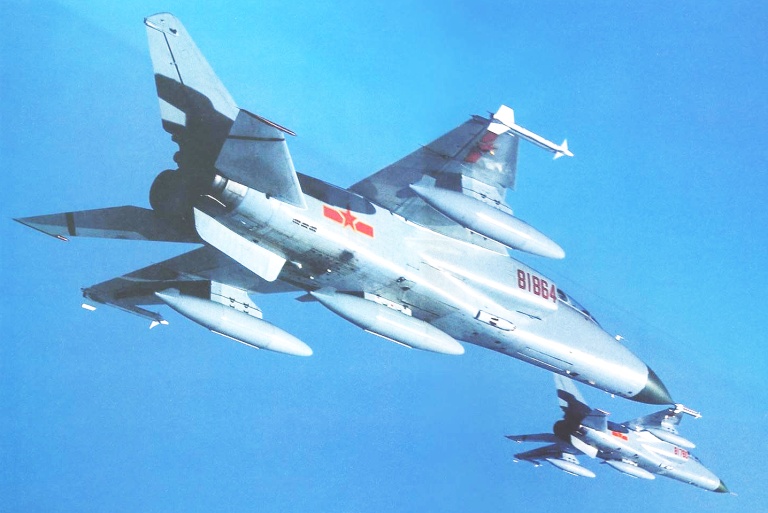 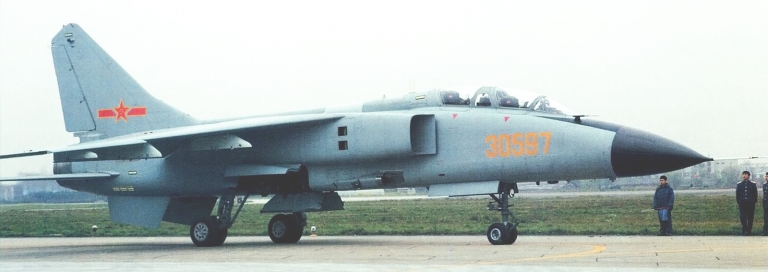 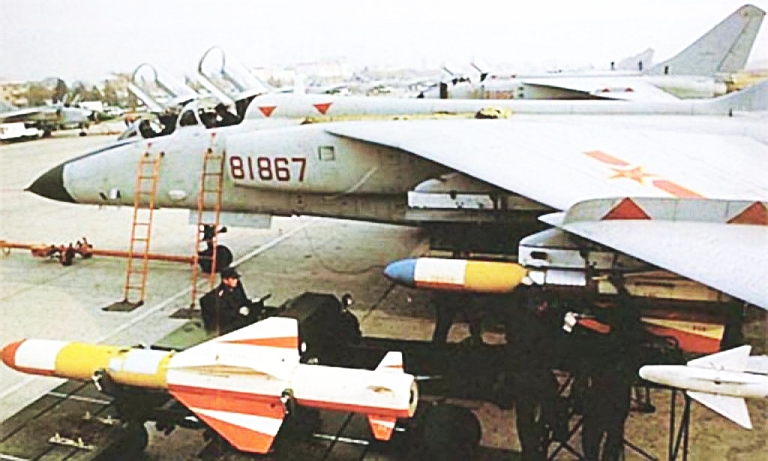 |
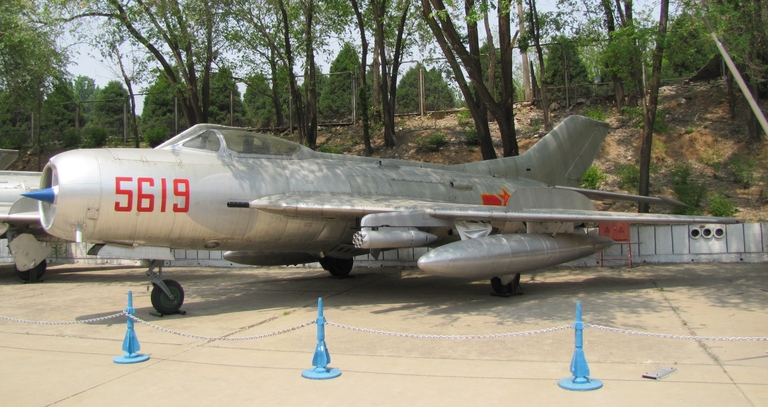
Shenyang J-6 / MiG-19 FarmerThe J-6 Farmer, a licenced Soviet MiG-19S,
was the backbone of the PLAAF and PLANAF fighter fleets until the
1990s, when imported Russian Su-27SK Flanker B fighters displaced it in
this role. In recent years the PLA retired its last remaining
operational examples, but the type continues to be widely operated by
Chinese client nations in the developing world. During its long service
life, the Farmer was subject to more experimentation than any other PLA
aircraft, evolving eventually into the parallel production Q-5 Fantan.
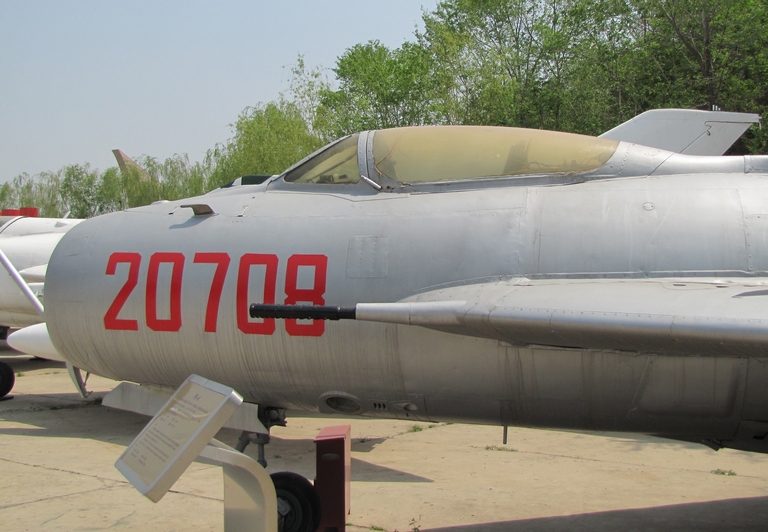
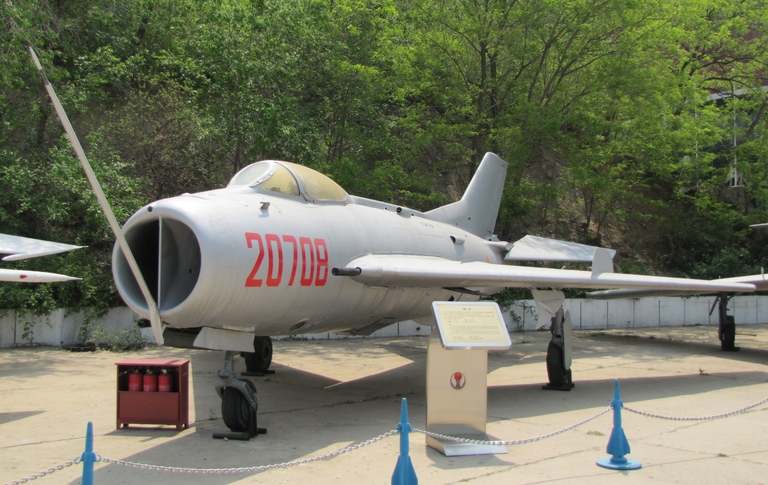
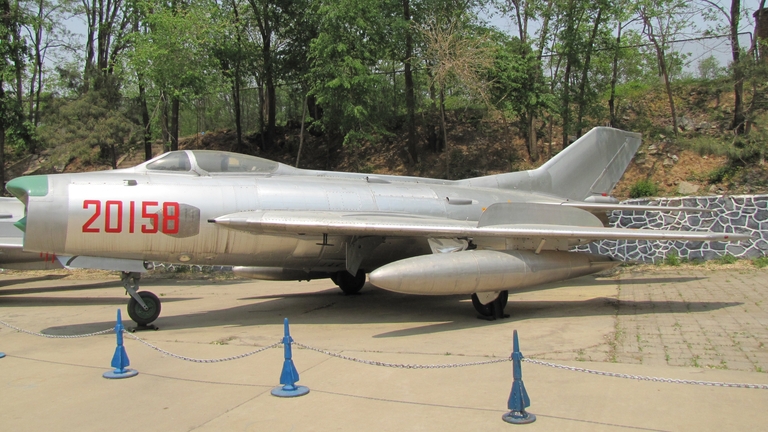
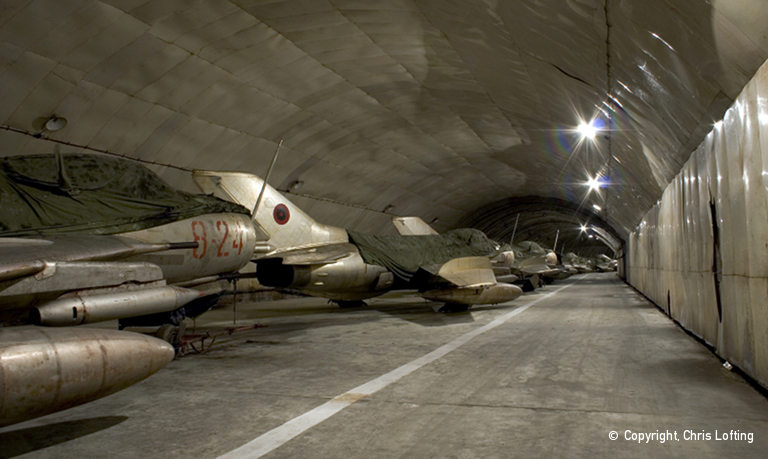 Above, below: Derelict Chinese supplied J-6 Farmers, with pitot probes in characteristic stowed position, parked in the main tunnel of the 14 metre wide underground hangar at Gjadër / Lezhë-Zadrima AB in Albania. Most Chinese client nations have been supplied with the J-6 (Courtesy of Chris Lofting). 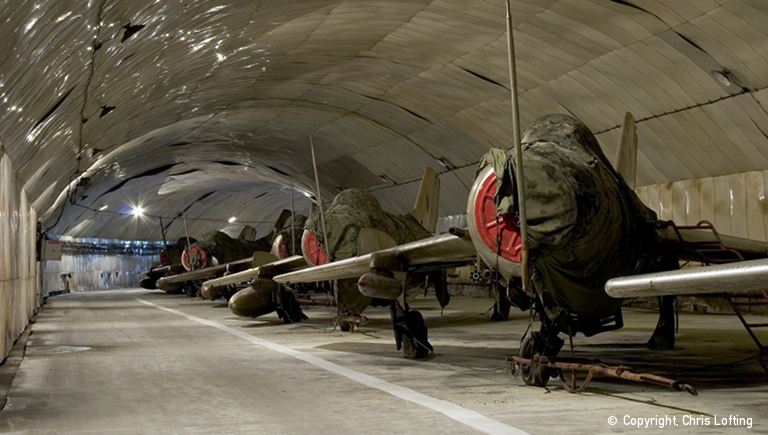 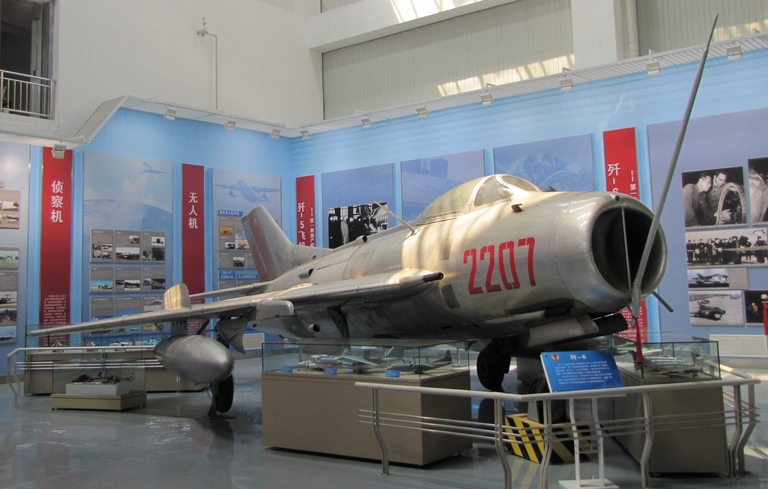 Chinese built J-6 Farmers on
display at Datangshan (©
Air Power Australia, via Zhenguan Studio).
   Imported Soviet MiG-19P Farmer B. This variant was fitted with the RP-1 Izumrud / High Fix ranging radar (© Air Power Australia, via Zhenguan Studio). 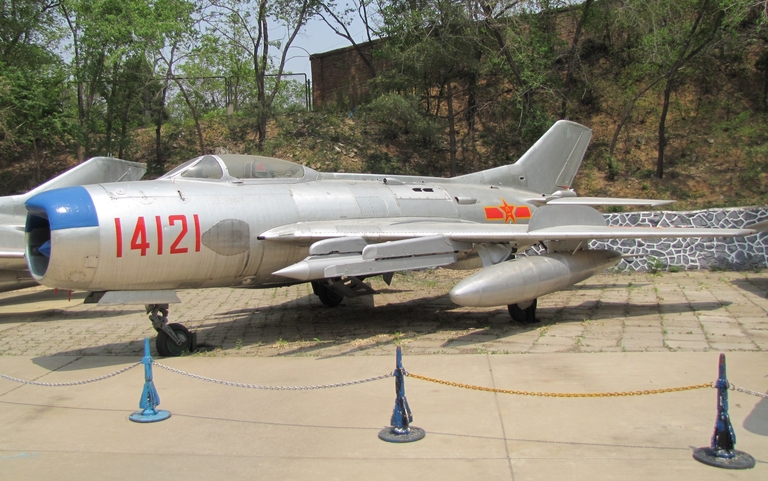 Imported Soviet MiG-19PF Farmer E.
This variant was fitted
with the RP-1 Izumrud / High Fix ranging radar and armed
with the K-5M / AA-1 Alkali beamriding AAM (© Air
Power Australia, via Zhenguan Studio).
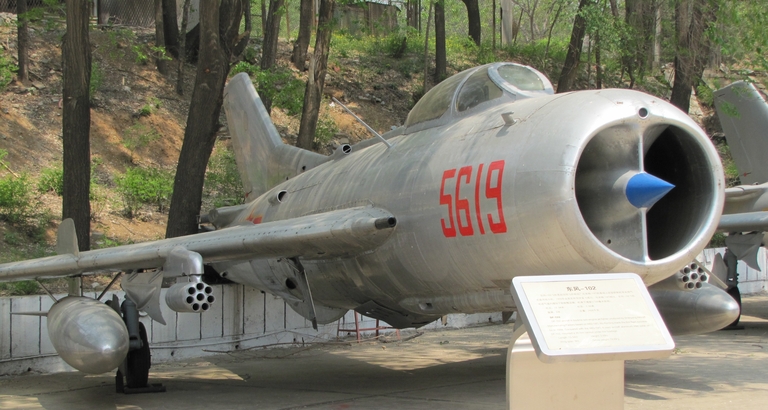
 The DF-102 was a Chinese Farmer
variant with a unique inlet arrangement and a centrebody bullet radome
(© Air
Power Australia, via Zhenguan Studio).
 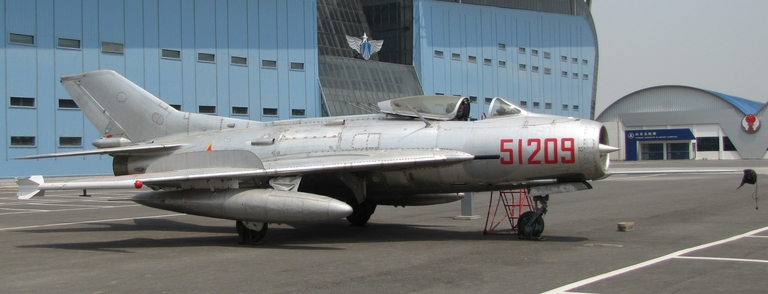 Shenyang J-6-III Farmer. Note the
wingtip rails for PL-2A Atoll AAMs, and standard 23 mm gun arrangement
(© Air
Power Australia, via Zhenguan Studio).
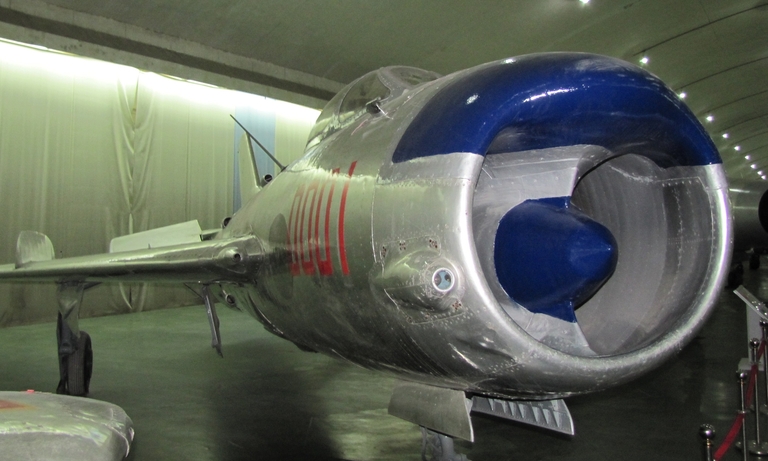
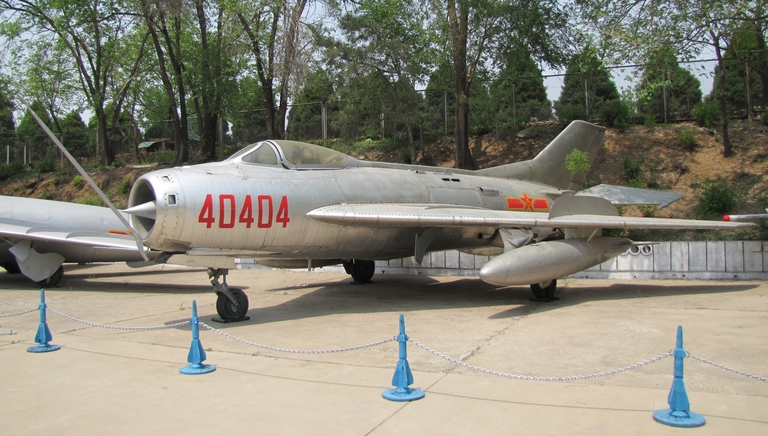 Shenyang J-6-IV Farmer. The wing root gun fairings are removed (© Air Power Australia, via Zhenguan Studio). 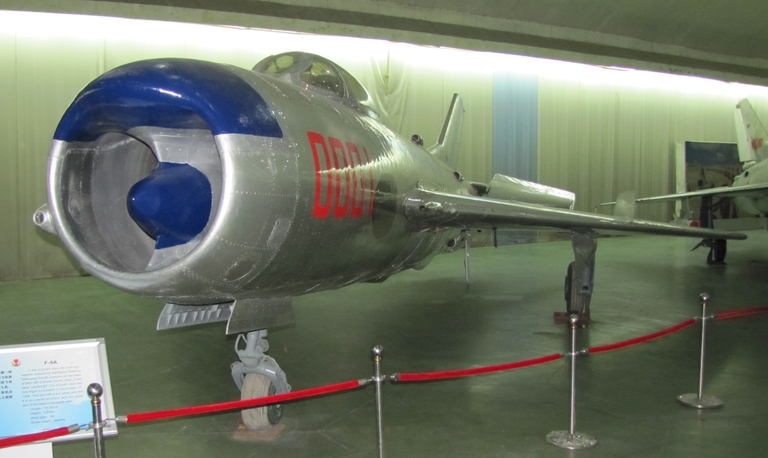 The DF-103 or F-6A was a reverse
engineered Soviet MiG-19P Farmer B. This variant was
fitted with the RP-1 Izumrud / High Fix ranging radar and
standard wing root gun armament (©
Air Power Australia, via Zhenguan Studio).
 |
Resources
|
|
|
|
Technical Report APA-TR-2007-0104 |
|
|||||||||||||
|
|
|
|
|
|
|
|
|
|
|
|||
|
|
|
|
|
|
|
|
|
|
|
|||
 |
|
|
|||||||||||
| Artwork, graphic design, layout and text © 2004 - 2014 Carlo Kopp; Text © 2004 - 2014 Peter Goon; All rights reserved. Recommended browsers. Contact webmaster. Site navigation hints. Current hot topics. | |||||||||||||
|
Site Update
Status:
$Revision: 1.753 $
Site History: Notices
and
Updates / NLA Pandora Archive
|
|||||||||||||
|
|
Tweet | Follow @APA_Updates | |||||||||||
|
|
|||||||||||||
|
|
|||||||||||||