|
||||||||||||||||||||||
 |
||||||||||||||||||||||
![F-22A Raptor, FB-22, F-22E, F-22N and Variants Index Page [Click for more ...]](APA/f-fb-22.png "F-22A Raptor, FB-22, F-22E, F-22N and Variants Index Page [Click for more ...]") |
 |
![People's Liberation Army Air Power Index Page [Click for more ...]](APA/pla-air-pwr.png "People's Liberation Army Air Power Index Page [Click for more ...]") |
 |
 |
 |
 |
 |
 |
![Military Ethics, Culture, Education and Training Index Page [Click for more ...]](APA/ethx-culture.png "Military Ethics, Culture, Education and Training Index Page [Click for more ...]") |
 |
||||||||||||
 |
![Russian / Soviet Weapon Systems Index Page [Click for more ...]](APA/rus-weps.png "Russian / Soviet Weapon Systems Index Page [Click for more ...]") |
 |
 |
 |

|
 |
 |
 |
 |
 |
||||||||||||
 |
 |
|||||||||||||||||||||
| Last Updated: Mon Jan 27 11:18:09 UTC 2014 | ||||||||||||||||||||||
|
||||||||||||||||||||||
|
||||||||||||||||||||||
|
||||||||||||||||||||||
|
|
|
|
|
|
|
|
|
|
|
||||||||||||
|
|
|
|
|
|
|
|
|
|
|
||||||||||||
|
|
|||||||||||||||||||||
| Last Updated: Mon Jan 27 11:18:09 UTC 2014 | ||||||||||||||||||||||
|
||||||||||||||||||||||
| AIR-AIR
REFUELLING Part 1 A Perspective View |
|||
|
|||
|
The flying boom was by then a well established technique, designed to allow relatively painless hookups between large and unmanoeuvrable aircraft, and had the advantage of allowing high fuel transfer rates of the order of 6,000 lb/min. A boom operator on the rear of the aircraft would steer the winged nozzle into a receptacle in the upper fuselage of the receiver aircraft. SAC was more than satisfied with the performance of the KC-135 and eventually purchased over 600 airframes thus creating the world's largest tanker fleet. The payoff in the use of AAR was evident and by the early sixties both Tactical Air Command (TAC) and the US Navy moved to equip their tactical aircraft with refuelling hardware. TAC retained the now USAF standard boom receptacles, while the USN adopted the cheaper and smaller probe/drogue technique. The probe/drogue technique involves the tanker trailing a hose with a drogue equipped receptacle, with receiver aircraft manoeuvring their probes into the drogue for a hookup. The advantage of this technique lay in the relatively compact and light hardware to be fitted to the tanker, a prerequisite for the USN who employed carrier based tactical airframes for the role, ie the KA-3 and KA-6D. The limitation of the probe/drogue hardware was in its restricted fuel transfer rate of less than 1,000 lb/min although this was hardly a problem with single or twin engined tactical jets. By the late sixties the US had clearly become the Free World's largest user of AAR, with the UK trailing second. The RAF employed the probe/drogue technique, refitting obsolete Valiant and later Victor bombers for the role. Tactical aircraft were refuelled from wingtip pods, while a much heavier fuselage hose/drogue system was fitted to refuel bombers and transports at much higher transfer rates. The Vietnam conflict clearly illustrated the benefits in the use of AAR and it is without doubt that SAC and USN tankers played one of the most important yet least publicised roles in the war. The massive air campaigns flown against the North relied heavily upon AAR support and could not have been successful without the tankers. This view was further reinforced by the demands of the massive MAC airlift to Israel during the 1973 Yom Kippur war. By the late seventies operational technique had matured on both sides of the Atlantic and AAR had become firmly embedded in both tactical and strategic air operations. The demand for AAR capacity had grown and new generation of tankers was sought. In the US SAC looked toward a strategic heavyweight tanker/transport to support SAC, MAC and long range deployments by TAC who had by then become committed to the Rapid Deployment Force. A contest between the B-747 and DC-10-30CF was won by the McDonnell Douglas aircraft, with the USAF eventually acquiring 60 of these capable aircraft. With an MTOW of 590,000 lb and fuel capacity of 345,000 lb the KC-10 has truly global capability, with its considerable freight capacity it has vastly simplified TAC deployments as most of the support personnel and equipment for the fighters aircraft travel on the tankers. The UK's tanker force had a much rougher ride. The late seventies saw nine VC-10 airframes earmarked for conversion to dual role tanker/transports to support RAF air defence operations in the North Atlantic and North Sea. These aircraft were not operational though in 1982, and thus two squadrons of Victors formed the backbone of the tanker force when the Argentines invaded the Falkland Islands. Committed to regaining the territory, the UK suddenly found itself with a drastic shortage of tankers given the demands of the campaign. Operations in the South Atlantic saw Nimrods quickly fitted with probes, subsequently C-130s fitted with probes and some C-130s fitted with fuselage hose/drogue hardware in makeshift installations to refuel C-130s. The RAF tanker force acquitted itself admirably by the end of the campaign, with many complex operations often involving multiple tanker to tanker refuellings to provide transports and Vulcan bombers with the fuel needed to operate over the remote South Altantic. The success came at a price though, with many Victor aircraft using up much of their remaining airframe life. At this time the Victors are due for early retirement, their role to be taken over by mixed force of 13 VC-10K.2 and VC-10K.3 aircraft which are due for conversion in the next two years. In addition to the VC-10s, the RAF acquired six former BA Lockheed L-1011-500 Tristars, which have been converted to tanker/transport configuration. Three former Pan-Am Tristars are also due for conversion. One of the major reasons for the RAF's large commitment to AAR is the air defence situation in the North Atlantic, which has seen the Russians build up a large force of Backfire bombers with supporting Flanker long range fighters. These aircraft would strike at targets in the UK and interdict shipping and thus the RAF is in the process of expanding its long range air defence capability. This situation has prompted the US Navy, which has a commitment to a forward deployed maritime posture, to investigate land based tankers as a supplement to CV tankers. SAC however jealously guard their territory and are now in the process of flight testing Mk.32B pods on a KC-10 and are looking toward retrofitting pods on to a number of KC-135 airframes. The KC-135 force is becoming expensive to run with J57 turbojets and SAC are now refitting these aircraft with CFM-56 fans and in some instances, TF-33 (JT3D) fans reclaimed from older B-707 aircraft bought up second hand and held in storage. While the US and the UK clearly lead the Free World in terms of size and capability of AAR forces, other nations have followed the lead. Spain, Morocco, Canada (2), Brazil (4), Israel (5) and Saudi Arabia (6) have all acquired B-707 derivative tankers, with Italy, West Germany and Japan currently considering their options. Of interest are the Israeli aircraft, retrofitted with booms by IAI, and the Saudi aircraft, which are new build CFM-56 powered KE-3A airframes bought to support the E-3/F-15 air defence force. These aircraft also carry Beech 1080 pods to refuel the Tornado IDS strike force. On the other side of the Iron Curtain, the Russians are currently phasing out older Mya-4 Bison tankers replacing them with new build Il-76 Midas tankers to support their strategic force of Bears, Backfires and new Blackjacks. A widebody tanker is expected, a derivative of the Il-86 Camber airframe. Clearly all forward looking air forces today accept the necessity of an AAR capability in air operations, the humble tanker is indeed a potent force multiplier. From the global perspective the RAAF's tanker force is modest in size and capability, but it is beyond any doubt a significant step in the right direction. With the currently benign regional environment and financially restrained mood in Canberra it will be difficult for the RAAF to make a strong case for a full size operational force of 8-12 boom, pod and fuel cell equipped tankers, however the increasing tendency toward instability throughout the Pacific and the growing power projection capability of India in the region could see changes further down the track. Much will depend upon our politicians' perceptions of the situation, which excluding the notable exception of Kim Beazley, have tended toward underestimating by a significant margin the potential for difficulties. If future governments remain sincerely committed to helping maintain stability in the South Pacific and to the North of Australia, they will ultimately have no choice than to build up a substantial tanker/transport capability. Not to do so could invite the kind of situation we would all ultimately like to avoid.
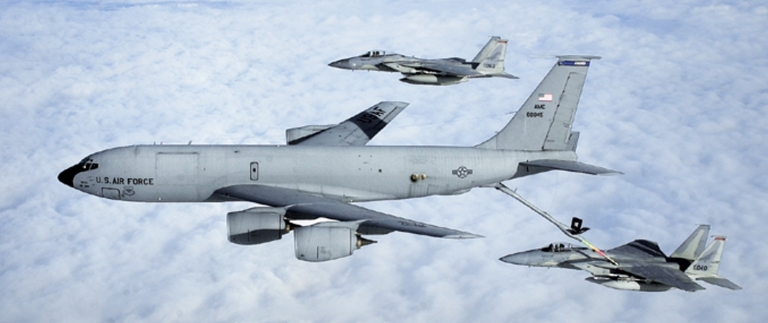
KC-135. The ubiquitous Boeing KC-135 is the numerically most significant tanker/transport in service today. This aircraft has acquitted itself very well in every major US military operation since the early sixties, reliably carrying up to 200,000 lb of fuel. The KC-135 force is today being refitted with CFM-56 and TF-33 turbofans, the CFM-56 powerplants increasing available fuel offload by an impressive 50%.
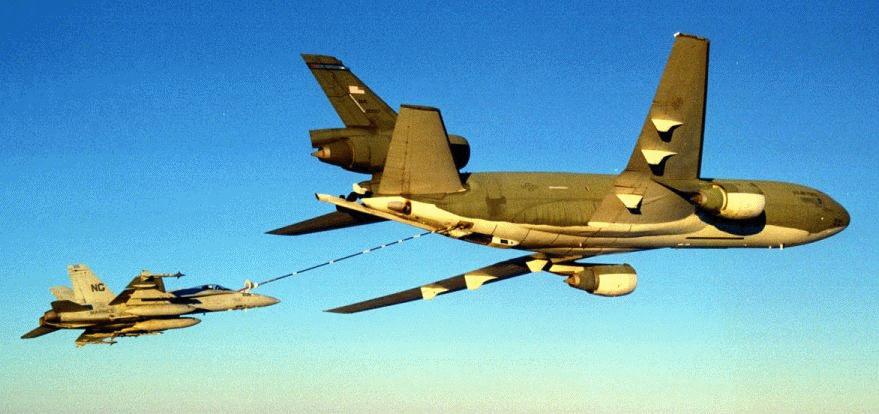
KC-10. The massive MDC KC-10 is a true strategic heavyweight in the AAR game. These tanker/transports entered service a decade ago, supporting MAC, SAC, TAC and USN aircraft. The USAF F-111 raid on Libya would have been logistically unmanagable without the KC-10. At the time of writing, flight testing was under way on Mk.32 wing pod installations for the KC-10. Long term USAF plans will see much of the tanker force fitted with pods thus vastly expanding the strike radius of US Navy carrier task forces.
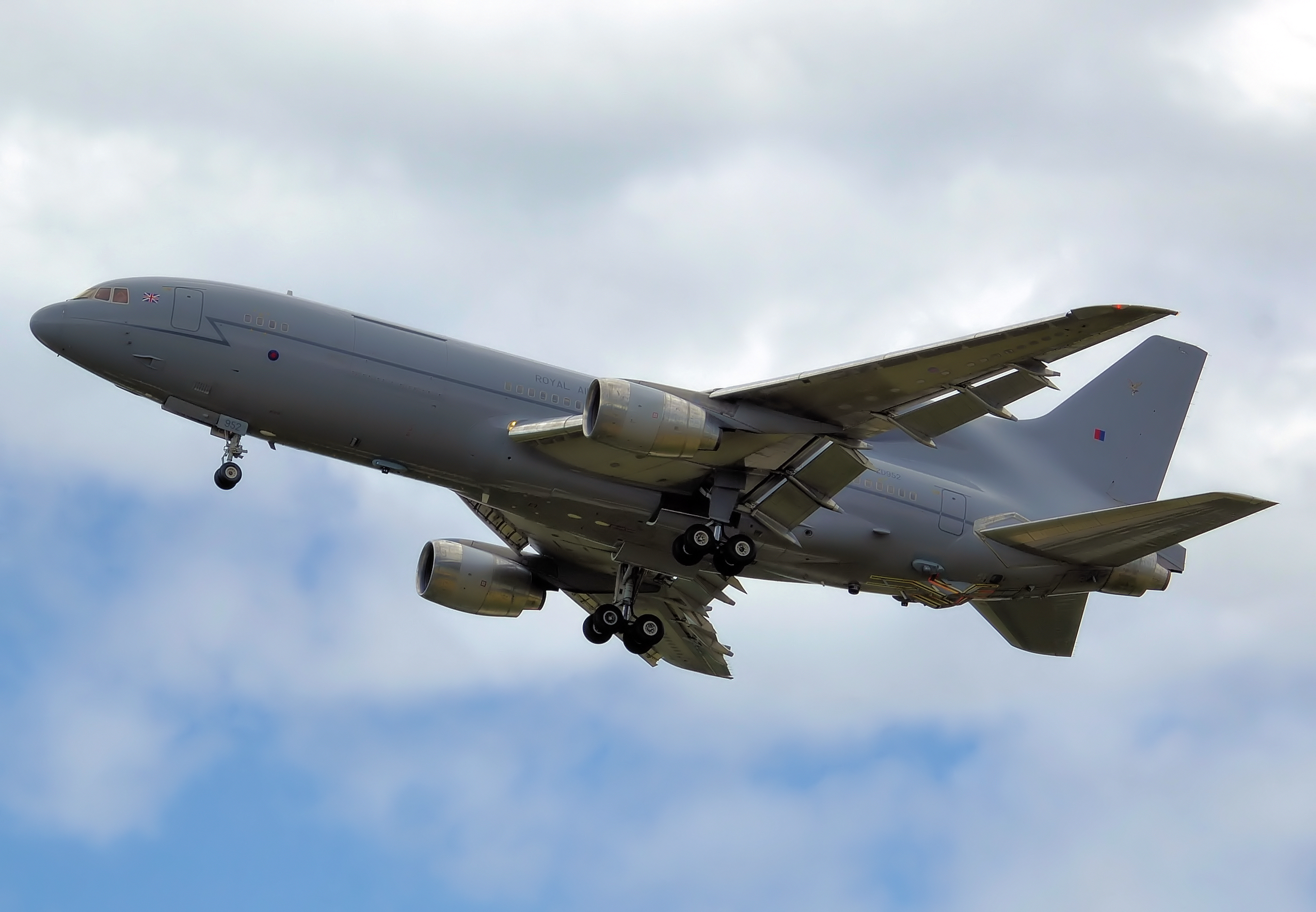
Lockheed L-1011 Tristar. The RAF has acquired nine former airline Tristars, six of which have be converted to tanker transports and three of which await conversion. After the trauma of refuelling operations in the South Atlantic, the UK government accepted the need for a substantial tanker/transport force which will ultimately comprise 9 Tristars and 22 VC-10s, as the current Victors are retired in the early nineties.
|
|||
|
|||||||||||||
|
|
|
|
|
|
|
|
|
|
|
|||
|
|
|
|
|
|
|
|
|
|
|
|||
 |
|
|
|||||||||||
| Artwork, graphic design, layout and text © 2004 - 2014 Carlo Kopp; Text © 2004 - 2014 Peter Goon; All rights reserved. Recommended browsers. Contact webmaster. Site navigation hints. Current hot topics. | |||||||||||||
|
Site Update
Status:
$Revision: 1.753 $
Site History: Notices
and
Updates / NLA Pandora Archive
|
|||||||||||||
|
|
Tweet | Follow @APA_Updates | |||||||||||
|
|
|||||||||||||
|
|
|||||||||||||