|
||||||||||||||||||||||
 |
||||||||||||||||||||||
![F-22A Raptor, FB-22, F-22E, F-22N and Variants Index Page [Click for more ...]](APA/f-fb-22.png "F-22A Raptor, FB-22, F-22E, F-22N and Variants Index Page [Click for more ...]") |
 |
![People's Liberation Army Air Power Index Page [Click for more ...]](APA/pla-air-pwr.png "People's Liberation Army Air Power Index Page [Click for more ...]") |
 |
 |
 |
 |
 |
 |
![Military Ethics, Culture, Education and Training Index Page [Click for more ...]](APA/ethx-culture.png "Military Ethics, Culture, Education and Training Index Page [Click for more ...]") |
 |
||||||||||||
 |
![Russian / Soviet Weapon Systems Index Page [Click for more ...]](APA/rus-weps.png "Russian / Soviet Weapon Systems Index Page [Click for more ...]") |
 |
 |
 |

|
 |
 |
 |
 |
 |
||||||||||||
 |
 |
|||||||||||||||||||||
| Last Updated: Mon Jan 27 11:18:09 UTC 2014 | ||||||||||||||||||||||
|
||||||||||||||||||||||
|
||||||||||||||||||||||
|
||||||||||||||||||||||
|
|
|
|
|
|
|
|
|
|
|
||||||||||||
|
|
|
|
|
|
|
|
|
|
|
||||||||||||
|
|
|||||||||||||||||||||
| Last Updated: Mon Jan 27 11:18:09 UTC 2014 | ||||||||||||||||||||||
|
||||||||||||||||||||||
| Tomahawks,
Submarines and the F-111 |
|||||||||||||||||||||||||||||||||||||||||||||||||||||||||||||||||||||||||||||||||||||||||||||||||||||||||||||||||||||||||||||||||||||||||||||||||||||||||||||||||||||||||||||||||||||||||||||||||||||||||||||||||||||||||||||||||||||||||||||||||||||||||||||||||||||||||||
|
|||||||||||||||||||||||||||||||||||||||||||||||||||||||||||||||||||||||||||||||||||||||||||||||||||||||||||||||||||||||||||||||||||||||||||||||||||||||||||||||||||||||||||||||||||||||||||||||||||||||||||||||||||||||||||||||||||||||||||||||||||||||||||||||||||||||||||
|
One of the ideas which has surfaced in recent times is that of replacing the ADF's strategic deterrent, the F-111, with BGM-109 Tomahawk Land Attack Cruise Missiles (TLAM-C) fired from Collins class submarines. The first time this idea surfaced was during the last Federal election, when the Opposition briefly floated the idea. More recently, a noted Australian defence journal ran a short discussion piece on the subject, concluding that "...the Tomahawk is the logical successor to the F-111s...", and suggesting that an additional two Collins class subs be built, presumably to provide enough hulls for the submarine force to absorb this role. These statements deserve some careful examination, if for no other reason than to clarify what the technical and strategic issues really are. The issues can be decomposed into two fundamental questions, the first question being whether there is a useful role in the ADF's inventory for the sub-strategic conventional Tomahawk, and the second question being, if yes, what is the most appropriate delivery platform for the Tomahawk ? To answer the first question we must look at what capability is offered by the cruise missile in comparison with existing capabilities, and what are its inherent limitations. The Capabilities and Limitations of the Tomahawk What the Tomahawk offers is the ability to stand off launch a precision weapon from outside the boundaries of an opponent's Integrated Air Defence System, and deliver a 1,000 lb class penetration warhead (Bullpup B in Block I, Titanium Case 700 lb in Block III) or Cluster Warhead (166 CEB bomblets) with a CEP (Circular Error Probable) of about 15 ft against a static point target, such as a bunker, building, air defence site or shelter. As the weapon has a range of several hundred nautical miles (600 NM Block I/II, 750 NM Block III) there is no need to directly expose aircraft and aircrew to defensive fire, as well as gaining the additional advantage of extending the reach of the launch platform by the range of the cruise missile. As cruise missiles fly a terrain following profile, they are very difficult to detect and engage, and expensive and specialised air defence weapons such as the SA-10/12-Clam Shell (S-300PMU/V-76N6) may be required to engage them. TOMAHAWK COMPARISON TABLE
*AGM-109H/L were never operationally deployed
|
|||||||||||||||||||||||||||||||||||||||||||||||||||||||||||||||||||||||||||||||||||||||||||||||||||||||||||||||||||||||||||||||||||||||||||||||||||||||||||||||||||||||||||||||||||||||||||||||||||||||||||||||||||||||||||||||||||||||||||||||||||||||||||||||||||||||||||
The
fundamental weakness of a cruise missile is in its cost, in using one
we
achieve the same effect as with a GBU-16/Mk.83 1,000 lb Laser Guided
Bomb or a CBU-87/CEM, at something like 50 to 100 times the cost per
weapon (cca USD 1M vs USD 10K). The US Navy's Gulf War Tomahawk strikes
against Baghdad were not a cheap exercise. The only circumstances where
the cruise missile becomes better dollar value than a Laser or TV
Guided
Bomb is where the air defence system of the opponent is able to inflict
several percent of attrition against the manned bomber delivering the
bomb. Where bomber attrition is below this threshold, the fractional
cost of bomber maintenance, fuel, aircrew training and the full cost of
delivered guided bombs is still significantly cheaper than the cost of
a cruise missile - or alternately, for the cost of one cruise missile
you can destroy several targets with manned aircraft and guided or
cluster bombs.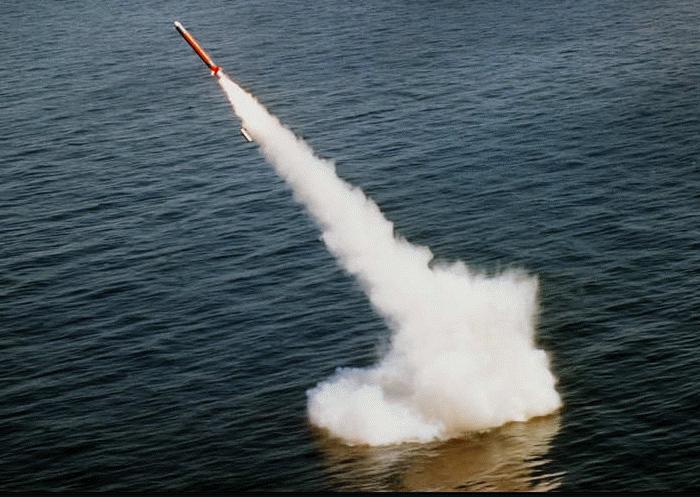 This bang-per-buck equation is only slightly more favourable to the cruise missile in carrier naval aviation, as the support costs must also absorb the resources required to maintain a Carrier Battle Group on station. As land based air is substantially cheaper to deliver than carrier aviation, conventional cruise missiles have not been deployed in serious numbers by any Western air force, the mid-eighties USAF AGM-109H was cancelled before deployment, and only limited numbers of the conventional AGM-86 subtype were ever built. Only the Soviets, faced with the annihilation of their geriatric subsonic Badgers and turboprop Bears, deployed significant numbers of such weapons. 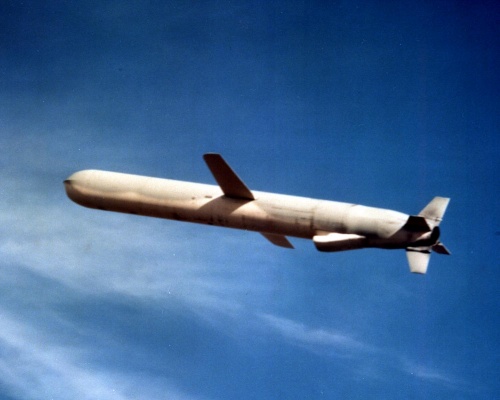 Another important limitation of cruise missiles is their inflexibility, in that they are only usable against "pre-briefed" static point targets, and will also require either satellite or airborne reconnaissance to produce targeting information. Without satellites, one still has to expose aircraft to get the pictures required to program the cruise missile's guidance. A manned bomber, on the other hand can be flexibly retasked, and used against strategic, theatre, maritime and battlefield targets. The bomber which can perform the cruise missile's strategic role can also be used to attack lower value targets, even down to individual vehicles, quite economically. Whether you are plinking tanks, cutting bridges and runways, or cracking shelters, bombers are nearly always cheaper to use. 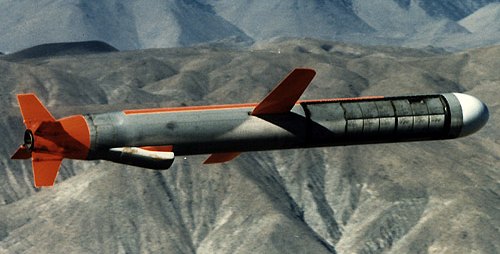 As a munition the cruise missile is only justifiable in those circumstances where manned aircraft cannot be brought to bear due radius limitations or survivability. With the deployment of a new generation of precision standoff missiles and DGPS/GPS/inertial guided bombs and glidebombs, the manned bomber survivability argument is becoming ever weaker with ongoing time. The radius issue is wholly determined by the availability of tankers for inflight refuelling. 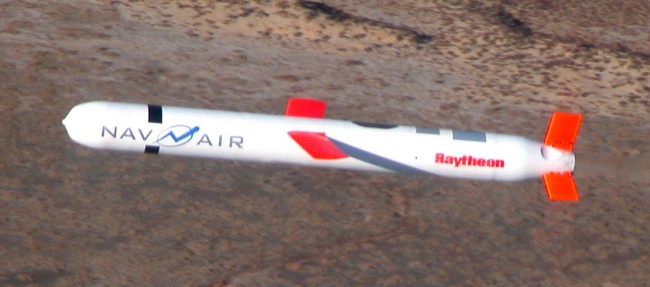 Assuming then that our political leadership should decide that cruise missiles are to be acquired, regardless of their limitations, the issue becomes one of selecting a suitable delivery platform. The 3,000+ NM radius Collins class attack submarine (SSK) has been, as noted above, repeatedly proposed for the role. This is worth closer examination. Cruise Missile Delivery Platforms What a submarine offers as a delivery platform is the ability to quietly approach an enemy coastline and then launch either salvoes of, or individual cruise missiles from torpedo tubes against targets up to 750 Nautical Miles away (BGM-109 TLAM-C Block III), extending the submarine's excellent 3000+ NM combat radius. To function as a cruise missile carrier, the sub would have to sacrifice much of its loadout of torpedoes and Harpoons to accommodate the cruise missiles, but it is reasonable to assume that at least 12 rounds could be carried, which is the existing load of a Los Angeles class SSN. Once these are fired, the submarine will then have to return to its base (or forward base/submarine tender) for a reload, evading enemy subs, ships and aircraft in the process. As a delivery platform the submarine has some fundamental limitations, which result in a poor ability to sustain a concentration of fire, and poor operational flexibility. The most notable of these limitations is in time to reload, as days or weeks may be required for it to withdraw from hostile waters and travel to a friendly port. This may not be an issue for a one-off punitive strike, but should hostilities be protracted, the 6 or 8 sub fleet will be hard pressed to maintain any kind of operational tempo and concentration of fire against an opponent, moreso if the enemy's landmass is outside our immediate region as we would expect it to be. Moreover, the subs may not be available to defend our shipping lanes from hostile ships and subs, or interdict an opponent's shipping, due the routing required to minimise reload time, as well as the reduction in torpedo and Harpoon loads. These limitations would seriously impair the credibility of the Collins/TLAM-C as a strategic deterrent, as well as compromising its primary role. 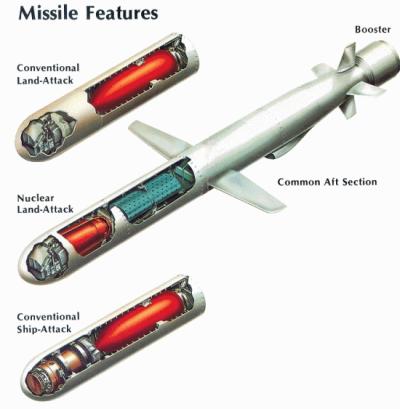 Another important limitation of the sub is its lack of flexibility, in that it is very limited in its ability to react rapidly to retasking. It may take the sub days to manoeuvre through an opponent's defences to position for a launch, and should the new target be outside the range of the cruise missile carried, it may take days to position for the new launch. In the fluid environment typical of modern warfare, the target may no longer be relevant. Should the target be far enough from the coastline, it may be out of reach altogether, should the type of target change, the sub may not carry the appropriate mix of warheads. This assumes that the missile can be retargeted using data on board the submarine, if not, it will need to rendezvous with another ADF vessel to collect the computer tape required to reprogram the missiles, or use satellite communications to download the required data, in both instances exposing itself to detection and attack from the air. Given the limitations of the submarine as a launch platform, what is the alternative ? Would the ADF require another delivery platform ? 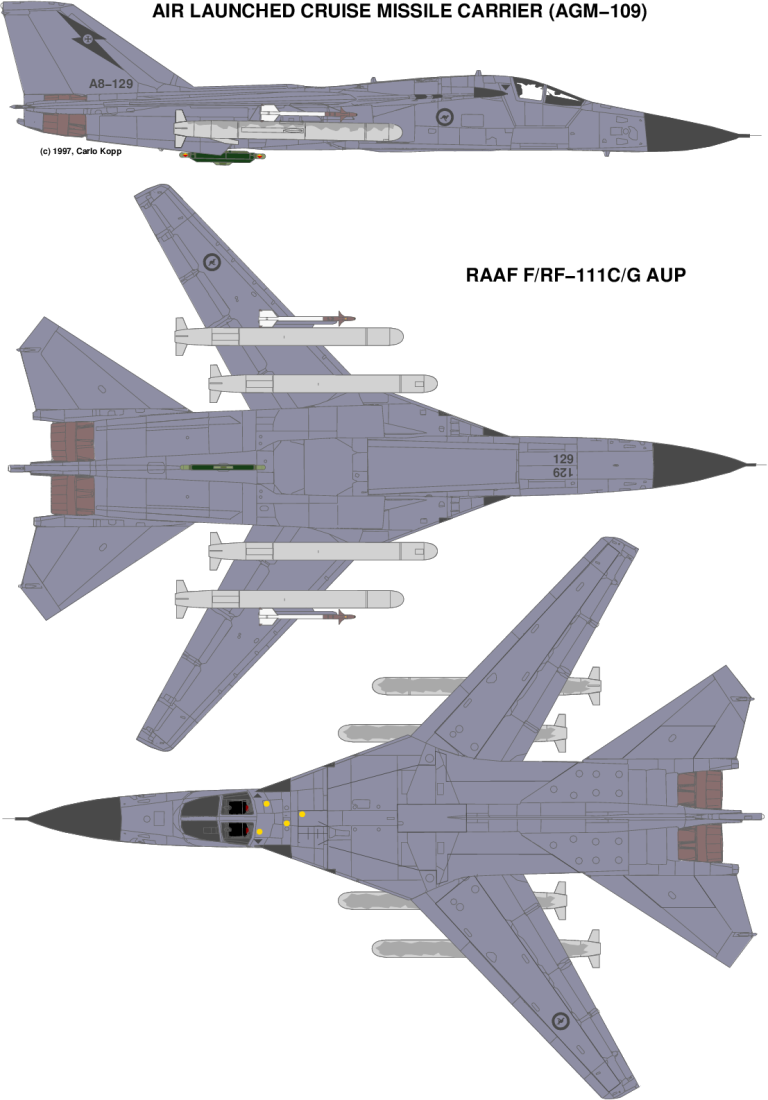 The answer is very simple. The most practical cruise missile delivery platform has been in ADF service since the mid seventies. It is the F-111. The F-111 could carry up to four air launched cruise missiles without compromising its performance or manoeuvre envelope - any limitations would be imposed by the payload alone. A 2,650 lb cruise missile (eg a MRASM-like Block III TLAM-C derivative) is similar in weight and drag to a 600 USG drop tank, and with inflight refuelling support the F-111 can easily match or exceed the radius of the submarine. The USAF F-111 raid on Tripoli in 1986 demonstrated this beyond any doubt. Because air launched cruise missiles do not need rocket boosters and torpedo tube sleeves, they are cheaper than their sub launched siblings. An AGM-109H/L MRASM air launched Tomahawk was 40 The F-111 as a cruise missile carrier has significant operational advantages over a submarine. The first is in its reload time, in that the aircraft may be back on the ground in hours, and once serviced, refuelled and reloaded, may be launched immediately for another attack. Because the F-111 can be turned around quickly, an opponent can be subjected to sustained missile attack over several days or weeks, assuming missile stocks are available. As the RAAF has two squadrons of aircraft, saturation attacks would be easy to orchestrate, compared to a coordinating a multiple submarine attack. 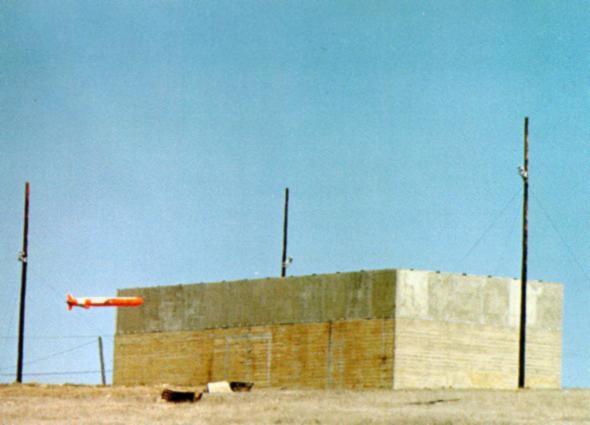 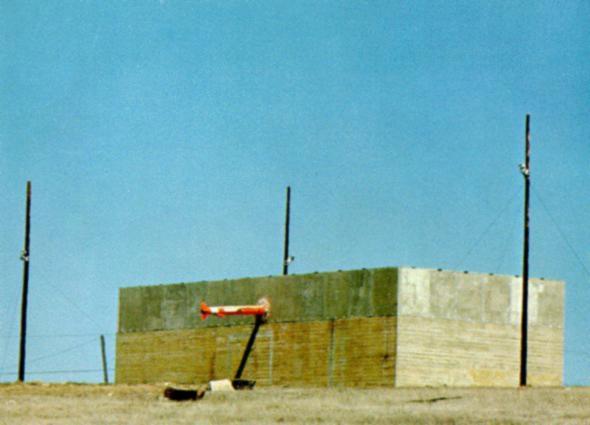 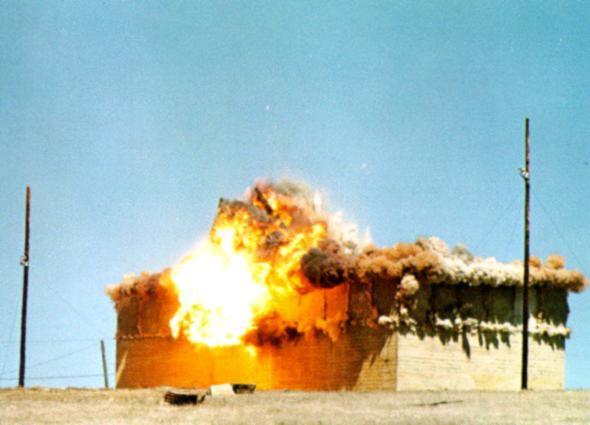 Should we disregard reload time, and assume a carrying capacity of 12 rounds per sub, or 72 to 96 rounds for the whole submarine force, the F-111 is still ahead as 36 aircraft with four rounds apiece totals 144 rounds for the Amberley Wing. Only should an 8 vessel force of Collins SSKs carry 18 rounds apiece (more than 3/4 total weapon capacity) can it match the F-111 fleet for aggregate payload capacity. Sustained concentration of fire is therefore not an issue with air delivered cruise missiles. What is significant is that three or four F-111s supported by one or two tankers can deliver the same cruise missile load over the same distance as a single submarine, in hours instead of days or weeks. Even should all F-111s be lost on the sortie, the cost is but a fraction of the value of a submarine in capital equipment, personnel, time to replace and propaganda value to an opponent. Whether a submarine in hostile coastal waters is more survivable than an F-111 is open to debate, certainly the submarine does not have the option of lighting its burners, zooming to 40,000 ft and egressing at Mach 2. What is certain is that an F-111 launching cruise missiles from outside hostile airspace is immune to SAMs, AAA and an extremely difficult target for even the best long range fighter aircraft supported by AEW. Indeed, the USN expended tremendous resources to defend against cruise missile firing Backfires, and many still debate whether the E-2C/F-14/Phoenix-Aegis/Standard-CIWS umbrella would have worked as well as envisaged. A cruise missile firing F-111 will defeat any air defence system in Asia today and in the forseeable future. What is no less important is that even equipped to fire cruise missiles, the F-11 retains its inherent multirole capability, and can be flexibly swung over to its alternate roles of conventional strategic and theatre strike, maritime strike, battlefield air interdiction and precision close air support. An aircraft returning from a cruise missile strike can be reloaded with laser guided bombs and sent out to plink some tanks and trucks which the infantry finds bothersome, or loaded with Harpoons and Sidewinders deal with shipping and maritime patrol aircraft which the Navy is unhappy about. The aircraft's inherent flexibility is an asset within itself. Two arguments have been levelled against the viability of the F-111 beyond 2015. The first is that of tactical viability, ie the F-111's ability to penetrate air defences. As a cruise missile carrier, it need not do so and thus this argument is irrelevant. Indeed the much older B-52 will continue in this very role well into the next century. The emergence of a new generation of low cost DGPS/GPS/inertial guided bombs and glidebombs which are deliverable from 30,000 ft and outside the range of AAA and most SAMs will further strengthen this case (a future TE currently in writing will address this in more detail), rendering the survivability argument quite impotent even for the delivery of "bread-and-butter" munitions. The second argument is based upon the exhaustion of airframe life. As a cruise missile carrier (and DGPS/GPS/inertial bomb carrier), the F-111 will not need to fly the high fatigue load terrain following profile it currently does. As a result, fatigue incurred per flight hour will drop significantly, and this would stretch the life of the airframes by an appreciable margin, assuming no work is done on the airframe. The task of zero timing an F-111C/G airframe is not as insurmountable as may be commonly believed - the existing 2015 expiry date was largely based on the assumption that no structural spares would be available, either new or used. With the large pool of boneyard airframes now available, used components could be readily sourced. To properly zero time the airframe, the key structural components to be replaced are the wing spars, the fuselage carry through box and upper longerons, as well as some lesser structural parts in the wings. Given the availability of these components, the work could be performed locally. It is worth noting that the cost to manufacture such components in small numbers is today somewhat lower than two decades ago, given the availability of computer controlled 3-axis machines, and integrated computer aided design and production tools. The issue of extending airframe life in the F-111C/G therefore boils down to the costs involved in either manufacturing and fitting new structural components, or accepting some airframe time on the structure and fitting boneyard wings and components recovered from mothballed USAF airframes. With more than 50 FB-111A/F-111G airframes in the boneyard, availability is not an issue. Should engine support become a problem, there is always the option of refitting with new or used F100 or F110 class powerplants. An F100-PW-229 IPE used in the F-15 and F-16 would match the full reheated thrust of the TF30-P-3 on dry thrust alone, while producing the same SFC in the same physical envelope at lesser weight. This class of engine would make high altitude dry thrust supersonic (M 1.3-1.5) cruise attack and escape profiles a viable proposition, and combined with suitable standoff weapons (eg DGPS/GPS/inertial bombs/glidebombs) provide excellent survivability against a fighter threat, as well as virtual immunity to the SAM/AAA threat. In terms of any cost comparisons, the F-111 is substantially cheaper than building more Collins class SSKs, moreso given the existing inventory. For the sake of comparison, however, let us consider the idea of reforming 2 Sqn as a dedicated cruise missile launching F-111G Squadron, and sourcing 12 used airframes ex-USAF, and four used boom equipped narrow-body tankers. Then factor in the cost of a partial avionic refit to AUP standards. The total cost, using existing infrastructure, would conservatively be of the order of $250 million. This is significantly less than the cost of a pair of Collins class submarines, while providing vastly greater operational flexibility in the strategic strike and anti-shipping roles. In reality, the existing F-111 force could readily absorb the role, in which case the cost devolves down to that of relifing the airframes, putting booms on the existing tankers, possibly acquiring some additional boom equipped tankers, and doing a minor software upgrade. This is much cheaper than building two more submarines, while also providing much work for domestic industry. It follows therefore that the idea of replacing the F-111 force with submarine launched Tomahawk cruise missiles is of dubious merit from a strategic and technical perspective, and substantially more expensive than extending the life of the existing F-111C/G force by zero timing and re-engining the airframes, and providing tanker support to extend combat radius. Whether the F-111 is used to launch cruise missiles or shorter ranging standoff weapons, it will always be a more credible strategic deterrent than the cruise missile firing submarine, because it can deliver a much greater sustained concentration of fire, is much more flexible in response time and tasking, and offers much better economy for damage inflicted. The only advantage held by the submarine over the F-111 is in unrefuelled combat radius, and this constraint to the F-111 is artificially imposed by the absence of boom equipped tankers. More than anything, the idea of replacing the F-111 with sub launched Tomahawk represents a lame political argument to justify the building of additional submarines at the expense of other ADF programs, without serious consideration having been given to getting the best possible use out of existing assets. Sadly, the much vaunted paradigm of joint force development seems to have been lost somewhere along the way. |
|||||||||||||||||||||||||||||||||||||||||||||||||||||||||||||||||||||||||||||||||||||||||||||||||||||||||||||||||||||||||||||||||||||||||||||||||||||||||||||||||||||||||||||||||||||||||||||||||||||||||||||||||||||||||||||||||||||||||||||||||||||||||||||||||||||||||||
|
|||||||||||||
|
|
|
|
|
|
|
|
|
|
|
|||
|
|
|
|
|
|
|
|
|
|
|
|||
 |
|
|
|||||||||||
| Artwork, graphic design, layout and text © 2004 - 2014 Carlo Kopp; Text © 2004 - 2014 Peter Goon; All rights reserved. Recommended browsers. Contact webmaster. Site navigation hints. Current hot topics. | |||||||||||||
|
Site Update
Status:
$Revision: 1.753 $
Site History: Notices
and
Updates / NLA Pandora Archive
|
|||||||||||||
|
|
Tweet | Follow @APA_Updates | |||||||||||
|
|
|||||||||||||
|
|
|||||||||||||






