|
||||||||||||||||||||||
 |
||||||||||||||||||||||
![F-22A Raptor, FB-22, F-22E, F-22N and Variants Index Page [Click for more ...]](APA/f-fb-22.png "F-22A Raptor, FB-22, F-22E, F-22N and Variants Index Page [Click for more ...]") |
 |
![People's Liberation Army Air Power Index Page [Click for more ...]](APA/pla-air-pwr.png "People's Liberation Army Air Power Index Page [Click for more ...]") |
 |
 |
 |
 |
 |
 |
![Military Ethics, Culture, Education and Training Index Page [Click for more ...]](APA/ethx-culture.png "Military Ethics, Culture, Education and Training Index Page [Click for more ...]") |
 |
||||||||||||
 |
![Russian / Soviet Weapon Systems Index Page [Click for more ...]](APA/rus-weps.png "Russian / Soviet Weapon Systems Index Page [Click for more ...]") |
 |
 |
 |

|
 |
 |
 |
 |
 |
||||||||||||
 |
 |
|||||||||||||||||||||
| Last Updated: Mon Jan 27 11:18:09 UTC 2014 | ||||||||||||||||||||||
|
||||||||||||||||||||||







| by
Dr Carlo Kopp, AFAIAA, SMIEEE, PEng July, 2007 Updated January, 2011 Updated April, 2012 Text © 2004, 2007, 2011 Carlo Kopp Line Artwork © 2007 Carlo Kopp  |
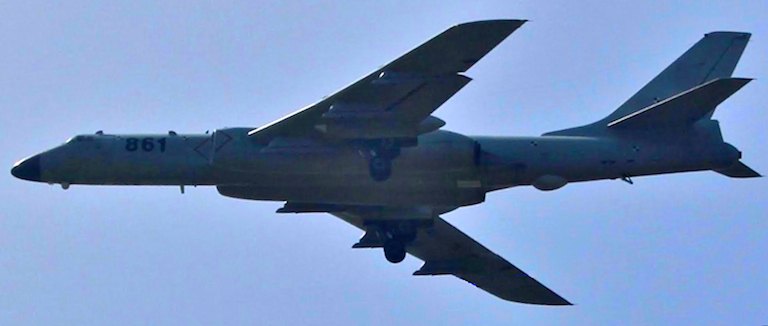 Xian
H-6K Turbofan Badger cruise missile
carrier (Xian).
Soviet Tupolev
Tu-16 Badger Variants [Click for more ...]
Video Footage Supplement [Click for more ...] 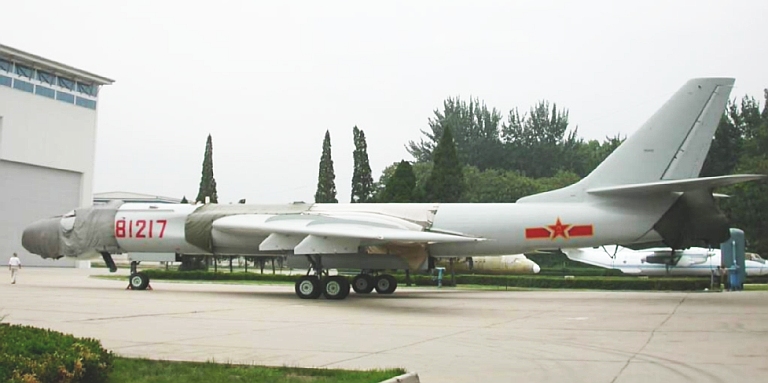 New build Xian H-6M Badger cruise missile carrier (Xian). Strike Variant Background The PLA's principal strategic strike aircraft is the Xian
H-6/B-6 Badger, which compares closely in size and performance to the
long retired RAF V-bombers. It is credited with a combat radius of
1,300 to 1,800 NMI (2,400 - 3,300 km). China has had a long love affair with this Tupolev designed
offspring of Boeing's B-29. During the 1960s Xian (Harbin) reverse
engineered the Tu-16K Badger A/B [More ...] to
provide a
nuclear strike force, with
most of the currently cited inventory of around 120 PLA-AF H-6E/I and
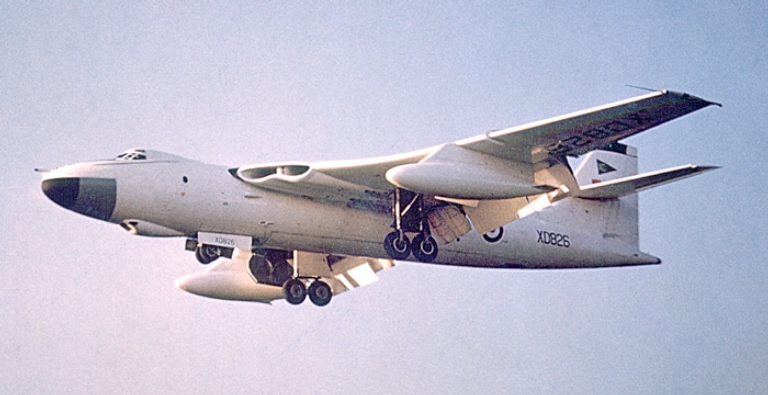
30 PLA-N H-6D Badgers built between 1968 and 1990. 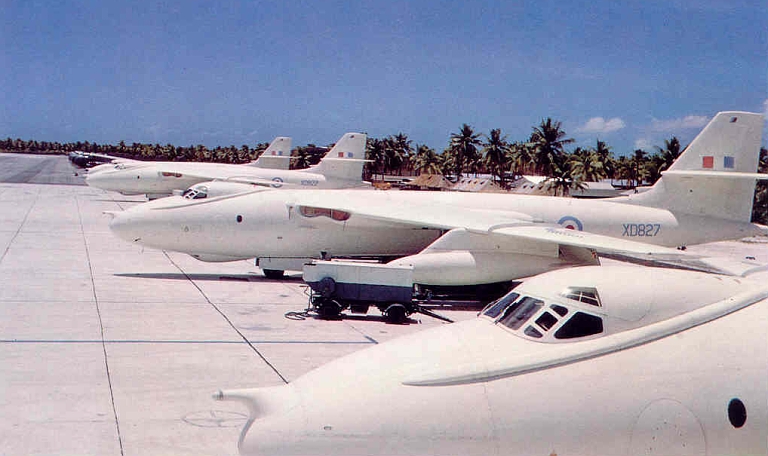 The Tu-16K/H-6 Badger is a
very close equivalent to the long retired RAF Vickers Valiant B(K).1.
Upper image Christmas Island during the Grapple A-bomb trials.
China's Badger production ramped up during the 1970s and
slowed down post 1990 when the last four H-6Ds were exported to Iraq,
with spares being an ongoing export to support Egypt's Soviet supplied
Tu-16Ks. Initial models were essentially cloned Tu-16/16K/16KS Badger
A/B, designated H-6A in PLA-AF service and armed with dumb bombs or
special weapons. Two B-29 style remote control barbettes and a tail
gunner's station, each with paired Nudelman-Rikhter NR-23 guns were
retained, including the PRS-1 Bee Hind tail gun radar. The H-6E/I designation is usually applied to block upgrades of
the H-6A - all distinguishable by the low profile nose radome for the
cloned Rubin-1 Short Horn attack radar.
The H-6D variant saw
the
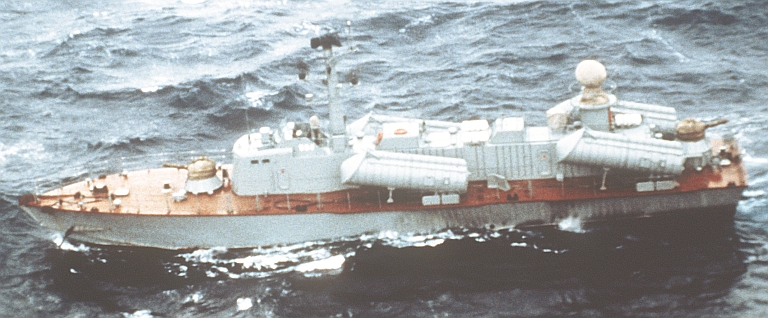
Styx weapon system in the Komar and Osa missile boats transplanted into
the H-6 Badger airframe, requiring a larger radome to house the Type
245 Square Tie attack radar (US DoD, PLA via CMA).
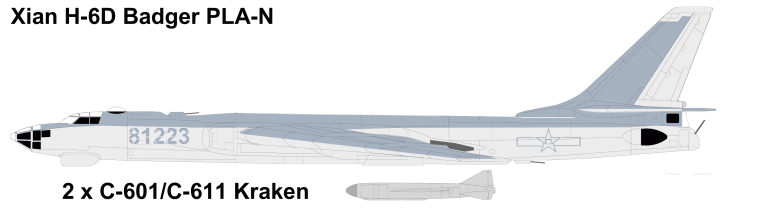
The subsequent navalised H-6D carried the Chinese Type 245
attack radar in a bulkier radome, and a pair of large liquid rocket
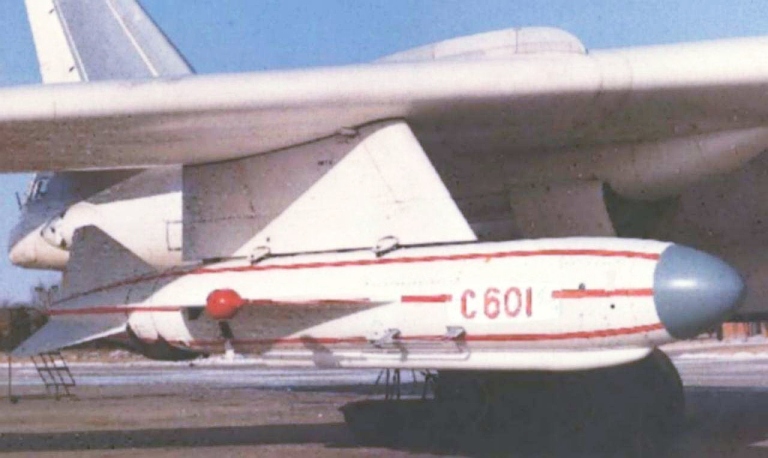
powered 5,400 lb C-601/YJ-6
(CAS-1
Kraken) ASCMs, based on the HY-2
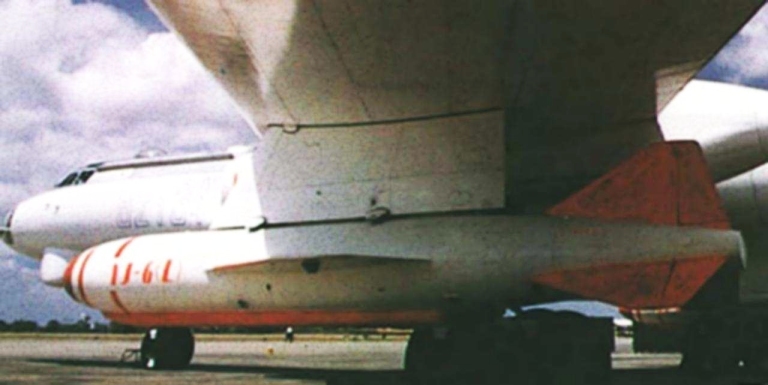
Silkworm, a P-21 Styx derivative. More recently longer ranging
C-611/YJ-61 have been carried. For comparison, in role the CAS-1 Kraken
compares most closely to the Soviet liquid rocket powered KSR-2 / AS-5A
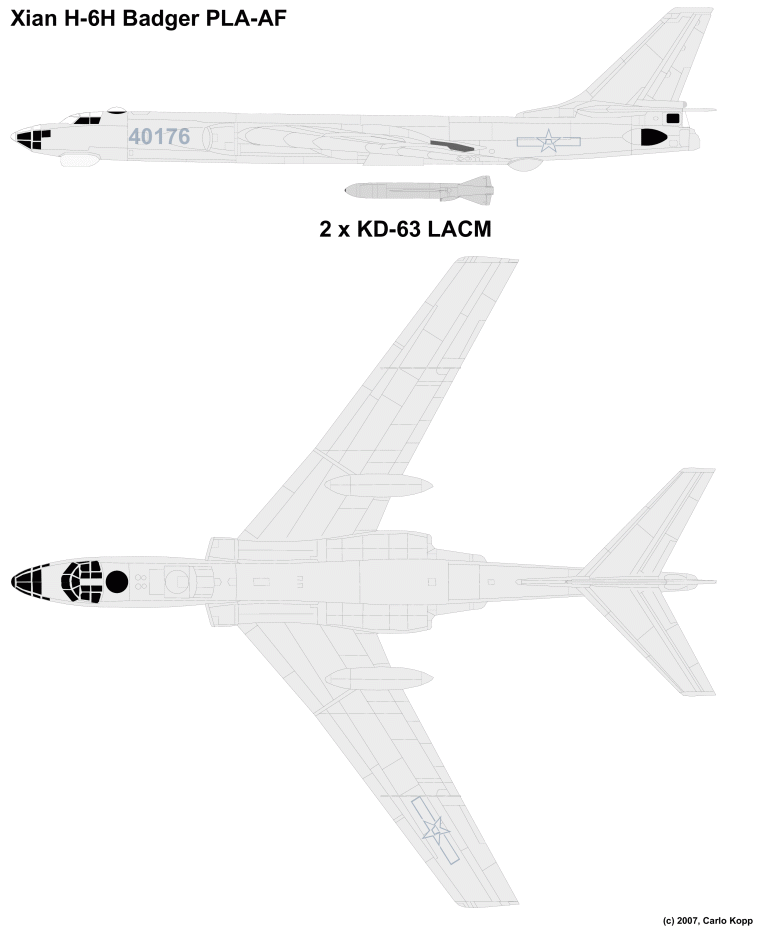
Kelt carried by a range of AV-MF Tu-16K variants. The most recent variant identified in operational service is a
subtype usually labelled the 'H-6H' which has all guns removed, the
dorsal station faired over and the ventral station replaced with a
large bulged radome, retaining two missile pylons. This variant is
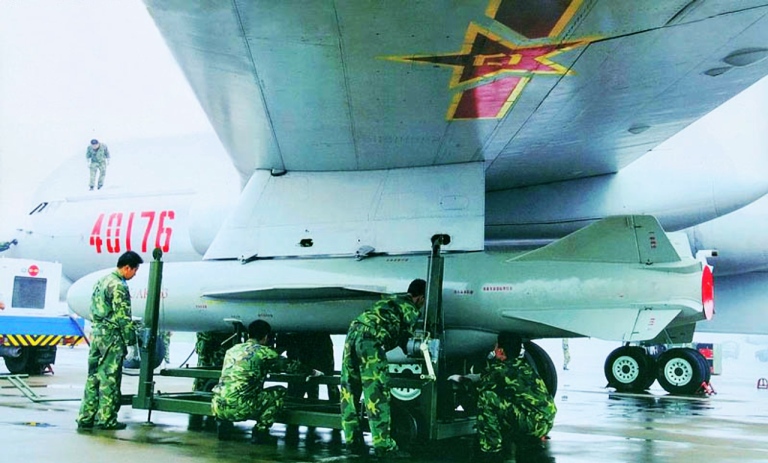
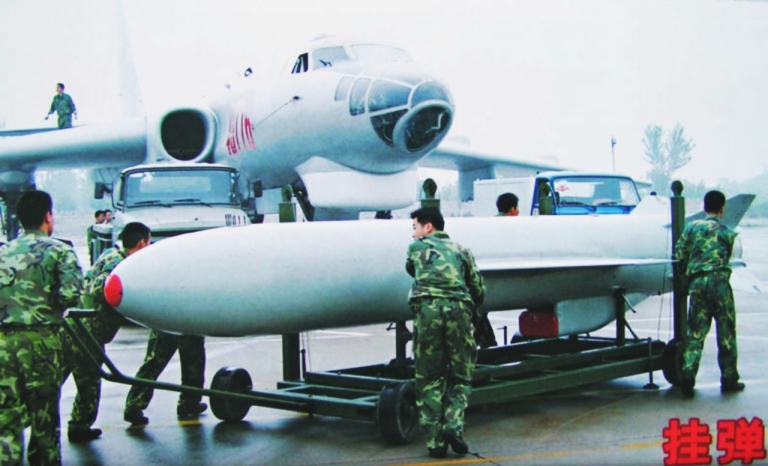
armed with a pair of KD-63 TV/datalink guided cruise missiles, derived
from the HY-4 Sadsack, itself a turbojet derivative of the
Kraken/Seersucker series. Chinese sources claim the radome covers the
datalink antenna for the KD-63 missile system. The are claims of a H-6G variant for missile targeting,
analogous to the Tu-95RTs Bear D in role. No details are available at
this time. Footage from the 2002 Zhuhai Airshow AVIC I promotional video shows a 'H-6M' prototype carrying four missiles which appear to be the YJ-82 derivatives - or dummy payloads of similar shape. In terms of land attack cruise missiles five immediate possibilities exist - the indigenous HN-1, HN-2 and HN-3 credited by Russian sources with 325 NMI (600 km), 800 NMI (1,500 km) and 1,350 NMI (2,500 km) range carrying 'special' payloads or less with a 900 lb (400 kg) class conventional payload, a cloned Tomahawk widely reported, likely to be the DH-10, and a variant of the 3,300 lb (1,500 kg) class Raduga Kh-65SE or Kh-55SM cruise missile. The Kh-65 is based on the Kh-55/RKV-500 (AS-15 Kent) carried by Russian Bear/Blackjack and is an equivalent to the Boeing AGM-86B ALCM. There are reports claiming that a design data package, and tooling for the Kh-65SE were exported to the PRC post 2000. All of these missiles are claimed to use Tercom/inertial guidance like the US AGM-86 and BGM-109 series. While the Badger is not a credible penetrator armed with free
fall bombs, if armed with a modern 600 NMI class conventional cruise
missile, or 1,300 NMI class nuclear armed cruise missile, it becomes a
credible strategic strike asset offering a reach of 1,900 to 2,600 NMI.
Carrying dumb bombs it replicates the close air support capability of
the B-52H and B-1B. If operated in a similar fashion to these US types
it could remain in service another 40 years. The most recent reports from China suggest a third new build
variant is in test, usually labelled the 'H-6K'.
This subtype has a
solid nose completely revised against the legacy H-6U, six wing pylons
for cruise
missiles, possibly one centreline pylon, and a bomb bay fuel tank. The
new nose section and crew station employs a multiple large panel glass
cockpit, ejection seats for the three or four crew members, a large
aperture attack radar, ventral thermal imager turret, and EWSP blister
radomes. Poor
quality imagery available indicates that a much larger engine inlet is
used, indicating that claims of a new turbofan engine are indeed
correct. Chinese sources are claiming the Saturn D-30KP-2 is employed,
due to a purchase of the several dozen of these engines in recent
years. The 'H-6K' is thus the most radical development of the H-6
Badger to date. With much lower SFC than the WP-8/RD-3M engine of the
baseline Badger, and ~85,000 lb of internal fuel, this variant will
outrange all earlier Badgers signficantly (until engine type and
installed SFC are known
more accurate estimates of range increases are problematic). The
missiles visible on existing imagery are of the configuration of the
Kh-55/DH-10/YJ-62, but poor quality precludes a more accurate
assessment. What is clear is that the H-6K is designed as a cruise
missile carrier to fit the 'second island chain' strategy. There are claims, only supported by photographs of models,
that
the H-6K uses a tailcone fairing similar to the Badger L design adopted by the Soviets to
replace the DK-7 tail gun barbette with electronic warfare equipment. Open sources identify the 8th (merged with the 48th), 10th,
36th Bomber Divisions as the principal units flying the H-6A/E/H/U
Badgers, and the 2nd Bomber Division flying the H-6D/DU.
Soviet
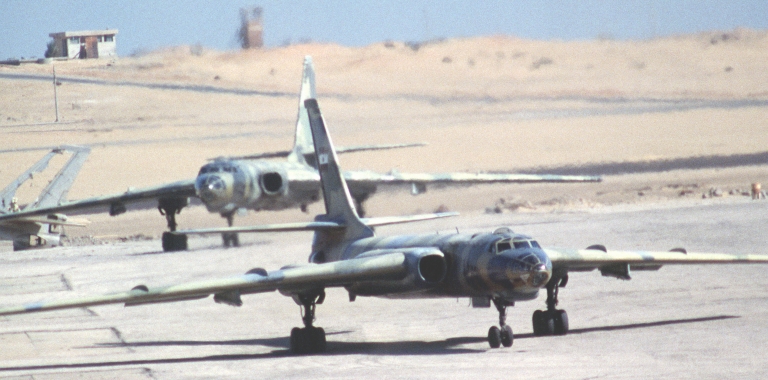
supplied Tu-16K Badgers were flown by the Egyptian Air Force, using
spare components supplied by XAC in China (US DoD). Tanker Variant Background [click for more
...] The sole operational tanker type in PLA service is the indigenously built Badger, although imported Il-78 Midas will be introduced soon. It is not surprising that the H-6 is the basis of China's first tanker as the Badger is available cheaply, and is large enough to be useful. With around 167,300 lb (75,800 kg) MTOW, 82,000 lb (37,150 kg) BEW, and an internal fuel payload of about 85,000 lb (38600 kg) using a bomb bay tank to supplant a 20,000 lb (9,000 kg) internal bomb payload, the Badger makes for a reasonable tanker in the size class of the HP Victor K.2. With a total fuel uplift at MTOW about one half of a KC-135E/R, each Badger in practical terms can adequately support only two fighters. Exact details on the number of H-6 Badgers converted to tankers are sketchy, as is technical detail on the configuration of the tanker. The aircraft is claimed to have dual INS and dual TACAN beacons. At least two variants have been reported, the PLA-AF H-6U and PLA-N H-6DU. Both appear to be conversions of existing variants, using a pair of wing mounted hose/drogue pods. The pod design has a more than passing resemblance to the UK FRL Mk.32 series pod - UK sources claim FRL were engaged during the 1980s to engineer the conversion. Available photographs indicate configurations with and without the ventral search radar radome, and some indicate the glazed navigator's station in the nose has been painted over or reskinned with sheetmetal, and a weather radar fitted. The remote control gun barbettes and tail turret are deleted to save weight. What fraction of the Badger fleet will end up as tankers remains to be seen. The current age of the fleet varies roughly between 12 and 30 years, and the design is a very sturdy Russian derivative of 1940s Boeing technology. Publicly available data suggests that Badger crews often average less than 100 hours annual flying time, which if true indicates that the fatigue life in the Badgers could last for decades yet, corrosion permitting. The bigger issue for the Badger are the fifties technology Xian WP-8 (Mikulin RD-3M-500) 21,000 lb class turbojet powerplants which are thirsty and maintenance intensive by current standards, and the antiquated avionics. Earlier attempts to re-engine the Badgers were abandoned. A newer technology 21+ lb class turbofan would have a major impact on the achievable fuel offload performance and the operational economics of the H-6U/DU Badger fleet. Conversion of 50% or more of the existing Badger inventory would provide a formidable aerial refuelling fleet by regional standards. Much will depend on perceived need vs demand for strategic strike tasking. The current inventory of around a dozen aircraft are claimed to be flown by the PLA-AF 9th Air Division. There is no evidence to date of strike tasked Badgers being fitted with refuelling probes. The natural candidate is the Tu-95/142 Bear probe, fitted either to the H-6 lower starboard gun port, or above the nose. With a single refuelling an ALCM armed Badger could reach northern Australia from the mainland. This analysis is an expanded and updated derivative of the 2004 analysis. Additional analysis of PLA Badger growth options is available in the recent analysis of Soviet Maritime Reconnaissance, Targeting, Strike and Electronic Combat Aircraft.
|
Resources
|
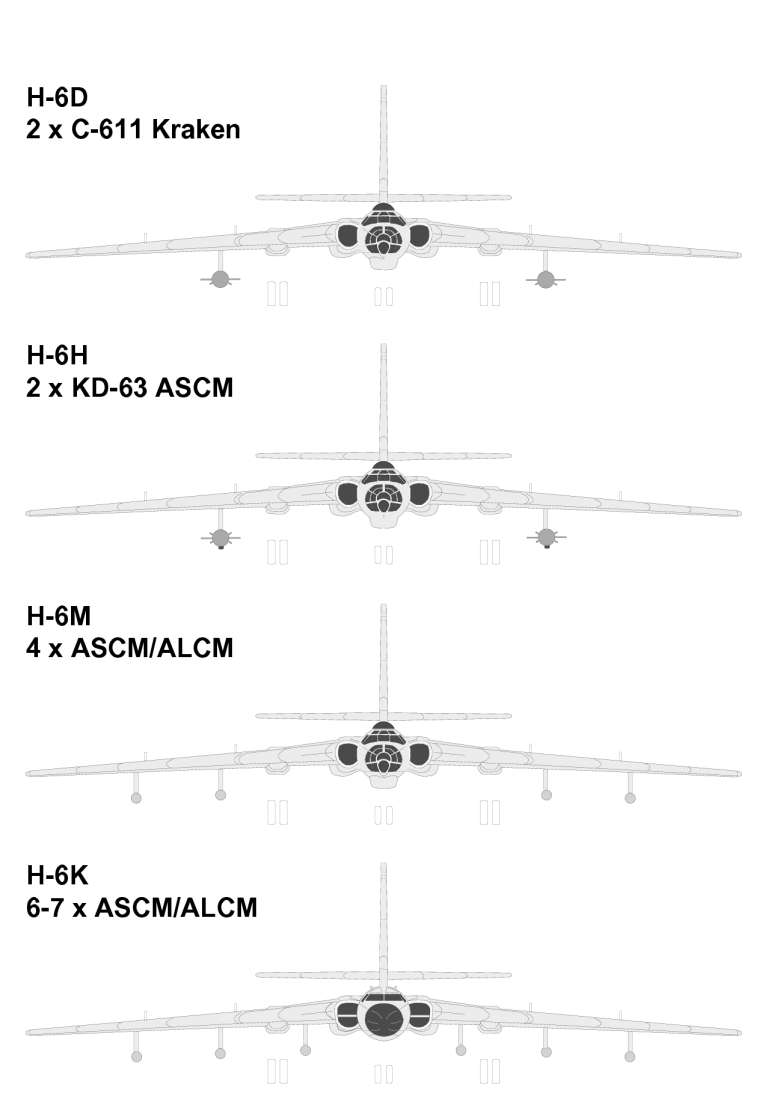  |
CAS-1 Kraken on a H-6D Badger (PLA-N).
CAS-1
Kraken on a H-6D Badger (PLA-N).
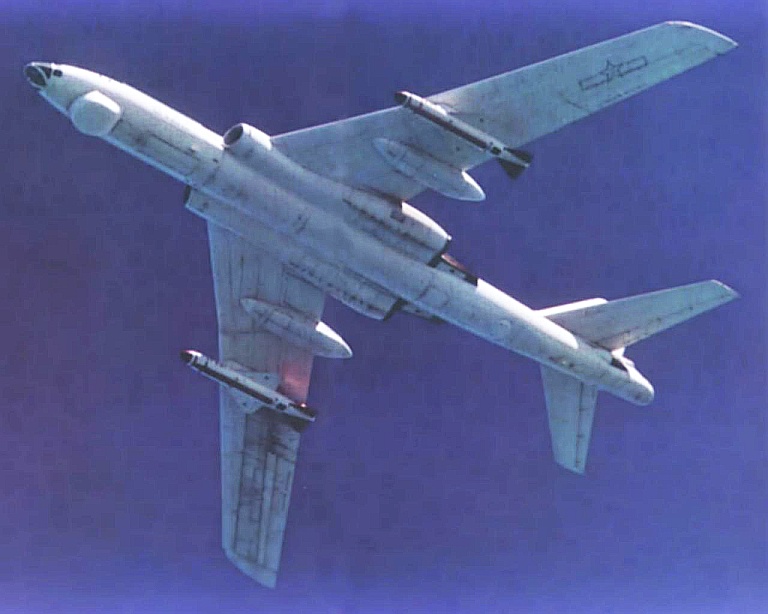 CAS-1
Kraken on a H-6D Badger (PLA-N).
|
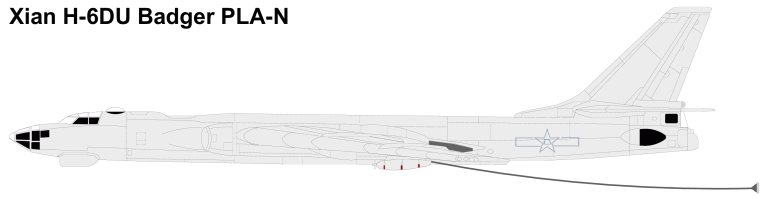 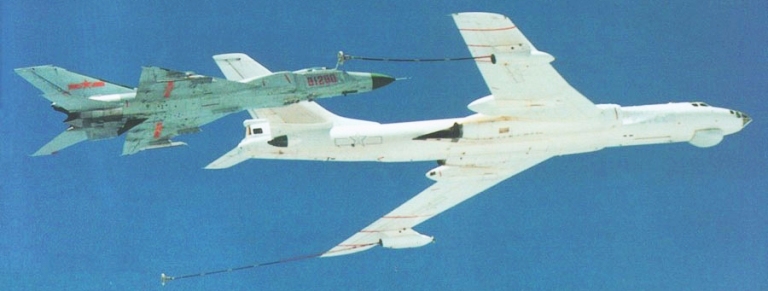 Navy
H-6DU
gassing a J-8-II.
|
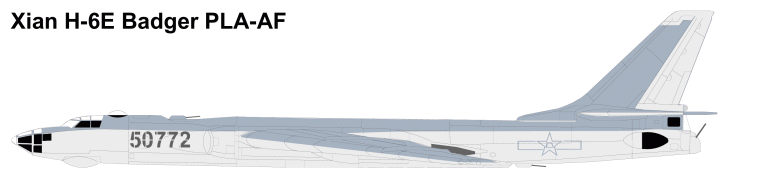 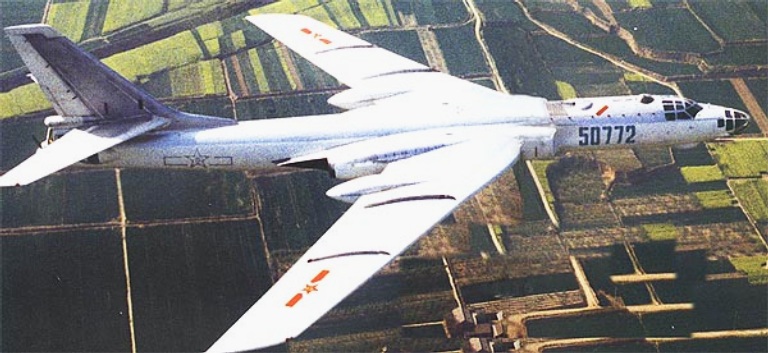 H-6E
- a baseline configuration for early H-6 builds.
|
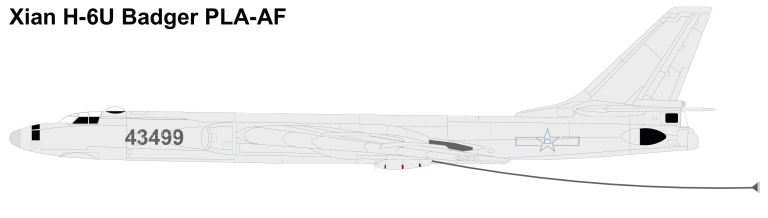 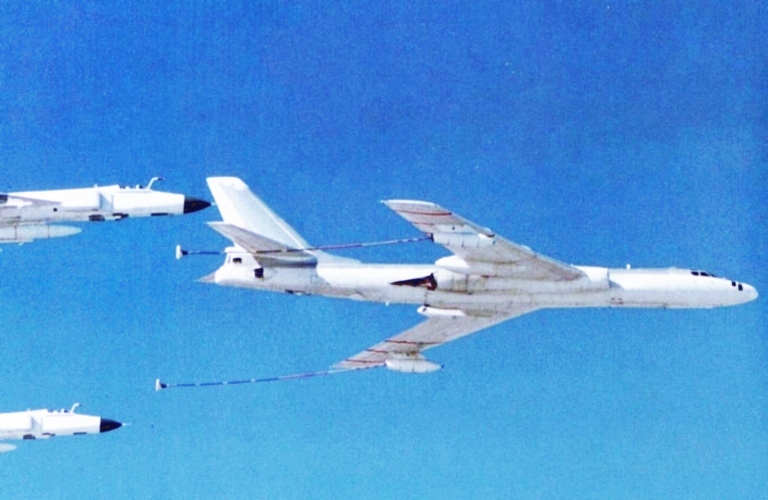 H-6U
gassing a pair of J-8-IIs.
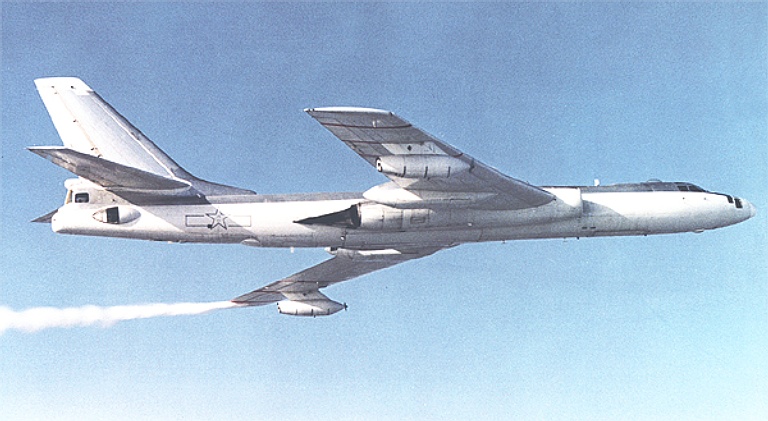 H-6U
dumping
fuel. Note the revised nose geometry.
 |
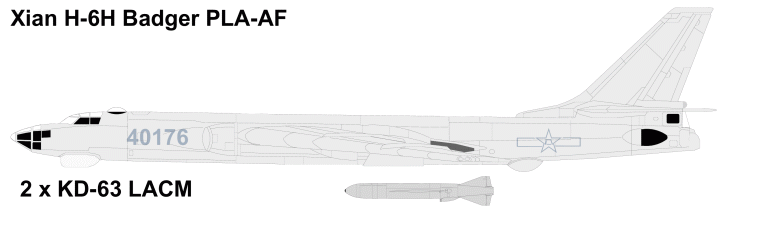 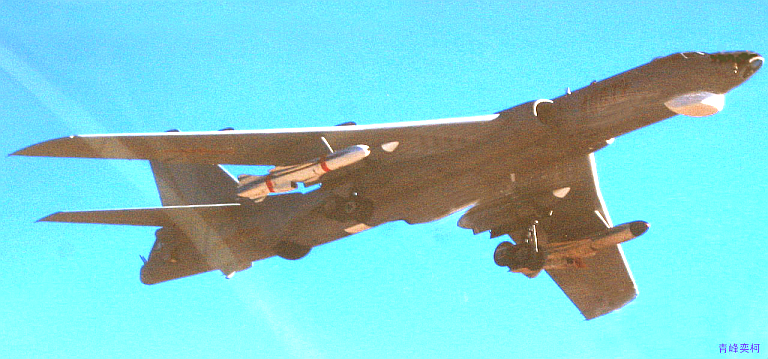 H-6H armed with two KD-63 ASCMs. 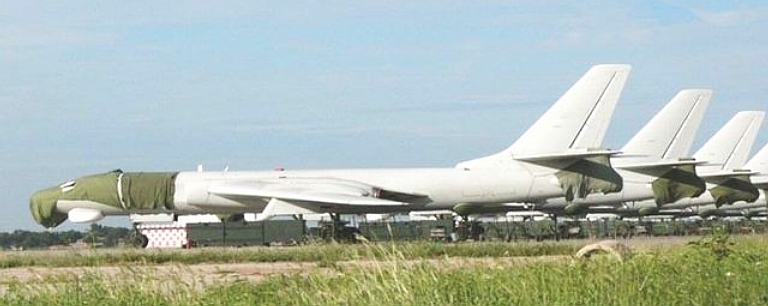 A row of parked H-6H Badgers. Note the aft ventral radome. 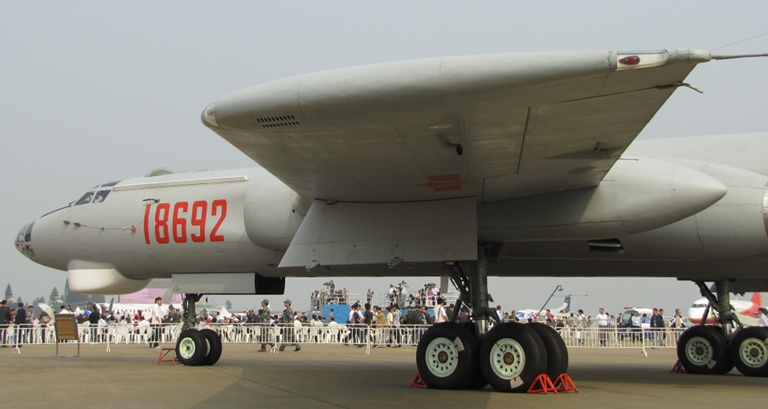 H-6H Badger (Zhenguan Studio, © 2010 Air Power Australia). 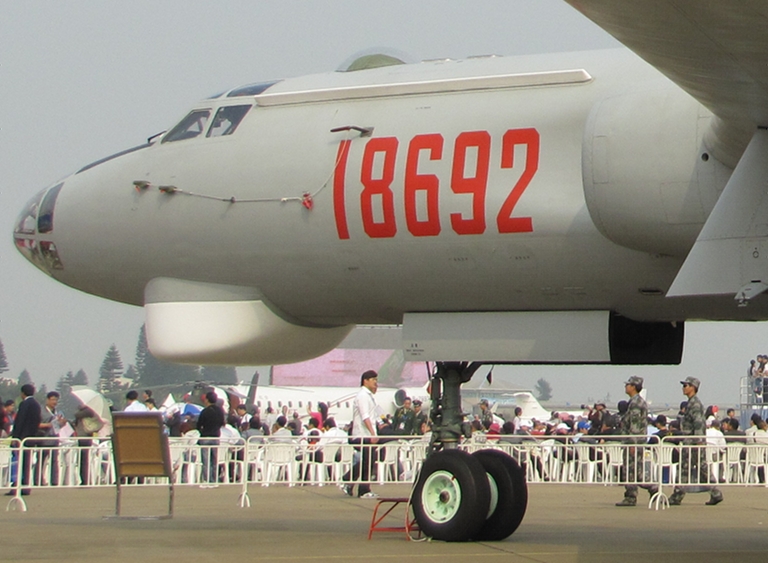 H-6H Badger (Zhenguan Studio, © 2010 Air Power Australia). 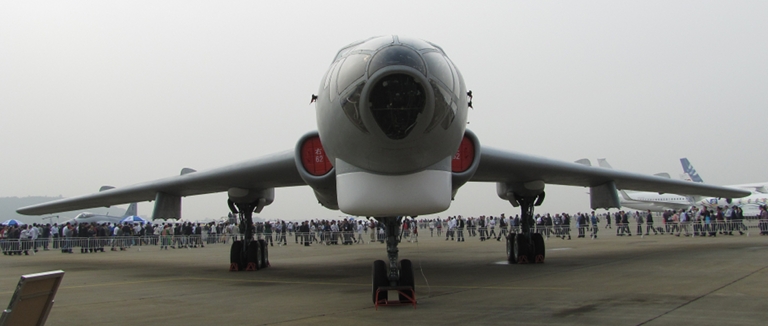 H-6H Badger (Zhenguan Studio, © 2010 Air Power Australia). 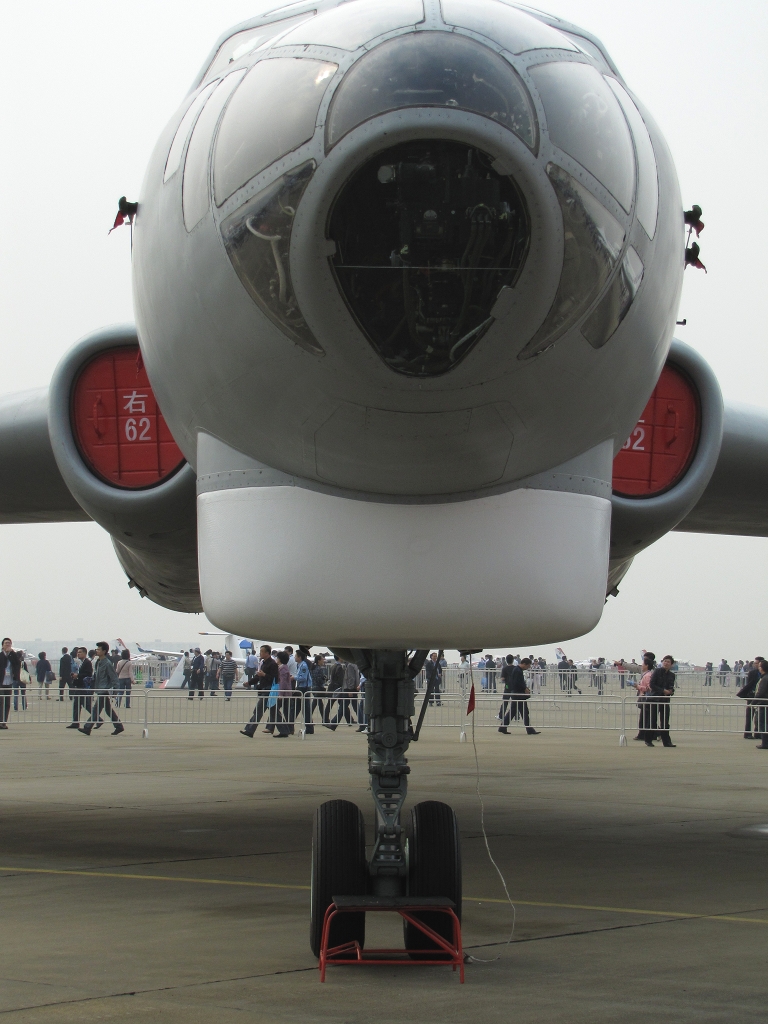 H-6H Badger attack radar radome detail (Zhenguan Studio, © 2010 Air Power Australia). 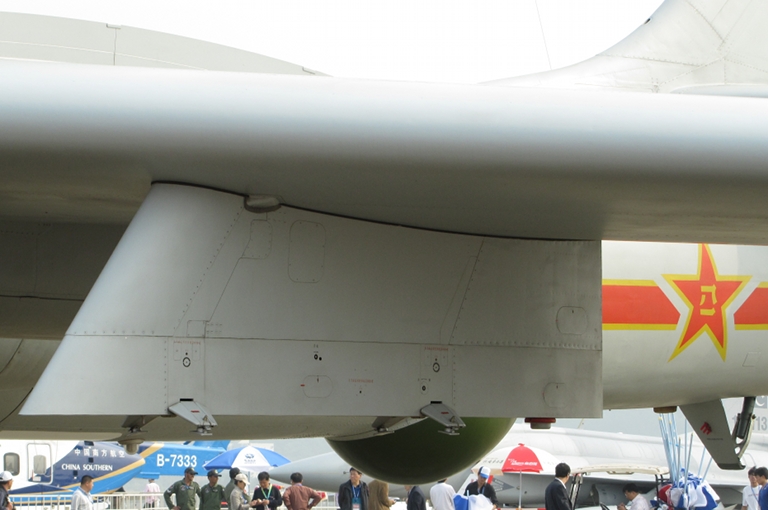 H-6H Badger wing pylon (Zhenguan Studio, © 2010 Air Power Australia). 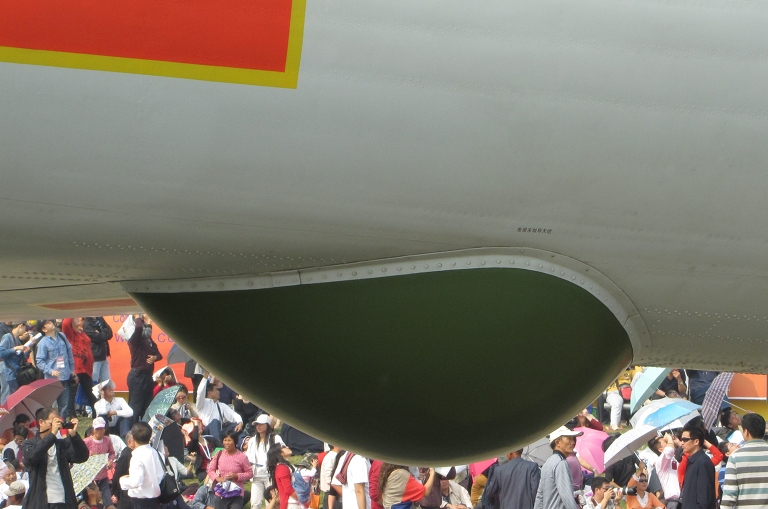 H-6H Badger aft ventral radome (Zhenguan Studio, © 2010 Air Power Australia).
Ground
crew loading a TV/datalink guided KD-63 ASCM.
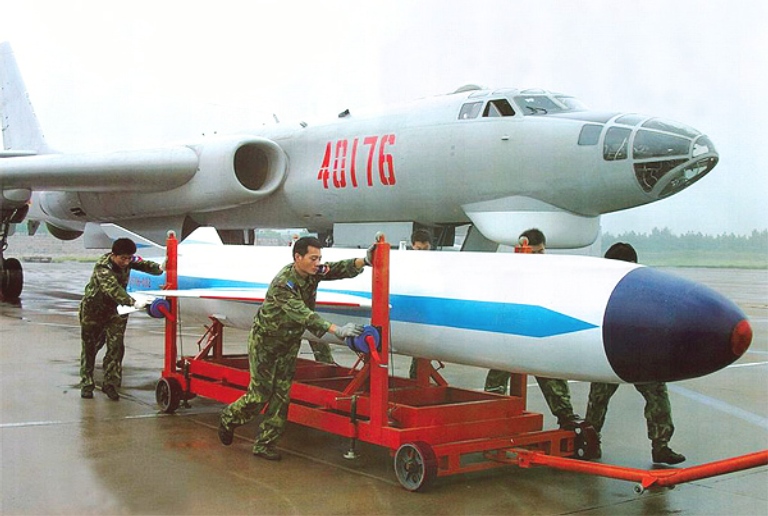 Ground
crew handling a radar guided YJ-63 ASCM, another variant of the
YJ/KD-63 family. Note the aft ventral radome on the H-6H Badger.
|
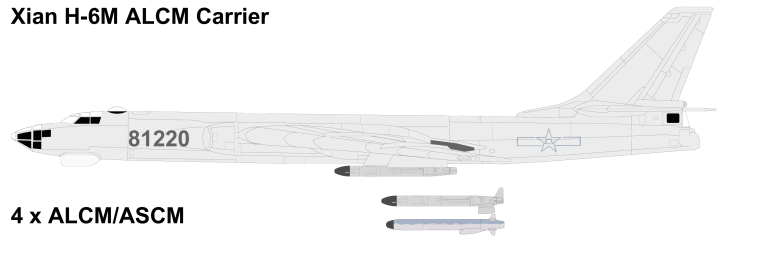 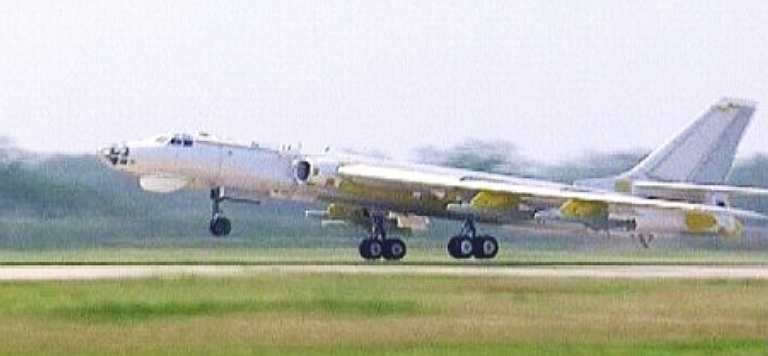 Still
from
the AVIC-1 video clip showing the prototype of the new build
'H-6M' variant. The missiles are likely YJ-80 series.
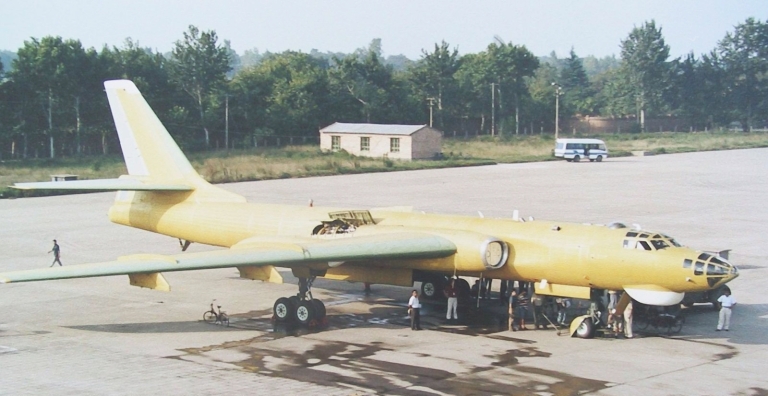 Another 'H-6M' prototype, in primer finish. 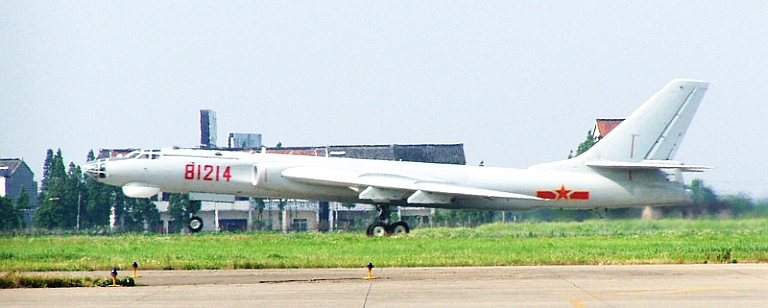 A
production
'H-6M' variant.
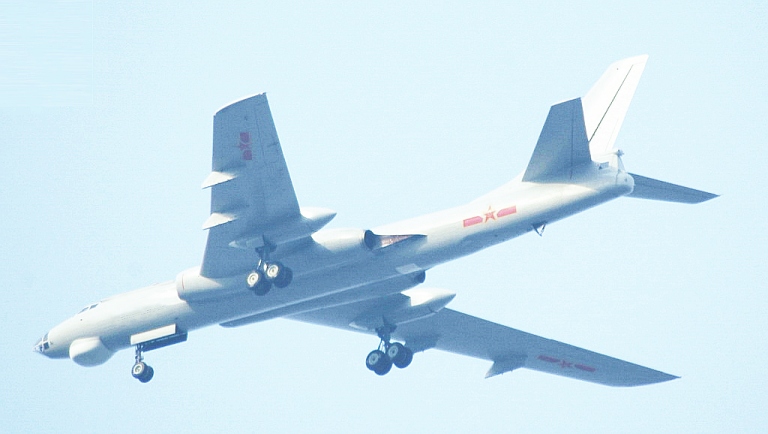 Ventral view of production 'H-6M' variant. Note the pylon arrangement and clean aft fuselage. 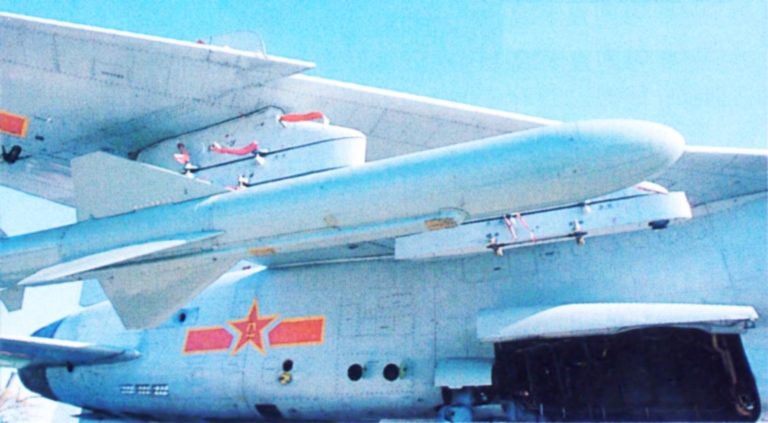 YJ-82K ASCM on a JH-7. 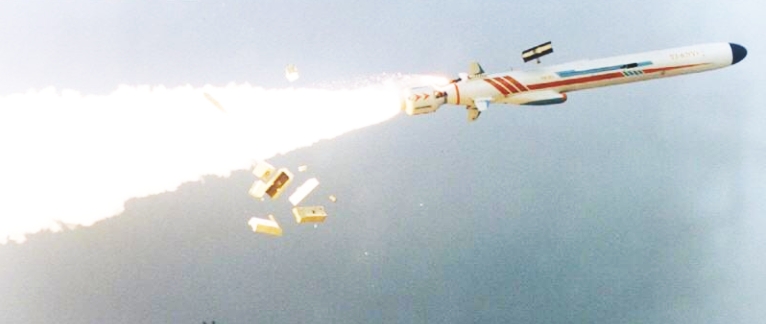 Launch
of a 'Tomahawk-like' PLA-N cruise missile, the YJ-62/C-602.
This missile is a candidate for new production cruise missile
carrier Badger
variants.
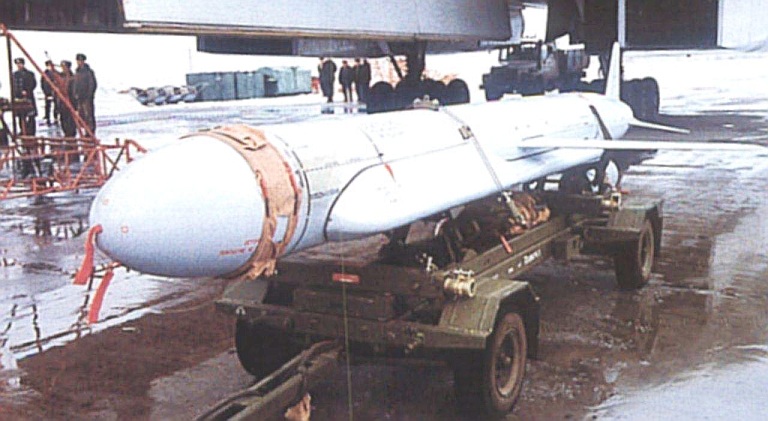 Raduga
Kh-55SM Kent with conformal fuel tanks. Illegally acquired samples from
the Ukraine permit the development of a cloned variant for the
PLA. This weapon is also a candidate for new production Badgers.
|
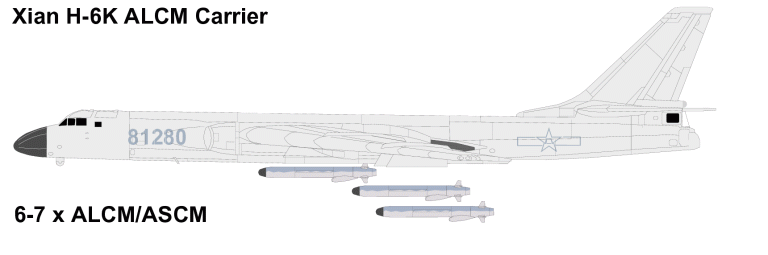 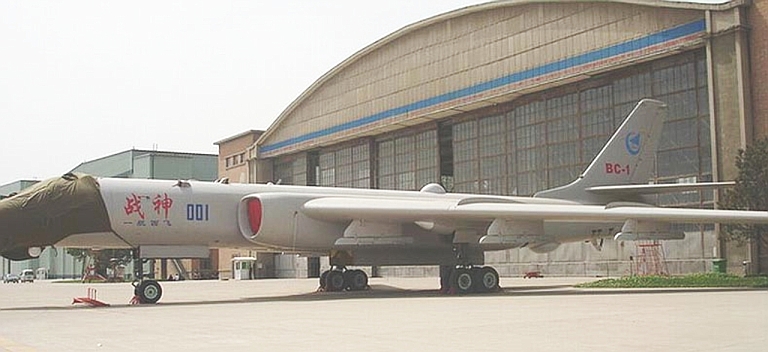 The most recent image of the H-6K to emerge on a Chinese internet site. This shows the dorsal and ventral radomes, the pylon arrangement and inlets well. The tailcome fairing is obscured.  Top: Poor quality Chinese Internet images of the H-6K prototype, showing the six wing pylon arrangements and enlarged inlets, for a turbofan believed to be the Saturn/Aviadvigatel' D-30KP. Note the size of the cruise missile payload. Centre: Xian factory image of revised forward fuselage on the H-6K, note the new attack radar radome, EWSP blisters and FLIR turret. Bottom: unlike the 'classic Badger' which required the crew to bail out B-29 style, the H-6K introduces ejection seats for the crew.  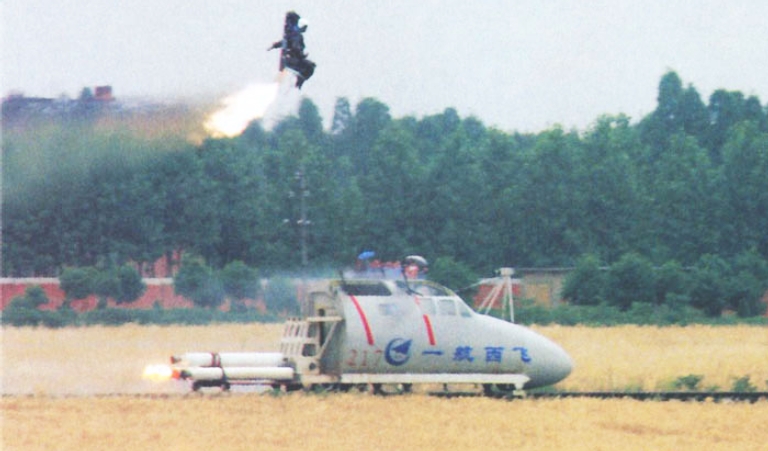 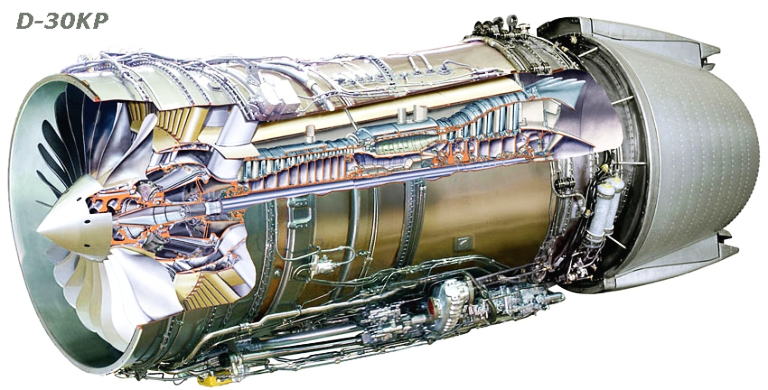 |
|
Imagery
Sources: Xinhua;
MilitaryPhotos.net;
Military.cz; Zhenguan Studio, other Internet sources.
Technical
Report
APA-TR-2007-0705
|
|
|||||||||||||
|
|
|
|
|
|
|
|
|
|
|
|||
|
|
|
|
|
|
|
|
|
|
|
|||
 |
|
|
|||||||||||
| Artwork, graphic design, layout and text © 2004 - 2014 Carlo Kopp; Text © 2004 - 2014 Peter Goon; All rights reserved. Recommended browsers. Contact webmaster. Site navigation hints. Current hot topics. | |||||||||||||
|
Site Update
Status:
$Revision: 1.753 $
Site History: Notices
and
Updates / NLA Pandora Archive
|
|||||||||||||
|
|
Tweet | Follow @APA_Updates | |||||||||||
|
|
|||||||||||||
|
|
|||||||||||||