|
||||||||||||||||||||||
 |
||||||||||||||||||||||
![F-22A Raptor, FB-22, F-22E, F-22N and Variants Index Page [Click for more ...]](APA/f-fb-22.png "F-22A Raptor, FB-22, F-22E, F-22N and Variants Index Page [Click for more ...]") |
 |
![People's Liberation Army Air Power Index Page [Click for more ...]](APA/pla-air-pwr.png "People's Liberation Army Air Power Index Page [Click for more ...]") |
 |
 |
 |
 |
 |
 |
![Military Ethics, Culture, Education and Training Index Page [Click for more ...]](APA/ethx-culture.png "Military Ethics, Culture, Education and Training Index Page [Click for more ...]") |
 |
||||||||||||
 |
![Russian / Soviet Weapon Systems Index Page [Click for more ...]](APA/rus-weps.png "Russian / Soviet Weapon Systems Index Page [Click for more ...]") |
 |
 |
 |

|
 |
 |
 |
 |
 |
||||||||||||
 |
 |
 |
||||||||||||||||||||
| Last Updated: Mon Jan 27 11:18:09 UTC 2014 | ||||||||||||||||||||||
|
||||||||||||||||||||||
|
||||||||||||||||||||||
|
||||||||||||||||||||||
|
|
|
|
|
|
|
|
|
|
|
||||||||||||
|
|
|
|
|
|
|
|
|
|
|
||||||||||||
| |
|
|
||||||||||||||||||||
| Last Updated: Mon Jan 27 11:18:09 UTC 2014 | ||||||||||||||||||||||
|
||||||||||||||||||||||
A Perspective on the Quadrennial Defense Review |
||||||||||||||||||||||||||||||||||||||||
|
Air Power
Australia - Australia's Independent Defence Think Tank
|
||||||||||||||||||||||||||||||||||||||||
| Air Power Australia NOTAM 10th February, 2010 |
||||||||||||||||||||||||||||||||||||||||
Peter Goon, BEng (Mech), FTE (USNTPS), Head of Test and Evaluation, Air Power Australia Dr Carlo Kopp, SMAIAA, MIEEE, PEng, Head of Capability Analysis, Air Power Australia |
||||||||||||||||||||||||||||||||||||||||
|
||||||||||||||||||||||||||||||||||||||||
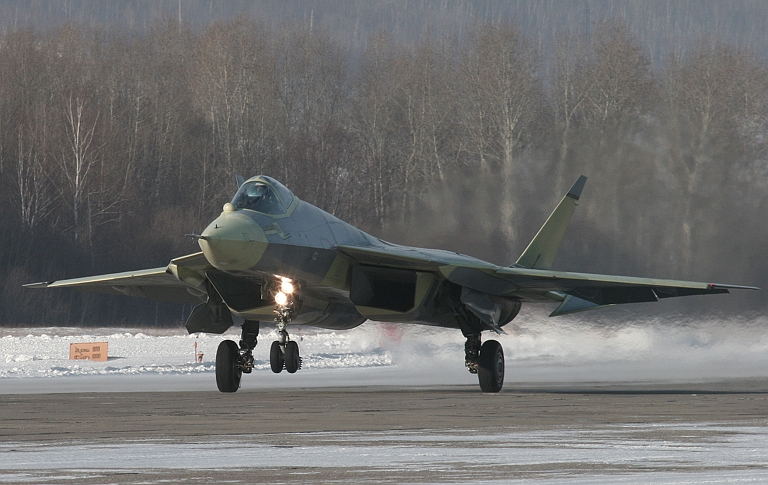 First prototype of the T-50 PAK-FA during
an early test flight, January 2010. This aircraft renders a decade of
OSD fighter planning wholly irrelevant. It is the sharp end of advanced
anti-access weapon proliferation (Sukhoi image).
|
||||||||||||||||||||||||||||||||||||||||
| The
very
recently
released
Quadrennial
Defense Review (QDR)
document is, for all intents and purposes, a public endorsement by the
Pentagon of two pivotal strategic matters which the founders of Air
Power Australia have argued for over more than a decade, these being
the enormous strategic impact of globally proliferating high technology
anti-access and area-denial
weapons, and the need for a survivable, persistent strike
and surveillance capable theatre combat aircraft. In the air combat domain, anti-access and area-denial weapons technologies comprise rapidly deployable, highly mobile advanced radars and Surface to Air Missile systems, counter-stealth radars, passive geolocation sensors, and advanced digital air defence C4 networks, all of which were developed to work in concert with advanced fighter aircraft such as the Su-35S Flanker and the stealthy, “F-22-like” Sukhoi T-50 PAK-FA, unveiled last week. In the maritime combat domain, anti-access and area-denial weapons technologies comprise advanced air, sea, sub and coastal battery launched supersonic anti-ship cruise missiles (ASCM), terminally guided anti-ship ballistic missiles (ASBM), quiet submarines armed with digital torpedoes, including supercavitating designs. In the basing domain, proliferating cruise missiles and terminally guided ballistic missiles render many existing US foreign bases effectively unusable for deployment of aircraft, warships and ground forces, and the logistical elements needed to sustain these. These weapons are now seriously challenging the ability of the United States and its close allies to conduct military interventions in many parts of the world. A nation which is equipped with much less than the full gamut of anti-access and area-denial weapons will be in the position to hold key US and allied in theatre assets at serious risk. Over the coming decade, this trend will drive the United States toward disproportionate responses if a contingency demands intervention, as many elements of the existing and currently planned US force structure will simply be unusable. The inclusion in a QDR document of anti-access and area-denial weapons as a strategically important aspect of the current and future threat environment is an important step forward, without a doubt. What is of some concern is that this trend was evident over a decade ago but was not being actioned in any fundamental strategic planning by the US OSD, indeed numerous unilateral funding and policy decisions made by the OSD over the last two years indicate that anti-access and area-denial weapons were neither understood, let alone considered, in planning for the US Air Force, especially tactical aviation planning. Decisions to cancel funding for additional F-22 Raptors, and defer the new replacement for the B-52 and B-1B, sustained in the current QDR document, are fundamentally at odds with the very same strategic reality of anti-access weapons proliferation articulated in the very same QDR document. Indeed, the unveiling in late January, 2010, of the Sukhoi T-50 PAK-FA prototype, with superior aerodynamic and kinematic performance to the F-22 Raptor, and comparable in stealth performance to the F-35 Joint Strike Fighter, but with far greater range and overall persistence, makes a complete mockery of most of the OSD planning for US TacAir capabilities over the last decade. Commercially, economically, operationally and strategically non-viable programs like the F-35 Joint Strike Fighter were and continue to be preferentially funded over strategically critical and far more cost effective programs like the F-22 Raptor and a replacement heavy bomber, despite the undeniable reality that the lame, just-so-flawed F-35 JSF aircraft would be killed in large numbers if flown against the much superior PAK-FA or Su-35S or advanced SAM systems like the S-400 Triumf / SA-21. This situation is made even more disturbing by the fact that both the PAK-FA and S-400 programs, in addition to the Su-35S, have been well documented in open-source data over the last decade, and all are in the process of being exported to a global clientele. The inclusion in this QDR document, of funding for a future "penetrating persistent strike and surveillance aircraft" for theatre operations, is one of the few genuinely relevant and important capabilities planned for dealing with anti-access and area-denial weapons. This capability is one which the founders of APA defined a decade ago, in the CONOPS and design definition of the “F-22A/Evolved F-111 Force Mix Option” proposal. Then defined around Australia's environment, this concept was, by necessity, and for reasons of cost effectiveness, constructed around an existing in service high performance airframe, the F-111. Central to this proposal, as defined in 1999/2000, was that the weapon system provide a full dual role capability across the persistent strike and ISR spectrum, exploiting the ever growing capabilities of modern digital radar, passive radio-frequency, and imaging optical technologies. That the idea of a shared role strike/ISR system was sound from the outset is reflected in the effort invested by the US Air Force to develop this capability in the FB-22A, which was unfortunately killed by the OSD during the past decade. That the capability has now re-emerged by necessity in the current QDR, shows that the need identified and defined by APA a decade ago is now so critical, that an OSD with an overtly anti-air-power agenda has agreed to fund it. While the proliferation of advanced anti-access and area-denial weapons is a critical problem for US services, it is catastrophic for America's smaller allies. Consider America's closest ally in the Pacific, Australia. In the Australian context, the criticality of anti-access and area-denial weapons in the absence of any countering capability to provide air superiority let alone air dominance may be seen in the following strategic impact chart wherein for somewhat less than the investment to purchase 24 x Super Hornet F/A-18F trainer aircraft, Australia could be denied access, let alone control of the Air-Sea-Land Gap to the north of the continent - the centre piece of Australian Defence and Security Policy for decades. With the advent of the Su-35S and now the PAK-FA T-50, with their internal fuel load of ~25,000 lb, extreme agility, far ranging strike and air-to-air weaponry, and, in the case of the latter, stealth capabilities that match and may exceed those of the just-so-flawed F-35A JSF, this picture gets a whole lot worse and not just in the air power stakes. Superior, if not dominant, air power in the hands of a peace loving nation like Australia is the key to maintaining strategic and tactical balance in the South West Pacific region. It is the ultimate conventional deterrent that has served our nation and this region well for over 40 years. 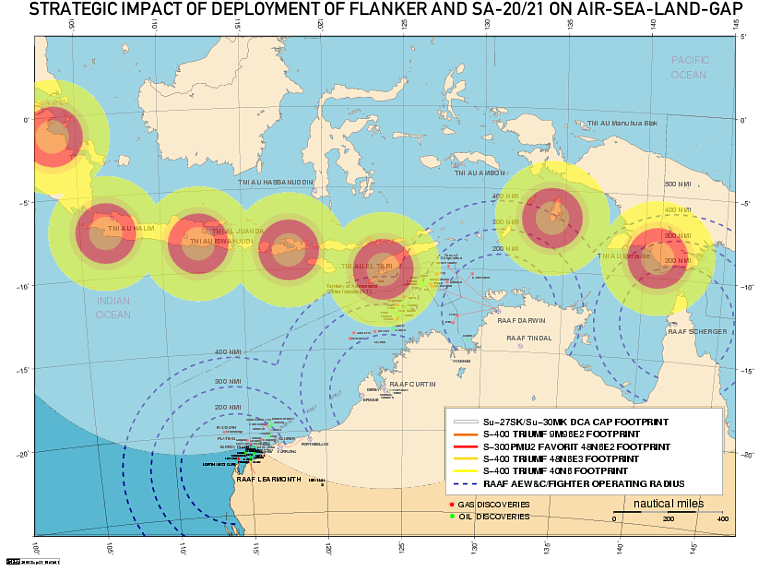 To replace such capabilities with the less than capable Super Hornet and just-so-flawed JSF is not only absurd, but quite irresponsible, and shows flagrant disregard to the maintenance and sustainment of peace and security in the region for Australia and its neighbours who, rightly, are concerned and will do what they need to do to protect their interests. Without the solid foundation of dominant or, at the very least, superior air power, as directed by successive governments in successive Australian Defence White Papers, the Australian equivalent to the QDR, Australia's “system-of-systems” based force structure, when tested, will collapse like a house of cards. The annihilation in combat of its less than capable air combat assets will be the curtain raiser for high cost capital assets such as the Wedgetail AEW&C, Aerial Refuelling MRTT, C-17 Globemaster III , AP-3C Orion and C-130J aircraft remaining on the ground or risk similar annihilation; its ground forces in the North and deployed being at risk of attack from the air where “one aircraft/three bombs/one Batallion” will be the order of the day; and, those embarked on the LHD and AWD ships steaming into the Air/Sea/Land Gap will risk being turned into shark bait. These are the realities to which the current Australian Defence leadership display a total indifference. For America and its allies, similar scenarios described by similar strategic impact charts are already forming around the world due to the ongoing proliferation of anti-access and area-denial weapons, from the Taiwan Straits to the Borders of Afghanistan to closer to home scenarios like Venezuela and Mexico. That good relations might now exist between neighbouring countries is not in question. What is in question is the seemingly deliberate move of the Gates OSD away from the teachings of conventional wisdom and the multiple impacts the resulting strategic and tactical imbalances will have on such relations. That which the Gate's OSD chooses to ignore or, at best, show a total indifference towards, says such impacts cannot be good. |
||||||||||||||||||||||||||||||||||||||||
|
Related Reading:
|
||||||||||||||||||||||||||||||||||||||||
| © 2009, 2010, Carlo Kopp and
Peter Goon |
||||||||||||||||||||||||||||||||||||||||
 |
||||||||||||||||||||||||||||||||||||||||
Air Power Australia Website - http://www.ausairpower.net/ Air Power Australia Research and Analysis - http://www.ausairpower.net/research.html  |
||||||||||||||||||||||||||||||||||||||||
| |
||||||||||||||||||||||||||||||||||||||||
|
|||||||||||||
|
|
|
|
|
|
|
|
|
|
|
|||
|
|
|
|
|
|
|
|
|
|
|
|||
| |
|
|
|||||||||||
| Artwork, graphic design, layout and text © 2004 - 2014 Carlo Kopp; Text © 2004 - 2014 Peter Goon; All rights reserved. Recommended browsers. Contact webmaster. Site navigation hints. Current hot topics. | |||||||||||||
|
Site Update
Status:
$Revision: 1.753 $
Site History: Notices
and
Updates / NLA Pandora Archive
|
|||||||||||||
|
|
Tweet | Follow @APA_Updates | |||||||||||
|
|
|||||||||||||
|
|
|||||||||||||






