|
||||||||||||||||||||||
 |
||||||||||||||||||||||
![F-22A Raptor, FB-22, F-22E, F-22N and Variants Index Page [Click for more ...]](APA/f-fb-22.png "F-22A Raptor, FB-22, F-22E, F-22N and Variants Index Page [Click for more ...]") |
 |
![People's Liberation Army Air Power Index Page [Click for more ...]](APA/pla-air-pwr.png "People's Liberation Army Air Power Index Page [Click for more ...]") |
 |
 |
 |
 |
 |
 |
![Military Ethics, Culture, Education and Training Index Page [Click for more ...]](APA/ethx-culture.png "Military Ethics, Culture, Education and Training Index Page [Click for more ...]") |
 |
||||||||||||
 |
![Russian / Soviet Weapon Systems Index Page [Click for more ...]](APA/rus-weps.png "Russian / Soviet Weapon Systems Index Page [Click for more ...]") |
 |
 |
 |

|
 |
 |
 |
 |
 |
||||||||||||
 |
 |
|||||||||||||||||||||
| Last Updated: Mon Jan 27 11:18:09 UTC 2014 | ||||||||||||||||||||||
|
||||||||||||||||||||||
|
||||||||||||||||||||||
|
||||||||||||||||||||||
|
|
|
|
|
|
|
|
|
|
|
||||||||||||
|
|
|
|
|
|
|
|
|
|
|
||||||||||||
|
|
|||||||||||||||||||||
| Last Updated: Mon Jan 27 11:18:09 UTC 2014 | ||||||||||||||||||||||
|
||||||||||||||||||||||
| Operation
Desert
Storm The Electronic Battle Parts 1 - 3 |
||||||||||||||||||||||||||||||||||||||||||||||||||||||||||||||||||||||||||||||||||||||||||||||||||||||||||||||||||||||||||||||||||||||||||||||||||||||||||||||||||||||||||||||||||||||||||||||||||||||||||||||||||||||||||||||||||||||||||||||||||||||||||||||||||||||||||||||||||||||||||||||||||||||||||||||||||||||||||||||||||||||||||||||||||||||||||||||||||||||||||||||||||||||||||||||||||||||||||||||||||||||||||||||||||||||||||||||||||||||||||||||||||||||||||||||||||||||||||||||||||||||||||||||||||||
|
||||||||||||||||||||||||||||||||||||||||||||||||||||||||||||||||||||||||||||||||||||||||||||||||||||||||||||||||||||||||||||||||||||||||||||||||||||||||||||||||||||||||||||||||||||||||||||||||||||||||||||||||||||||||||||||||||||||||||||||||||||||||||||||||||||||||||||||||||||||||||||||||||||||||||||||||||||||||||||||||||||||||||||||||||||||||||||||||||||||||||||||||||||||||||||||||||||||||||||||||||||||||||||||||||||||||||||||||||||||||||||||||||||||||||||||||||||||||||||||||||||||||||||||||||||
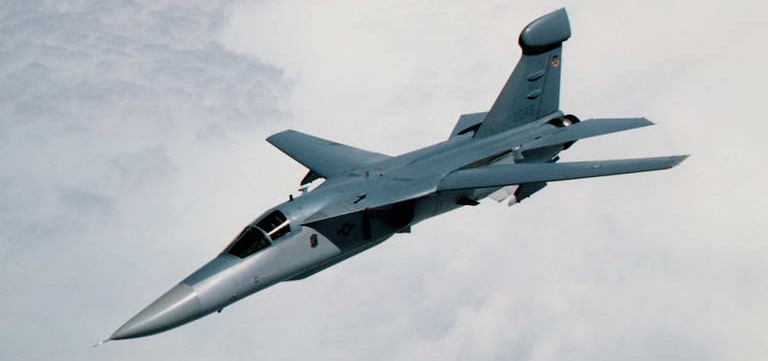 USAF EF-111A Raven tactical jammer (USAF). Part 1 The Gulf War has demonstrated yet again the central importance of electronic warfare to the conduct of a modern air war. So overwhelming was the weight of the initial attack, that the Iraqi IADS (integrated air defence system) collapsed in hours, never to regain anything approaching a semblance of functionality. What transpired was no surprise to informed observers, as the Libyan raid of 1986 and Israeli strike on the Bekaa Valley in 1982 both produced similar effects, albeit on a much smaller scale. It was clear that a repeat performance was a certainty if hostilities did break out, the only uncertainty lay in its form and timing. The extensive television coverage of the air war from the outset provided a clear indication of what was happening, and the queues of HARM loaded F-4G Weasels and F/A-18s congesting Saudi taxiways left no doubt whatsoever as to the ferocity of the battle taking place hundreds of miles away. It was quite clear to informed observers that Iraq's IADS was on the receiving end of an unprecedented assault, very different from the piecemeal Weasel and Iron Hand operations of the Vietnam period. The destruction of Iraq's IADS is a very good study of contemporary Western doctrine in the area of electronic combat, and deserves thus a close examination. The Target - The Iraqi IADS Australian Aviation published two brief reviews of Iraq's electronic order of battle, in November 1990 and April 1991. The Iraqi IADS was a composite system which integrated European and Soviet search and acquisition radars, and a range of Soviet and European SAM and AAA systems, all tied together with a French built Kari C3 (Command/Control/Communications) network. While smaller than the now defunct Soviet system in central Europe (Western TVD), the system had a respectable capability and comparable if not higher density of SAM and AAA systems, with considerable redundancy in communications links and hardened C3 facilities. Organisationally the IADS was split into three principal elements, a national fixed site strategic system using fighters and SA-2 and SA-3 systems covering key airfields and strategic air defence sites, operated by the Iraqi air force. This system was supplemented by Republican Guard operated SAM and AAA systems covering key nuclear, biological and chemical warfare facilities. Finally, the Iraqi army had its own mobile radar, SAM and AAA systems tasked with protecting both fixed sites and units in the field. Geographically the national IADS was split into several large zones, in each of which were located central local C3 facilities, one or more large hardened airbases and a network of communications links to fixed radar and SAM sites. Control of the whole network was centred in hardened facilities in the vicinity of Baghdad. While microwave links were used extensively, these were backed up by landlines. The structure of the system reflected the Soviet Air Defence Force (PVO) and Army Air Defence (PVO-SV) models respectively. The strategic air defences employed large GCI/EW (Ground Controlled Intercept/Early Warning) radars such as the Soviet P-35M and P-37 Bar Lock, which were used for wide area surveillance and early warning, these large MTI (Moving Target Indicator - ie low PRF) E/F (2.6-3 GHz) band systems being situated at key geographical locations to cover principal air bases and population centres. Bar Lock systems employ a pair of trailer mounted truncated paraboloid reflectors, and have a range of the order of 120 NM, the whole antenna/trailer assembly rotating at 12 rpm for 360 degree scan with six stacked beams for approximate height finding. Where low level coverage is required, they are typically supplemented by a Side Net E-band nodding height finding radar. The air force operated GCI/EW system formed the top tier of the IADS, supporting fighters with GCI vectors, but also datalinking early warning information down to individual SAM and AAA batteries. These were in turn directly supported by a range of early warning and acquisition radars, mobile and relocatable, such as the Flat Face, Squat Eye and Spoon Rest. These acquisition radars played a key role in the IADS, as they provided precise tracking information to SAM systems. They would also, under proper operating conditions, remain off the air until a target was to be engaged, at which time they would light up, acquire and track the target and feed the target's parameters to the fire control radars associated with the SAM and AAA systems in use. The P-15 Flat Face is a low PRF MTI radar which uses a pair of elliptical paraboloid antennas on a short mast above a trailer, operating in the B/C (UHF) band the radar is generally credited with respectable look down performance into clutter and good ECCM performance. As several late model units were captured by the Allies during the eighties, the Flat Face was wholly compromised. Reports of testing by the French suggested the radar had remarkably good performance for its class of system, and good ECCM. The P-15 Flat Face was originally used by the Soviets to support the SA-3 Goa, but since they were reluctant to export their mobile Long Track acquisition radars to non-Warpac nations, the P-15 was largely substituted. The Flat Face was the principal Soviet mobile battlefield surveillance/acquisition radar in use in Iraq and is associated with grouped area defence batteries of SA-3, SA-6 and point defence batteries of SA-8, Roland, ZSU-23-4P, SA-9 and SA-13. Where low altitude coverage was required, the P-15M Squat Eye was used. The Squat Eye is a direct derivative of the P-15, using essentially the same hardware but with only a single antenna mounted at the top of a 100 ft mast. A typical arrangement was to colocate a Flat Face and Squat Eye at a single site, both vans buried in revetments and covered with nets. The radar site would then provide high altitude coverage to the maximum range of the systems, and low level coverage limited by the height of the P-15M mast. Most acquisition radars were situated close to the targets covered by the area defence and point defence SAM systems which they were designated to support, and were often supplemented by height finding radars such as the Thin Skin, a truck or trailer mounted H-band nodding elliptical paraboloid system. The older SA-2 systems were supported by the geriatric VHF/A band P-12 and P-12M Spoon Rest low PRF MTI acquisition radars. These systems use an array of twelve Yagi antennas in two banks, mounted on horizontal booms on a common mast. Early models were mounted on a van trailer, newer build equipment on ZiL-151, 157 or Ural 375 trucks. While the P-12 is considered an unsophisticated analogue system by Western standards, it has a respectable range of 150 NM at altitude and its large wavelength improves its detection range performance against low RCS targets such as the F-117A. The Spoon Rest was wholly compromised when an Israeli commando team captured and removed a whole system in 1969. Iraqi Area Defence SAM Systems The third tier in the IADS hierarchy were the fire control/tracking radars associated with the SAM and AAA systems in use. These were typically co-located with the SAM or AAA batteries they supported and in most instances were dedicated to the weapon in use. The SAM systems were mainly of Soviet origin, with some European weapons in use. Area defence coverage was provided by approximately 70 batteries, close to evenly split in numbers between the SA-2, SA-3 and SA-6. The most numerous weapon was the SA-2 Guideline, supported by the Fan Song fire control radar. Almost no information is available on the composition of the SA-2 force, but the period over which the weapons were acquired suggest that most were of the older SA-2B variant supported by the almost devoid of ECCM Fan Song B radars, with later supplementary purchases being of the later build SA-2F model with the Fan Song E or F radar, the latter types incorporating ECCM measures to counter jamming. All Fan Song radars use separate beams for horizontal and vertical angle tracking of the target, with separate antennas for each. The fan shaped beams are scanned mechanically 15-17 times a second, the horizontal beam being pulsed to provide ranging information. Targets are acquired at low PRF, which is doubled once tracking is initiated. The missile is then launched and commanded to a collision with the target with commands from a UHF band very low PRF uplink. Up to six targets can be tracked concurrently, and three missiles guided concurrently against a single target. A typical regimental structure is that of a headquarters equipped with a Spoon Rest or Flat Face early warning/acquisition radar, supported by a Side Net or Thin Skin heightfinder, these systems providing early warning and target handoff to three launcher battalions. Each launcher battalion has a Spoon Rest acquisition radar and a Fan Song fire control radar, to support six revetted single rail launchers. Missiles are moved on a single round transloader semi-trailer, towed by a ZiL-157V or ZiL-131V 6 x 6 tractor. The Fan Song was jammed so successfully by the Americans in Vietnam that ECCM measures were added as a priority. The Fan Song E uses a LORO (Lobe On Receive Only) technique, with auxiliary transmit antennas, whereas the Fan Song F uses auxiliary optical angle tracking. Both techniques cannot prevent uplink jamming of the UHF command channel. The SA-2 weapon system was wholly compromised due capture of units in the Middle East and via US access to Egyptian systems. The limitations of the SA-2 caused the Russians much embarrassment in Vietnam resulting in the deployment of the smaller and more agile SA-3 Goa, designed to engage low flying targets. Reports on how many Goa systems were used by Iraq vary, but the numbers indicate about 25 battalions. The Goa is guided via command link from the I band Low Blow fire control radar, designed with LORO ECCM from the outset. The Low Blow uses a centrally mounted single truncated paraboloid transmit antenna with a single boom feed, and separate 45 degree angled mechanically scanned receive trough antennas, mounted in a characteristic chevron pattern. The angling of the antennas supposedly reduces the amount of ground clutter seen by the receiver. A backup optical tracker is used to defeat angle trackbreaking jam techniques, and MTI techniques are used to defeat chaff. The missile is steered by commands from a D band uplink antenna mounted on top of the fire control system, the missile's position is tracked via a beacon on the missile. Up to two missiles can be guided against one target concurrently, and six targets tracked concurrently. A typical battalion uses a single Flat Face or Squat Eye acquisition radar which supports a single Low Blow fire control radar, and typically four static launchers. These may be two rail or four rail systems, the latter adopted with the deployment of the SA-3B missile. Missiles are transported in pairs on a ZiL-157 or ZiL-131 6 x 6 transloader truck. Four battalions make up a regiment, which is equipped with an acquisition radar system, typically a Spoon Rest with a Side Net, or a Squat Eye operating with a Flat Face and Thin Skin. While the Goa missile is more agile than the Guideline, and its radar has better ECCM and low altitude tracking performance, the type's performance in SEA and the Middle East was hardly better than its predecessor's and since the US had access to systems captured by Israel in 1973, its weaknesses were well understood. The most potent area defence SAM system was the Iraqi army's mobile SA-6/Gainful 9M9 ZRK Kub/Kvadrat, which is supported by the Straight Flush radar system. The ramjet sustained 9M9 missile can pull 15G and is equipped with semi-active radar terminal homing supported by a proximity fuse, all of which vastly improved kill probability in comparison with the SA-2 and SA-3. The Straight Flush mobile fire control radar system is a fully self contained acquisition and guidance package mounted on a tracked 2P25 chassis. A stack of two independently rotating coaxial turrets supports separate acquisition and guidance radars. The lower half of the stack mounts a large horizontal G-H band parabolic section antenna, with four separate feeds producing four stacked beams for approximate heightfinding, three are H band, one is G band. While details have not been published, it is reasonable to assume this system is a low PRF MTI radar, its purpose is to acquire and track multiple targets and provide track parameters to the fire control system. The upper turret mounts the cassegrainian I band tracking and illuminating antenna. Once a target is selected for attack, using parameters from the acquisition system, the tracking antenna is slewed onto the target and initiates precise target angle tracking and ranging. Angle tracking is achieved by conical scanning, the radar operating in pulse mode during the command link guided midcourse phase of the missile's flight to provide ranging information, which is not required during terminal homing, when the radar switches to continuous wave operation to illuminate the target. The missile then homes in to impact. While there is little consensus in the open literature, it is reasonable to assume that early rounds had conically scanning seekers, with later build seekers fitted with monopulse seekers for improved ECCM. A typical engagement will involve a three round salvo on one target. A typical Iraqi Gainful regiment structure has a Flat Face, Squat Eye and Thin Skin providing target acquisition for five batteries, each with a Straight Flush and four three round tracked 2P25 TELs. Reloads are carried on a hoist equipped Ural-375 6 x 6 transloader truck, which carries three rounds. The Gainful debuted in the 1973 war, accounting for most Israeli losses due SAMs, mainly due inappropriate warning receiver fit on the IDF's fighter aircraft. The Bekaa Valley battle of 1982 saw the Israelis even the score, using ARMs to cripple the Straight Flush systems and then killing off the TELs with Mk.82. Samples of late build SA-6 were captured in Chad in 1987, and subsequently tested on a missile range in the UK, where the missile demonstrated high accuracy. Iraqi Point Defence SAM Systems The area defence SAMs were supplemented by approximately 250 point defence SAM systems, which if PVO doctrine were to be followed, would have made between 65 to 140 mobile batteries of various compositions. The most potent point defence SAMs were the SA-8 Gecko and the Franco-German Euromissile Roland. Both systems use a mobile fully self contained TELAR as the fire unit, and both have autonomous acquisition radars. In concept both are comparable to a mobile version of the Rapier used in this country. The 9M33 ZRK-Romb or SA-8 Gecko is derived from the naval Osa-M SA-N-4 Gecko, deployed in the early seventies on smaller combatants. The SA-8 uses an amphibious BAZ-5937 TELAR vehicle, which carries a turret with trainable launch rails and the Land Roll radar equipment. The H band target acquisition radar uses a folding paraboloid section antenna with 360 degree scan, this system uses multiple stacked beams for height finding. It is reasonable to assume it is a low PRF MTI system similar to that in Roland, as this technique is less demanding of signal processing than pulse Doppler, yet provides adequate clutter rejection for low altitude operations. Once a target is acquired the turret is trained upon it and the large J band pulse mode tracking system engaged, this system uses a side truncated cassegrainian dish with a characteristic flat dielectric blast shield. The tracking radar uses frequency hopping and monopulse angle tracking techniques to defeat jamming, as such it has the best ECCM capability of any Soviet export system. The tracking antenna is flanked on either side by a guidance antenna package, which generates I band capture beams after launch, an I band tracking beam to follow the missile's flightpath, and I band uplink signals to command the missile. The weapon uses fully automatic command to line of sight (CLOS) and the fire control system will collide the missile with the target. Backup optical tracking is fitted, two rounds can be fired at one target concurrently. Older SA-8A Geckos carried four ready rounds on open rails, later SA-8B six in box launchers. A typical deployment involves a battery with four TELARs, two BAZ-5937 transloaders and a BTR-60PU-12 8 x 8 command vehicle. The Roland is the Western equivalent to the SA-8, also deployed in the seventies and employed by Germany, France and the US Army. Like the SA-8 it uses a TELAR platform, the Iraqis purchasing the French AMX-30 chassis. The fully traversable turret has rails with two ready rounds, and can reload a further eight from magazines in the hull on either side of the turret. The rear of the turret mounts a cos**2 antenna for the D band Thomson CSF MTI acquisition radar, which will use multiple or split feeds for heightfinding via stacked beams. The antenna type is used to reduce the size of the ground return, ie the clutter which would obscure a target. The front of the turret mounts the Siemens J band low PRF tracking radar, which uses an elliptical cassegrain antenna under a blast shield. The radar uses monopulse angle tracking to defeat countermeasures, and has two channels, one for the target and one for the missile's CW beacon. Next to the tracking radar are situated an optical sight and a command link antenna. Like the SA-8 the Roland uses fully automatic command to line of sight guidance. Both the Roland and the Gecko are considered serious threats to low flying aircraft as they can be easily hidden and operate autonomously, while their tracking radars are substantially immune to simpler trackbreaking ECM techniques by virtue of monopulse angle tracking. As was to be later proven, the Roland lived up to its reputation. The Roland and Gecko were the best but not the most common point defence SAMs used. The most common system was the 9M31 Strela 1 or SA-9 Gaskin. This weapon is comparable to early models of the Sidewinder based Chapparel, and uses a BDRM-2 amphibious scout vehicle chassis as a TEL, with four boxed ready rounds. The missile itself is an unimpressive lightweight heatseeker with an uncooled Lead Sulphide detector element, capable of tail aspect engagements only. The Gaskin is usually operated in conjunction with the formidable ZSU-23-4P Shilka SPAAG system, which uses a similar chassis to the Gainful TEL. The ZSU-23-4P employs a J band Gun Dish pulse mode (magnetron) acquisition and tracking radar and is a fully self contained mobile system, whereas the SA-9 must be cued to a target for seeker lock-on and launch. Gaskin batteries often use a single Gun Dish radar mounted on a ZiL-157 6 x 6 truck, to provide warning of inbound aircraft. Soviet and some Warpac Gaskins also carry the Hat Box ESM equipment, which cues the operator to the radar and altimeter emissions of low flying aircraft, but it is not known whether the Iraqis had this equipment or whether they were competent to understand its use. As the Gaskin has been captured on many occasions by Western aligned forces, it has been wholly compromised. The Iraqis had also acquired, more recently, the new 9M37 Strela 10 or SA-13 Gopher heatseeking SAM. Using a tracked MTLBu TELAR, the SA-13 system has a rangefinding radar fitted and uses a bigger missile than the SA-9. Reports on the missile's seeker are conflicting, but it does appear that a cooled detector with reasonably sophisticated optical filtering is used, conferring all aspect capability. In Soviet deployments the SA-13 is formed into batteries with the new 2S6 SPAAG, four of each commanded from an MTLBu command vehicle and all relying on a separate Dog Ear acquisition radar, mounted on a dedicated MTLBu chassis. It is not clear whether the Iraqis were sold the Dog Ear, but it is likely they deployed the Gopher in a similar fashion to its predecessor the Gaskin. Deployment A typical composition for the Soviet PVO model would see static area defences implemented with batteries of SA-2 and SA-3, with mobile area defences and gaps in static defensive coverage plugged with the PVO-SV SA-6. The area defences would be supported by early warning radars at key sites, these covered redundantly by the early warning and acquisition radars of the SAM batteries. Point defences would then be comprised of mixed batteries, clustered about the specific target to be defended. A typical structure for a point defence battery is a quartet of SA-9 or SA-13 SAM systems, complemented by a quartet of ZSU-23-4P mobile AAA systems. These would then be supplemented by singletons, pairs or quartets of the mobile, fully self-contained SA-8/Land Roll or Roland command link SAMs. The intention of Soviet air defence strategists was to provide overlapping zones of coverage by various weapon types, thereby making it impossible for an aircraft to penetrate the area without encountering multiple types of SAM and AAA system. This was seen to be a means of maximising the demand placed upon Western ECM, thus forcing bigger ECM equipment at the expense of fuel and payload, while making it impossible to use any flight profile which could avoid the envelope of every weapon type. While the exact composition of the Iraqi IADS and its deployment at the outset of the conflict may never be known, it is reasonable to assume that the Republican Guard would have operated the most sophisticated systems such as the European Roland SAM and SA-8 SAM, and some fraction of the SA-6 batteries, with the remaining mobile systems deployed by the Iraqi army to cover forces in Southern Iraq and Kuwait. The static area defence SAMs were supplemented by a respectable quantity of AAA equipment, the heavier calibres supported by tracking radars such as the E-band Fire Can family of systems, or the newer I/J-band Flap Wheel series. The AAA was further supplemented by machine guns, hand held automatic weapons and man portable SAMs such as the SA-7B and SA-14, and the Chinese built HN-5A, a modified SA-7B with a cooled seeker. This was by all means a formidable air defence system if used properly, and had the potential to inflict substantial attrition if not dealt with properly. The Allied response reflected this. In comparison with the Warpac and Western TVD PVO/PVO-VS IADS, the Iraqis lacked the latest weapons and some types such as the cumbersome SA-4 and SA-5 systems, but the high fraction of SA-3, SA-6 and SA-8 systems was easily comparable to the central European theatre. Since Soviet doctrine opposes forward deployment of the latest/best systems, it is fair to say the Iraqis had a representative implementation of the Soviet IADS as forward deployed in Eastern Europe. The results clearly reflected this. REFERENCES: [1] Zaloga S.J. 'Soviet Air Defence Missiles', Jane's Information Group, 1989 [2] 'International CounterMeasures Handbook', EW Communications and Cardiff Publishing, 1985, 1987, 1989, 1990. Further Reading (2005): [1] Soviet Cold War Radars (in German) [2] Surface to Air Missile Systems (in German) [3] Radar and Electronic Warfare Facilities [4] Vestnik PVO - Soviet/Russian Systems (in Russian) |
||||||||||||||||||||||||||||||||||||||||||||||||||||||||||||||||||||||||||||||||||||||||||||||||||||||||||||||||||||||||||||||||||||||||||||||||||||||||||||||||||||||||||||||||||||||||||||||||||||||||||||||||||||||||||||||||||||||||||||||||||||||||||||||||||||||||||||||||||||||||||||||||||||||||||||||||||||||||||||||||||||||||||||||||||||||||||||||||||||||||||||||||||||||||||||||||||||||||||||||||||||||||||||||||||||||||||||||||||||||||||||||||||||||||||||||||||||||||||||||||||||||||||||||||||||
|
Table 1
Iraqi Electronic Order of Battle
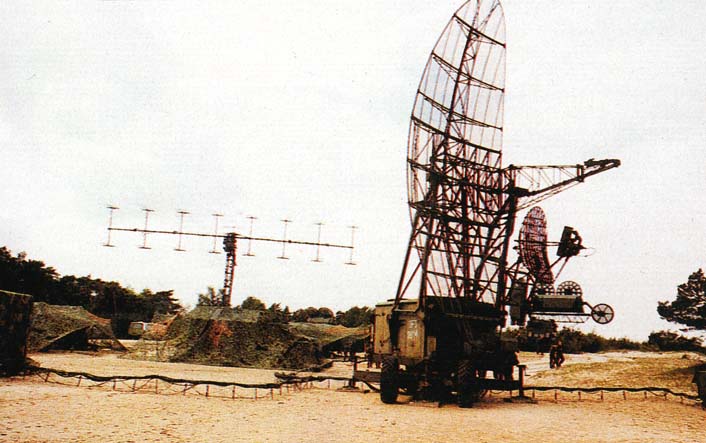 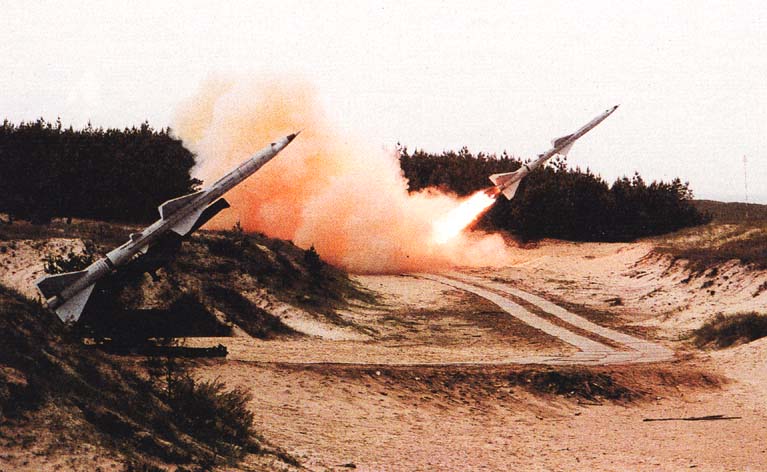 The V-75/SA-2 Guideline is a mainstay of the former communist bloc and its former client states. This two stage command link guided missile fared poorly in Vietnam, even worse in the Middle East and is not known to have scored any kills in the Gulf. Iraq had twenty batteries, with a total of 120 single rail launchers, mostly the old SA-2B variant but also some newer SA-2F. The SA-2 is supported by the Fan Song radar. 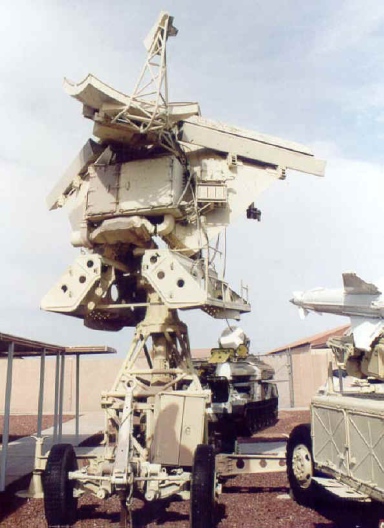 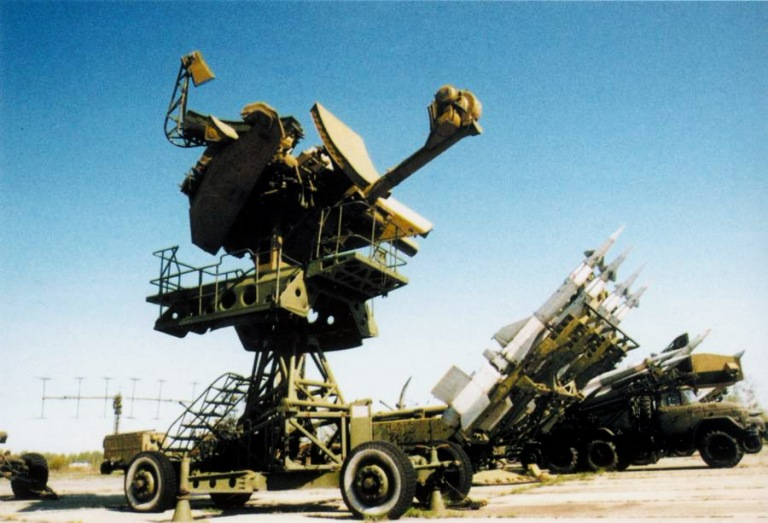 The S-125/SA-3 Goa was a major improvement upon its predecessor, with respectable low altitude performance and designed with ECCM features from the outset. Supported by the Squat Eye and Low Blow radars, the SA-3 was a key component of the Iraqi IADS with no less than 25 batteries deployed. Each battery had four launchers, each launcher with two or four rails. Several Allied aircraft were killed by this missile (Low Blow - USAF Nellis TTF). 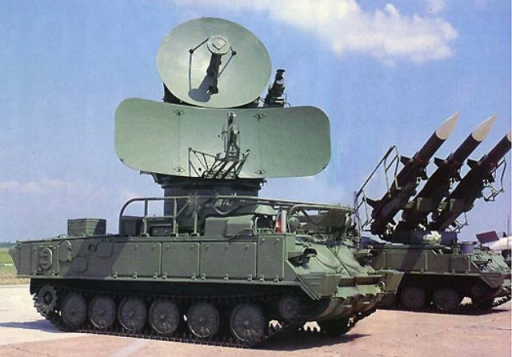 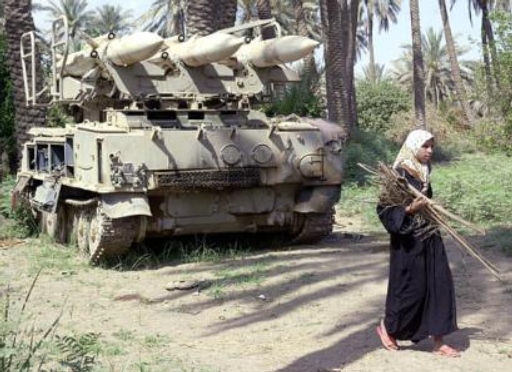 The ZRK Kub/Kvadrat/SA-6 Guideline was the most potent area defence missile used by Iraq. Mobile SA-6 regiments use the Squat Eye and Flat Face for early warning and acquisition, with battery acquisition and tracking accomplished by the Straight Flush radar system. Once a target is acquired by the Straight Flush, its upper tracking antenna tracks and illuminates for the command link midcourse guided and semi-active radar terminally guided ramjet missile. A single Straight Flush will support four three rail 2P25 TELs. 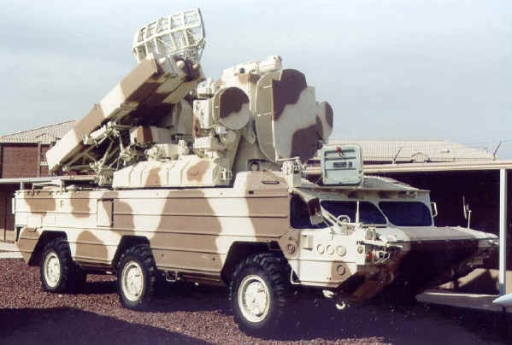 The ZRK Romb/SA-8 Gecko is a capable radar guided mobile point defence weapon. Each BAZ-5937 TELAR carries a complete Land Roll acquisition and fire control radar system, which can control up to two missiles concurrently against a single target. The Land Roll J band tracking radar is frequency agile and uses monopulse tracking to improve its resistance to hostile jamming (USAF Nellis TTF). 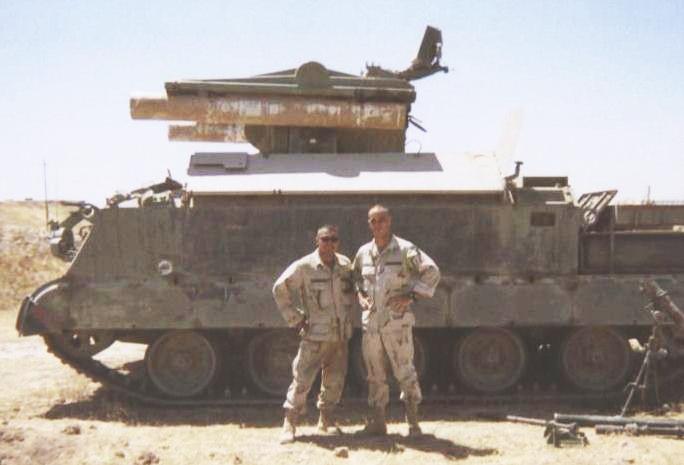 The Franco German Euromissile Roland is like the SA-8 a command link guided point defence SAM system, with a TELAR mounting a complete acquisition and fire control radar system. Like the SA-8 the Roland also uses monopulse angular tracking techniques to defeat jamming. Iraqi systems used the French built AMX-30 chassis. Several Allied aircraft were destroyed by Rolands. 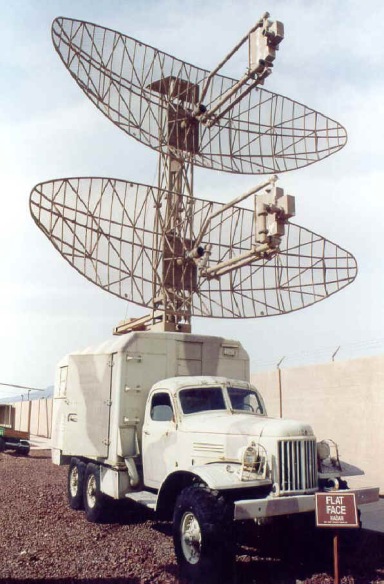 The P-15 Flat Face and P-15M Squat Eye were the best of the Soviet supplied acquisition radars used by Iraq. Both of these systems use much common hardware, and both are UHF band low PRF MTI systems designed to track low flying aircraft. A typical acquisition radar site would use one of each, with vans in camouflaged revetments (USAF Nellis TTF). 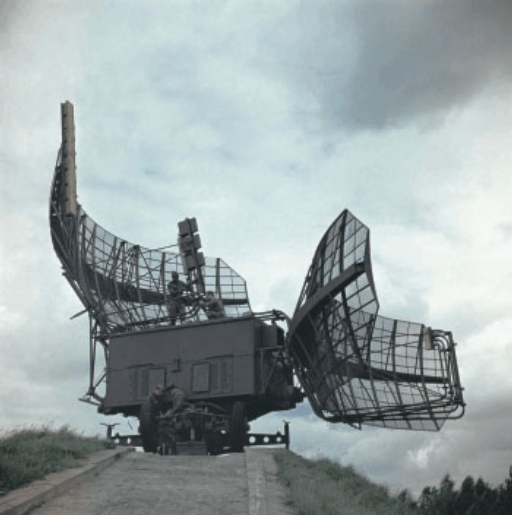 The P-35 Bar Lock is a mainstay of Soviet equipped air defence systems, functioning as a 3-D Ground Controlled Intercept/Early Warning system. These radars not only support interceptors, but also forward targeting information to acquisition radars further down the chain of the IADS. 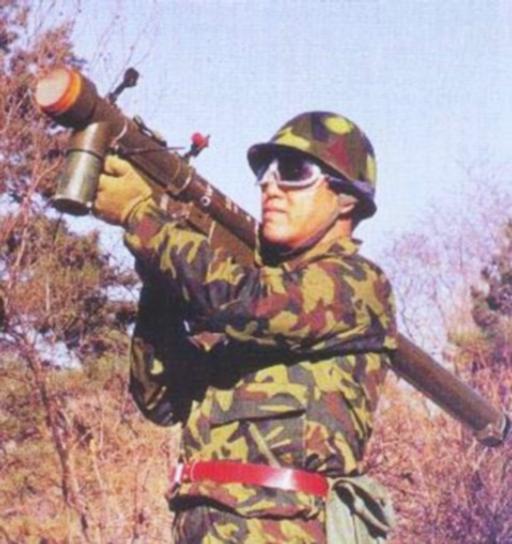 The man portable SA-7 Grail was used in large numbers by the Iraqis, and claimed a number of Allied aircraft, particularly those operated by the US Marines. Several subtypes were employed by the Iraqis, including the Chinese HN-5 which uses a more sensitive cooled seeker. Depicted a Chinese QW-1. 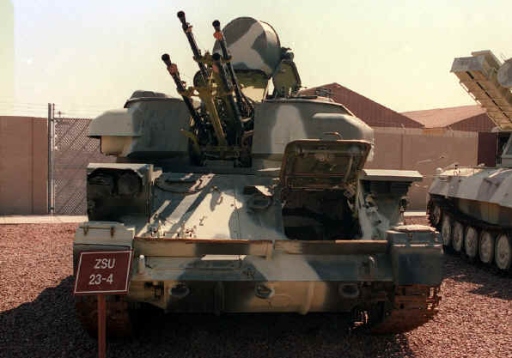 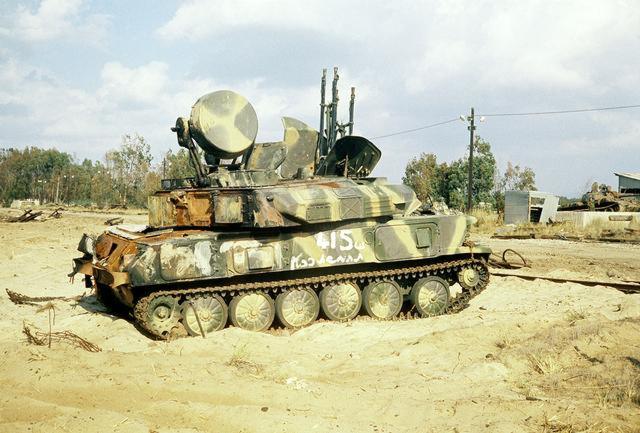 The ubiquitous ZSU-23-4P SPAAG was widely used by the Iraqis and many were lost to Allied aircraft during the campaign. Armed with four water cooled, radar directed 23 mm guns, the Shilka is a serious threat to low flying aircraft and helicopters. |
||||||||||||||||||||||||||||||||||||||||||||||||||||||||||||||||||||||||||||||||||||||||||||||||||||||||||||||||||||||||||||||||||||||||||||||||||||||||||||||||||||||||||||||||||||||||||||||||||||||||||||||||||||||||||||||||||||||||||||||||||||||||||||||||||||||||||||||||||||||||||||||||||||||||||||||||||||||||||||||||||||||||||||||||||||||||||||||||||||||||||||||||||||||||||||||||||||||||||||||||||||||||||||||||||||||||||||||||||||||||||||||||||||||||||||||||||||||||||||||||||||||||||||||||||||
|
Part 2
The Allied assault on Iraq saw the collapse of a formidable integrated air defence system, probably the most lethal outside the Warsaw pact. The Iraqi system had much in common with the Soviet system, including equipment, deployments, operational doctrine and diversity of types. The ease with which the Allies crippled and then demolished this system testifies to fundamental flaws in Warpac air battle doctrine, which would have had a decisive influence in any NATO-Warpac conflict. What follows is how it was done. Planning and Preparation The Allies had monitored the Iraqi IADS closely throughout the buildup period of Desert Shield, deploying a range of Elint (Electronic Intelligence gathering) assets to the theatre. These assets served the principal purpose of mapping out the Iraqi Electronic Order of Battle (EOoB), ie pinpointing the deployments and composition of Iraq's air defence batteries and supporting radar systems, and mapping out the stations and frequencies used for command and control of the network. Key systems employed were various subtypes of the EC/RC-135 Rivet Joint, the high flying TR-1 (U-2), the US Navy's EP-3 and EKA-3B aircraft and the RAF's Nimrod R.1. These aircraft were strategically positioned to cover particular sectors of IADS coverage when Allied aircraft, in the period preceding hostilities, feigned penetrations of Iraqi airspace. This is the oldest trick in the electronic warfare book and the Iraqis fell for it repeatedly, lighting up their radars to engage the would be inbounds, in doing so they provided the monitoring Elint platforms with their positions and the identities of their radars, in turn betraying the composition of their batteries. It is also very likely that the Iraqis indulged in the luxury of live testing and calibration of their radars, further assisting the Allied effort. 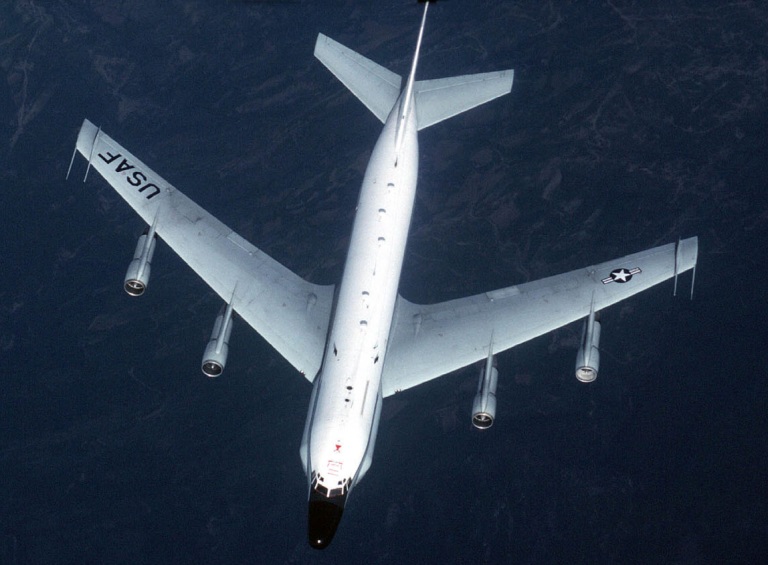 The most capable SIGINT/ELINT system in service is the US Air Force RC-135V/W Rivet Joint, equipped with the highly capable Raytheon 55000 Electronic Support Measures (ESM) and 85000 signals intelligence (SIGINT) receiver systems. The Rivet Joint played a pivotal role in the Desert Storm campaign, and more recently in the OAF, OEF and OIF campaigns (U.S. Air Force). With Elint equipment of appropriate capability it is possible to determine not only the type of emitter, but also often which model or subtype and its standard of calibration, all from the monitored and recorded emissions. The Iraqis violated a fundamental principle of electronic combat by lighting up radars outside of actual engagements, and then not moving or reshuffling their assets to invalidate Allied reconnaissance. Were they to have done the proper thing, they would have moved batteries to dummy SAM sites, lit up in the presence of Allied Elint aircraft, and then shifted the batteries to implement a scheme of tactical or strategic deception. If this is implemented properly, and appropriate emission control discipline enforced, it becomes very difficult for the attacking party to map out what the real structure of the target IADS is. This in turn makes the planning of a pre-emptive strike very difficult, as with the increasing complexity of the deception the risk of not taking out all key assets in the initial hit increases vastly. By the middle of January the Allies had a comprehensive picture of Iraq's IADS and were well positioned for a knock-out blow against the system, with substantial hard kill defence suppression assets in the theatre. Key systems were the F-4G Wild Weasel, a Phantom airframe fitted with a potent radar homing and warning receiver system (APR-47 RHAWS), which was supplemented by the HARM firing F-16C and F/A-18C. These aircraft were further supported by Alarm firing Tornado GR.1s of the RAF and HARM capable EA-6B Prowlers, A-7Es and A-6Es of the USN. Jamming assets assembled in the theatre included USAF EC-130 Compass Call standoff communications jammers, Naval EA-6B Prowlers and the USAF's EF-111A Ravens. The protracted buildup was a major benefit to the Allies, who used the time to upgrade both hardware and software in many of the jamming systems, to precisely match the Iraqi inventory. Unlike the Israelis in 1973, who carried the wrong jammers and warning receivers for the threat at hand, the Allies had the best of intelligence and used it to the fullest. The Allied planners envisaged a three pronged strategy for winning the electronic battle, concentrating on the simultaneous implementation of the following objectives:
Once the network was paralysed, individual area defences and point defences would have to light up their local radars to acquire inbound Allied aircraft and thus expose themselves. The local area defences would then be attacked by SEAD aircraft attached to inbound strike packages, with the twofold objectives of preventing attrition of strike aircraft and inflicting attrition upon elements of the IADS, thus implementing the second phase of the SEAD campaign. Allied mission planners expended by established standards unprecedented effort in computer modelling of the initial hours of the campaign [3], an effort which commenced only several days after the Iraqi invasion of Kuwait. Using the EADSIM/C3ISIM simulation program for analysis, a team of analysts created an extremely detailed model of the Iraqi IADS, containing performance parameters, kill probabilities and electromagnetic characteristics of the systems used. Using intelligence sourced from the DIA and JCS, the team then produced a model for the Iraqi C3 network which tied the IADS together. With a model for the Iraqi IADS/C3, the USAF's analysts then approached the Checkmate high level operational planning group, the strategists responsible for developing the Allied air war battle plan, and acquired details of the projected campaign. With the simulation model complete, or as complete as was possible with the data at hand, the analysts ran the simulation ten times. The results were a projected attrition no worse than 4% for the initial hours, numbers consistent with rule of thumb estimations and a simpler TAC Thunder simulation run earlier. A detailed discussion of Allied simulation effort justifies treatment in itself, what is significant is that it allowed Allied planners to explore a range of strategies, unit level tactics and aircraft type deployments before the commencement of hostilities. When the time came, the Allied battle plan was well structured and its effects understood in detail, everything happened for specific reasons at specific times and places. The 17th January, 1991 - the Coup de Grace The Allies struck at about 03:00 hrs local time on the 17th January, when USAF EF-111A and USN/USMC EA-6B crews hit the radiate switches on their ALQ-99 consoles, unleashing a torrent of noise and deception jamming signals unto Iraq's airwaves. Supported by the EC-130s' jamming of all known communications frequencies, the solid wall of electromagnetic garbage hid multiple waves of inbound strike aircraft and cruise missiles, while paralysing much of Iraq's communications network. Cruise missiles and F-117A Stealth Fighters struck at key C3 sites, while the first wave of 12 USAF F-4Gs and 60 USN/USMC F/A-18s, A-7s and EA-6Bs fired AGM-88 HARM anti-radiation missiles into key air defence radar systems and strategically positioned SAM sites. The weight of the initial assault was overwhelming, with several hundred HARMs fired in the first few hours of the campaign. USAF Maj Gen Glosson, director of campaign planning, reportedly stated that at this point during the assault, no less than 200 HARMs were enroute to their chosen targets (a total close to 2,000 rounds were fired throughout the conflict). This weight of numbers would not have been achievable without the US Navy, which had wired its F/A-18s, A-6Es, A-7Es and EA-6Bs for HARM, in the USAF inventory carried only by specialised F-4Gs and modified Weasel supporting F-16Cs; accordingly the Navy claim that no less than 80% of the HARMs fired in the initial attack came off USN launch rails. To further incapacitate the Iraqi C3 network, which due jamming would have to revert to land line communications, many of the cruise missiles were targeted at electrical power stations and distribution yards, a large fraction of the USN cruise missiles dispensing rather than submunitions spools of conductive carbon-fibre wire which caused massive and repetitive electrical short circuits. The effect was to cripple those communications and command facilities which did not have standby (backup) power systems, and those repeatered links which operated on mains grid power. Deception was added to the game plan. The USAF's 4468th Tactical Reconnaissance Group launched groups of Northrop BQM-74 Scathe Mean drones against the H-2 and H-3 airfields, Basra and Baghdad (see AA Sept 92). Flying from Saudi territory, the drones took up station in the vicinity of the targets and flew in loose formations, pretending to be inbound bombers. The Iraqi SAM operators attempted to engage and instantly attracted HARMs from waiting Weasels and Hornets. The USN expanded this aspect of the SEAD campaign by launching large numbers of TALD (Brunswick Tactical Air Launched Decoy) unpowered gliding decoys to seduce the Iraqis into firing off their limited SAM stocks, so successful were the TALDs that the Iraqis obstinately maintained, well into the campaign, that they had shot down several hundred Allied aircraft. Again the decoys created an opening for HARM shots. Another benefit of the use of such decoys, particularly with the static SAM systems, is that it forces the expenditure of ready rounds on launchers, leaving a time window of several minutes or more during the reloading of the launchers, when the battery is defenceless against air attack and has already blown its position. The centralised structure of the IADS collapsed inside the first hour of the assault and Iraq's fate was sealed thereafter. This did not however prevent the Iraqis from using their point defence weapons and some of the area defence weapons, with which they continued to threaten Allied aircraft with SAM launches and AAA fire. What followed was a systematic and sustained war of attrition against the remaining radars and area defence and point defence SAM systems, which were repeatedly attacked with HARMs and in many instances, RAF BAe ALARMs. The principal targets of this second phase of the SEAD campaign were the static and particularly mobile area defence SAMs, which had the capability to engage aircraft at high and medium altitudes, outside the coverage of point defence SAMs and AAA. It is interesting to note the general rule in modern SEAD campaigns, which is strike at the longest ranging systems first and then work down to the lesser systems, leaving point defences for last. In doing so, one eliminates first those systems with the greatest capacity for airspace denial, thus giving oneself ever increasing freedom of movement to engage the less capable systems. Interestingly, this strategy matches well with the strategic air attack model employed by the USAF, in that it first suppresses strategic area defences and leaves the mobile area and point defences of the deployed army for last, ensuring always that the defences will be forced to engage by virtue of attacking their defended sites. The Allied SEAD and jamming campaign yielded truly Lanchesterian results, with Iraqi radar, communications and SAM activity collapsing by an order of magnitude in days. While SEAD and jamming aircraft continued to escort Allied strike packages throughout the campaign, the number of missile launches and radar activity dwindled with ongoing time as attrition took its toll, and Iraqi SAM and radar operators refused to light up their radars for fear of being hit. A feature of the following weeks was an effect observed many times in the latter phase of the Vietnam Linebacker II campaign, the desperate firing of SAMs without any guidance signals. With a P[k] approaching zero, this tactic probably serves the sole purpose of bolstering the defenders' morale. An interesting aspect of the opening phase of the SEAD campaign was an attack by Army AH-64 Apache helos with Hellfire laser guided missiles against a pair of critical early warning radar sites in Southern Iraq. Eight aircraft of the 101st Airborne were led almost 400 NM deep into hostile territory at nap of the earth altitudes by a pair of USAF MH-53J Pave Low III helicopters of the 20th SOS (1st SOW) which used their comprehensive navigation and comms equipment to ensure the Apaches found their targets, a colocated Squat Eye and Flat Face, and a Spoon Rest, which were then hit with a total of 15 Hellfires at the specified time, just prior to their would be detection of inbound Allied aircraft. We can conjecture that these low band systems were specifically targeted to ensure that the inbound F-117As were not detected before arriving at Baghdad. Concurrently with the opening moves in the SEAD campaign, Allied interdictors hit key Iraqi air bases, cutting runways and taxiways to prevent all air movements where possible. From a theoretical perspective, these raids fall as much into the counterair campaign as into the SEAD campaign, an interesting parallel to the above noted hits on C3 facilities. This illustrates the essential need for concurrency in any air war, the strategic interdiction, electronic combat(EW+SEAD) and counterair campaigns being complementary in their effects and in their purpose. The Allied electronic campaign was an unprecedented success and has finally laid to rest the myth of the invincible IADS. It is proof of the correctness of Western electronic combat doctrine vs the doctrine of the West's now defunct opponent. It is of some interest to draw parallels to the Allied assault on Festung Europa and the collapse of the Third Reich's air defence system, for the Russians obsession with emulating Germany politically translated into a surprising adherence to visibly obsolete patterns of thinking about air and electronic combat, directly derived from Luftwaffe doctrine. History has, to some degree, repeated itself. REFERENCES:
|
||||||||||||||||||||||||||||||||||||||||||||||||||||||||||||||||||||||||||||||||||||||||||||||||||||||||||||||||||||||||||||||||||||||||||||||||||||||||||||||||||||||||||||||||||||||||||||||||||||||||||||||||||||||||||||||||||||||||||||||||||||||||||||||||||||||||||||||||||||||||||||||||||||||||||||||||||||||||||||||||||||||||||||||||||||||||||||||||||||||||||||||||||||||||||||||||||||||||||||||||||||||||||||||||||||||||||||||||||||||||||||||||||||||||||||||||||||||||||||||||||||||||||||||||||||
|
||||||||||||||||||||||||||||||||||||||||||||||||||||||||||||||||||||||||||||||||||||||||||||||||||||||||||||||||||||||||||||||||||||||||||||||||||||||||||||||||||||||||||||||||||||||||||||||||||||||||||||||||||||||||||||||||||||||||||||||||||||||||||||||||||||||||||||||||||||||||||||||||||||||||||||||||||||||||||||||||||||||||||||||||||||||||||||||||||||||||||||||||||||||||||||||||||||||||||||||||||||||||||||||||||||||||||||||||||||||||||||||||||||||||||||||||||||||||||||||||||||||||||||||||||||
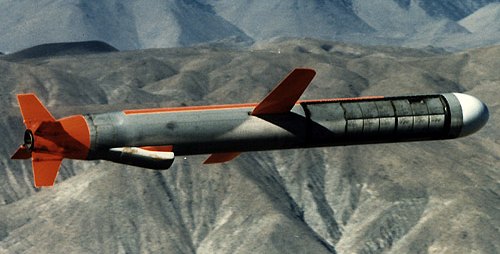 The ship and submarine launched BGM-109 cruise missiles were an important element of the multipronged Allied attack on Iraq's IADS and C3 network. During the initial assault, cruise missiles destroyed key command posts and communications sites, while other cruise missiles dispensed spools of carbonfibre wire over Iraqi powerplants and electrical switching yards, causing massive power outages (USN). 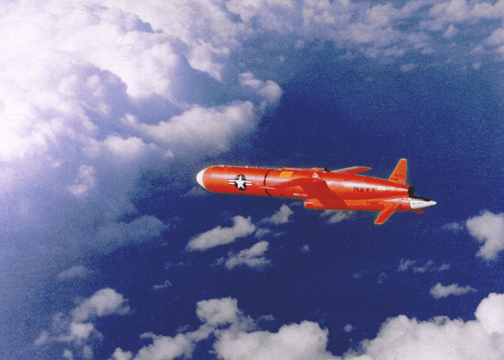 USAF BQM-74 drones were used in conjunction with Navy TALD glide decoys to deceive Iraqi SAM operators on a massive scale, each drone presenting the radar return of a real tactical aircraft. The Iraqis responded by firing SAMs at formations of the diminutive unmanned vehicles not only wasting precious rounds but also exposing themselves to HARM shots from F/A-18s and F-4G Weasels (Northrop-Grumman). 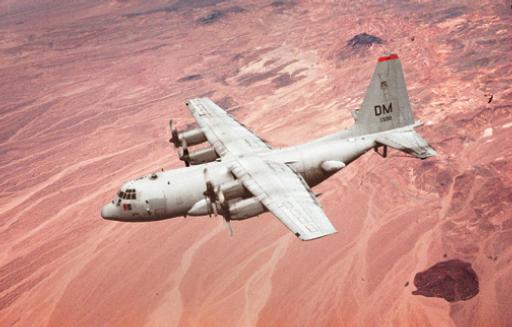 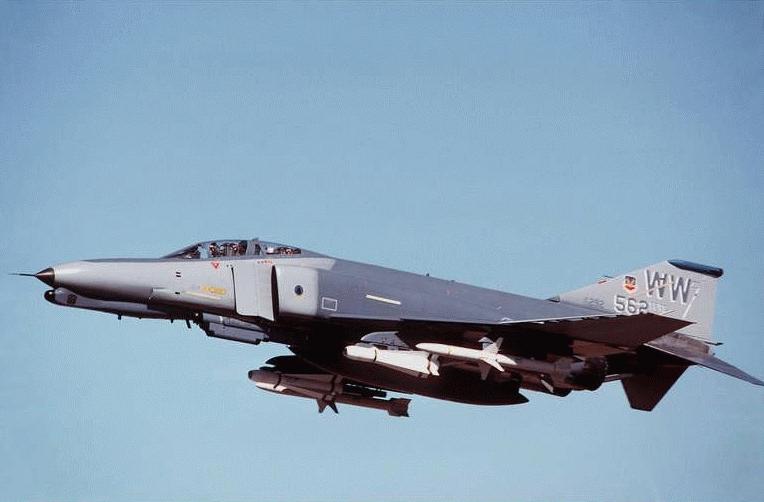 The USAF F-4G Wild Weasel was one of the most important types used in the initial assault. This aircraft carries the precision direction finding APR-47 radar homing equipment, which can exactly pinpoint and classify emitters in high density environments, under conditions where less capable equipment saturates with targets. The Weasels hit key sites with AGM-88 HARM antiradiation missiles. Other critical SEAD assets were the Navy/USMC F/A-18As which accounted for most HARM firings, in spite of their less sophisticated radar warning equipment USAF). 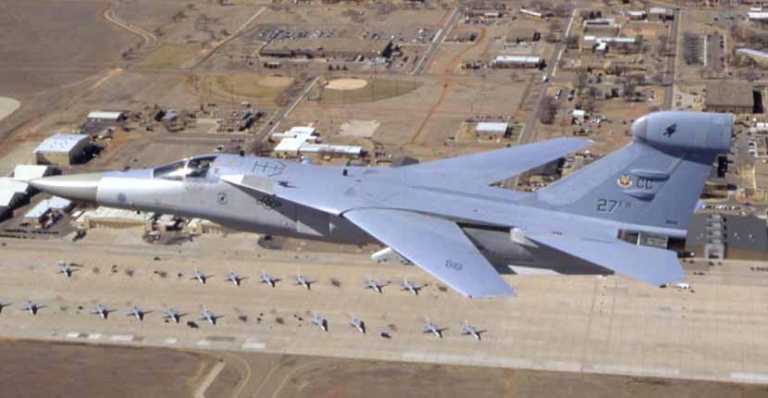 The USAF's EF-111A Ravens and USN/USMC EA-6B Prowlers unleashed a massive barrage of noise and deception jamming during the initial assault, this having the dual objectives of confusing Iraqi operators and denying them information on the position of Allied aircraft. Both aircraft carry versions of the massive ALQ-99 Tactical Jamming System, which is specifically designed to defeat GCI, early warning and acquisition radars with noise and false target information (USAF). 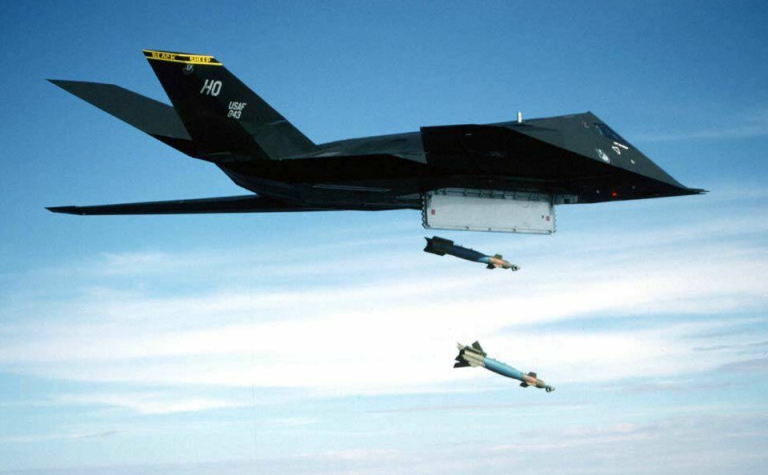 The Black Jet supplemented the specialised electronic warfare assets, flying precision strikes against important C3 nodes, radar sites and SAM sites covering critical ingress routes. A typical tactic used was to coordinate the run-in by the F-117A with barrage noise jamming by an EF-111A or EA-6B, this causing a reduction in the victim radar receiver's sensitivity to the point, where the otherwise detectable F-117A vanished from the screen (USAF). |
||||||||||||||||||||||||||||||||||||||||||||||||||||||||||||||||||||||||||||||||||||||||||||||||||||||||||||||||||||||||||||||||||||||||||||||||||||||||||||||||||||||||||||||||||||||||||||||||||||||||||||||||||||||||||||||||||||||||||||||||||||||||||||||||||||||||||||||||||||||||||||||||||||||||||||||||||||||||||||||||||||||||||||||||||||||||||||||||||||||||||||||||||||||||||||||||||||||||||||||||||||||||||||||||||||||||||||||||||||||||||||||||||||||||||||||||||||||||||||||||||||||||||||||||||||
|
Part 3 The Allied electronic and SEAD campaign in the Gulf saw the destruction of an air defence system very similar to that of the Warpac. This was achieved by a carefully structured mix of hard kill and soft kill assets, applied to the task from a position of fully understanding the objectives and dynamics of the electronic battle. The superb results of the campaign are directly attributable to Allied preparation and capability, and the latter we will now examine more closely. USN/USMC Hard Kill Assets - The F/A-18, A-7E, EA-6B and HARM The numerically most significant players in the Allied SEAD campaign were the US Navy's strike and electronic warfare aircraft. The nature of naval strike has traditionally forced a strong emphasis on Electronic Combat and this has reflected in the US Navy adopting a policy whereby all strike aircraft are equipped to carry the AGM-88 HARM anti-radiation missile. The Texas Instruments AGM-88 is a development of a seventies program to improve on the Vietnam era Shrike ARM. The HARM became operational with the USN's A-7E in 1984, and is a substantial 800 lb missile with a range well in excess of 10 NM and a speed in excess of Mach 2. The important aspect of HARM is its intelligent (Texas Instruments) broadband seeker, which covers frequencies from the lower microwave band well into the upper J band, and is quite capable of sorting, identifying and prioritising threats for attack autonomously. High directional accuracy is achieved with a nose mounted cavity backed conical spiral antenna, a class of antenna conferring coverage from C to J band. The autonomous seeker was sought primarily by the USN which could not afford the luxury of dedicated SEAD platforms, therefore every aircraft was seen as a potential platform. Unlike conventional guided munitions, the HARM must communicate with the aircraft's radar warning (or homing) equipment and the aircraft's crew, therefore the missile is supported by a dedicated launch computer, the Command Launch Computer (CLC) in USN/USMC service and the Aircraft Launcher Interface Computer (ALIC) in USAF F-16 aircraft, tied typically to the aircraft's Mil-Std-1553B digital databus. Via a bus the CLC/ALIC receives data from the missile and the aircraft's EW systems, and in turn sends messages to the mission computer for display to the crew. A typical installation is that in the F/A-18, which employs a LAU-118/A launcher attached to a BRU-32/A bomb rack, the LAU-118 providing the required umbilical interface to the HARM. Tied to the CLC the HARM has three basic modes of operation. In Self Protect Mode the missile is locked onto an emitter which it is cued to by the launch aircraft's onboard receiver, in Target of Opportunity Mode the HARM autonomously searches for targets which are displayed to the pilot by the Command Launch Computer, and finally in Prebriefed Mode the weapon is fired against a planned target. The USAF F-16 ALIC supports three modes, Position-known (POS), Launch-Off-RWR (LOR) and HARM-as-Sensor (HAS), similar to corresponding USN/USMC modes. Only aircraft fitted with the CLC/ALIC and with appropriate software to interface the mission/fire control computers to the CLC/ALIC can fire the weapon, others cannot. Once launched the HARM will home in on the selected emitter and detonate either on impact or near miss, earlier models fitted with a conventional blast fragmentation warhead, newer models (AGM-88C-1) with a prefragmented tungsten case warhead designed to perforate radar vans with tumbling high velocity fragments, to kill personnel and electronic equipment rather than simply strip off antennas and aerials, allowing later repair. The HARM uses a Motorola DSU-19 active optical proximity fuse. The weapon is fitted with a strapdown inertial navigator and in range known modes will fly a range optimising profile. If the target emitter goes off the air, it will search for other threats and attack the highest value emitter to be found. Models including and subsequent to the AGM-88B employ EEPROM Electrically erasable PROM) threat libraries. The USN's principal HARM shooters were the F/A-18s, which also comprised a large part of the USMC fixed wing contingent. Smaller numbers of A-7Es and A-6Es also carried the weapon, as did a substantial fraction of the EA-6B Prowler contingent. The F/A-18 installation uses target information from the HARM's nose mounted seeker and the aircraft's omni-directional ALR-67 warning receiver, the pilot is provided with a list of targets in descending order of priority displayed on one of the cockpit CRTs, targets are selected with a throttle mounted switch which sequences through the list. The ALR-67 combines both crystal video and superhet receiver hardware and complements the coverage of the HARM, it is however a very basic system in comparison with specialised homing receiver installations such as the USAF APR-38/47 in the F-4G. As such the composite installation provides omnidirectional coverage with low directional accuracy, and forward sector coverage with high directional accuracy due the seeker of the HARM. The most sophisticated USN/USMC installation is that of the EA-6B, which integrates the HARM into the aircraft's comprehensive ALQ-99 tactical jamming system (see AA 1/89). The EA-6B is equipped with a comprehensive suite of warning and homing receivers and carries specialist operators, this allows highly selective targeting of the HARM against radars and operators which might elude the more basic systems operated by pilots and bombardier/navigators in strike aircraft. This difference in capability is most apparent in a high threat density environment, where the workload associated with selecting and targeting a specific emitter can be excessive for an aircraft with a less capable warning receiver system, and less qualified operator. The USN's commitment to fitting aircraft with HARM reflected in workload, with 60% of the total number of SEAD missions flown during the war claimed by the USN, which provided escort jamming and SEAD for many mixed strike packages. USAF Hard Kill - The F-4G, F-16C and HARM The USAF deployed its dedicated F-4G Wild Weasel (see AA 7/86) to the Gulf, the lineal descendent of the Vietnam era Weasels. The F-4G carries the APR-47, a sophisticated long range homing receiver system designed to locate, identify and track a wide range of emitters in a high density signal environment. Using its interferometric antenna systems the APR-47 will pinpoint an emitter with high directional accuracy, while providing continuous real time position data to the HARM missiles carried by the aircraft. The combination of an accurate direction finding receiver with omnidirectional coverage, ranging on emitters and the ability to sort and track a large number of emitters concurrently, with an expert backseat operator provides the F-4G with a uniquely potent capability to selectively target and attack emitters. This capability is enhanced by the ability to feed targeting information to other suitably equipped aircraft. The F-4G/APR-47 supports HARM in two modes, Pre-Emptive (PE), a range known standoff mode, and Direct Attack (DA) a range known or unknown mode with short reaction time. Both modes support off-axis launches. Initial deployment saw the 561st TFS of the 35th TFW deploy from George AFB in California to Sheikh Isa in Bahrain, followed by 12 aircraft of the 81st TFS of the 52nd TFW at Spangdahlem, and later a further 12 from the 480th TFS of the 52nd, these attached to the 35th TFW (provisional) to form a composite wing. The 23rd TFS of the 52nd deployed its mixed F-4G/F-16C force to Incirlik in Turkey. In mixed force operations, the F-16Cs, which are fitted for HARM, fly air-air escort for the F-4Gs and carry HARMs to hit prebriefed targets, leaving the difficult mobile targets to the F-4Gs. The F-4Gs were most active in the first three days of the war, when targets abounded and the Iraqis were not shy about turning on their equipment. At this point in time the Weasels were a designated 'go/no-go' item for a strike package, ie no Weasels, no strike. The aircraft concentrated on area defences and point defence SAM systems, with the earlier discussed objectives. By the end of the first week the Iraqis realised that the SEAD campaign was specifically aimed at eradicating their SAM and GCI/EW radar capability and at that point they deliberately shut down as many systems as they could, dismantling and camouflaging many of these to avoid attack, while they also started redeploying their remaining air assets to the North to put them out of the reach of most Allied aircraft. Once the back of the Iraqi IADS was broken, the Weasel's tactics shifted toward keeping remaining SAM systems off the air by presence alone, typically a pair of F-4Gs armed with HARM would patrol an area and escort any strike aircraft arriving, then withdraw to refuel from a tanker while another pair took its place. These sorties typically lasted 4 hours, with short 30 minute escort runs alternating with refuellings. The USAF Weasel squadrons found an increasing fraction of aircraft were returning with unfired HARMs due the lack of emissions to guide on, as a result the aircraft were loaded with bombs, Maverick TV guided missiles and cluster bombs in addition to HARMs. There were two aspects to this decision, one the diminishing level of emitter activity which denied targeting, the other the objective of totally destroying the Iraqis' capability rather than merely stripping off antennas, allowing a radar to be later repaired or rebuilt. The Weasels' weapon of choice for suppressing AAA and non-emitting sites was the CBU-87/B Combined Effects Bomblet (CEB) cluster munition. The CBU-87 uses a standard SUU-65/B dispenser (ie bomb body) which has canted tail fins which spin the dispenser up to 2500 RPM after release from the aircraft and fin deployment. An FZU-37/B Doppler proximity fuse is typically fitted to provide submunition release at a programmed altitude, the spin of the weapon causes the submunitions to be ejected in a toroidal pattern about the dispenser. The BLU-97/B fin retarded submunitions have a shaped charge, combined with a fragmenting case and incendiary element to cause damage across a broad spectrum of targets. Of particular interest to the Weasels were SAM launchers and TEL vehicles which, as non-emitting targets, would not attract HARMs as their guidance radars did. These were systematically hunted down and destroyed, where ordnance remained the Weasels expended it against targets of opportunity on the way home. Toward the end of the campaign emitter activity dropped to zero and many Weasels were retasked with fighter CAP or strike missions, attacking power stations, HAS and other targets. A notable mission was a raid by Maverick firing F-4Gs on the Baiji oil refinery, which left fires active for over a week. In perspective, USAF Weasel operations more than anything resembled those of the Vietnam period, with a return to the idea of complete lethal suppression with a range of munitions (although purists may further argue that the campaign owes more to RAF/USAAF 2ATAF SEAD operations in June, 1944). The Bahrain based 35th TFW flew 2,331 sorties for 8,587 hours, firing close to 1,000 HARMs and two dozen AGM-45 Shrikes. RAF Hard Kill - The Tornado and ALARM The RAF's ARM is the BAe ALARM, a much newer weapon than the American HARM, designed with a much broader range of operating modes. Alarm was designed for SEAD and self-protection of the RAF Tornado, Jaguar and Sea Harrier, although at this time it is only carried by suitably modified Tornado GR.1s. The Alarm is like the HARM an intelligent autonomous weapon with a wideband homing seeker, unlike HARM it can however loiter and thus is a more suitable weapon for SEAD by non-specialised strike aircraft. Fully programmable in software, the Alarm is best used by 1553B bus equipped aircraft where the fire control or EW system can directly interact with the weapon until launch, if necessary changing the selection of target type and position. The missile receives position updates from the launch aircraft until launch. The Alarm has four principal operating modes. In Direct Mode the missile is programmed before launch with a prioritised threat file, it is then fired at the target, even from very low altitudes, pops up for its programmed mid-course phase, after which it initiates a search within a programmed box and locks on to the highest priority emitter detected and homes in to impact. Until the missile is committed to terminal homing it will autonomously change its selection of target if a higher value emitter is detected. In Dual Mode the Alarm will maximise the time during which it can threaten an emitter. If the emitter is radiating the Alarm will attack as in direct mode, if it shuts down, the Alarm will proceed to a point above the emitter where it deploys a parachute and loiters (UK sources indicating a climb to 70,000 ft). If the emitter turns on, the parachute is jettisoned and the Alarm dives into the target. In Loiter Mode the Alarm directly proceeds above the target and deploys its parachute, loitering until the emitter is activated. In Corridor/Area Suppression Mode the Alarm is fired in the direction of emitters, the position of which may not be precisely known. The missile then autonomously selects the highest priority target for attack. The Alarm is substantially lighter than HARM at 583 lb, allowing a better load on typical defence suppression aircraft. It employs a strapdown inertial navigation unit in addition to the radar homing seeker, and is fitted with a preformed fragmentation warhead for maximum lethality. The RAF had a total of nine Tornado GR.1s fitted for Alarm in the Gulf, nearly all 'borrowed' from 9 Sqn, but flown by crews from 20 Sqn. The aircraft flew from Tabuk in Saudi Arabia. A typical load was three rounds on fuselage stations. Typical missions involved Alarm launches by SEAD aircraft on separate axes to the inbound strike force, with the missiles fired in loiter mode. Typical deliveries involved a short pullup before weapon launch, after which the missile would steeply climb to its station. Reports suggest that pilots unfamiliar with the weapon were often alarmed (no pun intended) at the sight of the missile streaking upwards from low altitude, believing it to be a SAM. In total, the RAF flew 24 Alarm missions, comprising 52 sorties during which 121 rounds were fired. The supply of missiles was exhausted by mid February, after which the SEAD mission was delegated to USAF Weasels. By that time there was little Iraqi emitter activity remaining. Support Jammers - the EA-6B, EF-111A and EC-130 Compass Call The most potent support jammers in the campaign were the USN/USMC EA-6B Prowlers, which provided coverage across all bands. The USAF's EF-111As missed out on a planned upgrade to the ALQ-99E due a dispute between the USAF and the prime contractor, resulting in the cancellation of the upgrade to provide high band coverage. However, the Iraqi inventory contained a large proportion of older lower band Soviet built radars for which the existing ALQ-99E was well suited. Both of these aircraft performed a vital role in the campaign, flying standoff jamming and escort jamming for strike packages of USAF, RAF, Saudi, Italian and USN/USMC aircraft. So important were the support jammers in the opening phase of the battle, that they were designated a 'go/no-go' item in a strike package. The USN deployed a total of 27 Prowlers and the Marines 12 (VMAQ-2), with the USAF deploying Ravens from both the 390th and 42nd ECS' at Taif and Incirlik. The Ravens and Prowlers provided noise and deception jamming of GCI/EW and acquisition and tracking radars to prevent these from providing targeting information to SAM systems, in addition some Prowlers would have also provided communications jamming against GCI and SAM VHF/UHF communications links using their low band ALQ-149 pods, also effective against low band radars such as the Spoon Rest. As a result, the Iraqi SAM systems were unable to concentrate and coordinate their fire on individual targets, if they could even identify these. An interesting aspect of support jamming operations was the standoff jamming provided to penetrating F-117A Stealth Fighters. The commonly held belief that stealth aircraft are invisible to radar is wrong, they are merely less detectable. Similarly the belief that stealth aircraft cannot benefit from jamming is equally wrong (see AA 12/90, 5/87). What a jammer offers is such a reduction in defending radar sensitivity to render an otherwise detectable inbound stealth aircraft effectively invisible, by burying its return in noise. This was successfully accomplished on a number of raids when support jammers radiated as the F-117As closed on the target, concealing them totally. According to some sources, this practice was later discontinued as it was found that the Iraqis commenced firing blind barrage AAA once jamming was detected, although given the operating altitude of the F-117A this was unlikely to have been an issue. The only casualty of the campaign was an EF-111A, which impacted the ground while evading a SAM at low level near the Saudi border. Sadly the crew died when the ejection capsule failed. The EC-130 Compass Call aircraft provided communications jamming of GCI links and command links to SAM and AAA systems, forcing the Iraqis to rely on landlines of substantially lower bandwidth. These aircraft worked long hours, standing off near the boundaries of Iraqi airspace and pouring garbage into Iraq's airwaves. While not receiving the coverage of the fast jet support jammers, the EC-130s performed a vital role particularly in the early phase of the conflict. The role of the support jammers in the campaign has been overshadowed by the stunningly successful lethal SEAD campaign, however we must not overlook the fact that the the low aggregate attrition is directly attributable to support jamming, particularly in the early phase of the SEAD campaign when the Iraqis retained sufficient assets to saturate the escorting SEAD aircraft with targets. Any attrition warfare campaign takes time to be effective, ie the results are never instantaneous, and the use of soft kill support jamming provides a most useful buffer by inhibiting hostile air defence capability until attrition reaches a decisive level. The support jamming campaign must therefore be judged as much a success as the SEAD campaign, were it otherwise the attrition figures would be much different. Defensive Electronic Counter Measures The final aspect of the three pronged Allied strategy was the application of Defensive ECM (DECM) to protect Allied aircraft from those SAMs which penetrated the jamming and SEAD coverage of the strike packages. Many of the aircraft deployed in the theatre lacked internal ECM. All USN tactical aircraft carried internal jammers, in most instances the Sanders ALQ-126A or B trackbreakers, supplemented by the ALQ-162 trackbreaker. The ALQ-126B is a power managed jammer with coverage up to the I/J bands, capable of delivering in excess of 1 kW power per band at 4-5% duty cycles. A trackbreaker designed to defeat pulse mode SAM and AAA radars, the ALQ-126B modes include mainlobe blanking, inverse con-scan, range-gate pull-off and swept square wave which make it particularly potent against established Soviet conically scanning systems such as the SA-6/Straight Flush tracking/illuminating radar or the ZSU-23-4P/Gun Dish fire control radar. The 126B installation typically uses fore and aft antennas with 60 degree beamwidth and 15 degree depression to cover surface threats. On many aircraft the 126 is supplemented by the ALQ-162 which is a specialised continuous wave (CW) trackbreaker designed to defeat devices such as the SA-6 missile SARH seeker. All USN/USMC tactical aircraft carried internal warning receivers, in all instances either the standard ALR-67 or in older aircraft, the ALR-45 and 45F. These receivers are systems which combine crystal video receivers, superhets and a low band receiver. Four cavity backed spiral antennas are used for threat direction finding. Some older aircraft have an additional APR-43 Compass Sail/Clockwise C/D band launch warning receiver, which intercepts and analyses the command uplink signals associated with SAMs such as the SA-2, SA-3 and SA-6. The substantial dependence of Soviet SAMs upon command uplinks and tracking beacons (see table Part 1) makes for unambiguous indication of the state of the engagement. The USN's attention to DECM in tactical aircraft was not matched by the USAF. Of the USAF's tactical inventory, only the long range F-111 and F-15 carried internal trackbreakers. The F-15C and E carried derivatives of the basic ALQ-135 TEWS, a capable system with high band coverage, of which little has been published in open sources. The F/EF-111A/E/F carried various models of the ALQ-94/137, a combined pulse mode and CW deception and noise jammer with three subsystems covering low (E/F), mid (G/H) and high (I/J) bands with fore and in some airframes, aft coverage. The F-16s, F-4Gs, RF-4Cs and A-10s lacked internal jammers, the F-16C in particular missing out on the planned upgrade to the internal joint service ALQ-165 ASPJ. This created much heartache for the USAF, which was left with the task of distributing its meagre stocks of podded jammers amongst the close to 1,000 aircraft. Of the newest type, the ALQ-131 Block 2, only 260 were available, supplemented by 130 older model Block 1 pods which required pilot selection of jamming mode. In addition to the 131s, the USAF also had 250 older ALQ-119s and 50 Vietnam era ALQ-101s, many of which probably saw action over Hanoi. The F-4Gs were fitted with Raytheon ALQ-184s, which are upgraded from ALQ-119s. This situation created much pressure on the SEAD and support jamming forces, particularly since only the 131 and 184 could cope with newer threats, thus leaving the F-16s and A-10s otherwise susceptible to fire from weapons such as the SA-6 and SA-8 or Roland. Fortunately, the MTBF of the newer pods was exemplary, the 131 demonstrating 180 hrs (ie four times design spec) between failures, thus allowing for little downtime due pod outages. The Westinghouse ALQ-131(V) is the USAF's standard jamming pod, evolved from the earlier ALQ-119(V), in turn evolved from the Vietnam era ALQ-101 and QRC-335 programs. The 131 is designed as a fully modular system, with fully self contained cooling and support functions. The system is built around a C/I (Control/Interface) module which contains a digital computer and a programmable digital waveform generator, the latter feeding an array of jammer modules. The system can be slaved to an aircraft's RWR or controlled by an internal power management module, and is reported to provide a range of noise and deception jamming modes. Raytheon's ALQ-184(V) is a relative newcomer also derived from the ALQ-119 family. It employs Rotman lense antennas and provides noise and deception jamming modes, in the latter operating as a deception repeater. USAF radar warning assets were no less diverse than their DECM assets. Older tactical aircraft such as the F-4 and A-10 carried versions of the standard ALR-46 family, capable of handling up to 16 threat emitters concurrently, typically supplemented by a C/D low band ALR-64 Compass Sail launch warning system. The ALR-46 is a conventional crystal video receiver with a quartet of cavity backed spiral antennas for direction finding. The F-16s carried the ALR-69 which is an enhanced ALR-46 with integrated Compass Sail equipment, and a frequency selective receiver set, the latter capable of analysing guidance transmissions to determine the direction from which the missile is approaching. The F-111s and F-15s carried type specific warning equipment. The F-15C/E carried the capable E-J band ALR-56C, a dual conversion H/I/J band superhet receiver, supplemented by an ALQ-128 countermeasures receiver, whereas the F-111E/F carried the third generation of the C-J band ALR-62 warning and homing system, the current incarnation including an instantaneous frequency measurement receiver for precision direction finding. The EF-111A carried a modified subtype, the ALR-62(V)4 with facilities to 'look through' jamming by the ALQ-99E. Insofar as can be established from open sources, the USAF and USN diverge substantially in their respective strategies for the design of DECM systems, the Navy concentrating on specific trackbreaking techniques designed to defeat fire control systems, whereas the Air Force places a greater emphasis on generic techniques for defeating acquisition and fire control radars. While this more than anything reflects the differences between the naval environment and air-land battle environment, it has the benefit of presenting an opponent with a diverse array of jamming techniques to cope with. In the Gulf this effect was further enhanced by the presence of the RAF, who employed their own unique DECM equipment. The Tornado GR.1 carried an internal Marconi Radar Homing and Warning Receiver (RHWR) for threat detection, and the Skyshadow deception jamming pod. The RHWR covers the C to J bands, and will identify and classify AI radars, SAM and AAA acquisition and tracking radars and missile guidance emissions. The system provides long range warning and homing which implies the use of superhet receivers. The Skyshadow trackbreaker pod will concurrently counter pulse mode and continuous wave emitters with angle and range denial techniques, and will automatically prioritise threats and select appropriate jamming techniques and power levels. In addition, radar absorbent tiles were attached to the inlets to provide a useful reduction in frontal radar cross section, to enhance the effect of the Skyshadow's jamming when closing on a target. The RAF's Jaguars carried the older ALQ-101-10 jamming pods in addition to an internal RWR. The RAF expended much effort, like the Americans, in the prewar period to ensure that the threat libraries in the jammers were up to date. The mix of very old and very new Soviet built equipment, supplemented by Western equipment, and the unplanned for high/medium altitude operational environment, resulted in much software development effort to ensure that all threats were covered. The Allied DECM effort was greatly assisted by the fact, that all of the threat systems in the theatre were well known (see Part 1), although in hindsight this would have also been true of a Warpac/NATO conflict, as the Soviets were unlikely to have deployed the new SA-10, SA-11 and SA-12 in strength to the front line for fear of compromising them to Allied Elint. The low aggregate loss rate testifies to the effectiveness of the equipment, as most launched SAMs went ballistic even when guided. Lessons for Australia The world has not witnessed an electronic battle of such ferocity as in the Gulf since the Allied invasion of Europe in 1944. Significantly, the Allies' systematic expenditure on electronic warfighting capability over the last two decades has yielded substantial dividends. Moreso since the opponent was a good facsimile of the planned for threat, the Communist Warpac, and had an air defence system of similar density albeit somewhat lesser capability than the former Western TVD PVO and PVO-SV (army) deployments. Significantly, most of the systems deployed by the Soviets in Europe were identical to those in Iraq, or later models of the same types. The notion that the cumbersome SA-4 and SA-5 systems, and new mobile SA-10, SA-11 and SA-12 would have made up for the additional numbers and capability of Allied electronic combat assets in that theatre is hard to support. What this suggests is that the NATO-Warpac central European air battle would have probably followed a similar course, leading to the defeat of the Communists' IADS within a week or so, in turn leading to air superiority in the following week, as the Communist air forces would have withered under the fire of the Allied counter-air campaign. Fortunately this never had to happen and the world has been spared the inevitable nuclear response to the lost air battle and hence total conventional defeat through attrition by air. Several interesting observations must be made. First and foremost is the reality that the electronic battle must precede the opening of the counter-air battle. The attainment of air superiority requires the attainment of electromagnetic superiority - who controls the airwaves will control the skies. There can be no doubt that the established model for the air war, ie the counter-air battle to achieve command of the air, followed by interdiction campaigns to inflict attrition, must be expanded by the introduction of an electronic campaign to cripple the opponent's C3 and IADS, as a precursor to hunting down the opponent's air capability. It must be noted that while the foremost objective of the electronic campaign will always be the destruction of the opponent's air defence capability, by encompassing the opponent's total C3 system as a target for attack one has advanced the process of the strategic interdiction campaign by implementing its very first phase concurrently with the electronic campaign. The Gulf War was so one-sided because the electronic battle was so lopsided. The US and UK are acknowledged to be the most capable in the West, insofar as electronic combat capability goes, whereas the Iraqis were utterly inept in the discipline, if they at all recognised its existence as such. How much blame for Iraq's defeat must be attributed to Iraqi stupidity at a senior and operational command level, incompetence at the cutting edge, and how much is due to fundamental flaws in Soviet air battle doctrine, may be difficult to determine. What is certain is that even extremely competent air defence forces will not perform well once their C3 network is shattered. A highly centralised system breeds an inability to function without a C3 network and thus the effect of removing it exposes the basic limitations of the system. In this fashion Allied strategists attuned their campaign to a fundamental structural flaw in Warpac air battle doctrine. The deluge of jamming and anti-radiation missiles represented nothing less than a war of attrition against electronic assets. In this respect the electronic battle has acquired the fundamental characteristic of the air battle, it is a war of attrition. As such it is a battle where mobility confers a major advantage in allowing the choice of entering an engagement or not, and that mobility is an attribute of the attacking air force, weighing heavily in its favour. An aircraft can jam and dodge a missile, whereas a land based radar or SAM system can neither jam nor dodge an anti-radiation missile. It can only shut itself down and by doing so withdraw from the engagement, this unilateral move may not prevent a SEAD tasked aircraft from locating and destroying the shut down radar. Decoy emitters only delay the inevitable. It follows therefore that an air battle doctrine which relies heavily on ground based radar and SAMs is analogous to a doctrine of static fortification engaging a manoeuvre land force. Unless the attacking air force is particularly ill matched to the task, the advantage must lay with the attacker. Historical evidence easily supports this assertion, the only times when SAM based defences were successful was during the transient phase of deploying a new technology (SA-2,3 in SEA, SA-6 in Yom Kippur), once the limitations of the new weapon were understood the war of attrition swung in the favour of air power. This would have also been true of the SA-10, SA-11 and SA-12 in any European conflict. From the Australian perspective several issues become very clear. Reliance on a static air defence system is a flawed strategy as it forces a defensive posture where air assets become committed to protecting air defence infrastructure, rather than winning the offensive counter-air campaign. This may not be clear enough to the laymen who determine Australia's policy in this area and it is up to those who know to press this argument vigourously. Whether an OTHB network such as Jindalee would prove to be more of an asset than a vulnerability remains to be seen, when compared to a moving and difficult to hit AEW&C platform. Certainly were it to become Australia's principal means of detecting inbound threats it would become a very high priority target justifying the expense of systematic SEAD strikes, cruise missile strikes or special operations raids. Warning time notwithstanding, defending it would absorb assets. Similarly the utility of SAM and AAA systems is doubtful. They cannot prevent air power from inflicting attrition and themselves inflict only questionable levels of attrition on an attacking force. Where low level SAMs are the only types available, using PGMs from medium altitudes defeats the SAM and AAA defence totally. While the ADF is woefully weak in this area, it is worth stating that resources should not be expended on SAMs or AAA. The payoff is simply not there. Another issue is that of C3 in the deep North, which has always been a basic vulnerability of the ADF. Any opponent who is serious will target the fixed C3 sites and in doing so will make life very difficult for the ADF. There is reasonable justification for equipping the RAAF's tankers as VHF/UHF/satellite communications relay platforms/command posts to provide some additional redundancy over fixed installations (not unlike the RAF's tankers), as is there a case for further redundancy via mobile satellite communications terminals above what is projected. The vulnerability of our national C3 network is something to seriously ponder, should we ever become embroiled in a neighbourhood brawl. Distances what they are, crippling our C3 network could allow an opponent substantial freedom of operations in the North. Lacking anything even approaching an IADS, the issue of its crippling isn't really applicable, but selective air strikes or special operations raids on the Jindalee and primary radar facilities could have a similar effect should we become too reliant on them. The reality is that static systems are targets which can't run away and therefore cannot be expected to survive for long unless disproportionate resources are assigned to defend them. What must be seriously questioned is the ADF's failure to commit to the development of a substantial support jamming and SEAD capability. If such a program exists it is a well kept secret of which there is no visible evidence. This is in contrast to the RAAF's P-3C ESM program, where the ADF is gaining a long overdue and substantial capability. In any confrontation the ability to determine the opponent's electronic order of battle is of paramount importance. Whether this is achieved by specialist aircraft or by fitting mission consoles and ESM receivers to P-3Cs is a matter of implementation. A little capability in this area goes a very long way. The RAAF's recently adopted policy of acquiring EW systems only with full software support packages is a major step forward, as the ability to update threat libraries quickly and quietly is fundamental to success in the EW game. EW systems with obsolete or inappropriate threat libraries are useless ballast. Buying canned systems from overseas without the software support package is an utter waste of taxpayer's money. Our defensive electronic warfare capability is by all standards modest and SEAD capability non-existant. The F-111 and F/A-18 carry defensive ECM and RWRs, while the P-3 force carries ESM equipment. There are no SEAD or Support Jamming assets by tasking or functional specialisation and given policy at the time of writing, they are unlikely to be acquired in the near future. This is a major weakness stemming from a lack of policy direction, in turn stemming from a lack of understanding in decisionmaking circles. While the regional environment could hardly justify a substantial and dedicated support jamming capability, by the same token if we ever had to go to war such a capability will be sorely needed. A useful compromise is a capability based on role specific high power communications and radar jamming pods, carried by standard or modified tactical aircraft, these pods being targeted at generic and known threat systems. In particular GCI/EW radars, acquisition radars and VHF/UHF GCI comms links need to be targeted as the ADF has no capability to do so at this time. A mix of noise jamming, false target generator and comjam pods carried by either of the tactical jet types could prove of substantial usefulness particularly during the crucial opening phase of any conflict. The design of such pods or modification of existing overseas designs could be a useful way of developing an indigenous EW manufacturing and support infrastructure. Another capability worth consideration is an emitter locating system or homing receiver system, fitted to some of the tactical jet airframes. One approach would be a centreline pod with a quartet of dual baseline interferometers (eg conventional 5 x cavity backed spiral), feeding IFM receivers, the whole system thus capable of 360 degree coverage in operation from D band through J band. Such a pod would carry a processor to sort, identify and locate emitters based on receiver outputs. The pod could be integrated with the aircraft's weapon system via the 1553B mux bus. This would be a most useful integration and development exercise, insofar as gaining experience goes (and alternately an airframe specific design could also be built). Export customers need not be ruled out. Electronic combat is neither black magic or unattainably difficult science, it is an established engineering and operational discipline where success is achieved through systematic effort. The Gulf War demonstrated beyond any doubt the central importance of electronic combat to the modern air war and those who fail to take heed today will be tomorrow's losers. Failure to understand the dynamics and strategy of electronic combat is no longer excusable, and those who resist the acquisition of capabilities in this area are either stupid or in effect acting against Australia's interests. The ADF to date has accepted the importance of electronic combat, but we have yet to see a serious committment of resources. Hopefully this will eventually take place, if it doesn't we may become the losers in any future conflict. Adequate precedents do exist. Editor's Note 2005: The last twelve years have seen no significant advances in RAAF SEAD, DEAD or Electronic Combat capabilities. Indeed, the Defence leadership rejected an offer during the late 1990s to take a large fraction of the then prematurely retired US Air Force EF-111A Raven fleet. Numerous papers and studies indicating the strategic value, and indeed the need for Electronic Combat / Electronic Attack capabilities have not been acted upon. For all intents and purposes the RAAF remains devoid of significant capabilities in this area, and maintains a minimal investment in combat aircraft defensive systems, despite the availability of doctrinal models for defining these capabilities. REFERENCES:
|
||||||||||||||||||||||||||||||||||||||||||||||||||||||||||||||||||||||||||||||||||||||||||||||||||||||||||||||||||||||||||||||||||||||||||||||||||||||||||||||||||||||||||||||||||||||||||||||||||||||||||||||||||||||||||||||||||||||||||||||||||||||||||||||||||||||||||||||||||||||||||||||||||||||||||||||||||||||||||||||||||||||||||||||||||||||||||||||||||||||||||||||||||||||||||||||||||||||||||||||||||||||||||||||||||||||||||||||||||||||||||||||||||||||||||||||||||||||||||||||||||||||||||||||||||||
|
Table 1 (US Navy Losses)
|
||||||||||||||||||||||||||||||||||||||||||||||||||||||||||||||||||||||||||||||||||||||||||||||||||||||||||||||||||||||||||||||||||||||||||||||||||||||||||||||||||||||||||||||||||||||||||||||||||||||||||||||||||||||||||||||||||||||||||||||||||||||||||||||||||||||||||||||||||||||||||||||||||||||||||||||||||||||||||||||||||||||||||||||||||||||||||||||||||||||||||||||||||||||||||||||||||||||||||||||||||||||||||||||||||||||||||||||||||||||||||||||||||||||||||||||||||||||||||||||||||||||||||||||||||||
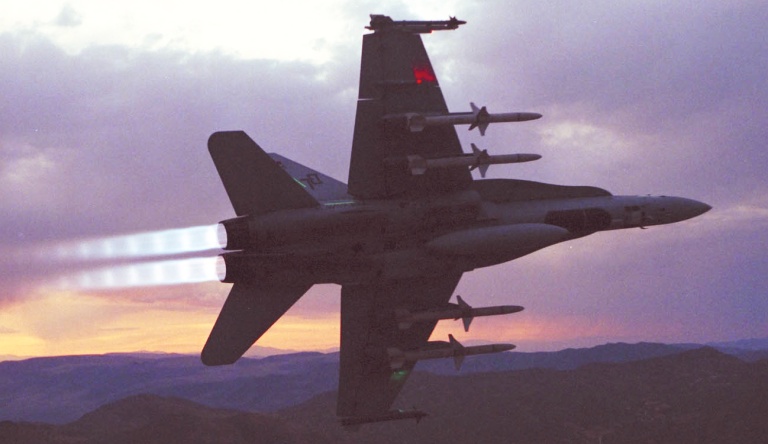 The numerically most important HARM shooter was the F/A-18 flown by the USN and USMC. US F/A-18Cs are fitted with the HARM command launch computer, which interfaces the missile to cockpit displays and the ALR-67 Radar Warning Receiver. The limitations of this installation lie in the directional accuracy of the APR-67 and the system's limited capacity to deal with large numbers of threat emitters(Boeing). The Gulf saw what will probably be the last combat deployment of the seventies F-4G Wild Weasel. The Weasels carry the massive APR-47, a potent radar homing system which has 360 degree precision direction finding and ranging capability by virtue of multiple interferometric antenna arrays. Another unparalleled strength of the APR-47 is it capability to handle very high density signal environments which can saturate lesser systems with targets. The backseater is a specialist Electronic Warfare Officer. 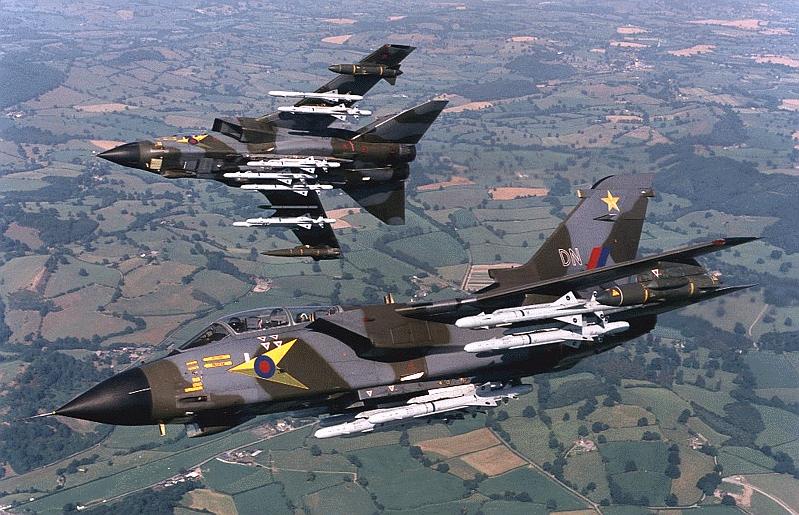
The RAF fired off all stocks of its new ALARM anti-radiation missile. A much newer design than the US HARM, the ALARM has a novel loitering mode, where it zoom climbs to high altitude, then deploys a parachute and silently descends searching for emitters. RAF Tornadoes typically carried three rounds on fuselage stations. Defensive jamming for the Tornado was provided by Skyshadow ECM pods, carried on one wing station, the other carrying a flare/chaff dispenser pod. 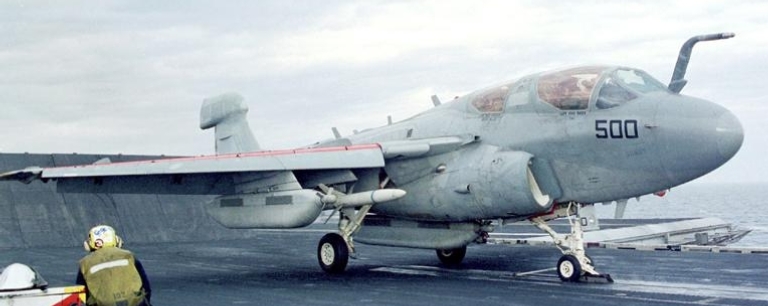 Grumman's EA-6B Prowler was the most important tactical jamming type used in the Gulf. With a more advanced high band jamming subsystem than its air force counterpart, the EF-111A, the Prowlers provided escort jamming and standoff jamming for Allied strike packages and individual F-117A strikes. Many EA-6Bs were fitted with HARM command launch computers and supplemented naval F/A-18s as HARM shooters. The characteristic bulbous radome on the vertical stabiliser houses a directional receiver package, whereas role specific jammers are carried in up to five pylon mounted pods (see photo by Jarmo Lindberg). Three specialist operators are carried (USN). 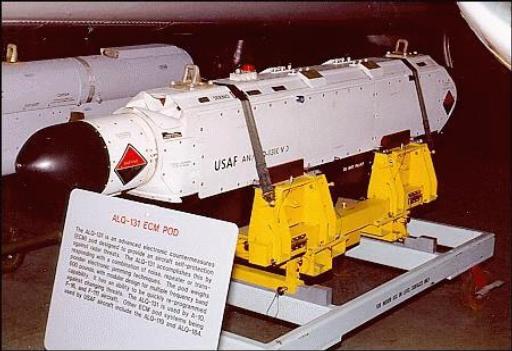 While all USN/USMC aircraft carried internal ALQ-126 defensive ECM equipment, the USAF had fallen behind with plans to fit the internal ALQ-165 ASPJ DECM and had to rely on a somewhat diverse collection of ALQ-131, ALQ-184, ALQ-119 and ALQ-101 jamming pods to protect the F-16, A-10 and F-4. The Westinghouse ALQ-131 pod is here shown during fit checks on the F-111C, to date no pods have been acquired by the RAAF (USAF via FAS). |
||||||||||||||||||||||||||||||||||||||||||||||||||||||||||||||||||||||||||||||||||||||||||||||||||||||||||||||||||||||||||||||||||||||||||||||||||||||||||||||||||||||||||||||||||||||||||||||||||||||||||||||||||||||||||||||||||||||||||||||||||||||||||||||||||||||||||||||||||||||||||||||||||||||||||||||||||||||||||||||||||||||||||||||||||||||||||||||||||||||||||||||||||||||||||||||||||||||||||||||||||||||||||||||||||||||||||||||||||||||||||||||||||||||||||||||||||||||||||||||||||||||||||||||||||||
|
|||||||||||||
|
|
|
|
|
|
|
|
|
|
|
|||
|
|
|
|
|
|
|
|
|
|
|
|||
 |
|
|
|||||||||||
| Artwork, graphic design, layout and text © 2004 - 2014 Carlo Kopp; Text © 2004 - 2014 Peter Goon; All rights reserved. Recommended browsers. Contact webmaster. Site navigation hints. Current hot topics. | |||||||||||||
|
Site Update
Status:
$Revision: 1.753 $
Site History: Notices
and
Updates / NLA Pandora Archive
|
|||||||||||||
|
|
Tweet | Follow @APA_Updates | |||||||||||
|
|
|||||||||||||
|
|
|||||||||||||






