|
||||||||||||||||||||||
 |
||||||||||||||||||||||
![F-22A Raptor, FB-22, F-22E, F-22N and Variants Index Page [Click for more ...]](APA/f-fb-22.png "F-22A Raptor, FB-22, F-22E, F-22N and Variants Index Page [Click for more ...]") |
 |
![People's Liberation Army Air Power Index Page [Click for more ...]](APA/pla-air-pwr.png "People's Liberation Army Air Power Index Page [Click for more ...]") |
 |
 |
 |
 |
 |
 |
![Military Ethics, Culture, Education and Training Index Page [Click for more ...]](APA/ethx-culture.png "Military Ethics, Culture, Education and Training Index Page [Click for more ...]") |
 |
||||||||||||
 |
![Russian / Soviet Weapon Systems Index Page [Click for more ...]](APA/rus-weps.png "Russian / Soviet Weapon Systems Index Page [Click for more ...]") |
 |
 |
 |

|
 |
 |
 |
 |
 |
||||||||||||
 |
 |
|||||||||||||||||||||
| Last Updated: Mon Jan 27 11:18:09 UTC 2014 | ||||||||||||||||||||||
|
||||||||||||||||||||||







|
Engagement
and
Fire
Control
Radars
Technical Report APA-TR-2009-0102(S-band, X-Band, Ku/K/Ka-band) |
||||||||||||||||||||||||||||||||||||||||||||||||||||||||||||||||||||||||||||||||||||||||||||||||||||||||||||||||||||||||
| by
Dr
Carlo
Kopp, AFAIAA,
SMIEEE,
PEng January 2009 Updated April, June, 2009 Updated February, August 2010 Updated May, August 2011 Text, Line Art © 2008 - 2012 Carlo Kopp  |
||||||||||||||||||||||||||||||||||||||||||||||||||||||||||||||||||||||||||||||||||||||||||||||||||||||||||||||||||||||||
|
||||||||||||||||||||||||||||||||||||||||||||||||||||||||||||||||||||||||||||||||||||||||||||||||||||||||||||||||||||||||
Agat Active Radar Seekers for SAM Upgrades |
||||||||||||||||||||||||||||||||||||||||||||||||||||||||||||||||||||||||||||||||||||||||||||||||||||||||||||||||||||||||
|
|
||||||||||||||||||||||||||||||||||||||||||||||||||||||||||||||||||||||||||||||||||||||||||||||||||||||||||||||||||||||||
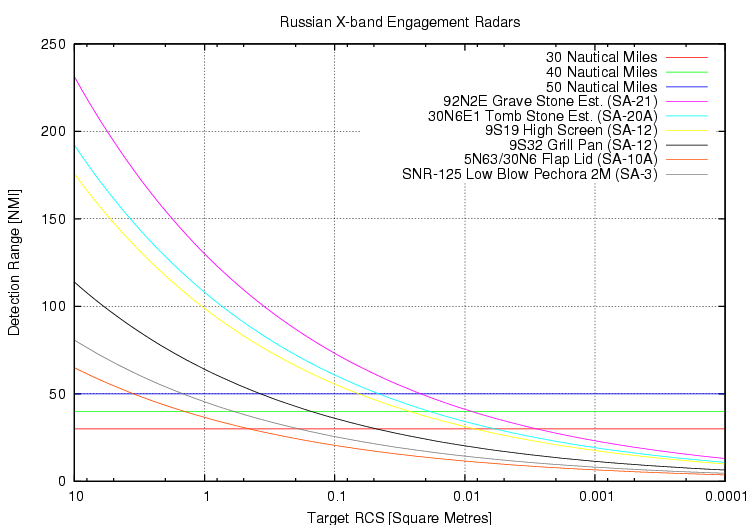
| System |
S/X |
X |
X/Ku |
K |
Ka |
| SA-2
Guideline |
SNR-75 Fan Song | ||||
| SA-3
Goa |
SNR-125 Low Blow | ||||
| SA-4
Ganef |
1S32
Pat
Hand |
||||
| SA-5
Gammon |
5N62
Square
Pair |
||||
| SA-6
Gainful |
1S91 Straight Flush | 1S91 Straight Flush | |||
| SA-8A/B
Gecko |
Land Roll | Land Roll | |||
| SA-10A
Grumble |
5N63
Flap
Lid |
||||
| SA-10B Grumble | 5N63S Flap Lid | ||||
| SA-10C Grumble | 30N6 Flap Lid | ||||
| SA-11
Gadfly |
9S35 Fire Dome | ||||
| SA-12
Gladiator/Giant |
9S32
Grill
Pan |
||||
| SA-15
Gauntlet |
Scrum
Half
/
PESA |
Scrum Half | |||
| SA-17
Grizzly |
9S35M Fire Dome | ||||
| SA-19
Grison |
Hot Shot | ||||
| SA-20
Gargoyle |
30N6E1
Tomb
Stone |
||||
| SA-20 Gargoyle | 30N6E2
Tomb
Stone |
||||
| SA-21 |
92N6E
Grave
Stone |
||||
| SA-22
|
Phazotron PESA | ||||
| SA-23 Gladiator/Giant | 9S32M
Grill
Pan |
References
- Viktor Litovkin, Unique Surface-To-Air Missile Baffles Foreign Military Diplomats In Egypt, Moscow (RIA Novosti), URL: http://www.spacewar.com/reports/Unique_Surface_To_Air_Missile_Baffles_Foreign_Military_Diplomats_In_Egypt_999.html
- Upgrade of the S-125
"Pechora" ADMS to level of the S-125-2T "Pechora-2T" ADMS, URL: http://www.tetraedr.com/eng/production_pechora.php
Upgrade of the S-125 "Pechora" ADMS to level of the S-125-2TM "Pechora-2TM" ADMS, URL: http://www.tetraedr.com/eng/production_pechora2tm.php - S-200 / SA-5 Gammon, URL: http://www.s-200.de/
- 5N62V Target Illumination and Guidance Radar, Peter's ADA, URL: http://www.peters-ada.de/s_200_1.htm
- Upgrade of the S-200
VE "Vega" ADMS, URL: http://www.tetraedr.com/eng/production_vega.php
Upgrade of the "OSA-AK(M)" ADMS to level of the "OSA-1T" ADMS, URL: http://www.tetraedr.com/eng/production_osa.php - Yevgeny
Pigin,
Gennady
Kaufman,
BUK-M1-2
AIR
DEFENSE
MISSILE
SYSTEM
HAS
NO
EQUALS IN TERMS OF
COMBAT EMPLOYMENT, Military Parade
JSC, 1998, URL: http://milparade.udm.ru/29/066.htm
- «Оса», (9К33, SA-8, SA-8A, Gecko) зенитный ракетный комплекс
- The OSA anti-aircraft missile system, JSC "Izhevsk Electromechanical Plant "Kupol".
- The TOR-M1 anti-aircraft missile system, JSC "Izhevsk Electromechanical Plant "Kupol".
- The TOR-M2E anti-aircraft missile system, JSC "Izhevsk Electromechanical Plant "Kupol".
- Miroslav Gyürösi, Russian companies team to develop wheeled Tor-M2E , Jane's Missiles & Rockets, October 01, 2007.
- Pantsir-S1 Air Defense Missile/Gun System, KBP Instrument Design Bureau,59 Shcheglovskaya Zaseka St., 300001 Tula, Russia.
- Tunguska-M1 Air Defense Missile/Gun System, KBP Instrument Design Bureau,59 Shcheglovskaya Zaseka St., 300001 Tula, Russia.
- 30 mm 2A38M Automatic Anti-Aircraft Gun, KBP Instrument Design Bureau,59 Shcheglovskaya Zaseka St., 300001 Tula, Russia.
- Phazotron Shlem air defence radar system, Phazotron NIIR.
- Martin Rosenkranz, MAKS 2007 Spezial: Pantsir-S1 (SA-22), Russlands neuestes Flugabwehrsystem.
- Michal Fiszer, Name of the Roses, Microwave Journal Online, Military Microwaves Supplement 2006, Page 30, Horizon House Publications, URL: http://www.mwjournal.com/article.asp?HH_ID=AR_867
- Said Aminov, Многоканальная станция наведения ракет 9С32, ЗЕНИТНАЯ РАКЕТНАЯ СИСТЕМА 9К81 С-300В (SA-12 Giant/Gladiator), Vestnik PVO, URL: http://pvo.guns.ru/s300v/s300v_4.htm
- Iosif
Akopyan,
Director
General
and
General
Designer
of
the
Moscow
Agat
Research Institute JSC, Academician of the Russian Academy
of Rocket, and Artillery Sciences, Dr. Sc. (Technology), Professor,
AGAT: NEW GENERATION OF ACTIVE RADAR HOMING HEADS, Military Parade, July-August, 2003,
Rosoboronexport. URL: http://www.missiles.ru/_foto/Slanec_1348/1.pdf
SNR-75
Fan
Song A-E / S-75 Dvina/Desna/Volkhov / SA-2 Guideline
Gin Sling /
HQ-1/HQ-2 Guideline (PLA)
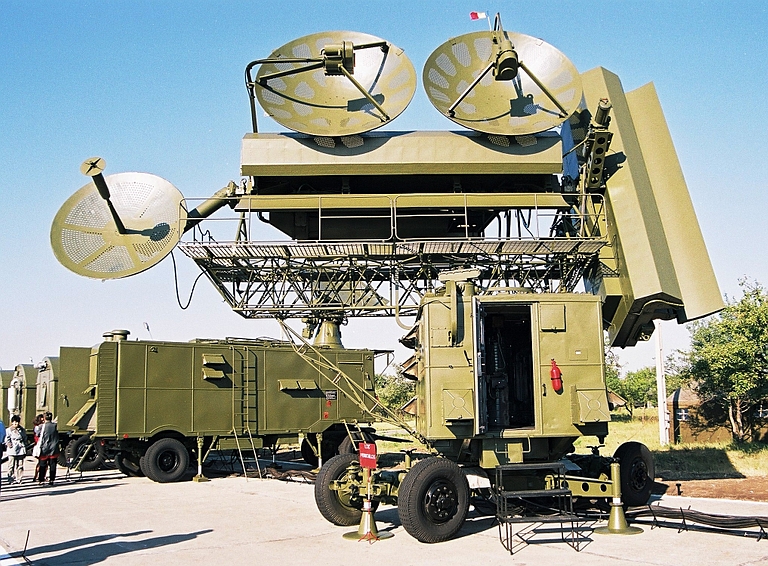
The Fan Song is the engagement radar for the S-75/SA-2 family of SAMs. First deployed in strength during the Vietnam conflict, and later used extensively in the Middle East and Africa, the SA-2 was the first Soviet SAM to be used in anger and accounted for large numbers of Western aircraft until electronic countermeasures were developed. The system was cloned by PLA and still remains widely in use, even though Russia has replaced it with the SA-10/20 system.
The are at least six known variants, one of which is a PLA clone. Details of PLA modifications to the design are not public knowledge. There are sufficient differences in the PLA designs to regard these as unique derivatives. The antenna configuration of the PLA variants generally follow the Fan Song A arrangement.
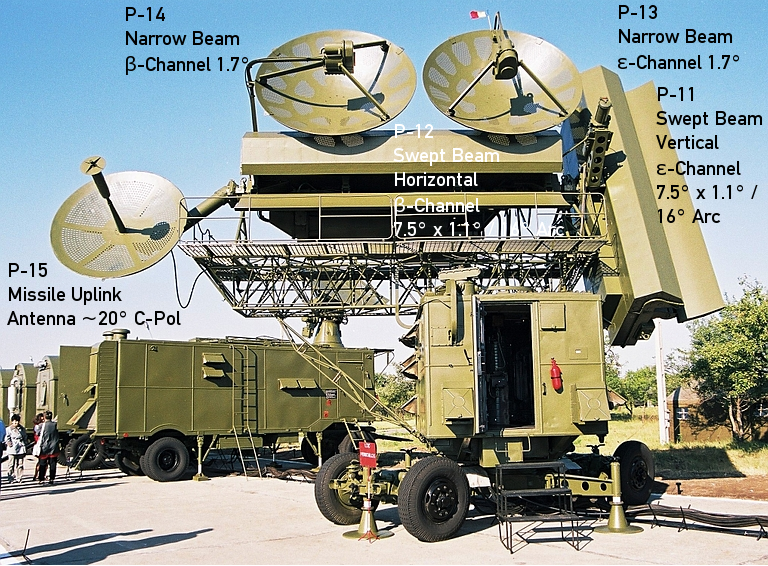
In the late model Fan Song E, the radar used a pair of roof mounted narrow beam parabolic antennas to transmit, and the trough antennas to transmit and receive, the latter intended Scan On Receive Only (SORO) regime developed as an Electronic Counter-Counter Measure against angle jamming techniques. As the trough antennas are fixed in polarisation, separate transmit antennas were employed, with mutually orthogonal polarisations, one used for the elevation or ε-channel, and one for the azimuth or β-channel.
The complete antenna head can be steered in azimuth by rotating the cabin on the rotary mount, while the antenna head can be tilted in elevation using mountings on the roof of the cabin.
The antennas were employed in specific regimes of operation, depending on the operating mode of the Fan Song.
Search Mode is employed to acquire targets for engagements, and the Fan Song crew is cued to the target by an acquisition radar such as a P-12 Spoon Rest, usually supported by a nodding heightfinder. In search mode, the P-11 and P-12 trough antennas are locked into a “wide beam” configuration with a 7.5° x 16° mainlobe section, the intent being to maximise detection volume while accepting poor angular accuracy. Transmissions are at a low PRF of 828-1,440 Hz, and the pulse duration is extended to maximise pulse energy.
Once the target has been acquired, the Fan Song will switch into one of several tracking modes. In these modes the radar emits through the paired P-13 and P-14 parabolic antennas, each of which transmits a linearly polarised but mutually orthogonal signal. Transmissions are in a high PRF regime, typically at 1,656-2,880 Hz, with a shorter pulse duration.
In RS (Ручное Сопровождение) or Manual Track mode the operator uses either the radar scope or the external TV telescope (analogue vidicon tube) to manually track the target. This is the fallback operating mode under severe countermeasures conditions when the automatic mode cannot maintain lock.
In AS (Автоматическое Сопровождение) or Automatic Track mode the P-11 and P-12 trough antennas are configured in narrow beam mode and employed to produce the well known flapping scan beams to generate target angle track outputs in azimuth and elevation, respectively. This is a SORO mode as the jammer cannot know the scan cycle produced by the internal rotating antenna feed.
A third automatic mode, termed ASAP mode, is also employed and uses automatic track and antenna steering.
Once the command link guided missile has been launched, its position must be tracked, and steering commands must be sent to the missile. The circular polarised P-15 antenna is used to transmit the pulse modulation K1, K2, K3 and K4 uplink signals to the missile. The missile transponder beacon is tracked in range and angle using the P-11 and P-12 trough antennas.
SNR-75M3 Fan Song E Engagement Radar Detailed Imagery
| SNR-75
Fan Song C/E Principal Specifications [A, C] |
|
|---|---|
| Operating
Band
[GHz] |
5.010-5.090
/
4.910-4.990 |
| Pulse
Repetition
Interval
(PRI)
[msec] |
- |
| Pulse
Repetition
Frequency
(PRF)
[Hz] |
Search 828-1,440 / Track 1,656-2,880 |
| Pulse
Duration
[usec] |
0.4-1.2 |
| Peak
Power
[MegaWatt] |
1.0
-
1.5
(0.6
A/B/F) |
| Ave
Power
[kiloWatt] |
- |
| Displayed
Range
[km] |
75.0-150.0 |
| Range
Resolution
[m] |
- |
| Mainlobe
Width
[°] |
1.5
x
7.5
(2.0
x
10.0
A/B/F
variants) |
| Scan Rate [Hz] |
15.5 - 17.0 |
| Track/Engage
Capability [targets] |
1/1 |
| Missile Uplink Channels [-] | 2 |
| Deploy/Stow Time
[min] |
~60 |
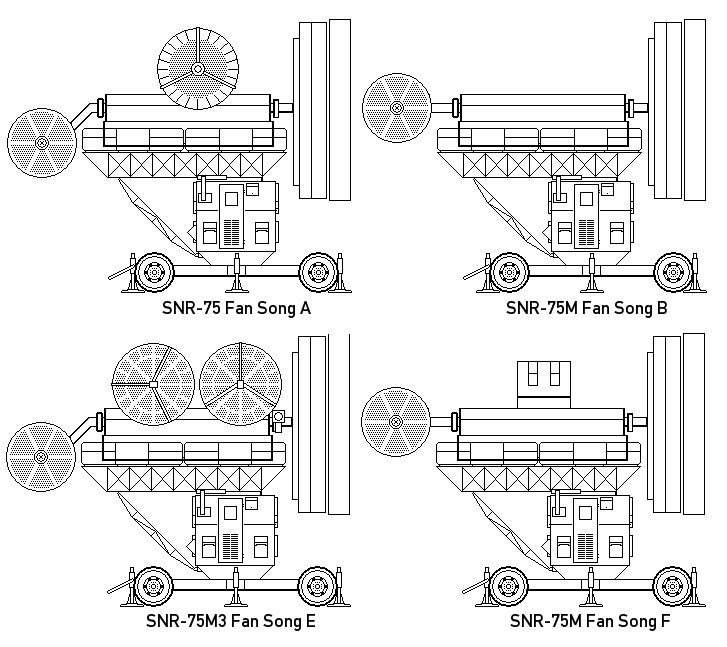
| Fan Song Variants |
||
| Russian
Designation |
NATO Designation | IOC |
| RSNA-75
/
SA-75
Dvina |
Fan
Song
A
/
SA-2A
Guideline
Mod.
0 |
1956 |
| RSNA-75M / SA-75M Dvina | Fan
Song
B / SA-2B Guideline Mod. 1 |
1960 |
| RSN-75
/
S-75
Desna |
Fan
Song
C / SA-2C Guideline Mod. 2 |
1959 |
| RSN-75M / S-75M Desna | Fan
Song
C
/
SA-2D
Guideline
Mod.
3 |
1964 |
| RSN-75VM
/
S-75MV |
Fan
Song
D / SA-2D Guideline Mod. 3 |
1964 |
| RSN-75MV
/
S-75VM
Desna |
Fan Song E / SA-2D Guideline Mod. 3 | 1960 |
| RSN-75V
/
S-75V
Desna |
Fan
Song
E
/
SA-2D
Guideline
Mod.
3 |
1973 |
| RSN-75V1
/
S-75M1
Volkhov |
Fan
Song
E
/
SA-2D
Guideline
Mod.
3 |
1963 |
| RSN-75V2 / S-75D Volkhov | Fan
Song
E
/
SA-2F
Guideline
Mod.
5 |
1971 |
| SNR-75M3 / S-75M3 Volkhov | Fan
Song
E
/
SA-2D
Guideline
Mod.
3 |
1975 |
| SNR-75M4 / S-75M4 Volkhov | Fan
Song
E
/
SA-2D
Guideline
Mod.
3 |
1978 |
| RSNA-75M
/
S-75M2
Volkhov |
Fan Song F / SA-2D Guideline Mod. 3 | |
| Source: http://www.rzeszow.mm.pl/~jowitek/S-75.html / Vestnik PVO | ||
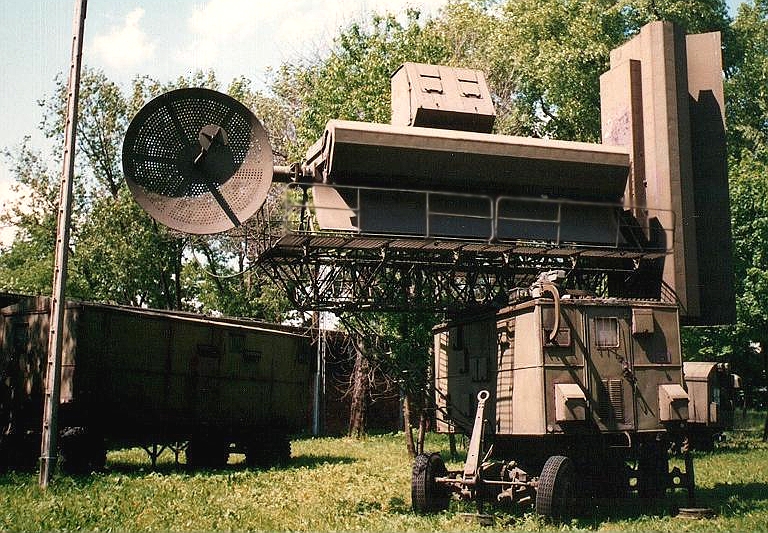
RSNA-75M / Fan Song F used with the S-75M2 Volkhov / SA-2D Guideline Mod. 3.
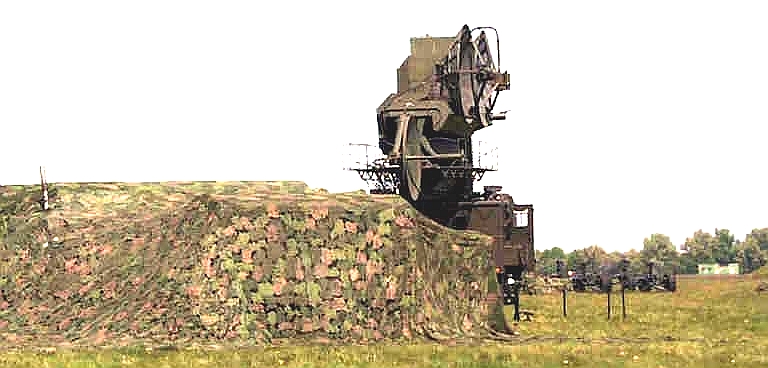
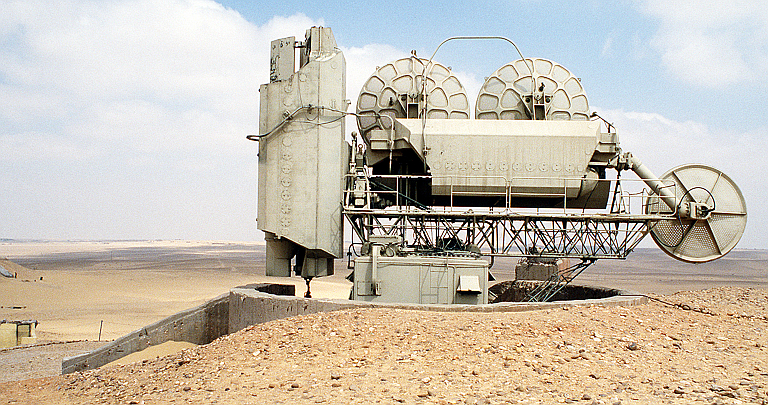
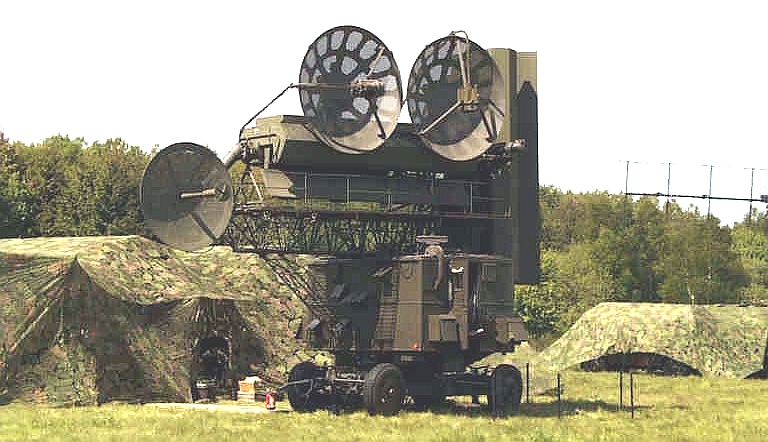

The late 1970s SNR-75M4 was developed for S-75M4 Volkhov and employed some digital technology. While usually listed as a Fan Song E, the system deserves a unique designation. Note the relocated P-15 uplink antenna on the right, and entirely new narrow beam antenna with what appears to be a scanning feed (Russian internet image).
SNR-125
Low Blow / S-125 Neva/Pechora / SA-3
Goa
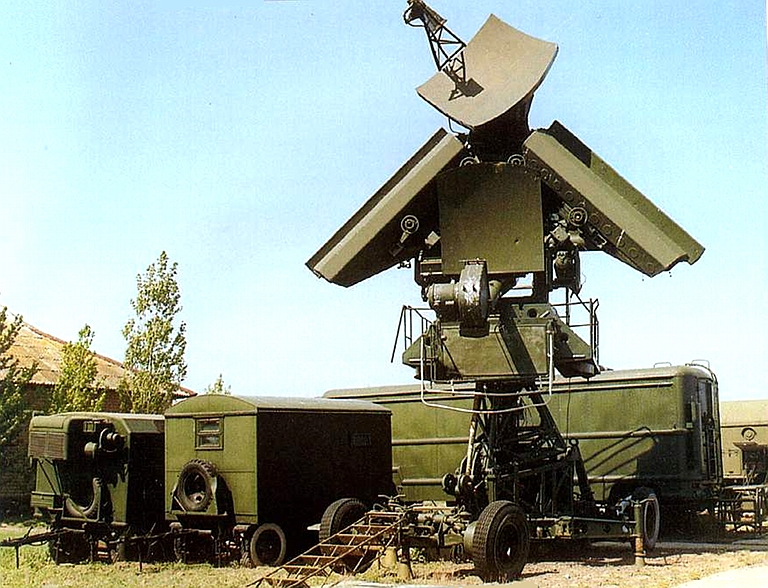
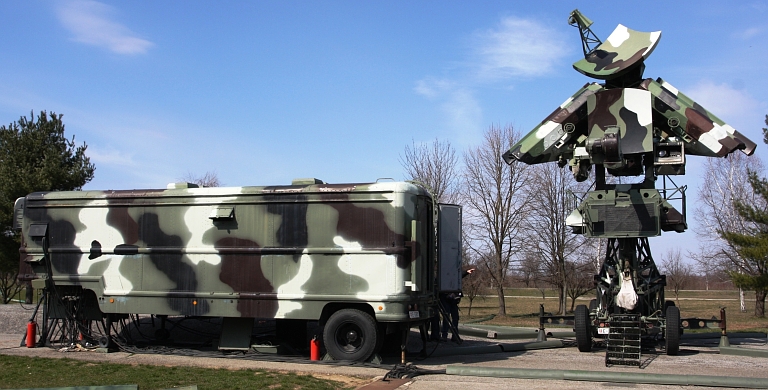
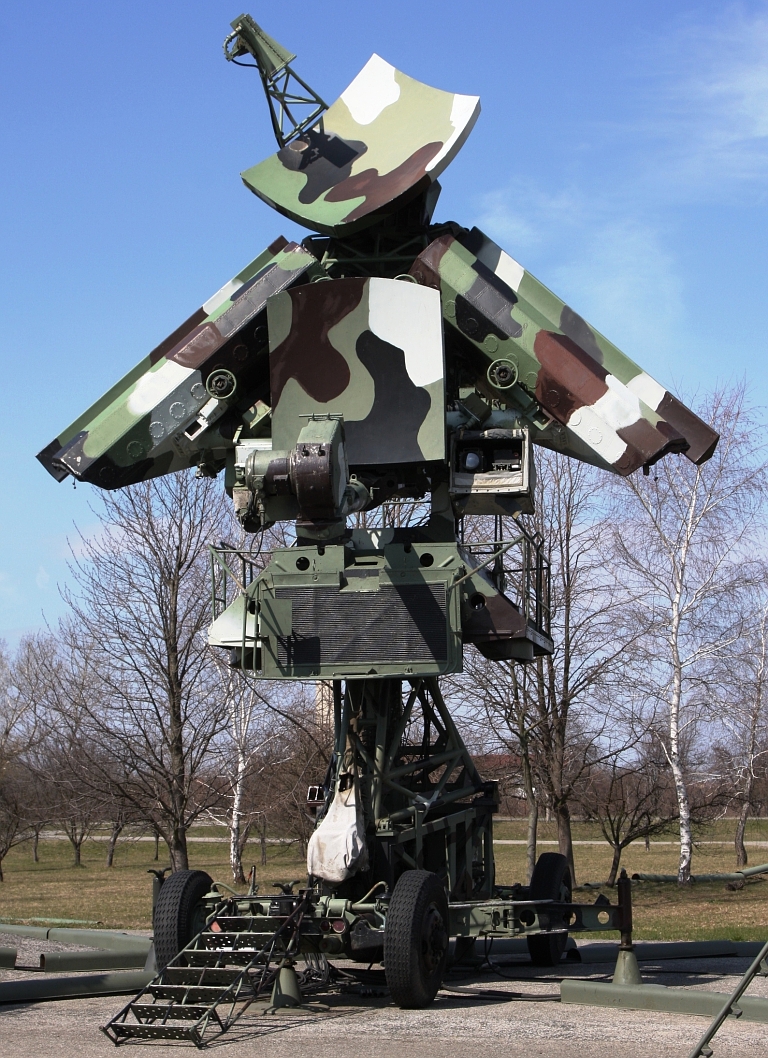
Like the SNR-75, the SNR-125 uses a pair of fixed scanned trough antennas to generate flapping fan shaped beams, but the design is inherently SORO with a separate transmit antenna mounted between the characteristic chevron arrangement of trough antennas. Optical adjunct tracking using the 9Sh33A Karat 2 television telescope has been installed on later variants, initially the SNR-125M1. The antenna at the top of the turret is used for the low power missile FMCW uplink channels.
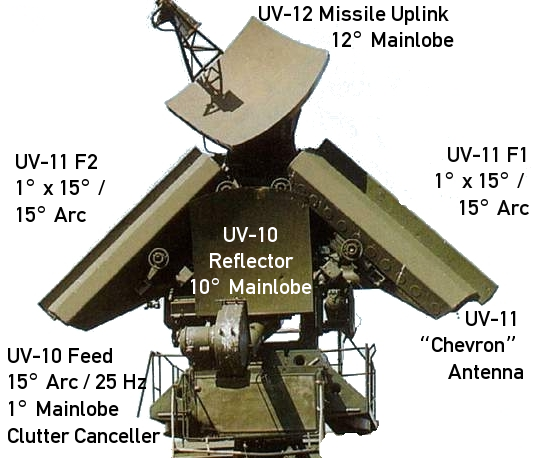
The antenna suite on the Low Blow radar head is more sophisticated and complex than the earlier Fan Song design. The antenna functions are, respectively:
UV-10: Transmit for target and missile tracking, Transmit/Receive for rangefinding, Transmit/Receive for initial target acquisition, Receive for clutter cancelling channel. The boom mounts a cluster of feed horns, including a rotating scanning feed, each producing unique mainlobes. The scanned acquisition beam mainlobe is 1° wide and swept through a 15° arc in elevation at 25 Hz, the mainlobe for target tracking transmit and rangefinding receive is 10° wide.
UV11 F1 and F2: Receive antennas for target and missile transponder beacon tracking. These produce 1° x 15° fan shaped mainlobes which sweep through a 15° arc.
UV-12: Missile uplink antenna for the FMCW 12 Watt command link.
The Low Blow is designed to acquire targets using only bearing and range inputs from an external 2D acquisition radar, such as a P-12/18 Spoon Rest or P-15M Squat Eye. When acquiring a target, the Low Blow radar head is rotated to the target bearing and the UV-10 antenna scanning feed engaged to produce a 1° wide pencil beam swept in elevation.
Once the target is acquired the Low Blow is switched into tracking mode, using the UV-10 antenna to transmit, the UV-10 to receive for ranging, and the scanning UV-11 chevron receive antennas for angle tracking. The radar head is mechanically steered in azimuth and elevation to maintain track.
Like the Fan Song, the Low Blow provides manual tracking, automatic tracking and television angle tracking modes. The system provides five missile guidance control laws, TT (CLOS), PS, MV (LoAlt), K (surface target attack) and DKM (ballistic). Three missile uplink signals are employed, K1 and K2 for pitch/yaw steering, and K3 for fuse control.
Russian doctrine in the presence of heavy jamming was often to cease emitting and use the scanning receiver to effect angle tracking of the jammer, acquire the target with the TV telescope, and perform a range unknown missile shot against the jammer in CLOS mode.
Due to the addition of a clutter canceller and analogue MTI circuits, the Low Blow has significantly better clutter rejection performance compared to the earlier Fan Song. Cited low altitude capability is against targets as low as 20 m (~60 ft AGL).
A number of upgrades have seen the towed Low Blow rehosted on to a vehicle to provide a self propelled "shoot and scoot" capability for batteries, with the launchers also mounted on vehicles to produce proper TELs. Several upgrades are available in which most or all of the analogue electronics are replaced with digital COTS technology.
| SNR-125
Low Blow Principal Specifications [B, D] |
|
|---|---|
| Operating
Band
[GHz] |
~9.0 |
| Pulse
Repetition
Interval
(PRI)
[msec] |
- |
| Pulse
Repetition
Frequency
(PRF)
[Hz] |
Search 1750-3500 / Track 3560-3585 |
| Pulse
Duration
[usec] |
0.2
-
5.0 |
| Peak
Power
[MegaWatt] |
0.270 |
| Ave
Power
[kiloWatt] |
- |
| Displayed
Range
[km] |
110.0 |
| Range
Resolution
[m] |
- |
| Mainlobe
Width
[°] |
12.0 x 1.5 |
| Scan Rate [Hz] |
Search 16 / Track 25 |
| Track/Engage
Capability [targets] |
1/1 |
| Missile Uplink Channels [-] | 2 |
| Missile Uplink
Power [W] |
~12
CW |
| Deploy/Stow Time
[min] |
~60 |
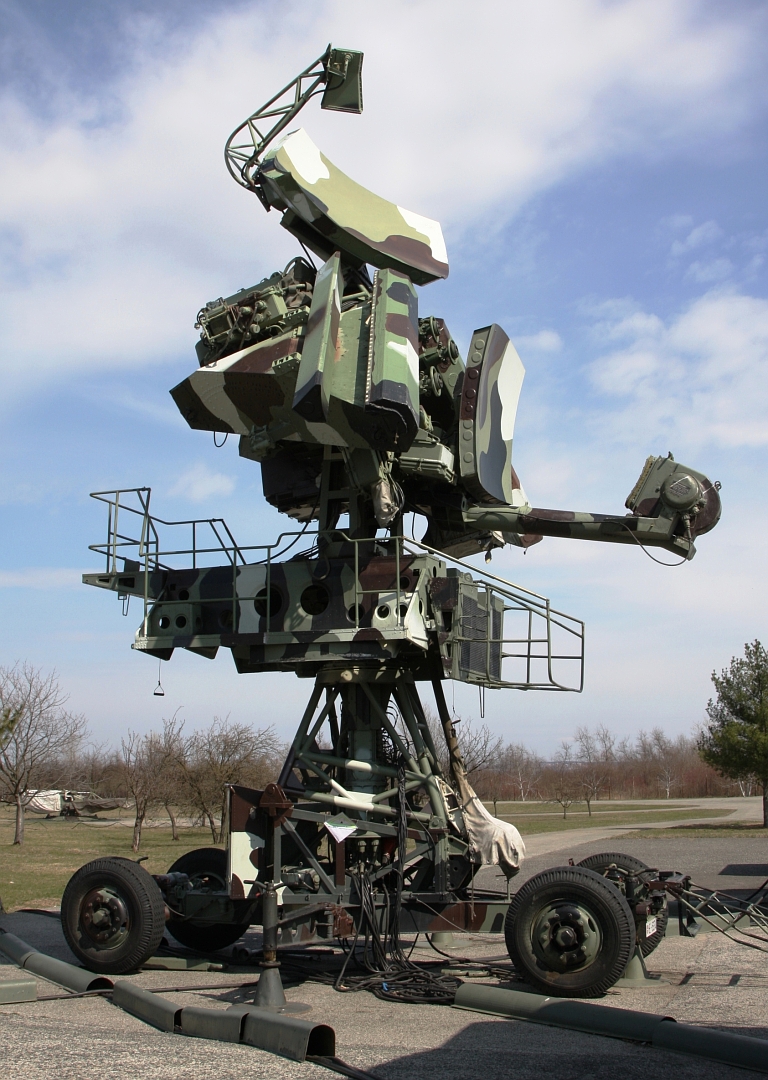
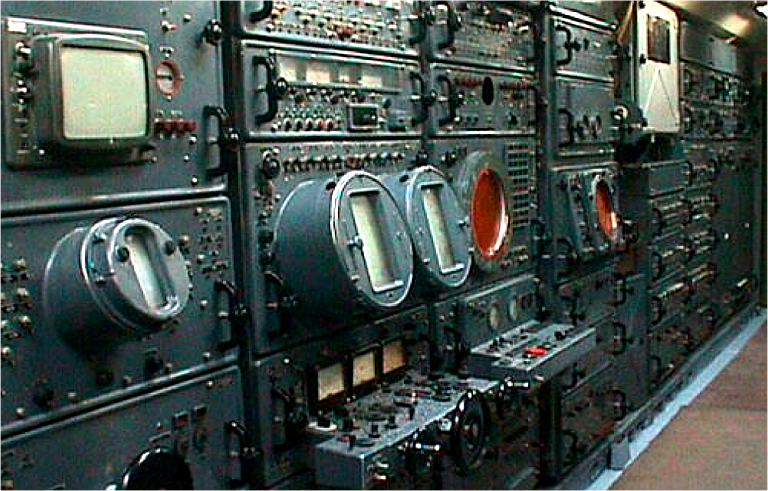
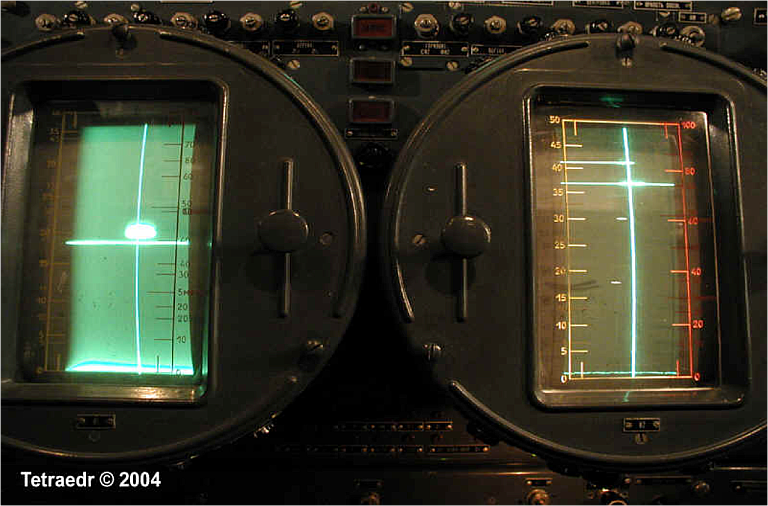
1S32
Pat Hand / 2K11 Krug / SA-4 Ganef
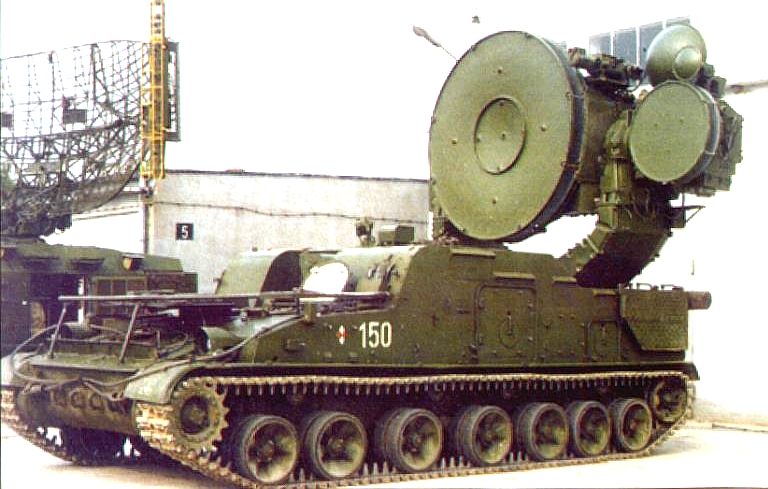
The Pat Hand combined a cluster of four antennas, the largest of which was a monopulse narrow beam target track antenna, to the left of which was the monopulse wide angle missile track antenna. Missile capture and command uplink antennas are mounted above the pair. An 9Sh33 optical tracker, identical to the 2K12 / SA-6 Gainful design, was later added. The 1S62 command datalink was used to control the 2P24 TELs, and employed a telescoping mast antenna. The 3M8 / SA-4 Ganef missile used command link guidance not unlike the S-75 / SA-2 Guideline and S-125 / SA-3 Goa, with similar control laws. Russian sources claim that the missile also used a pulsed semi-active homing seeker for terminal guidance, however documentary materials published in Germany indicate this is not correct.
Russian sources put the peak power rating at 750 kiloWatts, sensitivity at 10-13 Watts, angle track error at 0.06° and range error at 15.0 metres.
1S32 Pat Hand engagement radar (Russian MoD).
5N62
Square Pair / S-200A/V/D
Angara/Vega/Dubna / SA-5 Gammon
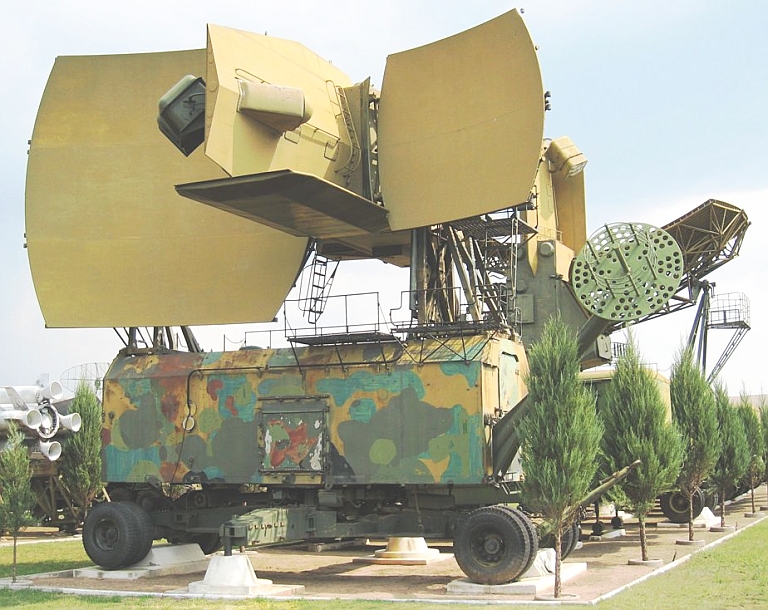
Each 5N62 radar comprises two primary components, the K-1 and K-2 “cabins”, both towed to location. The K-1/K-1V/M Transmitter/Receiver cabin is the radio-frequency component of the 5N62 radar. The K-2/K-2V/M Fire Control Centre cabin, built into an OdAZ-828 semi-trailer van, houses the operator consoles, a digital computer and supporting electronics. It also is an integral part of the 5N62 radar system. Stow and deploy times for the whole radar system are ~8 hours, as the knocked down antenna head has to be assembled from components or vice versa.
An inflatable shelter is available for static installations of the complete K-1 antenna package.
Antenna steering in azimuth is effected by rotating the whole cabin and antenna head on the turntable coupling. Maximum slew rate is 20°/sec. Antenna steering in elevation is effected by tilting the complete antenna head about a rotational joint in the support frame.
The boom mounted circular polarised helical antenna on the side of the cluster is for the 5V21/5V28 missile uplink/downlink channel. The missile downlink is used to monitor missile status and health, the missile uplink is used to arm the proximity fuse, arm the warhead, and initiate the missile self destruct function. The modulations and signalling format have not been disclosed.
The FMCW design can measure target azimuth, elevation, range and radial velocity, with operator displays showing angles, range, altitude and linear velocity. Two basic waveforms are employed:
- ФКМ фазокодовая манипуляция / phase-code manipulation - used for combined angle tracking and rangefinding, with FM “pseudo-pulses” modulated on to the CW carrier. These were emitted at a very low “pseudo-PRF”, with a reliable range measurement taking up to 30 seconds due to manual resolution of range ambiguity.
- МХИ
монохроматическая
излучения / mono-chromatic
emission - used to illuminate the target for the inbound missile
seekers. In this mode the radar provides angle tracking and radial
velocity measurement, and is credited with an effective range of 220
NMI.
- Sector Search Mode: the antenna automatically sweeps in azimuth, incrementally increasing the elevation angle with each sweep.
- Conical Search Mode: the antenna automatically sweeps a circle, increasing the off-boresight angle with every sweep.
- Manual Mode: the operator uses an elevation and azimuth wheel to steer the boresight.
Operator training guide manuals translated from Russian and distributed to Warsaw Pact allies state that two primary flight regimes are employed, one for “close” and the other for “distant” targets, the transition being at slant ranges of 70 ~ 80 km (38 - 43 NMI).
If a target is designated to be “close”, and with either tflight< 60 [sec] and H ≤ 20,000 [m] (shallow trajectory) or tflight< 70 [sec] and H > 20,000 [m] (steep trajectory), then a conventional P-nav control law is employed for the whole duration of the flight.
If a target is designated to be “distant”, and with either tflight≥ 60 [sec] and H ≤ 20,000 [m] (shallow trajectory) or tflight≥ 70 [sec] and H > 20,000 [m] (steep trajectory), then the missile flies with two discrete control laws applied, one for midcourse flight, the other for terminal homing. The midcourse flight regime control law is a constant lead angle (ε=35º; β=0º or 15º) rule, with the missile switching over to the P-nav control law for terminal homing.
This strategy was adopted to maximise range against distant targets, as the P-nav algorithm can be wasteful of kinetic and potential energy.
Many later configurations permitted a two-channel capability, with two 5N62 radars supporting a single battery, both under the control of a single K-9 Battery Command Post.
In operation the 5N62 was embedded in the S-200 battery. The S-200 K-3 Launch Control Centre cabin (OdAZ-828) is used to control and sequence the individual 5P72 launchers with the 5V21/5V28 missile rounds. The K-9 Battery Command Post (i.e. Battle Management Post ) cabin (OdAZ-828) is used to integrate track data provided by the acquisition radars, such as the P-14 Tall King or P-35/37 Bar Lock, and supporting heightfinders such as the PRV-17 Side Net / Odd Pair, and an IFF interrogator such as the 1L22 Parol.
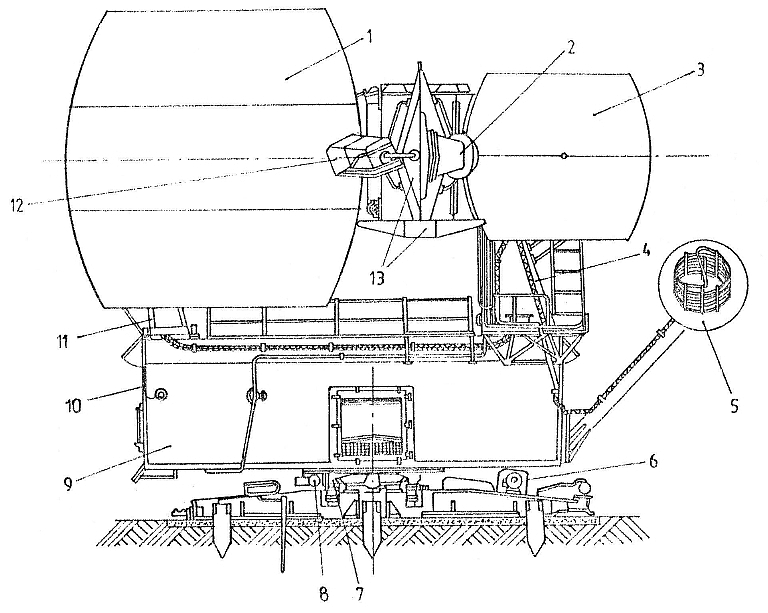
| K-1V Antenna Head System - Front View | |
| 1 |
KA-141M transmit antenna |
| 2 |
KA-152 receive antenna feed |
| 3 |
KA-151M receive antenna |
| 4 |
Support frame |
| 5 |
KA-17M missile uplink/downlink antenna |
| 6 |
Amplifier |
| 7 |
Rotational
drive component |
| 8 |
Rotational drive component |
| 9 |
KA-10V cabin |
| 10 |
Antenna
emulator |
| 11 |
Support frame |
| 12 |
KA-142MT transmit antenna feed |
| 13 |
Spillover screen |
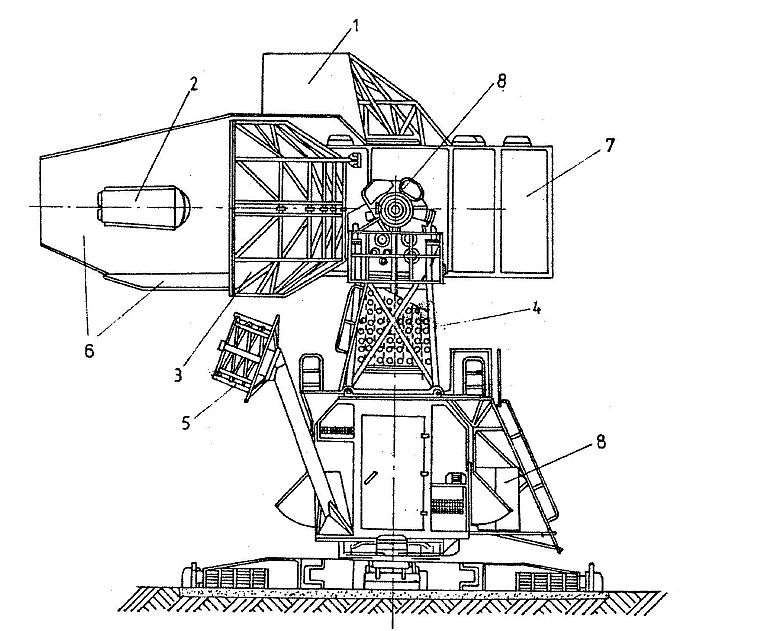
| K-1V Antenna Head System - Profile View |
|
| 1 |
KA-141M
transmit antenna |
| 2 |
KA-152
receive antenna feed |
| 3 |
KA-151M
receive antenna |
| 4 |
Support frame |
| 5 |
KA-17M
missile uplink/downlink antenna |
| 6 |
Spillover
screen |
| 7 |
Transmittter
/ receiver housing |
| 8 |
Antenna
drive motors |

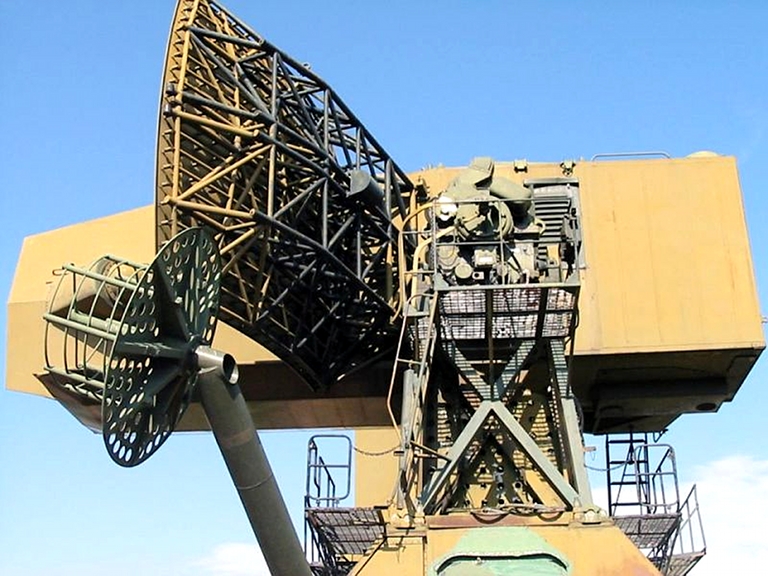
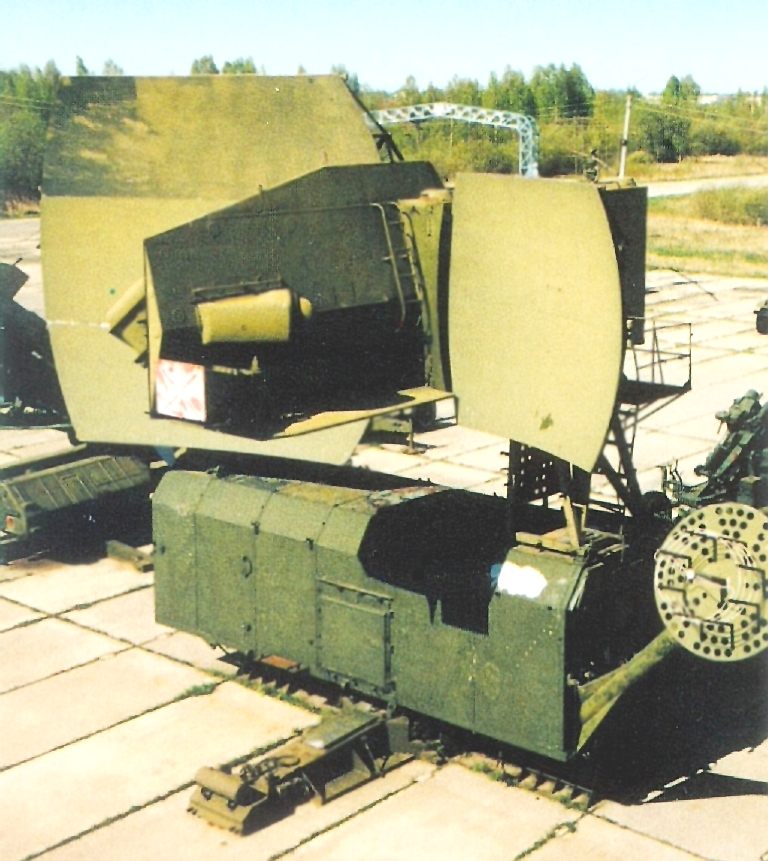
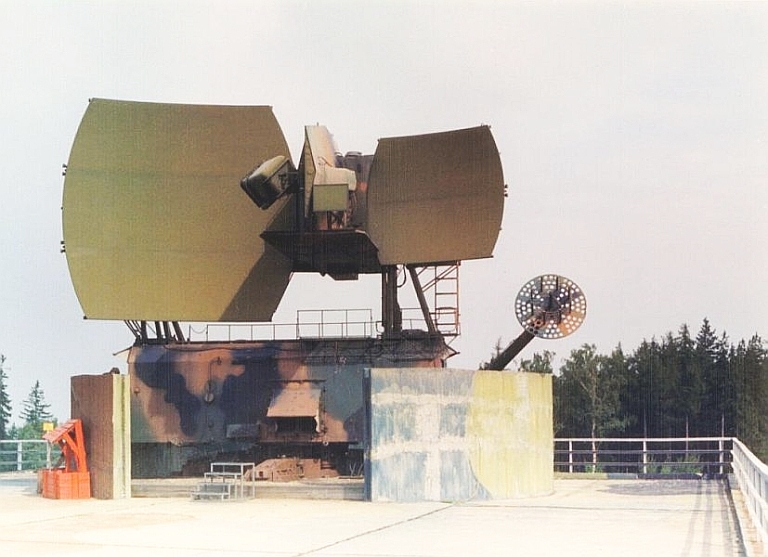
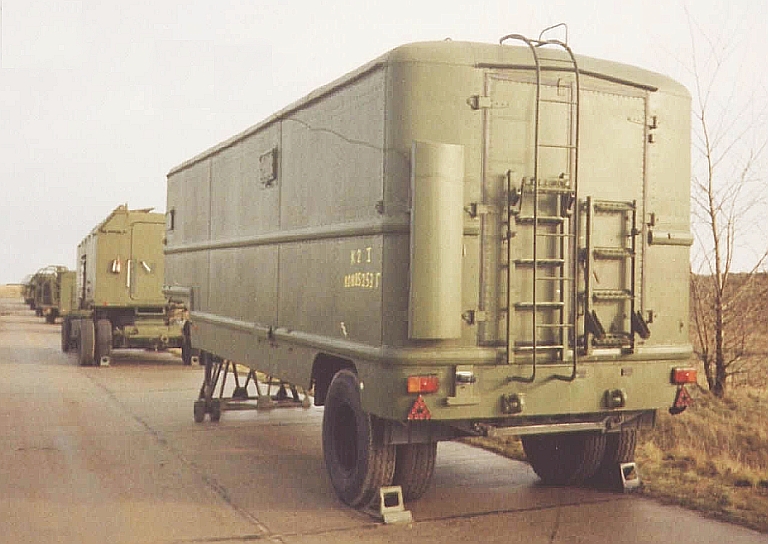
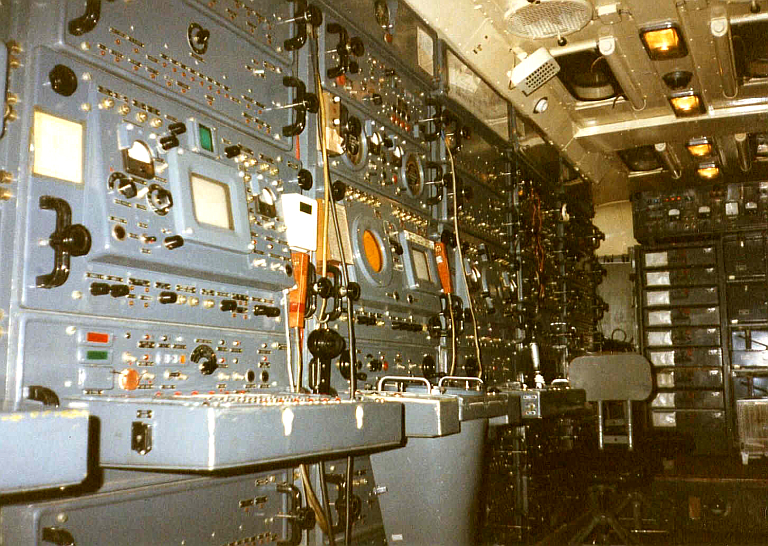
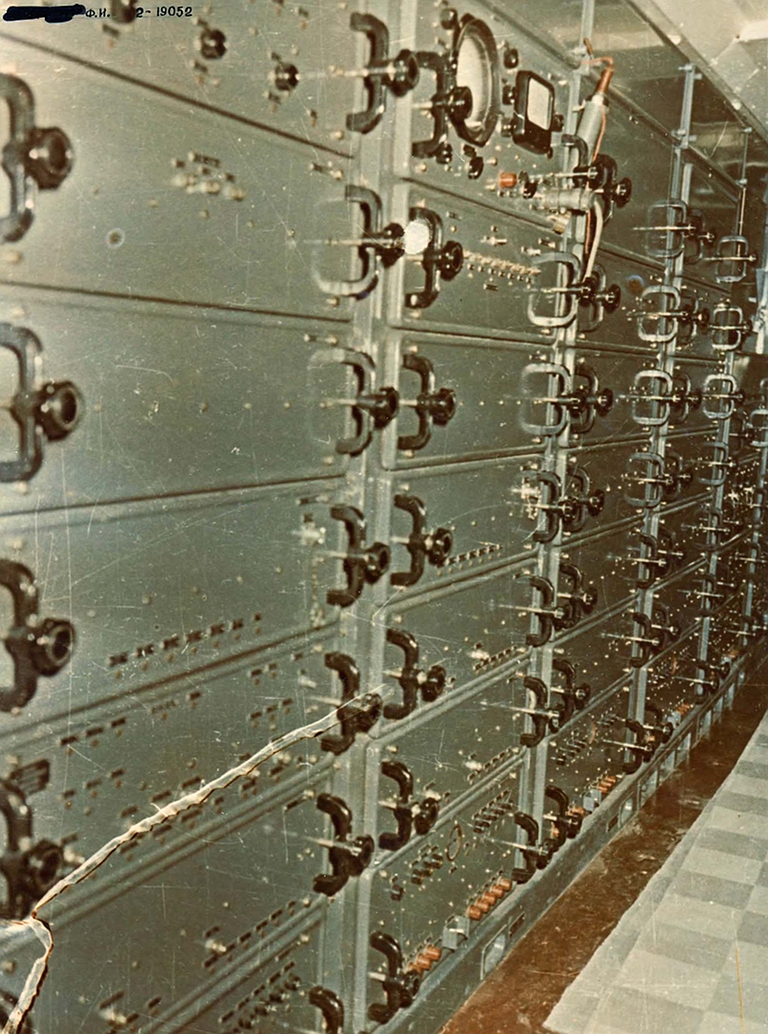
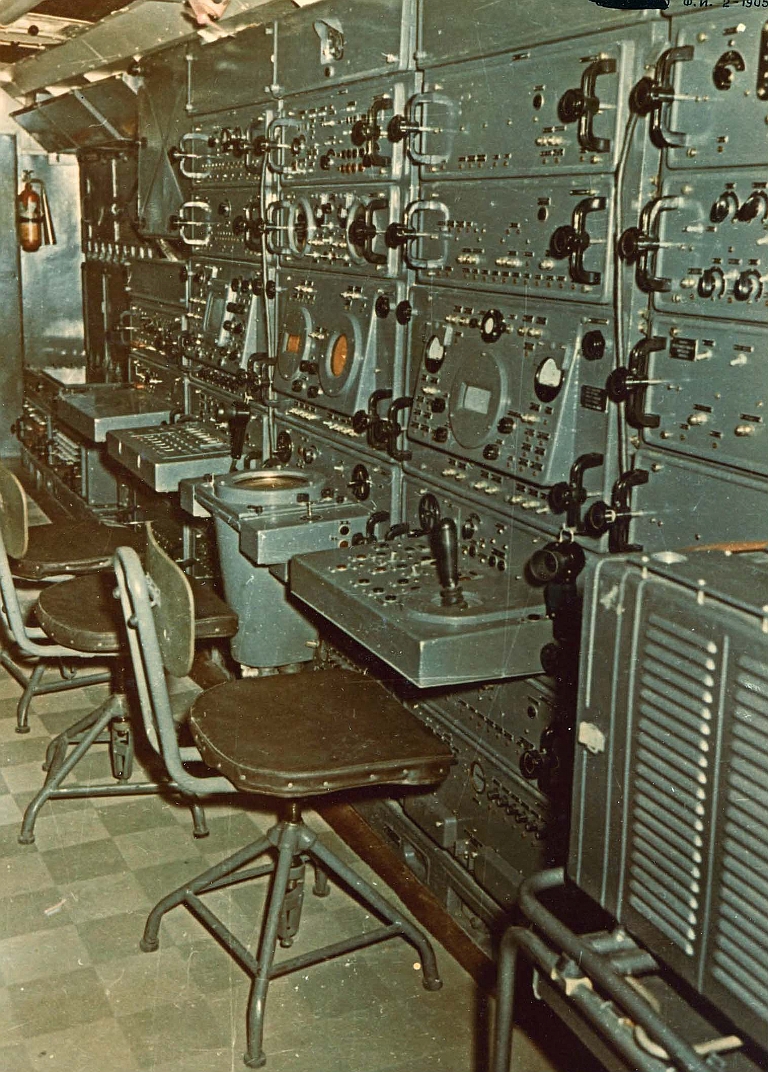
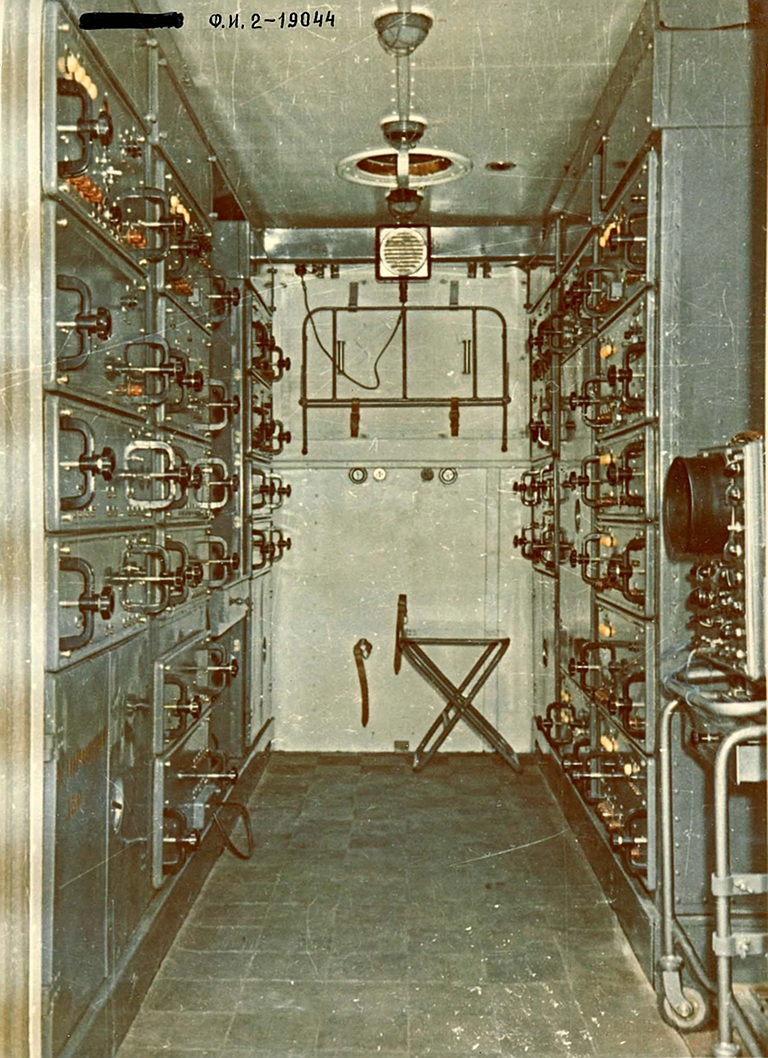
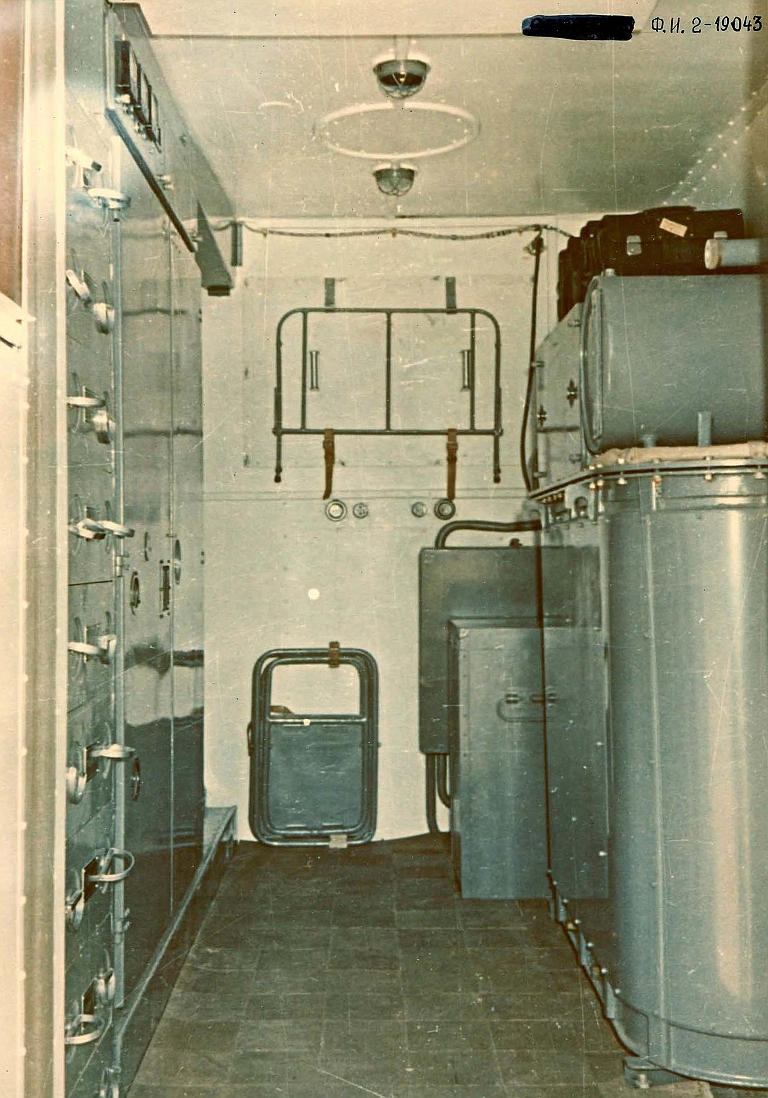
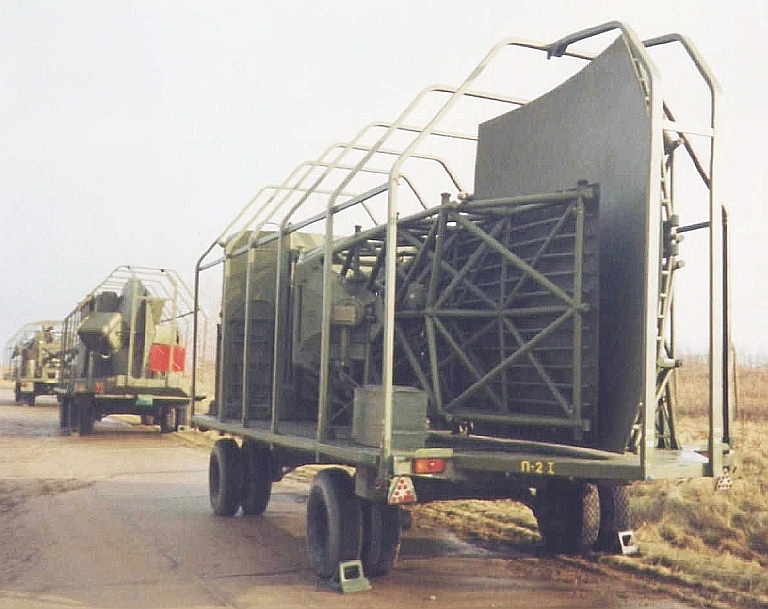

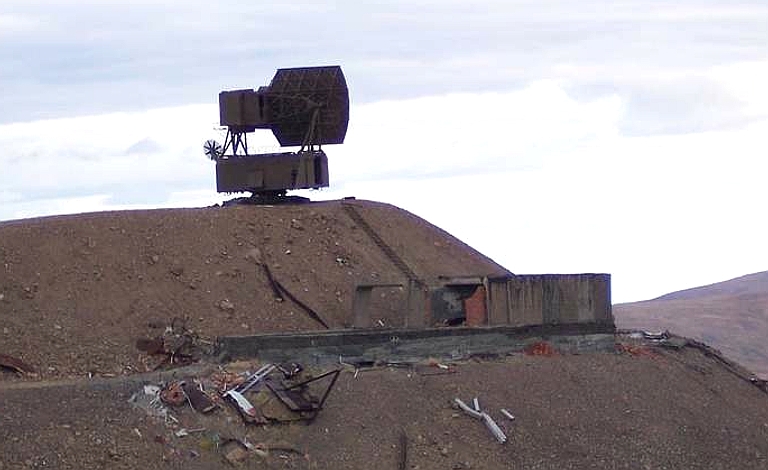
5N62 Square Pair 'Illumination and Guidance Radar' deployed on elevated terrain to maximise engagement range for the missile battery.
1S91
Straight Flush / 2K12 Kub/Kvadrat / SA-6
Gainful
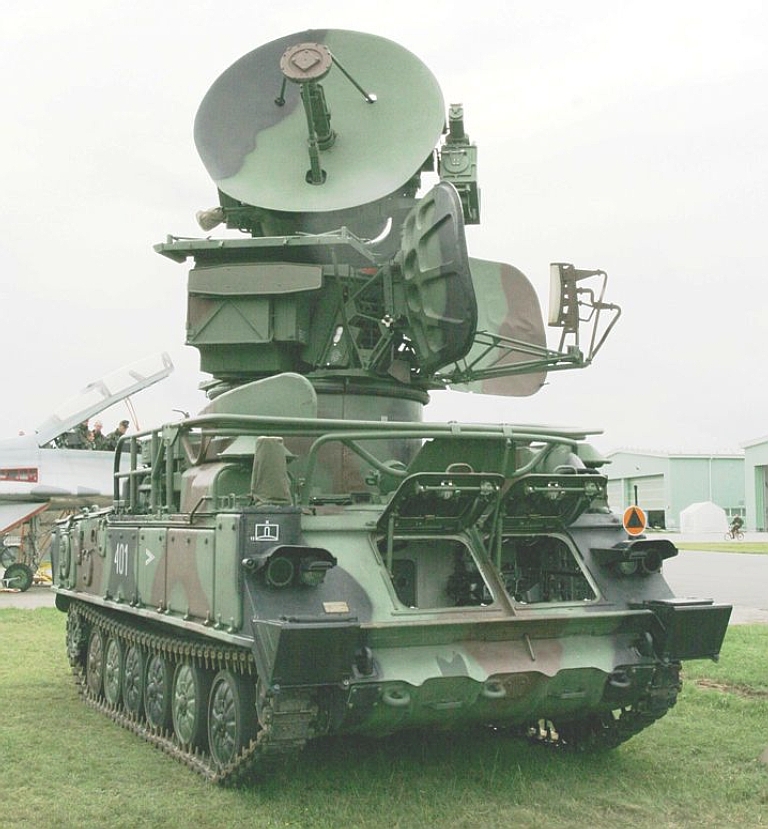
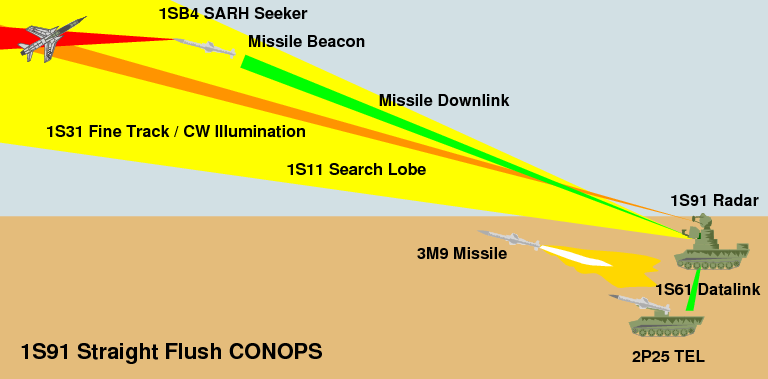
The 1S11 is coherent pulsed radar capable of performing 360° azimuth sweeps at 15 RPM in early variants and 20 RPM in later variants. It operates in the lower X-band and has two independent MTI channels, each capable of transmitting at 600 kiloWatt peak power on a discrete operating frequency. Cited PRF is 2.0 kHz, with a 0.5 μsec pulse width. The receiver sensitivity is 10-13 Watts. The ~1.0° mainlobe can be elevated through 20°.
Later variants use a 9Sh33 telescopic TV camera for visual angle tracking of targets. A 1S51 IFF system is integrated. A 1S61 digital datalink terminal is carried, it communicates with 1S61 terminals on the 2P25 TELs and transfers target location to cue the TELs and drive elevation and azimuth inputs for the TEL launchers.
The 1S31 is a specialised pulsed fire control radar employing monopulse angle tracking to maximise jam resistance. ECCM measures include carrier retuning and automatic PRF sweeping, with a cited nominal PRF of 2.0 kHz, with a 0.45 μsec pulse width. Two 270 kiloWatt peak power channels are used to perform fine tracking and terminal CW illumination for the 3M9/9M9 SAM seeker. The ~1.0° mainlobe can be steered independently of the 1S11. Cited max antenna slew rate is 20°/sec and elevation rate 10°/sec.
The solid propellant rocket/ramjet 3M9/9M9 Gainful missile round uses a 1SB4 monopulse semi-active homing seeker with the capability to estimate closure rate to the target by comparing the illumination carrier frequency with the carrier in the backscatter from the target. A tunable narrowband fliter is used to track the return from the target and minimise the clutter spectrum. The missile carries a beacon to enable tracking by the 1S91 during the midcourse phase. A Home-On-Jam (HOJ) capability is cited by Russian sources.
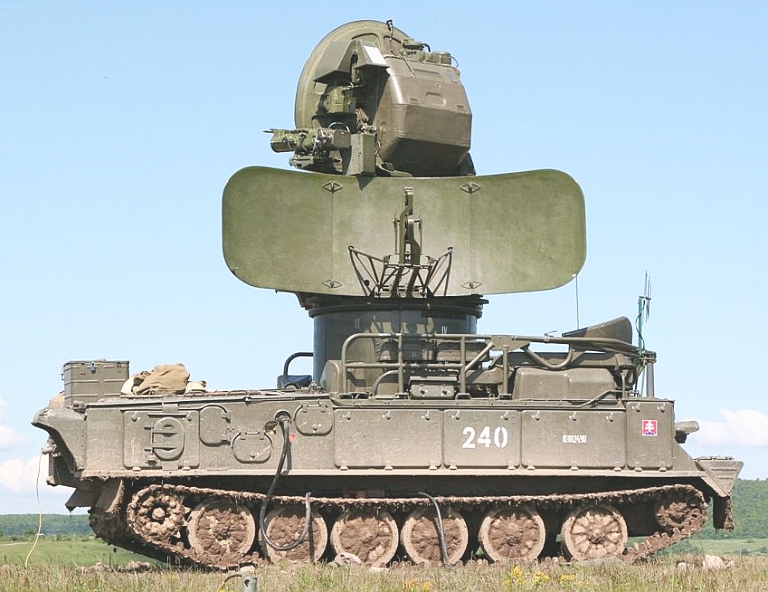
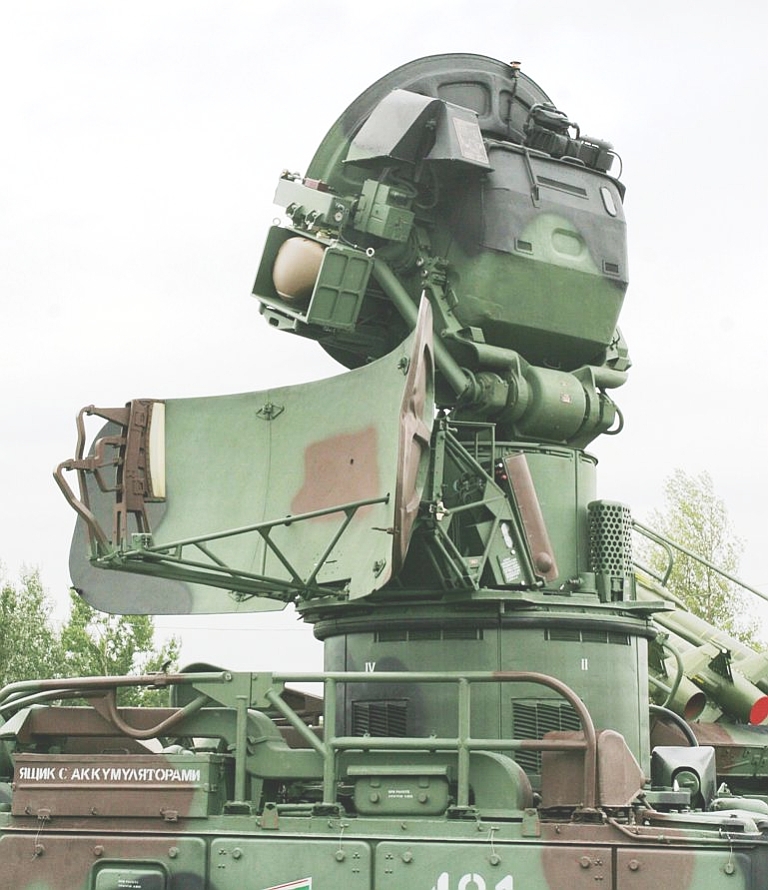
1S91M2 Straight Flush of the Slovakian Army (Image © Miroslav Gyűrösi).
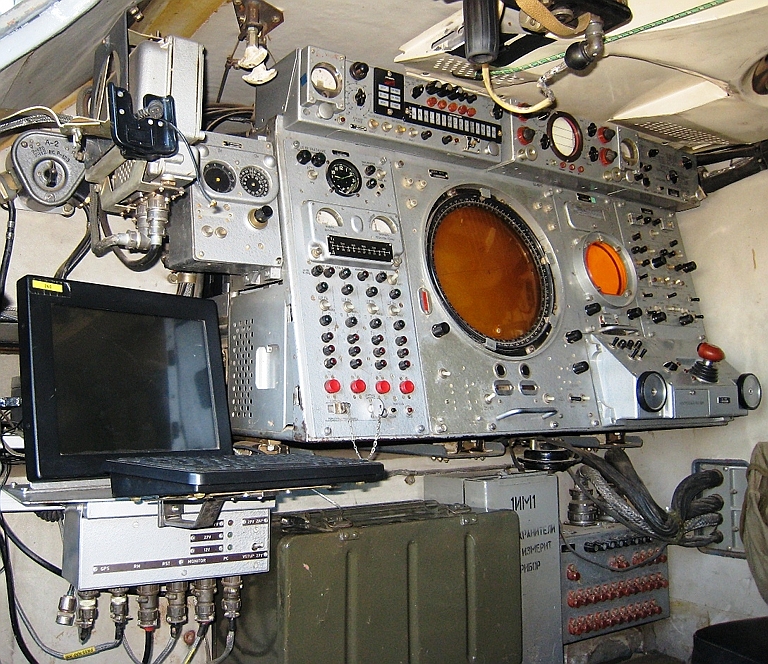
Land
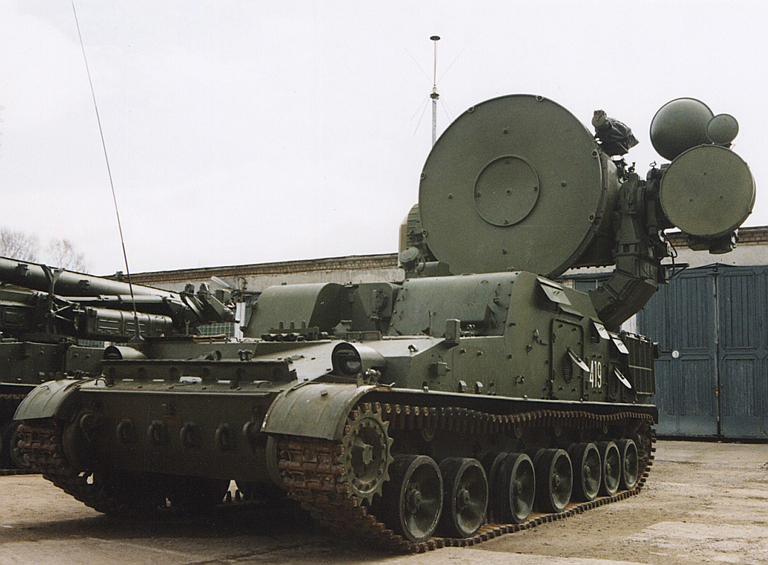
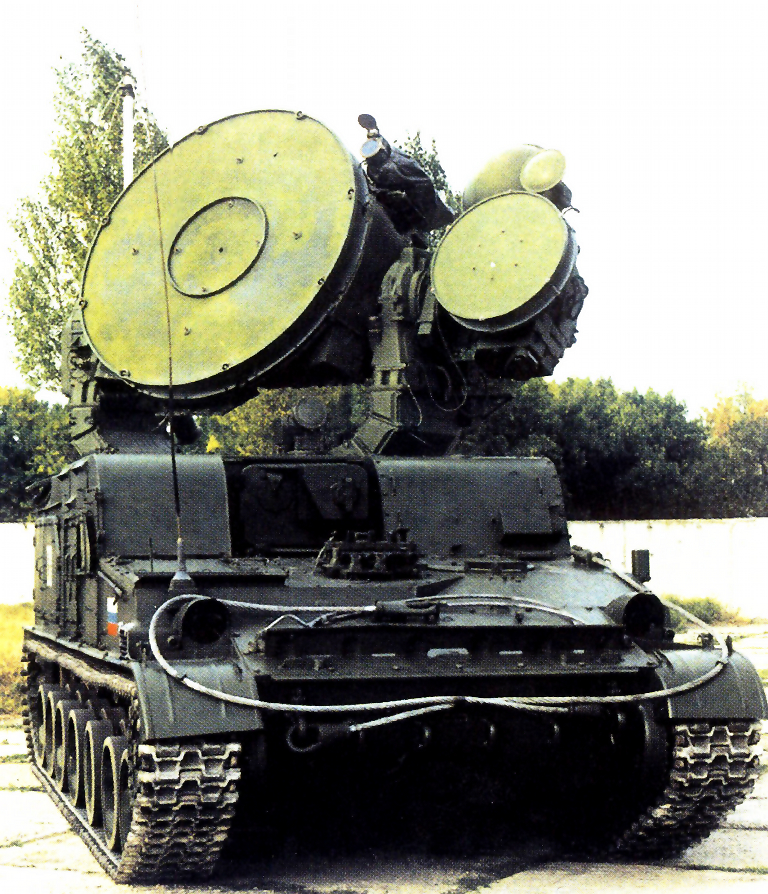
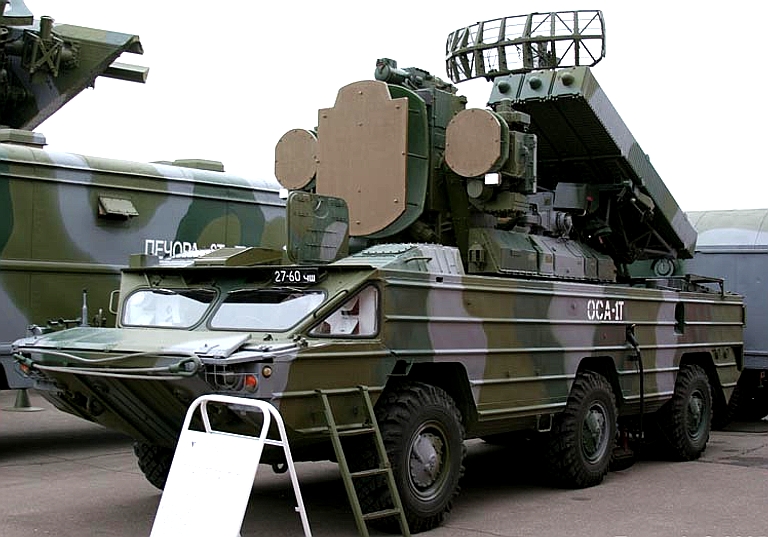
Roll / 9K33/9K33M2/M3 Osa AK/AKM / Osa T
/ SA-8 Gecko
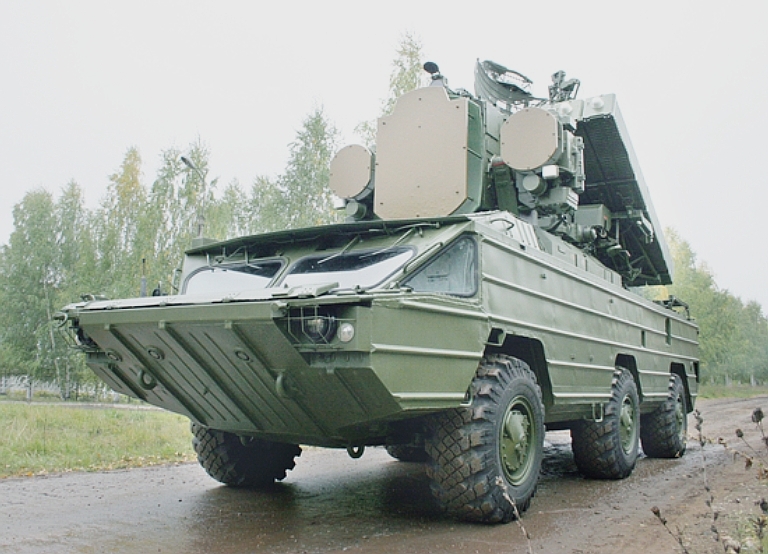
Osa AKM - an upgraded
SA-8B
Gecko (JSC Kupol images).
The acquisition component is equipped with a mechanically steered stabilised paraboloid section antenna with three feeds, providing a 1° - 4° mainlobe in azimuth and 19° mainlobe in elevation, sweeping at 33 RPM. This radar produces a peak power of 270 kiloWatts. the 1S51 IFF interrogator antenna is mounted above the primary reflector.
The tracking and missile guidance component is mounted on the front of the turret. It has a large protected truncated paraboloid primary reflector with a ~1° mainlobe, used with a ~200 kiloWatt peak rated pulsed transmitter, and a 2*10-13 Watt receiver. This radar is used to perform precision tracking of targets using a monopulse feed network for high jam resistance, and it provides the transmit portion of the beacon channel.
To either side of the primary antenna are paired missile capture, tracking and uplink antennas, used to support the Command to Line of Sight (CLOS) guidance on the missiles. The missiles receive pitch/yaw steering commands and a fuse activation command, generated by the fire control system and its 9S456M3 computer system.
Adjunct angle optical tracking is provided by a 9Sh38/83-2 Karat optical tracker.
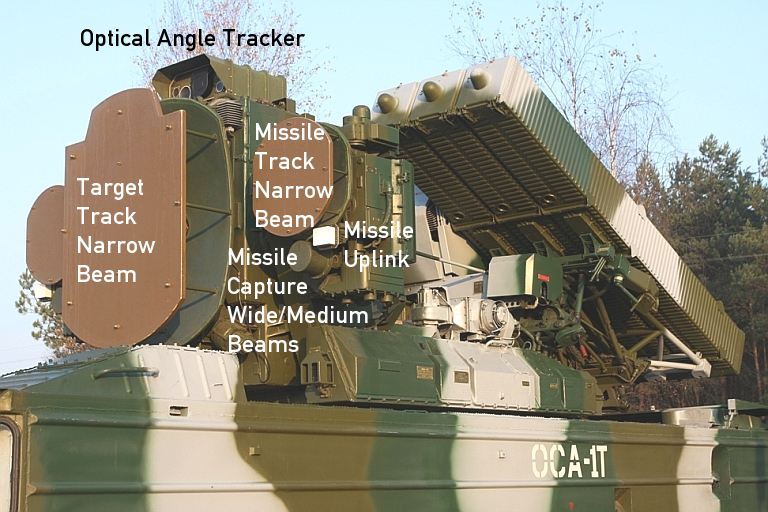
In operation, the acquisition radar develops tracks of potential targets, and once a target is selected, the turret with the antenna head is slewed to point the tracking antenna at the target. The tracking antenna then searches, acquires and initiates angle and range tracking of the target. Once the target is within the LAR, the missiles can be launched. Missile power-up, gyro spinup and stabilisation on TELAR power takes ~13 sec. After the missile is launched it must be captured. the wide beam aperture achives this between 60 - 150 m from the TELAR. The system then switches into the medium beam mode, and then narrow beam mode, once the missile has been steered on to its intended trajectory.
Russian sources claim the trajectory used included a vertical bias component to fly the missile above the line of sight converging with the target at impact. German sources claim a modified TT/CLOS algorithm is used.
The complete mission package is powered by a 9I210 gas turbine APU, driving a 220V /400 Hz and 27 VDC power supply.
Numerous upgrades are on offer for the Gecko, including the Russian Osa AKM and ByeloRussian Osa 1T.
| Acquisition Radar |
|
| Peak Power [kW] |
270.0 |
| Receiver Sensitivity [W] |
10-13 |
| Pulse Duration [usec] |
0.45 |
| Accuracy |
Angular
2° / 300 m |
| PRF [kHz] |
2.8 |
| IF Frequency [MHz] |
30.0 |
| Detection Range [km] | 45.0 |
| Azimuth
Coverage |
360° |
| Elevation |
0-30° |
| Antenna
Lobe
1 |
1.23° Azimuth / 4.0°
Elevation |
| Antenna
Lobe
2 |
1.23° Azimuth / 4.0° Elevation |
| Antenna
Lobe
3 |
1.4° Azimuth / 18.0-22.0° Elevation |
| Scan Rate [RPM] |
33.0 |
| Engagement Radar |
|
|
Peak
Power [kW] |
180.0 |
|
Sensitivity
[W] |
10-13 |
|
PRF
[kHz] |
2.8 |
| IF Frequency [MHz] |
30.0 |
| Pulse Duration [usec] |
0.225 |
| Tracking Envelope
|
Target Range [km]: 0-28.0 |
| Elevation: -12° to +78° | |
| Azimuth: 330° | |
| Slew Rates [°/sec] | Elevation: 30.0 |
| Azimuth: 15.0 | |
| Resolution |
Angular: 00-20 |
| Range: 55m | |
| Accuracy
|
Range: +/-10m |
| Azimuth: 1.3° | |
| Elevation: 0.9° | |
| Missile Tracking Receivers |
|
| Search Sector |
Elevation: -12° to 78° Azimuth +/-15° |
| Capture
Angle |
22.8° |
| Maximum
Error |
10° |
| Antenna
Lobes |
"wide beam" 14° "medium beam" 2.2° "narrow beam" 0.6 |
| Missile
Uplink
Transmitters |
|
| Peak
Power
[kW] |
100.0 |
| Pulse
Duration
[usec] |
0.72 |
| Antenna
Lobes |
"wide
beam"
10-18° "medium beam" 3° |
| Uplink
Message
K1
/
K2 |
Pitch/Yaw |
| Uplink
Message
K3 |
Proximity
Fuse
Activate |
| Uplink Message K4 | Reserved |
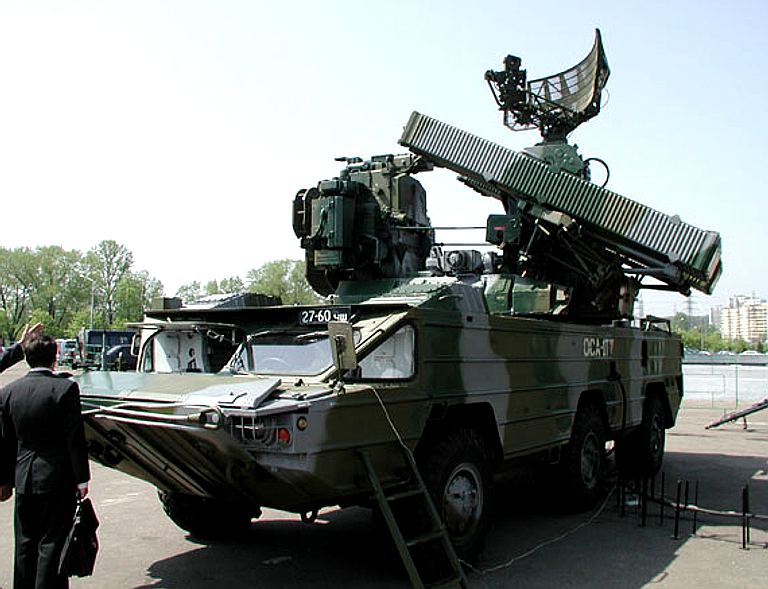
Tetraedr Osa 1T legacy TELAR (Tetraedr images).
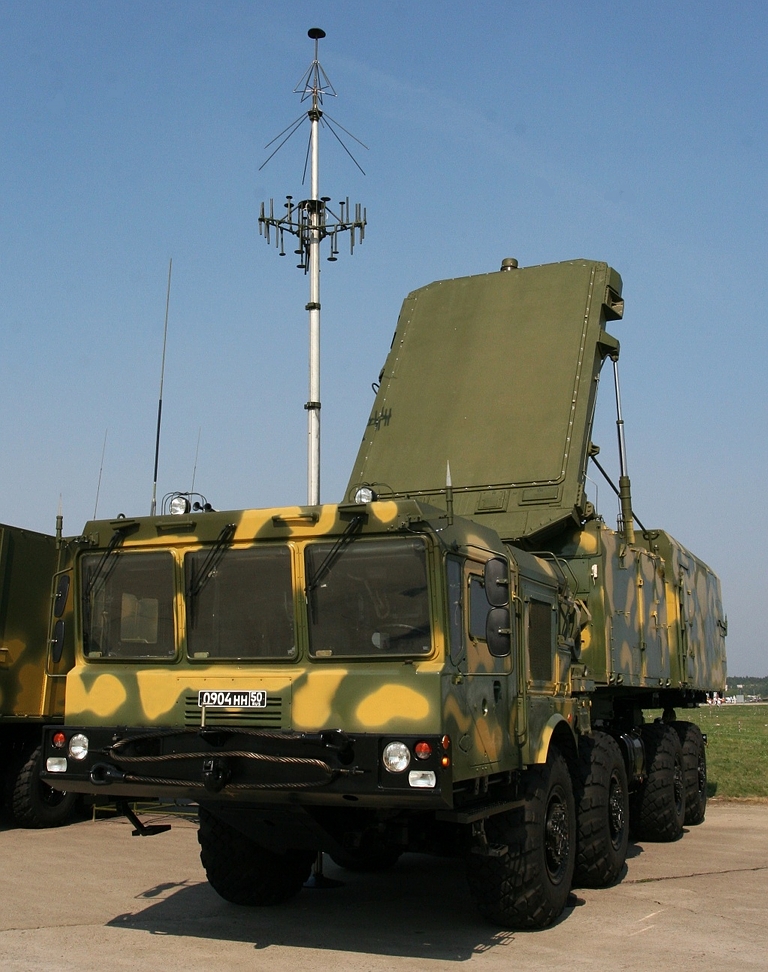
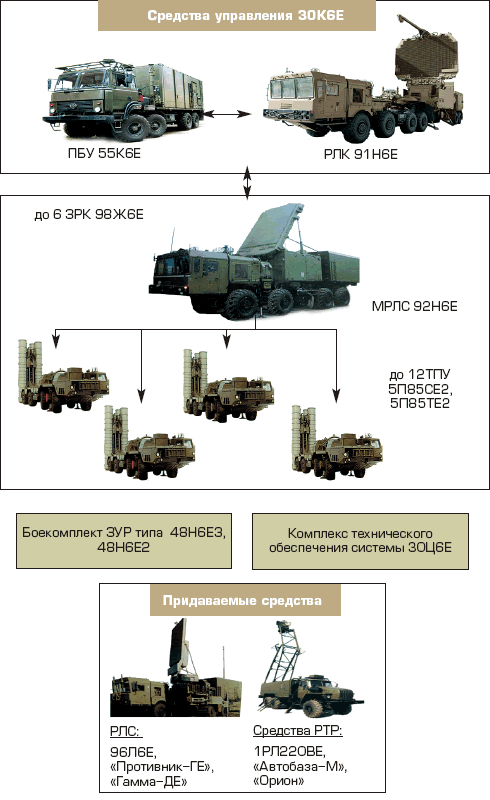
5N63/5N63S/30N6
Flap Lid A/B/C / SA-10 Grumble
30N6/30N6E/30N6E1/30N6E2
Tomb
Stone
/
SA-20
Gargoyle
92N6E Grave
Stone / SA-21
Design of the S-300P and S-300V SAM Systems [Click for more ...]
Technical Analysis of S-400/SA-21 SAM Systems [Click for more ...]
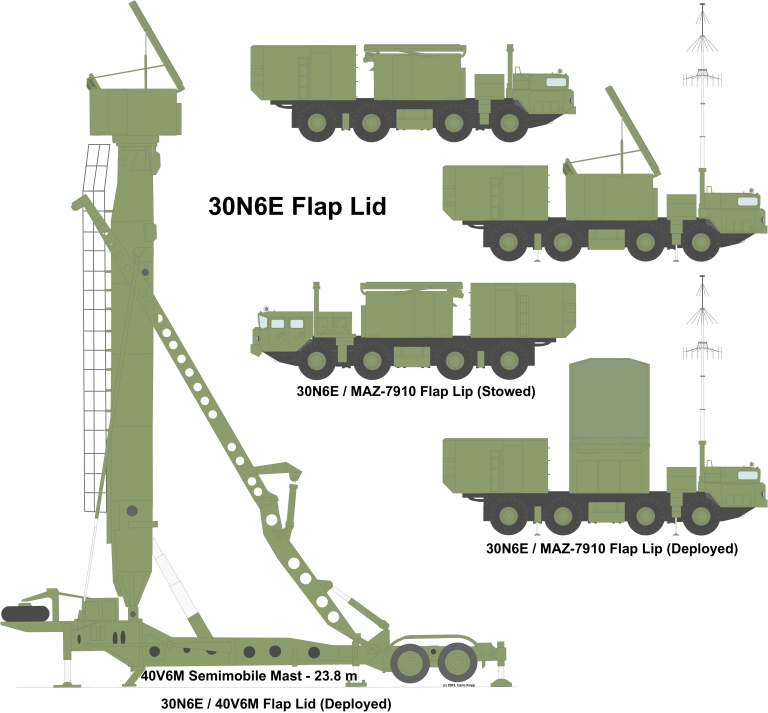
The 5N63 was a huge generational leap in technology from the Fan Song, Low Blow and Square Pair mechanically steered and scanned engagement radars on preceding V-PVO SAMs. With electronic beam steering, very low sidelobes and a narrow pencil beam mainlobe, the 30N6 phased array is more difficult to detect and track by an aircraft's warning receiver when not directly painted by the radar, and vastly more difficult to jam. While it may have detectable backlobes, these are likely to be hard to detect from the forward sector of the radar. As most anti-radiation missiles rely on sidelobes to home in, the choice of engagement geometry is critical in attempting to kill a Flap Lid.
Growing US electronic combat and SEAD capabilities, in the EF-111A Raven and F-4G Weasel forces were clearly considered a serious threat and this spurred the further evolution of the S-300PT system. In 1982 the V-PVO introduced a fully mobile variant of the system, designated the S-300PS (P- PVO, S - Samochodnyy/Self-propelled), labelled by NATO the SA-10B. The S-300PS saw the 5N63 Flap Lid engagement radar transplanted on to the high mobility 8x8 MAZ-7910 vehicle derived from the MAZ-543. The rehosted radar became the 5N63S Flap Lid B (Samochodnyy/Self-propelled). This permitted the engagement radar and TELs to set up for firing in 5 minutes, and rapidly scoot away after a missile shot to evade US Air Force Weasels. The improved 5N63S Flap Lid B radar had the capability to concurrently engage six targets, and guide two missiles against each target. The phased array beam steering angular range was extended to permit instantaneous coverage of a 90 degree sector, comparable to the SPY-1 Aegis radar.
The next big evolutionary step in the S-300P system was the introduction of the enhanced S-300PM and its export variant the S-300PMU1/SA-10D, in 1993. The SA-10D, later redesignated SA-20 Gargoyle, was subjected to what Russian sources describe as a deep modernisation with design changes to most key components of the system. The aim was to improve its basic capabilities as a SAM, extend radar and engagement footprints, increase the level of automation in the system, and introduce an anti-ballistic missile capability against ballistic missiles with re-entry speeds of up to 2.8 km/sec. Incremental changes were made to the Flap Lid, yielding the 30N6/30N6-1 Tomb Stone variant, designated 30N6E1 for export, capable of guiding the new 48N6 missile, the manufacturer claims an ability to engage targets with an RCS as low as 0.02 square metres at an unspecified range, and an autonomous search capability. The 30N6E1 retains the capability to deploy on the 40V6M mast.
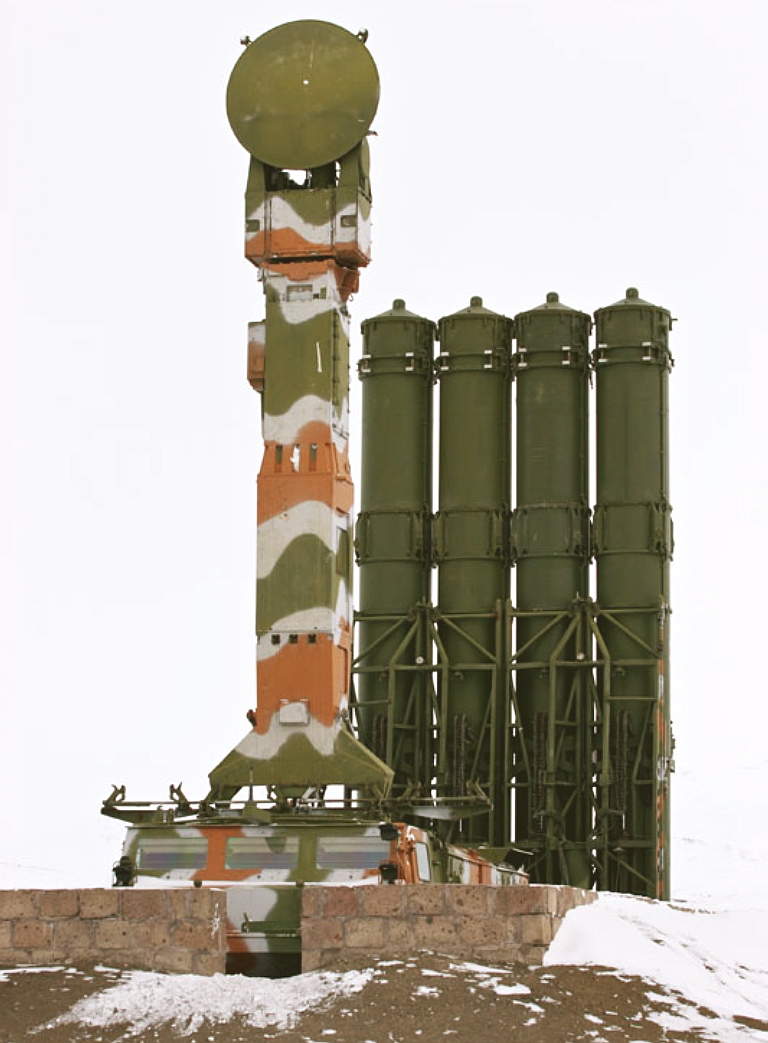
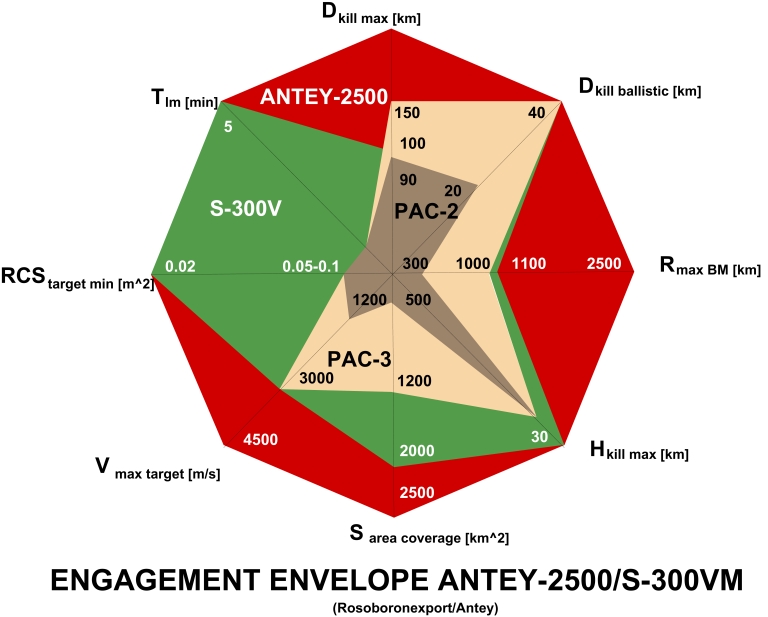
Further evolution of the S-300P design took place between 1995 and 1997, yielding the S-300PMU2/SA-10E Favorit system, later redesignated SA-20 Gargoyle, intended to compete directly against the Antey S-300V and Patriot PAC-2/3 systems as an Anti-Ballistic Missile system. The Favorit incorporates incrementally upgraded 30N6E2 Tomb Stone engagement radar. The Favorit's new command post has the capability to control S-300PMU / SA-10, S-300PMU1 / SA-20 batteries, and also S-200VE/SA-5 Gammon batteries, relaying coordinates and commands to the 5N62VE Square Pair guidance and illumination radar.
The most recent derivative of the S-300P family of systems is the S-400 Triumf or SA-21. The 30N6E2 further evolved into the more capable 92N2E Grave Stone, carried by a new 8 x 8 MZKT-7930 vehicle. The additional range required a significantly uprated transmitter tube to provide the higher power-aperture performance needed, in additional to an improved exciter and automatic frequency hopping capability.
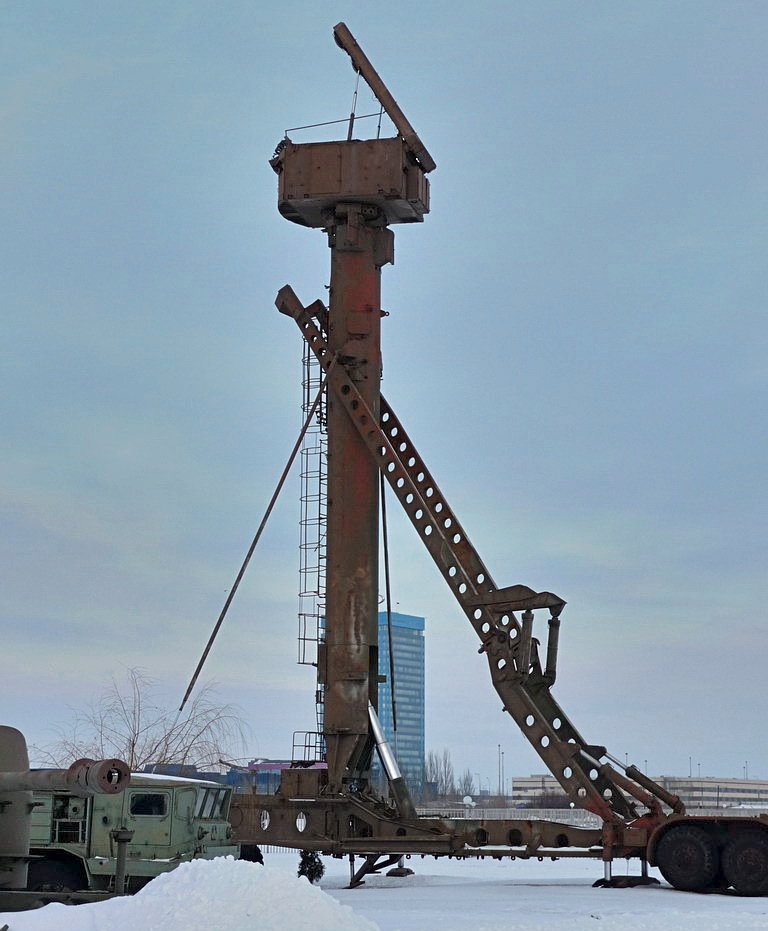
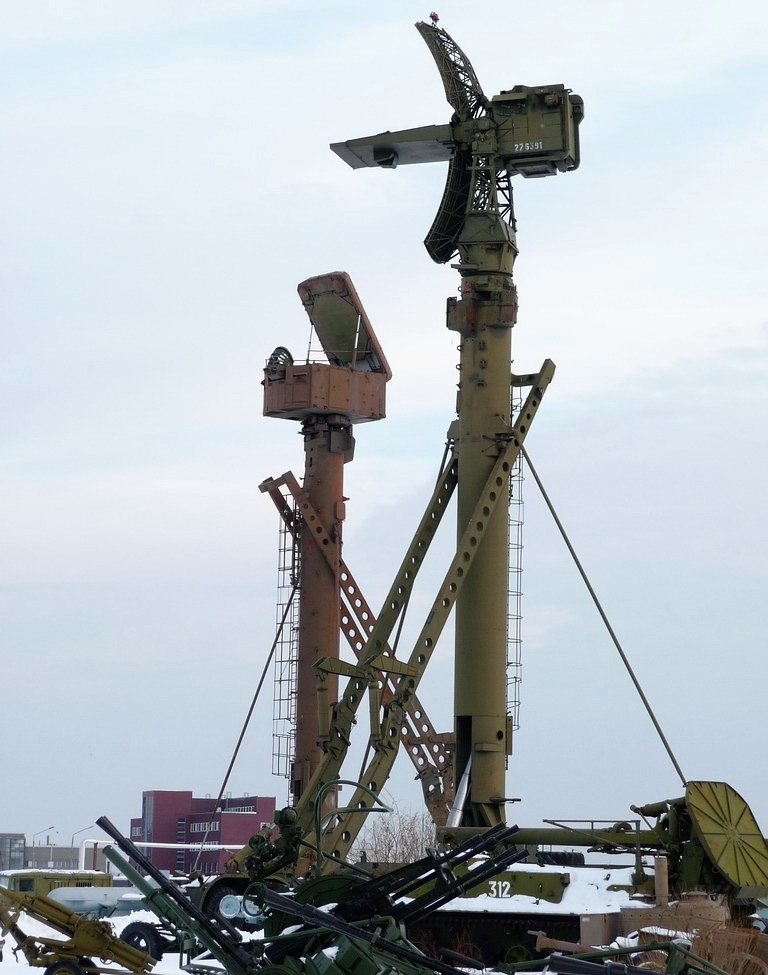
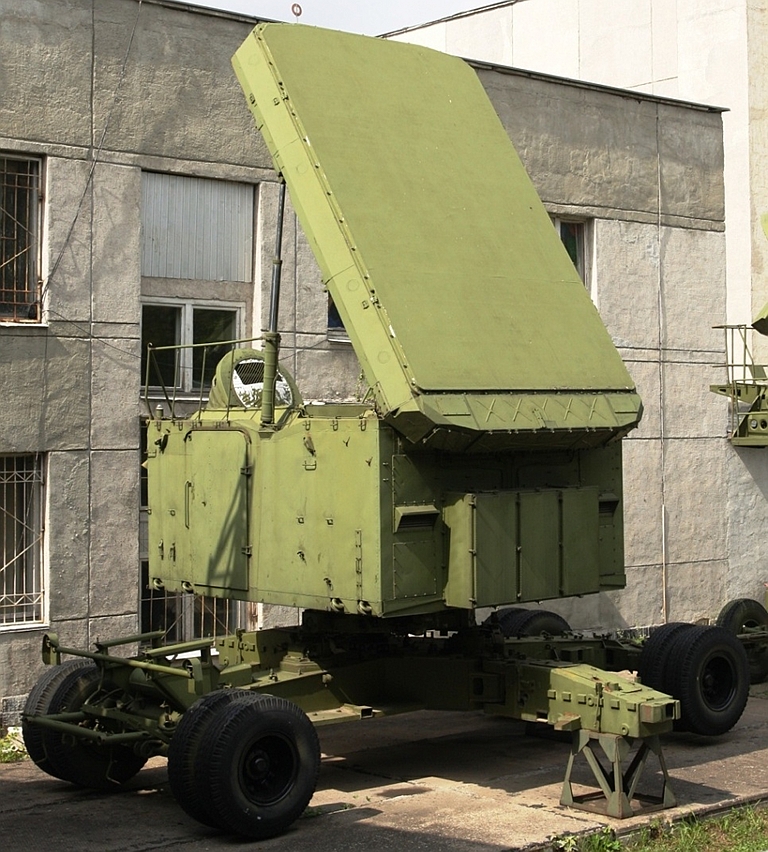
An excellent study of the 5N63 Flap Lid A deployed on 40V6M semi-mobile mast system by Said Aminov, produced at the Togliati Museum in Russia (© 2009, Said Aminov).
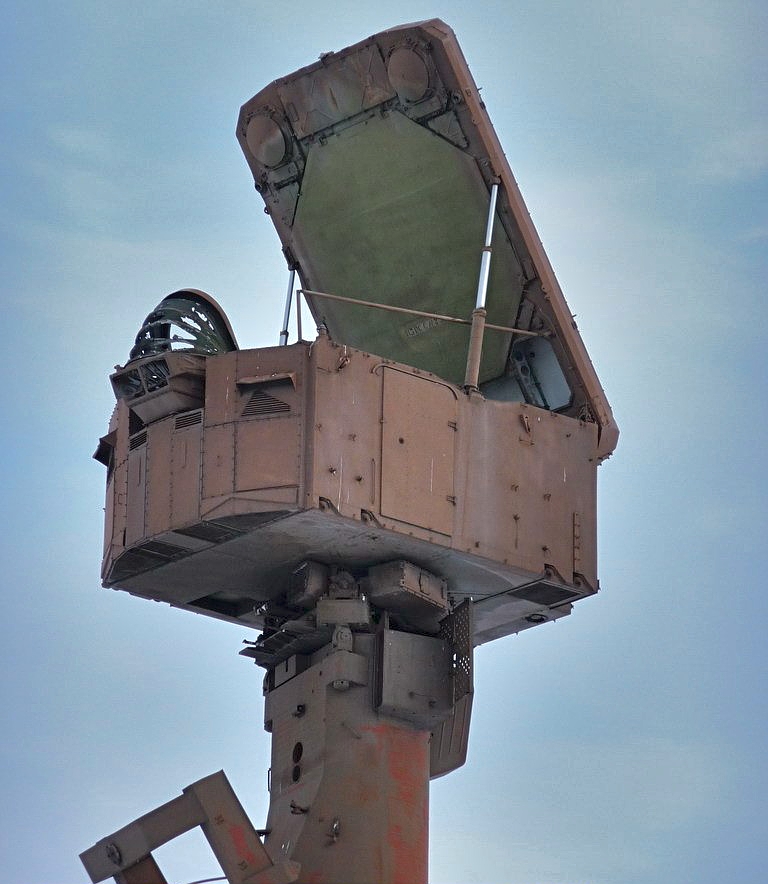
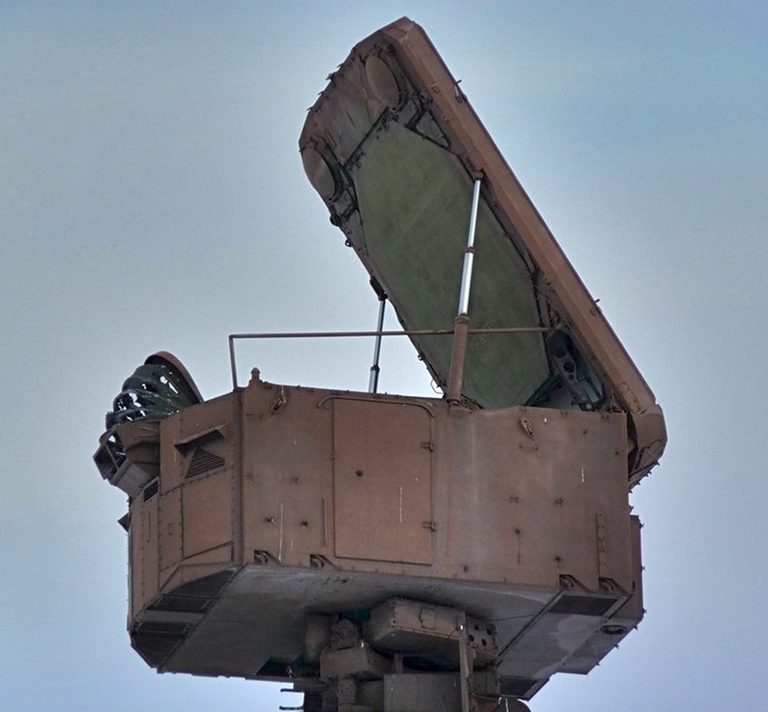
Above, below, detail of the 5N63 Flap Lid A F1 radar head module deployed on 40V6M semi-mobile mast system, by Said Aminov, produced at the Togliati Museum in Russia. The dual plane monopulse circular polarised primary feed has been stripped and the concertina shroud has deteriorated. The operator consoles are in the F2 module, typically located on a truck. Later self-propelled 5N63S Flap Lid B variants retained the capability to deploy the F1S module on the 40V6M/MD mast, with the F2S module remaining attached to the MAZ-7910 8x8 vehicle chassis (© 2009, Said Aminov).
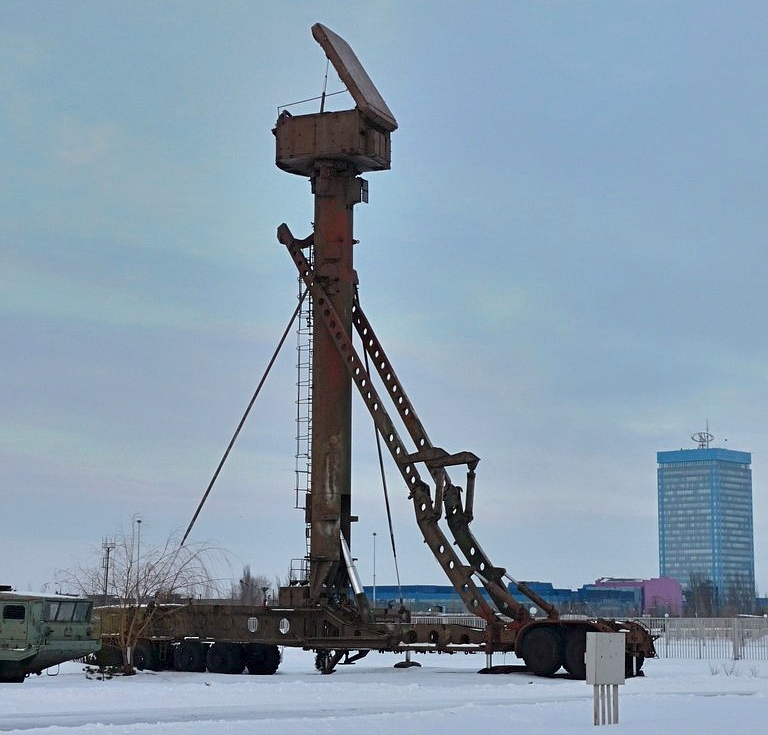

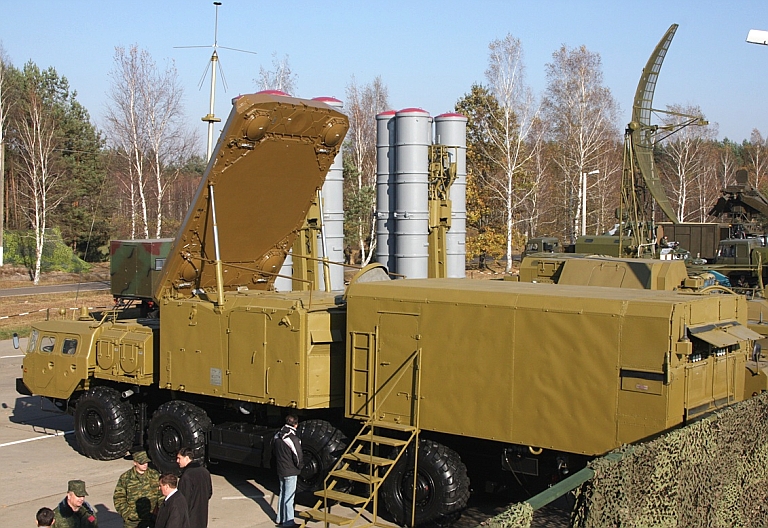
5N63S
Flap Lid
B deployed.
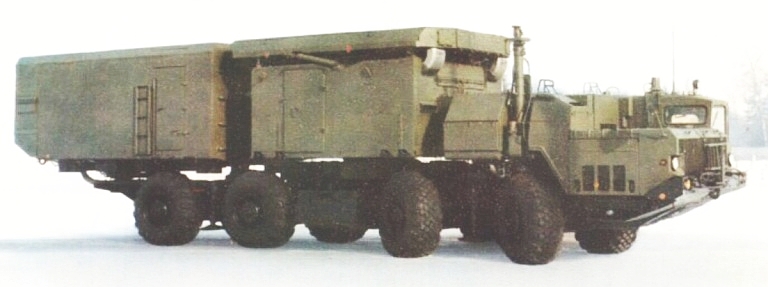
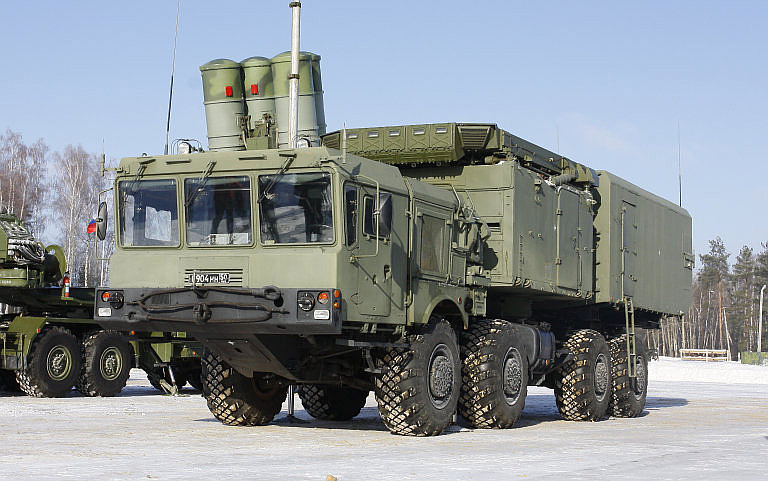

NIIP 9S35/9S35M Fire Dome / SA-11 Gadfly
NIIP 9S36 / SA-17 Grizzly
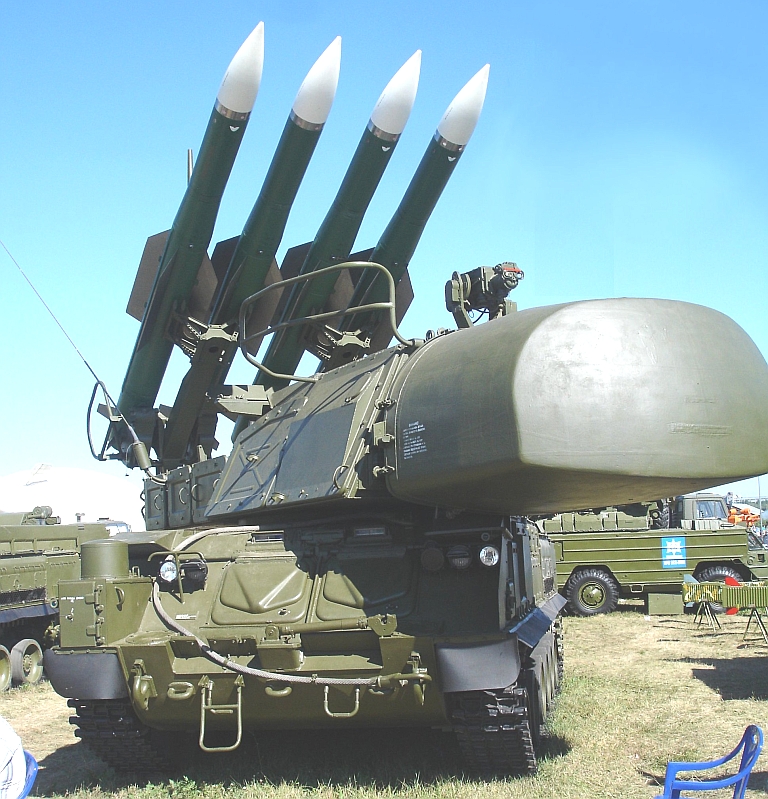
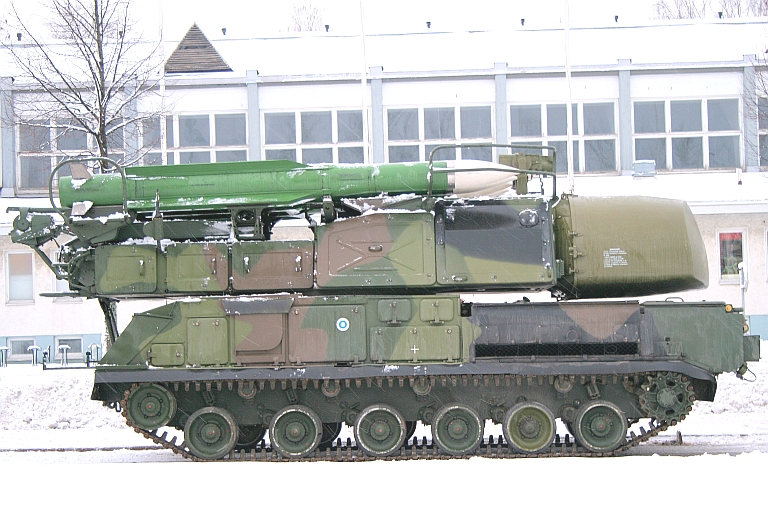
9S35M1 Fire Dome on 9A38M1 TELAR in Buk M1 system (Wikipedia image).

The 9S35 Fire Dome provides a limited search and acquisition capability, a tracking capability and CW illumination for terminal guidance of the semi-active homing SAM seekers. It incorporates an IFF interrogator, optical tracker, datalink, and is powered by the TELAR's gas turbine generator. A shared antenna is employed for two X-band transmit/receive channels. These respectively provide a pulsed mode for search and track functions, with linear chirp for compression, and a CW mode for illumination. Monopulse angle tracking is employed for jam resistance. For target tracking the antenna and feed system provide a mainlobe with 2.5° width in azimuth and 1.3° in elevation. For CW illumination the antenna and feed system provide a mainlobe with 1.4° width in azimuth and 2.65° in elevation.
Operating autonomously, the 9S35 will take 4 seconds to sweep a 120° sector, with an elevation of 6° to 7°. When cued to acquire and track, with will take 2 seconds to sweep a 10° x 7° az/elev solid angle. Average power output in pulsed tracking modes varies between 0.5 and 1 kiloWatt, with CW illumination at 2 kiloWatts. The search and monopulse angle tracking receivers are both rated at a Noise Figure of NF=10 dB. The range error is cited at 175 metres, the angular error at less than 1°. The radar can switch from standby mode to combat operation in twenty seconds.
Notable exports include Finland (M1), Egypt (M1-2), Myanmar (M1-2), Serbia (M1-2), Syria, and Georgia (M1). Upgrades on offer include the Russian Agat 9B-1103M-350 active radar seeker, based on the RVV-AE / AA-12 "AMRAAMski" seeker, for the 9M38 round. The Buk MB upgrade package is offered by NPO Agat in ByeloRussia, better known for its Command Posts.
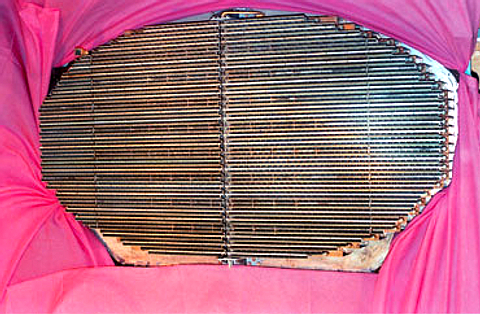
9K317 Buk M2 / SA-17 Grizzly introduced the new Tikhomirov NIIP 9S36 passive phased array engagement radar, replacing the Fire Dome. The beamsteering parameters cited by Russian sources are consistent with a tilted fixed passive phased array. ESA element count, sidelobe performance, peak power and other cardinal design parameters have not been disclosed to date. The cited detection and tracking ranges for the 9S36 are not consistent with NIIP's airborne PESA design range performance, power densities and aperture sizes, and should be therefore be treated with caution - NIIP have achieved considerably better range performance in the N-011M BARS and N-035 Irbis E airborne radars, with smaller apertures.
The most interesting component of this design is the standalone mast mounted 9S36 phased array, designed to provide extended low altitude and surface coverage, in air defence but also maritime coastal defence applications. This design uses a 21 metre telescoping and elevating mast which mounts a radar head with the 9S36.
| NIIP 9S36 PESA Engagement Radar |
|
| Target
Acquisition
Coverage: |
|
| Azimuth |
±45° |
| Elevation |
0 - 50° |
| Target
Tracking
Coverage: |
|
| Azimuth | ±60° |
| Elevation | -5 - 85° |
| Range
Performance
(MiG-21
RCS
Target): |
|
| Detect
|
100
km |
| Acquire/Track
|
95
km |
| Number
of
Tracked
Targets |
4 |
|
|||||||||||||||||||||||||||||||
9S32
Grill Pan / S-300V / SA-12 Gladiator /
Giant
9S32M Grill Screen / S-300VM / SA-23 Gladiator / Giant
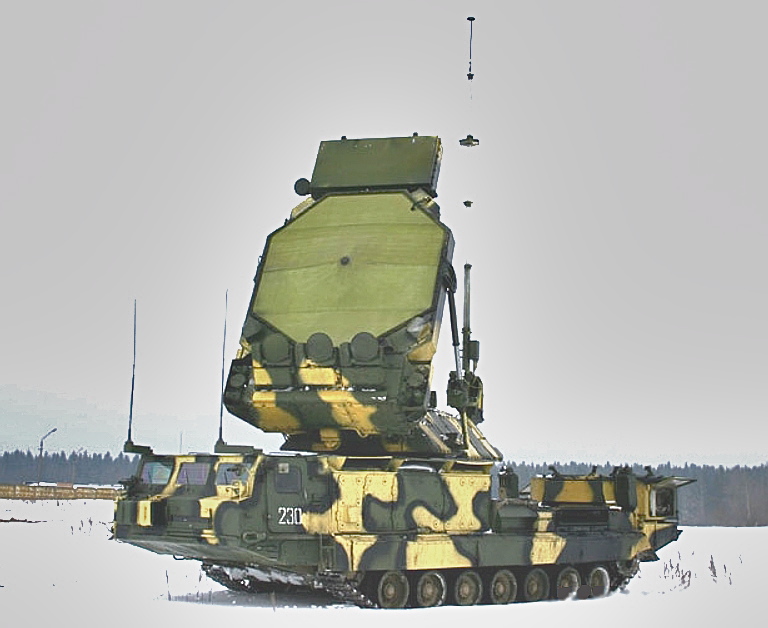
Like the 9S19, the 9S32 is a high
power-aperture, coherent, X-band phased array, but specialised for
missile guidance producing a mainlobe of ~1 degree in width.
The TWT based transmitter is rated at 150 kW peak and 10 to 13
kW average
power, with receiver sensitivity cited at 10-17 Watts.
Cited
detection
ranges are about 80 nautical miles for fighter sized targets, 40
nautical miles for SRAM class missiles and up to 80 nautical miles for
larger IRBMs.
The pulse Doppler radar uses monopulse angle tracking techniques, frequency hopping in all modes to provide high jam resistance, and linear FM chirped waveforms providing a high compression ratio. Three auxiliary receiver channels are used for cancelling sidelobe jamming.
Two basic operating modes are
used. In the first the 9S32 is controlled by the 9S457 command post and
acquires targets within a narrow 5º x 6º degree field of view,
alternately
it can autonomously search and acquire targets within a 60º field
of view, from an elevation of 0 to 18º. A datalink antenna is mounted
aft of the array.
Cited aerial target RMS errors
for the 9S32 are 5-25 metres in range, 0.3 - 1.5 m/s in velocity, and
0.2 - 2 arcmin in elevation and bearing.
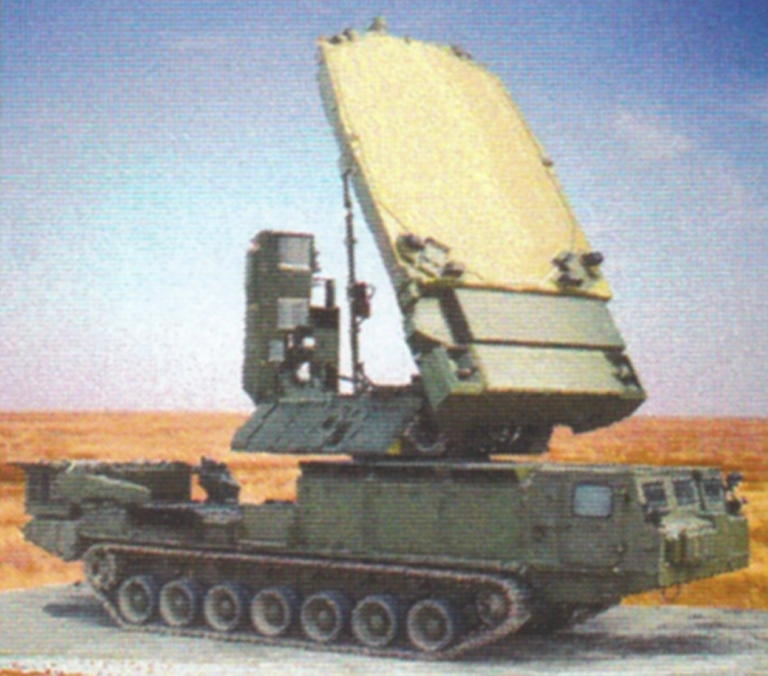
The S-300VM and likely S-300V4
employ the heavily redesigned 9S32M Grill Screen. This 9S32 derivative
employs an space fed PESA which is clearly based on the design used in
the 9S19 Imbir / High Screen series of ABM radars. Cited range
performance is ~108 nautical miles, but may be as high as 135 nautical
miles given revised range figures for the 9M82M missile.
![[Click here ...]](http://www.ausairpower.net/PVO-SV/000-9A83-7.jpg)

Scrum Half / PESA / 9K331M/M1 Tor M/M1/M2E / SA-15 Gauntlet
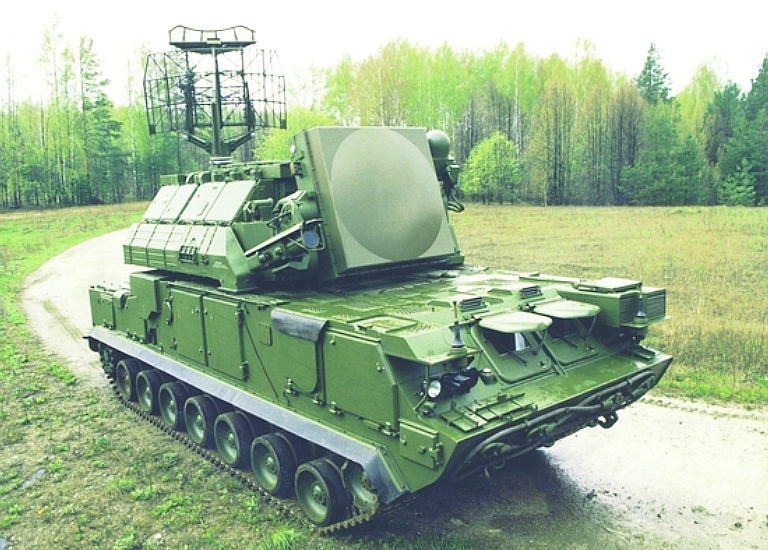
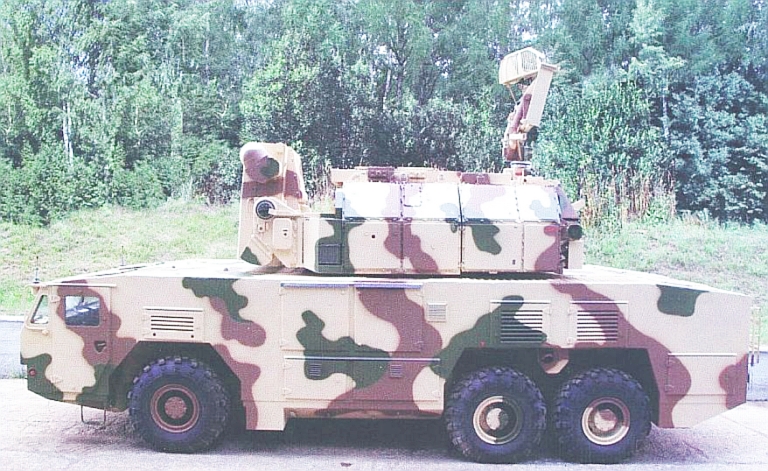
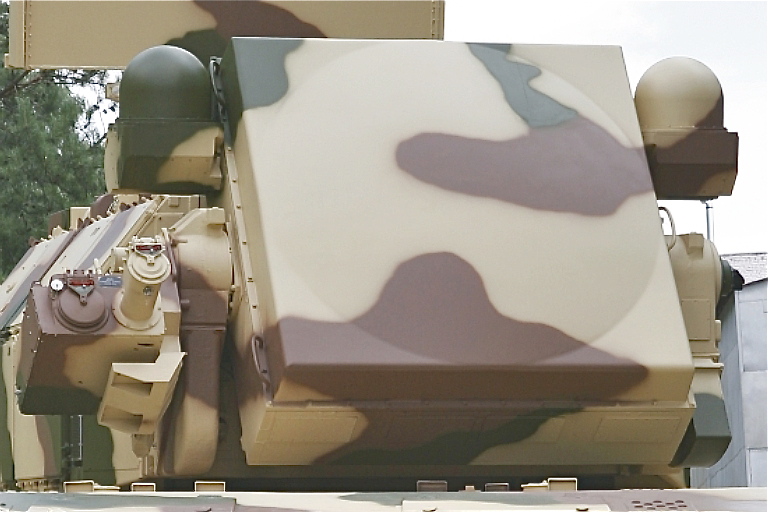
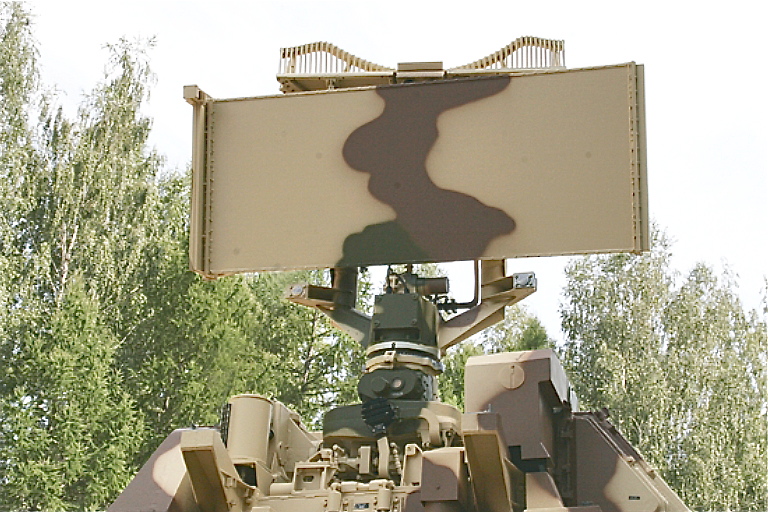
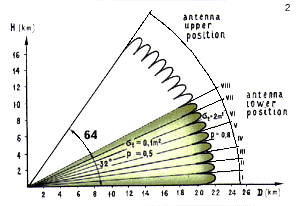
First generation systems employed a mechanically steered paraboloid section antenna for the MTI acquisition radar component, which can be elevated by 32° to sweep a high altitude or low altitude volume, at 60 RPM. The mainlobe width in elevation is ~4.0°. Cite: "To increase the pulse energy, the length of the emitted pulse is increased, and the pulse is internally modulated. The radar can also operate in an active jamming environment when the entire transmitted power of the radar is accumulated in one critical portion instead of being distributed among three portions." Cite: "The accuracy of target designation is 100 m in range, 20 min in azimuth and 2 deg in elevation."
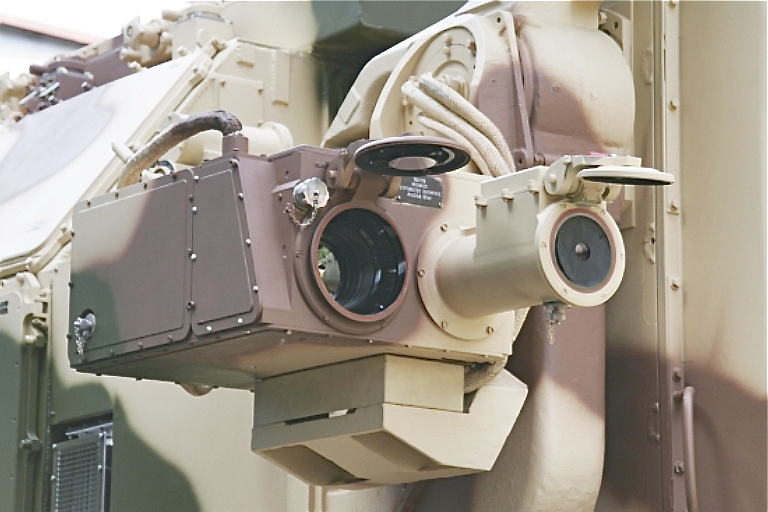
1RL144 Hot Shot / SA-19 Grison
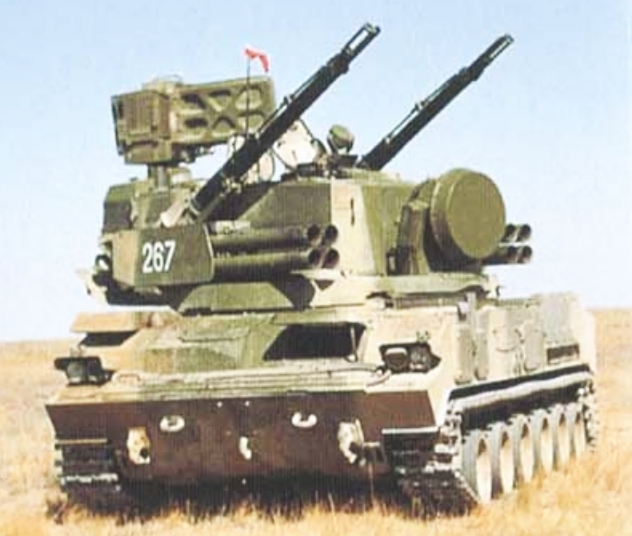
The Soviets needed a weapon system which could win in a 'high noon' shootout with the A-10 or a nap-of-ther-earth pop-up rotary wing threat. This became one of the defining requirements for the Tunguska, and led to the development of the high speed 9M311 SAM, intended to cross the distance between the Tunguska and the target before the latter could hide below the horizon line. This capability would be supplemented by a 30 mm gun system.
The missile requirement led to the unusual two stage 9M311 design, in which the first stage boosted the round to 900 m/s at burnout, the sustainer in the terminal stage burning to impact and maintaining a 600 m/s velocity. The missile employs command link guidance, with an automatic Command to Line Of Sight (CLOS) control loop for the terminal phase to impact, with an 18G capability. The engagement radar component of the 1RL144M Hot Shot system is claimed to operate in the millimetric band, using jam resistant monopulse angle tracking; a 1A29M optical sight is boresighted with the radar. A 1RL138 IFF system is included. Conceptually the 2S6 missile package has its closest Western equivalents in the Franco-German Roland system, and the UK Rapier Blindfire and Seawolf systems.
The most recent variants of the system displayed have included components of the radar suites developed for the 96K6 Pantsir S1 / SA-22, specifically the 2RL80 S-band phased array acquisition radar and 1RS2/1RS2-E Shlem or SSTsR (Stantsiya Slezheniya Tsel'a i Rakety - Target and Missile Tracking Station) engagement radar.
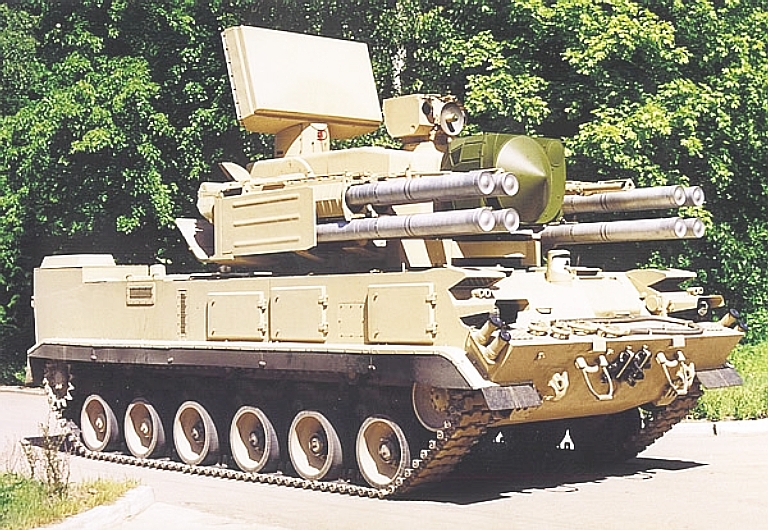
Phazotron 1L36E/1RS2 / VNIIRT 1RS2-1 / 96K6 Pantsir S1 / SA-22
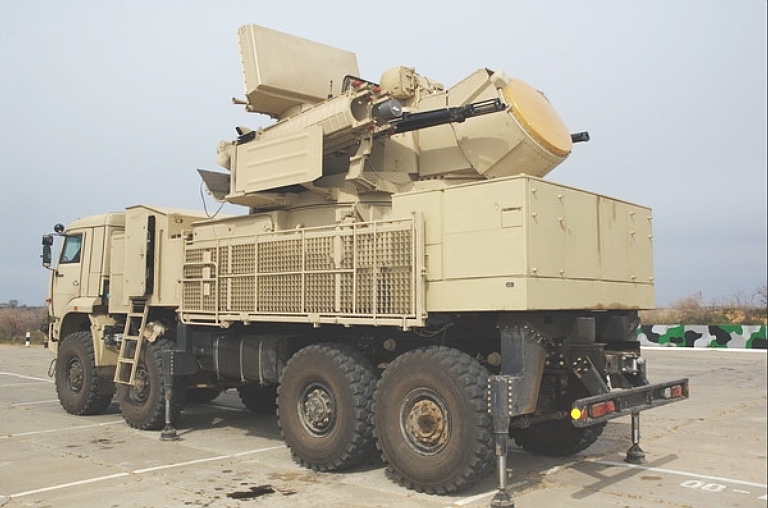
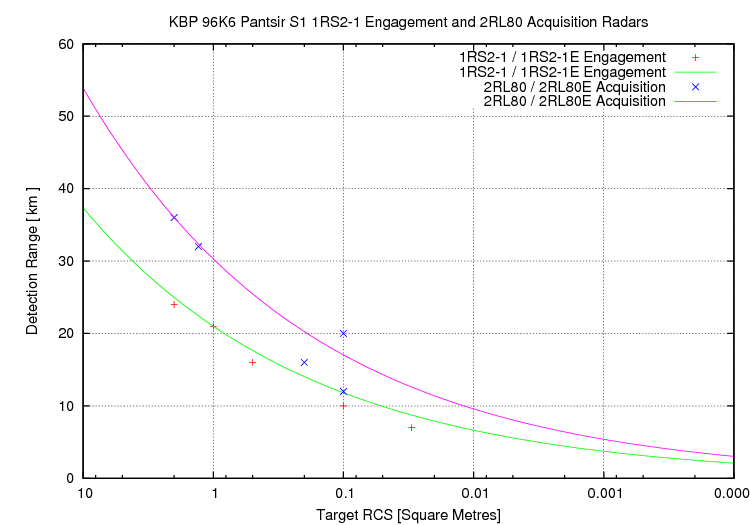
The VNIIRT developed PESA technology acquisition radar on the Pantsir S1, the 2RL80/2RL80E, uses a mechanically rotated 1776 x 940 mm sized 760 kg passive S-band phased array. The design provides elevation coverage between 0° and 60°, range coverage between 1 and 50 km, and performs a circular scan in 2 or 4 seconds. The radar can initiate tracking in 2 seconds. Cited detection range performance for a 1 m2 target is 47 km, for a 0.1 m2 target is 26 km. Cited clutter rejection is 55 dB. Accuracy figures cited are 50 metres in range, 15 - 18 min of arc in azimuth, and 25 - 30 min of arc in elevation.
Elevation coverage is selectable in increments of 0° - 60°, 0° - 30°, 40° - 80° and 0 - 25°, and the radar can search a 360° circle at 15 or 30 RPM. Range coverage can be selected in several modes, at 1-30 km, 1-50 km, 1-25 km and 3-80 km.
Acquisition performance for various target types has also been cited, with notable inconsistencies:
- 36 km for a small fighter with a 2 m2 RCS;
- 20 km for a manoeuvring cruise missile with a 0.1 m2 RCS;
- 16 km for a glidebomb with a 0.2 m2 RCS;
- 12 km for an AGM-88 HARM anti-radiation missile with a 0.1 m2 RCS;
- 32 km for an AH-64 Apache attack helicopter.
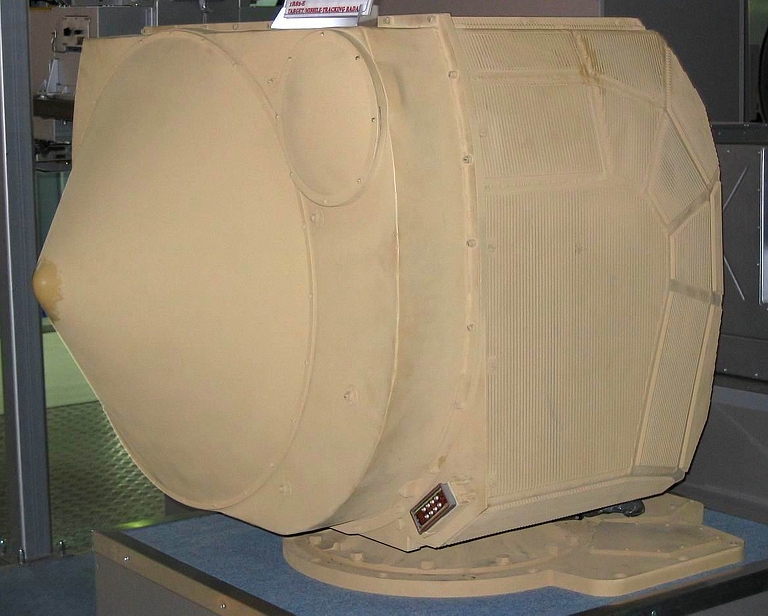
Early Pantsir S1 demonstrators initially used an MMW band monopulse tracking antenna, with a characteristic conical radome, with the Russians claiming two discrete Phazotron designs in this configuration, the 1L36-01 Roman and later 1RS2-E Shlem.
This pulse Doppler radar is designated the 1RS2/1RS2-E Shlem or SSTsR (Stantsiya Slezheniya Tsel'a i Rakety - Target and Missile Tracking Station), initially designated the 1RS1 and 1RS1-E for export. Cited tracking range performance for a 2 m2 target is 30 km. Cited RMS angular errors for X-band operation are 0.3-0.8 milliradians, for Ku-band operation 0.2-0.4 milliradians, with a 5 metre range error.
The X-band component of the SSTsR is used for target tracking, and uplink of missile steering commands., the Ku-band component for target and missile beacon tracking. The system typically guides one or two missile rounds against a single target.
This design has since appeared on the 2K22M1 Tunguska M1 demonstrators, various repackaged Pantsir variants on smaller chassis, usually with the 2RL80E acquisition radar.
In 2004 the requirement for the PVO engagement radar changed, when it was expected that the program would be cancelled. A new requirement was issued to increase the number of concurrent targets to be tracked and engaged, and engagement range was increased. This likely reflects the success of the US GBU-31/32/35/38 JDAM and emergence of analogues globally, where more than two weapons would be released from an aircraft concurrently. With the GBU-39/B Small Diameter Bomb intended to be released eight at a time, the Roman and Shlem would be saturated in a single aircraft attack.
This resulted in the development of an entirely new PESA based radar, curiously designated the
- Operating centre wavelength claimed by KBP to be “8 mm in the K-band” - antenna geometry suggests 15 mm (20 GHz) to 18 mm (16.7 GHz);
- Beamsteering angles of up to ±45° of arc;
- Mechanical PESA boresight steering in elevation between -5° and 82°;
- Track while scan of nine separate targets;
- 90% probability of initial target acquisition within 1 second of coordinate transfer from the 2RL80 with errors of ±2.5° in azimuth, ±2.5° in elevation, ±200 m in range and ±60 metres / sec in radial velocity;
- Tracking errors of 0.2 milliradians in azimuth, 0.3 milliradians in elevation, 5 metres in range and 2 metres / sec in velocity;
- Ability to track airborne targets at velocities between 10 to 1,100 metres / sec;
- Ability to capture 4 missiles after launch;
- Ability to track 3 to 4 outbound missiles at velocities between 30 to 2,100 metres / sec;
- Detection range of 24 km against a 2.0 m2 RCS airborne target; 21 km against a 1 m2 RCS airborne target; 16 km against a 0.5 m2 RCS airborne target; 10 km against a 0.1 m2 RCS airborne target; 7 km against a 0.03 m2 RCS airborne target;
The primary antenna is used for target and missile tracking, it is supplemented by a command link antenna which is part of the APKNR (Apparatura Peredachi Komand i Naprovadzaniya Raket) subsystem for datalink control of the missiles.
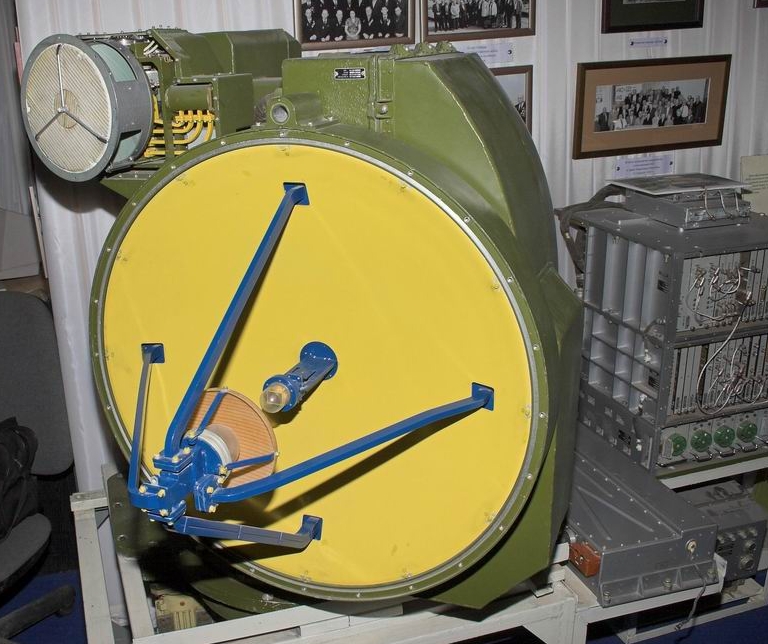
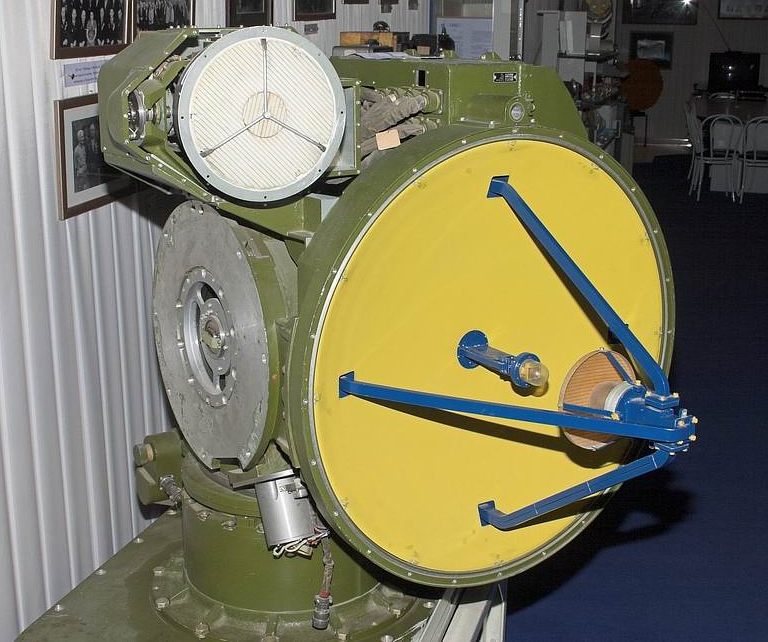
The 1L36-01 Roman was the first engagement radar used on the Pantsir S demonstrators. The characteristic conical radome shape conceals a parabolic reflector antenna with a quad waveguide feed for dual plane monpulse angle tracking, with X-band and Ku-band channels. Note the smaller upper missile command link antenna. The radar has been labelled as a 96L6-1, but more commonly as the 1L36-01 (© 2007, Yevgeniy Yerokhin, Missiles.ru).
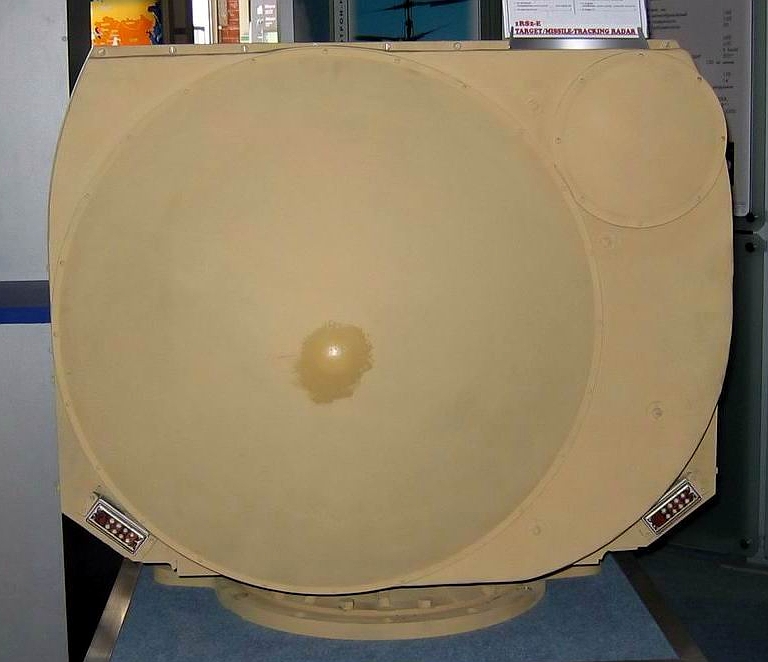
The 1RS2-E Shlem was the second engagement radar used on the Pantsir S demonstrators, it continues to be offered with Pantsir and Tunguska variants on tracked chassis where its compact size and single target limitation do not present operational problems. The antenna has not been displayed without the radome, but is likely to be very similar to the earlier 1L36 Roman series (© 2005, Said Aminov, Vestnik PVO).
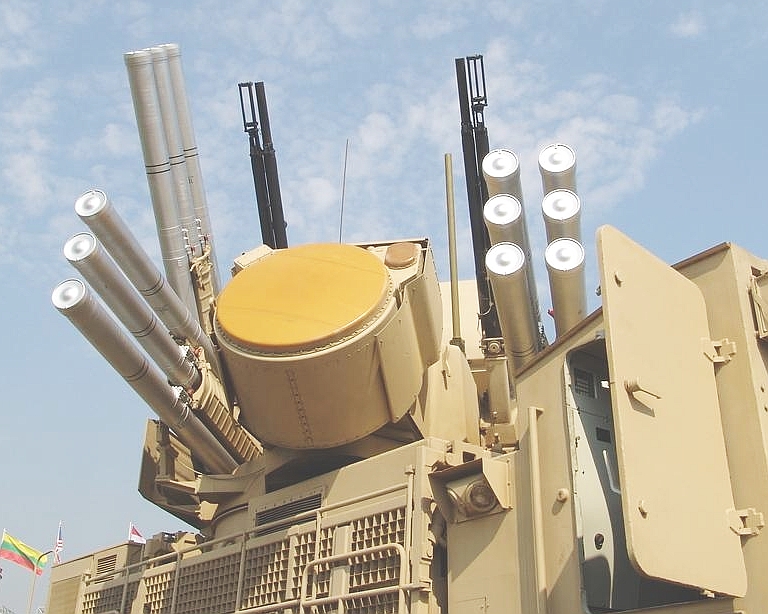
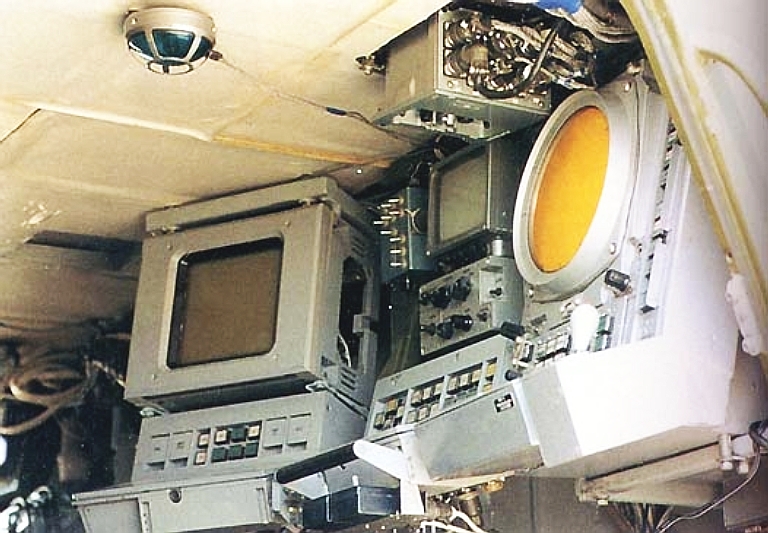
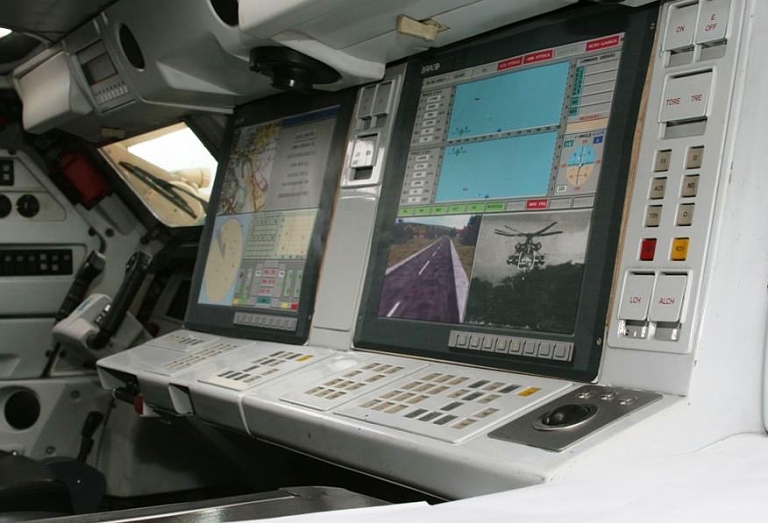
Crew stations in the recent Pantsir S1E hosted on the GM-352 chassis (image © Miroslav Gyűrösi).
Imagery Sources: Russian Internet, Chinese Internet, Almaz-Antey, LEMZ, VNIIRT, Author
Line Artwork: © 2000, 2007, 2008, 2009 Carlo Kopp
Technical Report APA-TR-2009-0102
|
|||||||||||||
|
|
|
|
|
|
|
|
|
|
|
|||
|
|
|
|
|
|
|
|
|
|
|
|||
 |
|
|
|||||||||||
| Artwork, graphic design, layout and text © 2004 - 2014 Carlo Kopp; Text © 2004 - 2014 Peter Goon; All rights reserved. Recommended browsers. Contact webmaster. Site navigation hints. Current hot topics. | |||||||||||||
|
Site Update
Status:
$Revision: 1.753 $
Site History: Notices
and
Updates / NLA Pandora Archive
|
|||||||||||||
|
|
Tweet | Follow @APA_Updates | |||||||||||
|
|
|||||||||||||
|
|
|||||||||||||